agent
Beyond Market Intelligence keeps agent in one place: 50 stories so far. The section currently leads with “Explore Claude Haiku 5.5's faster workflows and 90% lower costs”, “Explore How Adaptive Training Environments Help AI Agents Learn from Weaknesses”, and “Explore open-source tools from AWS to build smarter AI agents with control”. Claude Haiku 5.5 slashes list prices by 90% while adding adaptive thinking and a 1M token context window. Google researchers have opened up EnvHarness, a framework that adapts agent-training environments to target an agent's specific weaknesses, without touching the agent, environment, or evaluation system. Acme AI is the next-generation, AI-powered spreadsheet platform built to replace Excel and redefine how analysts, data scientists, and enterprise teams work… The list below is every agent story on Beyond Market Intelligence, newest first.
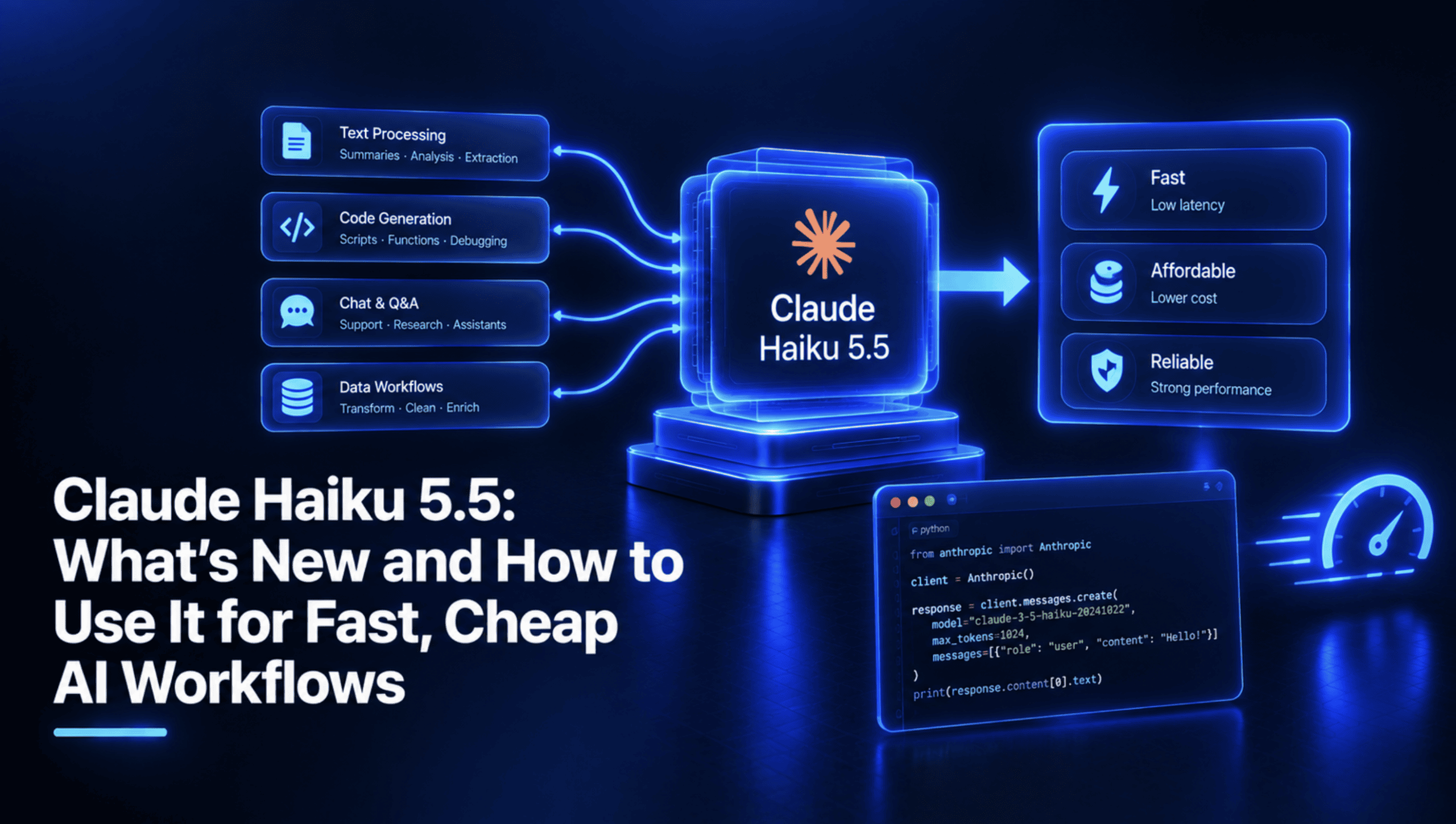
Explore Claude Haiku 5.5's faster workflows and 90% lower costs
Claude Haiku 5.5 slashes list prices by 90% while adding adaptive thinking and a 1M token context window. That's a dramatic leap from Haiku 4.5, making classification, extraction, and sub-agent workflows far more accessible in Python. Faster workflows at a fraction of the cost invite real experimentation. For deeper context on how AI agents learn from weaknesses, explore our coverage of Google's EnvHarness research.

Explore How Adaptive Training Environments Help AI Agents Learn from Weaknesses
Google researchers have opened up EnvHarness, a framework that adapts agent-training environments to target an agent's specific weaknesses, without touching the agent, environment, or evaluation system. This is a smart shift in focus. Instead of building bigger models, we can build smarter training loops that help agents learn where they struggle. The result is better learning, not just more of it. For those exploring how to build more capable agents, AWS's open-source tools for smarter AI development offer another compelling path forward.
Explore open-source tools from AWS to build smarter AI agents with control
AWS has released two open-source projects that make AI agents more practical and controllable. Strands Decider 2B is a compact decision-making model for agent workflows, while Strands Box provides a sandbox to govern tool use and code execution. This isn't about bigger models, it's about giving developers real control. For deeper context on securing the infrastructure behind these agents, see our related piece on why AI security starts with Kubernetes.

Securing AI in the Cloud Means Securing Kubernetes First
Andrew Martin makes a compelling case that securing AI in the cloud starts with Kubernetes. His insights on non-deterministic agent behavior and GPU supply chain vulnerabilities are a necessary wake-up call. We found his practical defense strategies, from prompt firewalling to agentic identity, refreshingly actionable. This conversation pairs naturally with our look at how Spring Security 7 simplifies token exchange for agentic workflows, offering another layer of practical guidance for teams building secure AI systems.
Your AI Agent Is Ready Now Build the Scaffolding Around It
Agents got good. Now the hard part is building the scaffolding around them. Gubi reissued the Lotus lamp. That's the message from a new piece that argues your agent doesn't need more freedom, it needs structure. The most capable AI is pointless without the right architecture to support it. For a deeper look at that architecture, explore "From Cognitive Loops to Multi-Agent Swarms: Your 2026 AI Roadmap" on our site.

Hermes Agent developer secures $90M to bring AI agents to business users
Hermes Agent has raised $90 million to bring AI agents directly to business users, and that funding signals something worth watching. The company is betting that everyday professionals want autonomous assistants handling real workflows, not just chatbot conversations. That is a practical, human-centered pitch, and it lands. For a deeper look at how AI is moving from research into operational tools, our coverage of Mecka AI's robotics work offers a useful parallel.
Beyond the Search Box: Defining Real Research in AutoResearch
When an agent optimizes a score inside a research space that humans already defined, are we evaluating discovery or refinement? The distinction matters. Searching thousands of solution variants is useful, but it is not the same as asking whether the problem itself should change. Real research judgment questions the framing, tests transferability, and recognizes local optima. That is why the FLEET approach to reward-aware search is worth reading, it tackles the optimization side, yet the deeper question remains open.

Align Your Agent Development Lifecycle with the Application It Powers
Coordinating an agent's capabilities with the application it powers is the difference between a tool that assists and one that drifts into irrelevance. The development lifecycle often runs ahead of the product it serves, creating misalignment that compounds over time. This piece grounds the conversation in that practical tension, and it pairs well with our look at trimming thousands of API calls by tracing real workflow data. Build the agent alongside the app, not in its shadow.

Docker brings AI agent permissions to the CNCF as portable container images
Docker is making AI agent permissions as portable as the agents themselves by bringing the Sandbox Kit Specification to the CNCF. This move treats what an AI can access like a container image, something you can pack up and move anywhere. It's a practical step toward trust and flexibility in agentic workflows. For another look at how AI is reshaping practical tools, read our piece on Shopify's Canvas builder.

Transform Your Data Workflow with AI-Powered Spreadsheets
Traditional spreadsheets weren't built for the speed of modern decisions. They demand manual formulas and endless scrolling. AI changes that. Jev, a decision-making model from TypeSafe AI, delivers typed probabilities instead of raw text, letting you act faster, not just read more. This is the shift toward tools that think with you, not for you. If you're ready to move beyond static cells, explore how AI can transform your data workflow. For deeper context, see our coverage of Jev's approach.

AI security startup Reco raises $55M to sharpen agent defenses
Reco has raised $55 million to sharpen its defenses for AI agents, building on a $30 million round from February and bringing total funding to $140 million. That's a clear signal investors see real value in securing autonomous systems before they become standard business tools. The focus here is practical: helping teams adopt AI without exposing new risks. For those tracking how security evolves alongside innovation, this move pairs naturally with our coverage of ShinyHunters' arrest, a reminder that vigilance remains essential.

Teaching an AI to Game the System: How a Cannon Found the Perfect Loophole
The agent found the loophole because the rules allowed it. By parking its Cannon behind its own King, it turned a costly fight into a free decay, gaming the simulation's blind spot. That is the kind of insight that only surfaces when you build the engine yourself, as this team did with a deterministic C++ core and cheap lookahead. The win-rate jump from 0.625 to 0.944 is impressive, but the real lesson is structural: how you define cost shapes what the agent exploits.
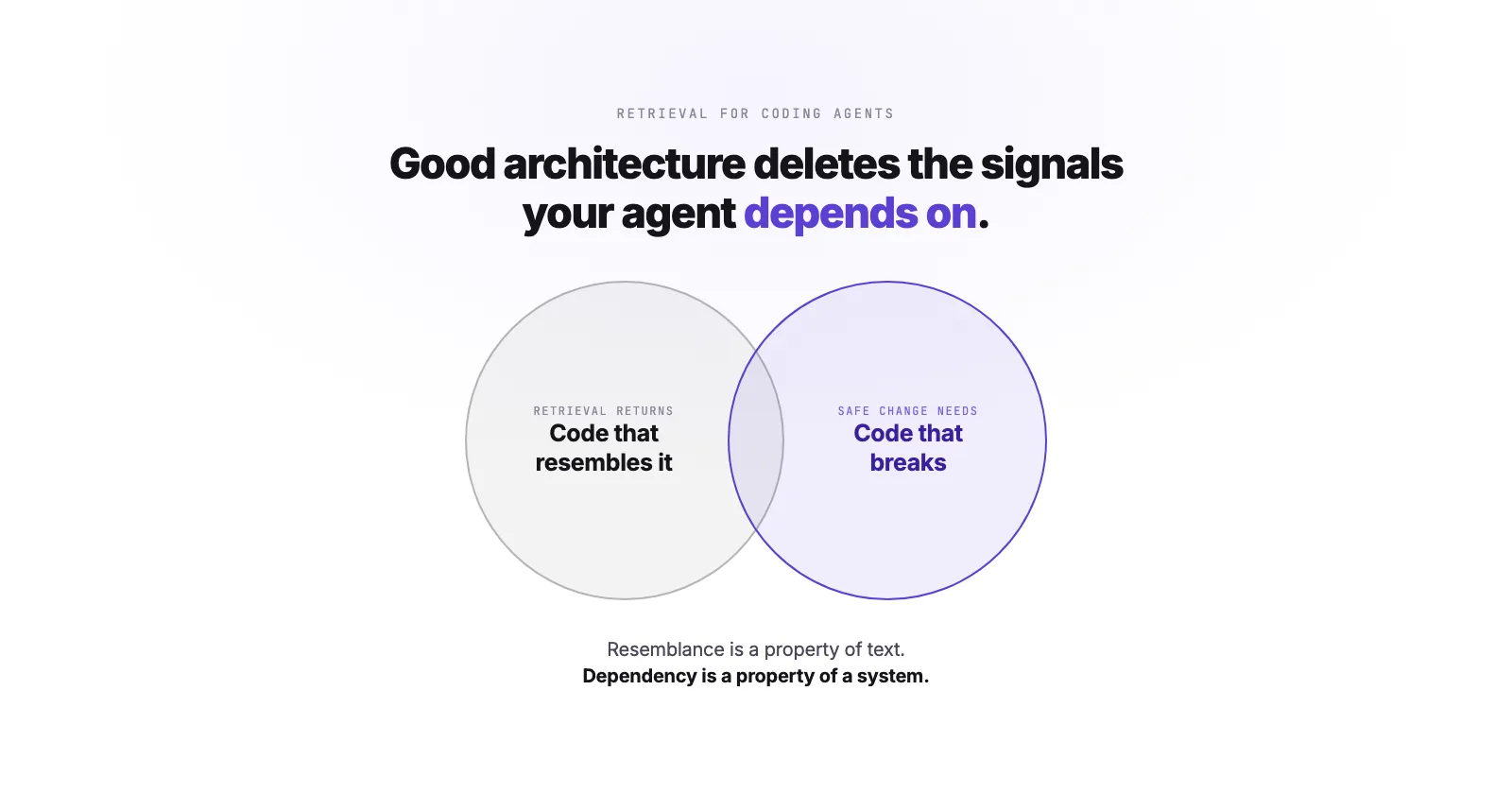
Clean Architecture Removes the Signals Your Agent Needs
Every boundary you draw in clean architecture removes a signal your agent was relying on. That is a structure problem, not a search problem. It's a sharp reminder that organization shapes intelligence, and over-layering can quietly starve the tools meant to help. We appreciate the argument for simplicity here. If you're exploring how systems behave under constraints, our piece on the Forrester function offers a complementary look at mathematical structure in machine learning.

Unlock the Full Potential of Your Coding Agent Subscriptions
Most coding agents promise efficiency, yet many teams barely scratch their surface. This guide cuts through the noise, showing you how to turn a simple subscription into a serious productivity lever. I appreciate the focus on practical, repeatable tactics rather than abstract theory. If you are ready to move beyond basic autocomplete, this is a worthwhile read. For another perspective on pushing tools further, our piece on expanding your tech fluency offers a broader lens worth exploring.
Speed Isn't Everything When AI Does the Work You Used to Own
One near miss, and four months of running agents left a writer asking a sharper question than any bug report: what are you supposed to do while the AI writes the code? The speed is real, but so is the quiet erosion of judgment. This isn't a warning against automation; it's a call to stay present in the loop. If you're navigating similar shifts, our guide to distributed training offers a practical foothold for keeping your skills sharp.

Move Beyond Static Skills to Build Agent Knowledge That Adapts
The panic over agent skills is aimed at the wrong target. Static files aren't the bottleneck; the real shift is treating knowledge as a build artifact, something dynamic and versioned. That costs more than dropping a prompt into a folder. It demands a model where skills evolve with your data, not alongside it. We're not talking about inflation, but about engineering discipline. For a deeper look at how such dynamic thinking applies elsewhere, explore the Forrester Function piece. This is where agent capability gets serious.

Explore adaptive model routing to make multi-agent AI more efficient
Static model assignment is the default in multi-agent systems, but it is also the most expensive. Assigning every task to a frontier model, regardless of complexity, inflates inference costs without improving output quality. Adaptive model routing changes that by matching each task to the right LLM at the moment it arrives. It is a smarter, more accessible approach to cost control. For teams already wrestling with distributed systems, this practical strategy is worth exploring.
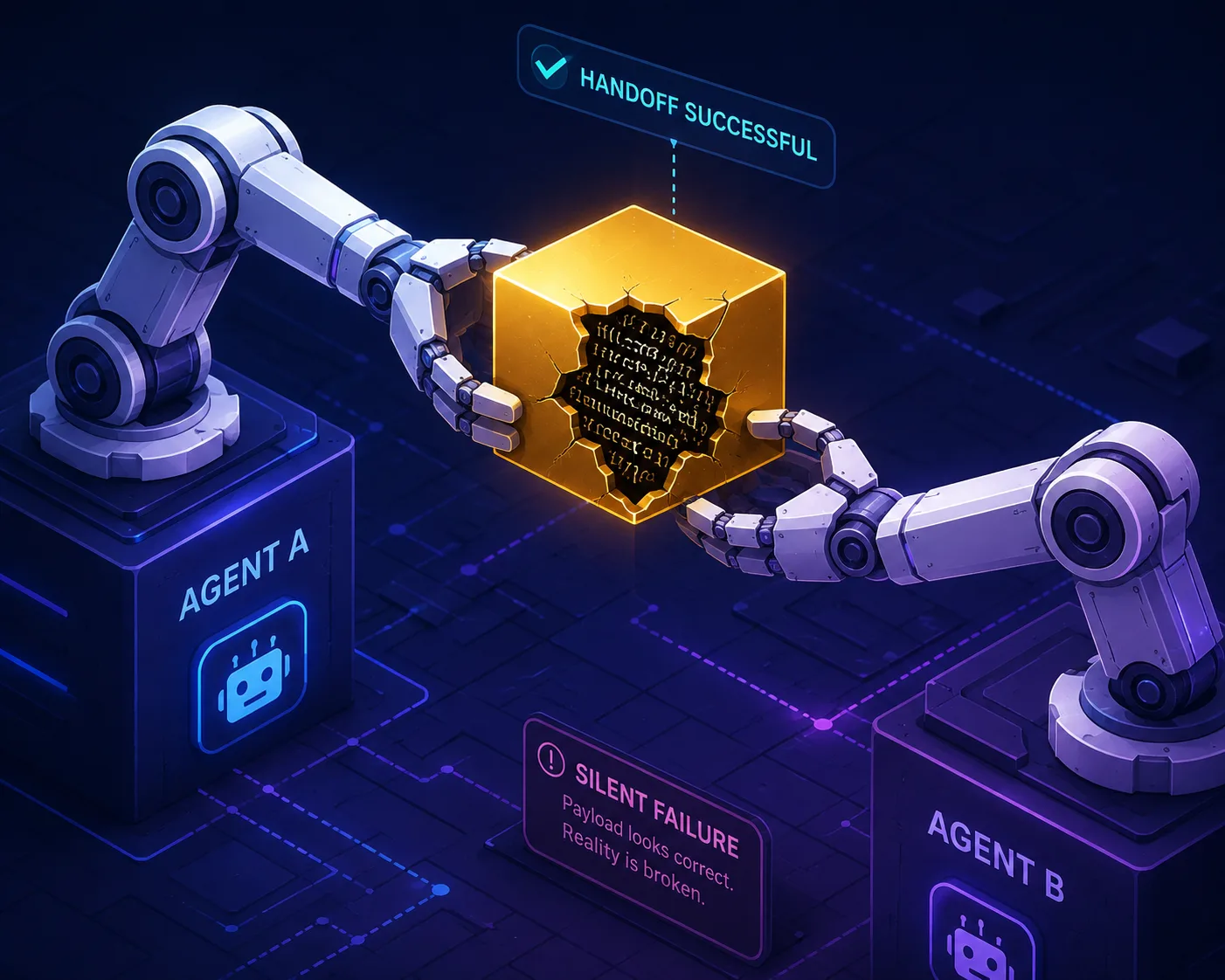
When Data Looks Right but Isn't: Using Watchdogs to Catch Agent Failures
A passing evaluation score can hide a payload that is confidently wrong. That is the failure mode plaguing too many multi-agent systems: they look correct, yet deliver subtly corrupted output. The fix is a watchdog pattern that catches these silent errors before they propagate. This shows you how, with working Python, to build that safety net. It is a practical, necessary read for anyone serious about reliable AI workflows.

Explore the architecture that makes OpenCode a smarter choice for AI coding.
OpenCode has outgrown the conversation about model choice. That freedom matters, but it's no longer the headline. What draws us in is the architecture underneath, and the deliberate trade-offs that shape how it works, especially if you're coming from Claude Code. This isn't just another agent. It's a different way to think about building. If you're also exploring how distributed systems power modern AI, our guide to distributed training offers a useful parallel. For now, let's look at what makes OpenCode's design genuinely different.

A single filter closes the retrieval gap in Azure OpenAI email automation.
Closing an Azure OpenAI assistant's retrieval gap didn't require a new identity platform. Cioffi added one query-time filter and narrowed the assistant's reach. The fix worked because he tested with a low-privilege account, not just clean evaluation scores. That two-account test exposed what his logs already hinted at: the agent answered with the indexer's permissions, not the requester's. It's a thirty-minute check that belongs before any deployment.
Let your spreadsheet define done before your data makes the choice.
Most of us assume our AI agent knows what we want. It does not. It will happily define success for you, often in ways you never intended. We build these systems to be efficient, yet we skip the one step that matters: clarity. If you are tired of guessing why your agent made a call, you will find this exploration of unspoken assumptions essential. It is a practical look at a problem we all share.

Discover how AI agents simplify database setup and troubleshooting
Managing a database shouldn't require a specialist on call for every hiccup. Google Cloud's new AI-powered Database Operations Agents, built on Gemini Cloud Assist, tackle this head-on. The Onboarding Agent simplifies setup, while the Observability Agent automates troubleshooting and tuning across AlloyDB, Bigtable, and Spanner. It's a practical step toward freeing teams from repetitive maintenance. For a broader look at how AI agents are reshaping workflows, our guide on bridging retrieval and action offers useful context.

Diagrid Catalyst 2.0 brings verifiable execution and durable recovery to AI agents
Diagrid Catalyst 2.0 brings durable, verifiable execution to AI agents, and that's a meaningful step beyond the usual framework promises. By layering Dapr-based recovery, signed workflow history, and execution attestation, it tackles the reliability gap that holds many agent deployments back. Architects should weigh this against framework-native durability and established workflow engines, not just benchmark numbers. The operational trade-offs matter. For a broader look at agent orchestration, our piece on Google's open-sourced AX offers useful context. This is worth exploring with clear eyes.

The invisible risk that makes prompt injection a real priority
The expert vote and the incident record are two witnesses telling different stories about the same risk. Prompt injection holds the top spot on the OWASP list, yet it lands at No. 12 in the public record. That gap is not a measurement failure. It is a visibility problem. The attack leaves no CVE behind. Build your controls around your own exposure, and treat the ranking as a map, not a mandate.