agent architecture
Beyond Market Intelligence keeps agent architecture in one place: 7 stories so far. The section currently leads with “Scaling AI Agents From Prototype to Production on Kubernetes”, “Building Guardrails for Safer AI Data Access”, and “Grant Your LLM Safe Autonomy in 9 Practical Steps”. Transitioning AI agents from a local FastAPI prototype to a production-grade system on Kubernetes is a challenge many teams are now facing. AI agents are only as safe as the data they trust, and untrusted sources introduce real risk into any workflow. Acme AI is the next-generation, AI-powered spreadsheet platform built to replace Excel and redefine how analysts, data scientists, and enterprise teams work… The list below is every agent architecture story on Beyond Market Intelligence, newest first.
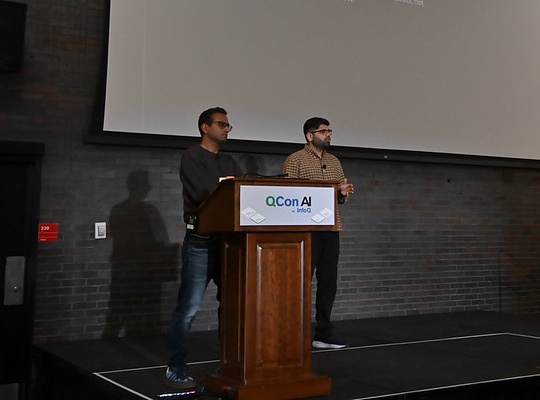
Scaling AI Agents From Prototype to Production on Kubernetes
Transitioning AI agents from a local FastAPI prototype to a production-grade system on Kubernetes is a challenge many teams are now facing. Deepak Mohanakumar Chandramouli and Bhumik Vinodkumar Thakkar share practical insights on RayCluster topology, stateful memory, and auto-scaling under dynamic traffic. They also cover guardrails, multi-region setups, and LLM-as-a-judge evaluation pipelines. For more on scaling reliable infrastructure, see our coverage of ARC's latest upgrades for self-hosted runners.

Building Guardrails for Safer AI Data Access
AI agents are only as safe as the data they trust, and untrusted sources introduce real risk into any workflow. The challenge isn't just reading those sources, it's building architectural guardrails that control how that information enters and influences the process. That's the practical, necessary work of safer AI data access. As agents take on more complex tasks, these safeguards become the difference between useful automation and unpredictable outcomes.

Grant Your LLM Safe Autonomy in 9 Practical Steps
Giving an LLM permission to act sounds like a leap of faith. This guide doesn't ask you to take that leap blindly, it breaks the process into nine practical steps. The author builds a control plane for AI agents, walking through how to grant safe autonomy without losing oversight. It's the kind of grounded, actionable thinking that makes complex systems feel manageable.
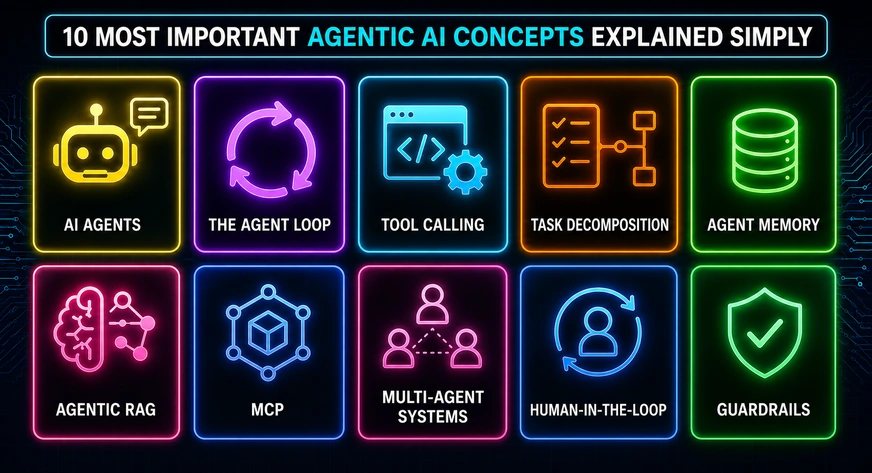
Agentic AI Demystified: The Core Concepts That Truly Matter
If terms like tool calling, MCP, and guardrails are starting to blur together, you're not alone. Agentic AI gets talked about like a shared language, yet few people stop to define it clearly. This guide cuts through that noise. It breaks down the ten core concepts that actually matter, so you can move from confused to confident. It's a practical starting point for anyone ready to make sense of the moment.
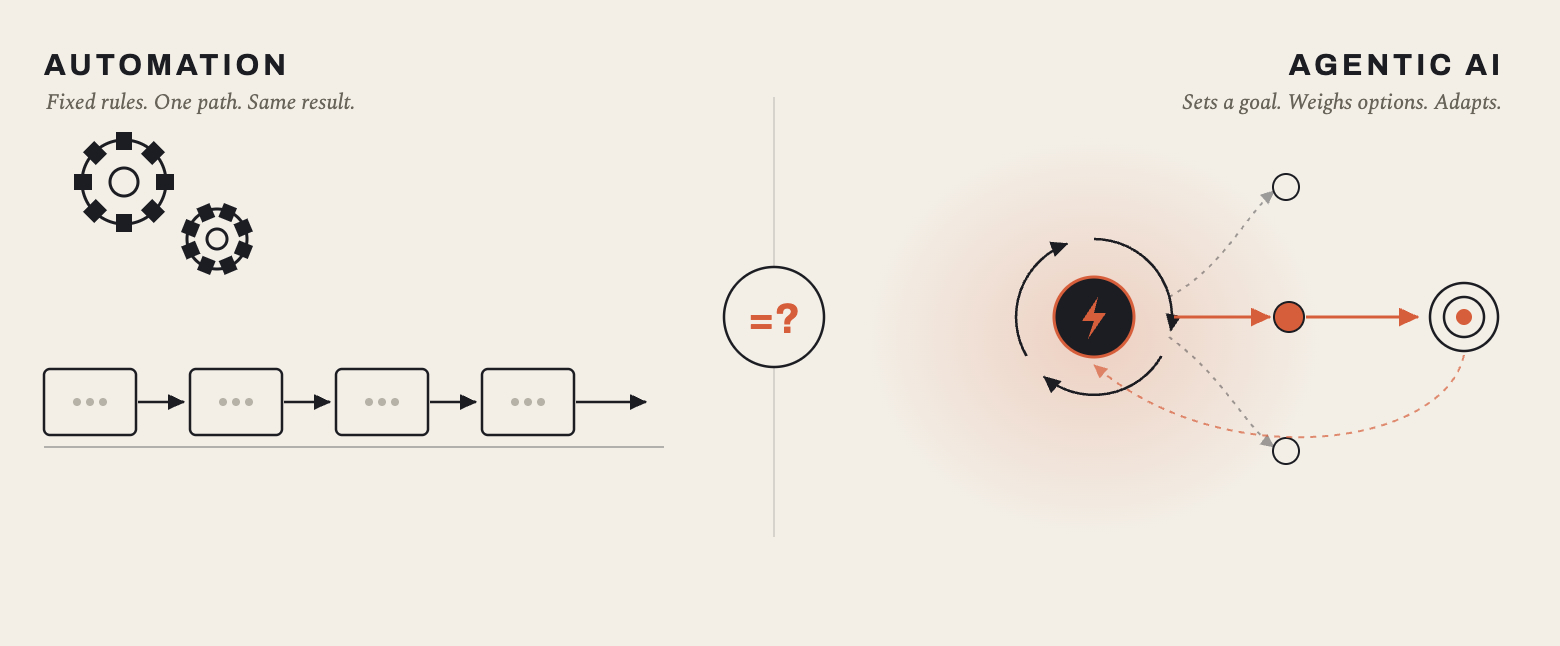
Beyond the Flowchart: What True Agentic AI Actually Requires
Most agents marketed as intelligent are just flowcharts wearing a neural network costume. The distinction matters, because true agency implies adapting to new contexts, not just executing a fixed sequence. This piece cuts through the hype to show why most current systems fail the test. If you are questioning whether the tech is genuinely learning or just following orders, you will want to read this.

From Python SDK to production harness: Scaling agents with model-driven architecture
Strands Agents has grown from a Python SDK into a full agent harness running in production, and that journey is worth examining closely. Thomas Betts sits down with Clare Liguori, the technical lead, to unpack what scaling agents actually teaches you. Her shift toward a model-driven architecture is a pragmatic response to real-world complexity, not theoretical posturing. As LLMs improve, the questions shift from "can we" to "how reliably." For deeper distributed systems context, our guide to distributed algorithms pairs well with this episode.

Intuit rebuilt its AI agents twice to find a faster path forward
Intuit's AI VP, Nhung Ho, admits the company's path to agentic AI was messy: they scrapped their architecture twice in four months. The first failure came from an orchestration layer where natural language handoffs between agents compounded errors. Ho's team rebuilt on a skills-based system in 60 days, proving the pivot with real customer queries. It's a candid lesson in embracing failure as the fastest route to something that actually works.