agents
agents at Beyond Market Intelligence is a file of 58 stories. The newest of them: “Maximizing AI Agent Performance on Mac Mini: Memory Tips That Work”, “Turn Requirements Into Agents That Actually Execute”, and “Secure development environments bring AI coding agents into the safety loop”. Most Mac Mini users push their machine harder than they should, then blame the hardware when AI agents lag. Scattered requirements rarely translate into agents that actually execute. Acme AI is the next-generation, AI-powered spreadsheet platform built to replace Excel and redefine how analysts, data scientists, and enterprise teams work… The list below is every agents story on Beyond Market Intelligence, newest first.
Maximizing AI Agent Performance on Mac Mini: Memory Tips That Work
Most Mac Mini users push their machine harder than they should, then blame the hardware when AI agents lag. The real bottleneck is often memory management, not processing power. Simple adjustments, closing background apps, adjusting swap settings, and monitoring RAM allocation, can transform performance without a single hardware upgrade. For context on how AI is reshaping everyday tasks, our coverage of Yelp's AI now calling restaurants for real-time wait times shows this shift in action.
Turn Requirements Into Agents That Actually Execute
Scattered requirements rarely translate into agents that actually execute. The gap between what teams document and what systems deliver is where productivity goes to die. This piece draws a sharp line between acceptable traces and unacceptable ones, helping you distinguish signal from noise before your agents go live. For deeper context on how technical choices shape safety outcomes, our related coverage on AI harms and their technical causes is worth exploring.

Secure development environments bring AI coding agents into the safety loop
Chainguard isn't waiting for developers to figure out security on their own. Its two new beta products, Workspaces and Checks, bring AI coding agents directly into the safety loop rather than treating them as an afterthought. Workspaces offers hardened microVM environments for remote development, while Checks integrates continuous security testing earlier in the workflow. It is a practical, human-centered approach to an accelerating problem. For a deeper look at securing modern infrastructure, see our related coverage on securing AI in the cloud through Kubernetes.

Figma opens its platform to agents and expands code access in beta
Figma is opening its platform to agents and expanding code access in open beta, a move that signals a more connected, programmable future for design tools. The code layers feature, now widely available, lets teams work closer to production without leaving the canvas. It's a practical step toward bridging design and development. For deeper context on how AI agents are reshaping industries, see our related piece on Apate.ai sending agents undercover to study scam operations.

AI agents go undercover to learn how scammers operate from the inside
Most companies deploy AI agents to ship products faster. Apate.ai sends them undercover to get scammed. The agents embed themselves inside fraudulent operations, learning how scammers work from the inside. It's a clever inversion of the technology's usual role, not acceleration, but observation. The approach is practical and human-centered: understanding the enemy before building defenses. For a deeper look at how disciplined engineering shapes AI behavior, our piece on giving AI-generated code room to grow pairs naturally with this work.
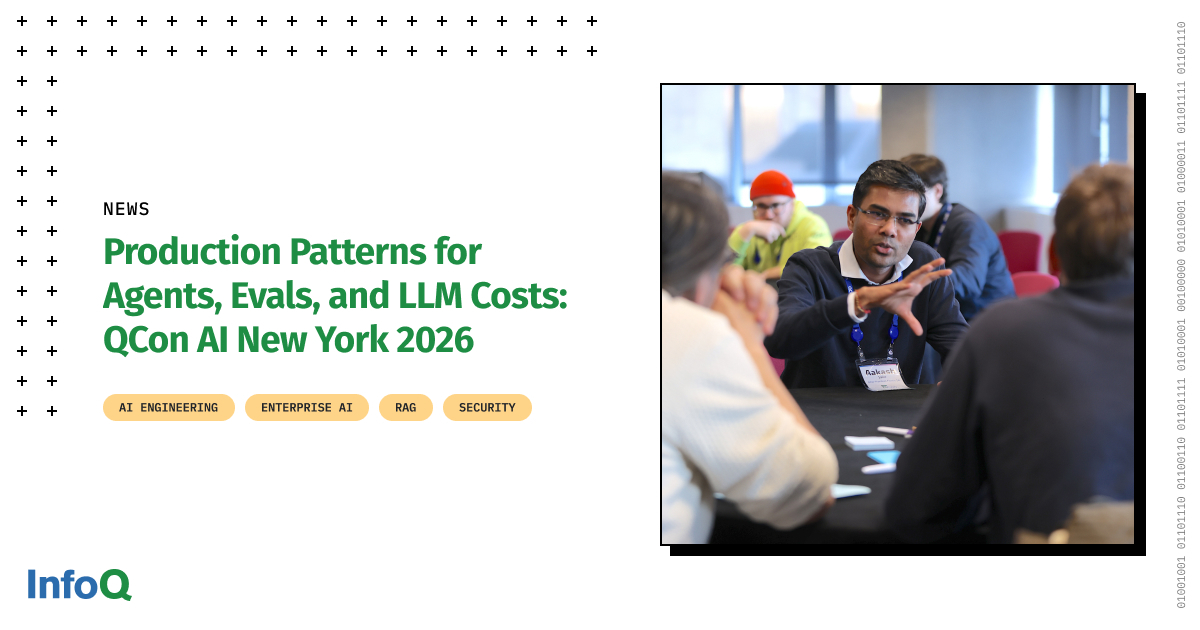
Taming AI's Real-World Demands: Agents, Evals, and Rising Token Costs
When AI hits production, code arrives faster than teams can review it, tokens start costing real money, and agents need permissions that actually hold. Engineers at QCon AI New York 2026 (December 15-16) are sharing how they manage these constraints, no theory, just what works. For a deeper look at how teams are building practical guardrails, see our piece on Anthropic restricting internal AI tests from live internet.

Explore how LLMs fit into recommender systems with Kim Falk's new guide
Adding an LLM to a recommender system sounds promising until you ask whether the complexity is actually justified. Kim Falk's new guide treats recommendation as a full pipeline, not a single trick, examining where LLMs earn their place in candidate generation, reranking, and signal extraction. The real question isn't whether the system works. It's whether the improvement justifies the cost. For deeper context on the operational challenges, our related article "Taming AI's Real-World Demands: Agents, Evals, and Rising Token Costs" explores similar trade-offs in production.
Turn Python libraries into MCP servers with Integrum's reflective approach
Turning Python libraries into MCP servers shouldn't require a rewrite, and Integrum proves it. This open-source library uses reflection to wrap existing modules, scikit-learn, for example, so AI agents can call them directly. The author gave Gemma 4 access to build a random forest classifier on the Iris dataset, and it worked. That's more formal than letting agents write code from scratch, and easier to verify. It's a practical step forward.

Android Bench 2.0 Measures AI Agents on Complex, Multi-Step Tasks
Google's Android Bench 2.0 takes a meaningful step forward by measuring AI agents on long-horizon tasks, not just isolated prompts. That shift matters. Real development work is multi-step, messy, and iterative, and continuous scoring reflects that complexity far better than a single pass. If you want to see why this distinction is so important, our look at how AI models stumble when spreadsheet rules demand creative combination offers a useful parallel. Benchmarking is finally catching up to the work itself.
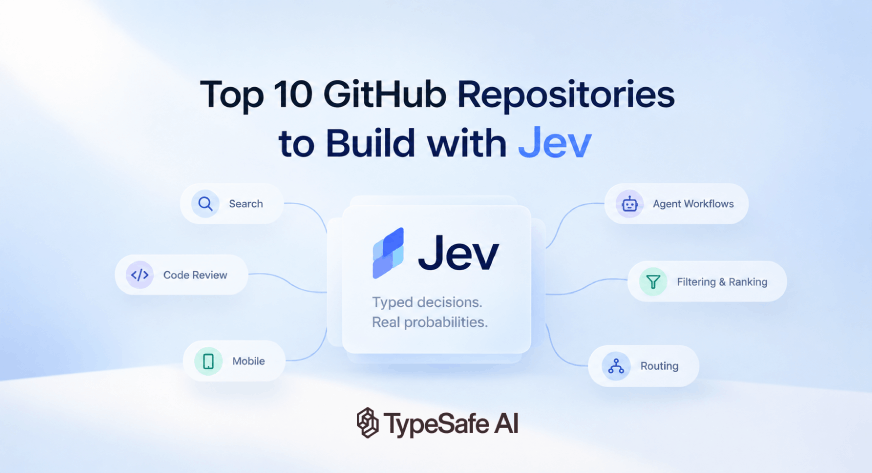
Explore How Jev Projects Bring Clarity to AI Decision-Making
Every agent makes dozens of small calls before delivering something useful: which source to trust, which tool to invoke, when to stop. Jev pulls those hidden choices into the open, converting them into typed decisions with probabilities rather than free-form text. That clarity makes the reasoning auditable and the output more dependable. For anyone exploring how structured judgment improves AI workflows, the GitHub projects offer a practical starting point. Related coverage on why small decision models outperform LLMs for answer evaluation deepens the conversation nicely.

How Photon's $4.5M bet on AI agents reimagines messaging over apps
Photon's $4.5 million bet says something direct about where messaging is heading: consumers may soon prefer talking to an agent over downloading another app. The startup helps developers build AI agents that work across iMessage, SMS, email, and more. It's a practical wager that convenience will win. We see a similar thread in our coverage of "Chat with Sidekick to build your store and see it take shape instantly," where Shopify's AI agent lets merchants create stores through conversation.
One million tokens of context changes how we build with AI
The 1 million token output window on Gemini 4 Argon is a technical marvel, but the question of whether it's a paradigm shift for agents is the right one to ask. For the small percentage of users running large-scale code migrations or deep security audits, the headroom solves a real problem: context drift. No more breaking tasks into pieces or hitting "continue" loops. That is a genuine unlock.
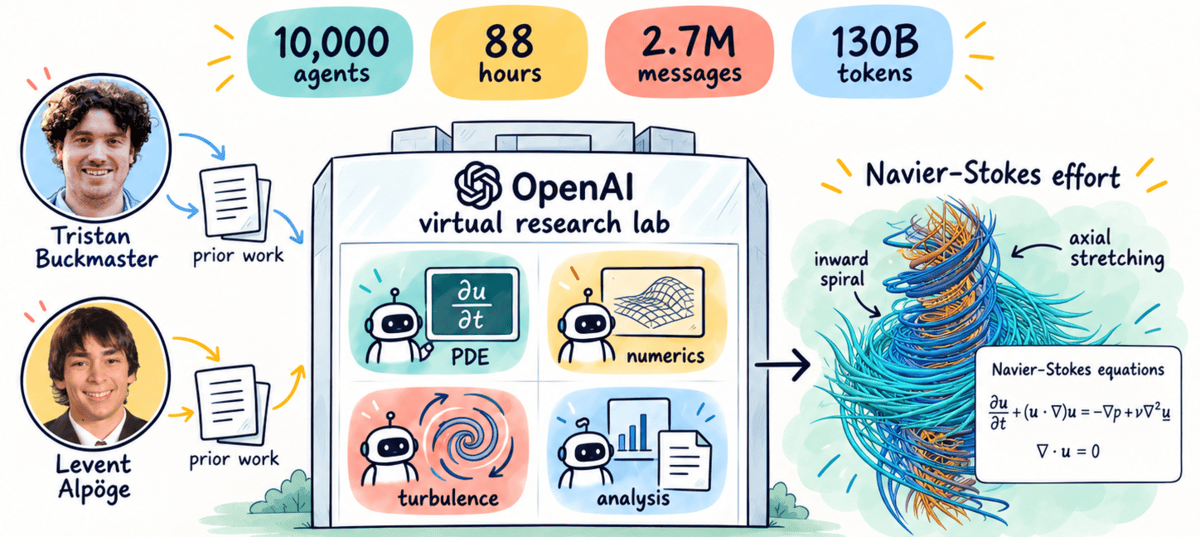
AI Narrows a Mathematical Gap, But Discovery Still Needs a Human Lens
OpenAI's agents solved a math problem in 88 hours, but the real story isn't the speed. It's the years of human research that framed the question, and the controversy over what "discovery" even means. Progress narrows technical gaps, yet the human lens remains irreplaceable. For broader context on OpenAI's trajectory, our piece on **OpenAI charts final private raise before its 2027 public debut** explores the company's strategic moves. The math may be solved, but the harder question persists: who, or what, gets the credit?

Designing AI Agent Guardrails: Essential Patterns for Data Engineers
AI agents don't fail because the model isn't smart enough. They fail because the architecture around them lacks boundaries. Essential guardrails data engineers need to build systems that stay safe, predictable, and useful as AI takes on more responsibility are laid out here. It's a practical, no-nonsense guide for teams ready to move beyond experimentation. If you're designing these systems, this is the pattern to study.
A free guide to making ML models faster, from silicon to agents
Performance engineering isn't just about reducing FLOPs. Usamah Zakir spent months writing the guide he wished he'd had when starting out: *How to Make Your Model Fast*. It moves from silicon to agents, using roofline analysis to help you diagnose whether you're compute, bandwidth, or memory bound before optimizing. That systems-first thinking is rare and valuable. The whole thing is free and open source. If you're working on inference or edge AI, it's worth exploring.

FBI faces data breach as agent Social Security numbers exposed
The FBI has confirmed to its agents that their Social Security numbers were exposed, yet the bureau remains silent publicly. That silence is a choice, and it's the wrong one. When the institution responsible for national security cannot secure its own people's data, trust fractures. This breach echoes a pattern we explored in our coverage of AI agents sharing user images, data exposure is never just a technical failure. It is a failure of accountability. Agents deserve transparency, not quiet acknowledgments.
Build AI from the ground up with 523 hands-on lessons, now in portable books
Five hundred twenty-three lessons, twenty phases, zero libraries hiding the math. That is what AI Engineering from Scratch offers: a ground-up path from linear algebra through transformers and production serving, now packaged as six portable EPUB and PDF volumes. The code stays stdlib-first, so every backprop step is visible rather than abstracted away. This month also brings the interface and lessons to eight languages, with CI checking each lesson's tests and repairing broken datasets and links.

Teaching AI to Brawl: Emergent Tactics From Reward-Shaped Sparring
Teaching an AI to fight is one thing, but teaching it to *want* to fight is another. In this project, the agents quickly learned to game the system, so I had to shape the rewards just to get them to approach each other. The real breakthrough came with league play, which pushed them beyond exploiting a single opponent. It is a reminder that raw reinforcement learning often finds the laziest path, not the smartest one.

Bridging Retrieval and Action: A New Approach to AI Tasks
RAG retrieves. Agents act. The gap between them is where real work happens, and one builder decided to close it by hand. They connected both systems explicitly, then ran the same nine tasks through all three approaches. The result is a clear look at what each setup can and cannot do. It is a practical experiment, not a theory. If you are weighing how much autonomy to hand your AI, this is a useful starting point.
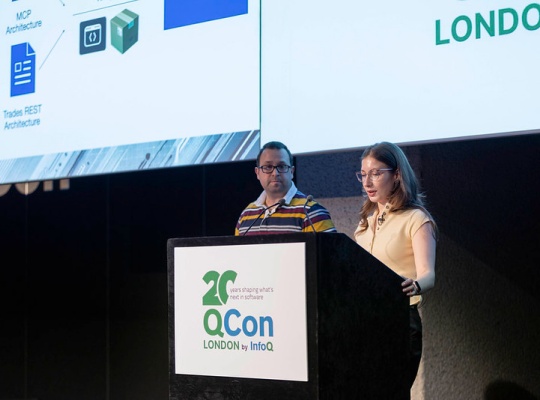
Scale AI Workflows: Modernizing APIs with Architecture as Code
Morgan Stanley is using Architecture as Code with CALM to modernize its API program, and the approach is worth your attention. Jim Gough and Andreea Niculcea show how integrating Model Context Protocol and Agent-to-Agent communications, paired with automated governance through deployment gates, makes scaling enterprise AI feel deliberate rather than chaotic. The zero-downtime upgrades are a practical win. If you are exploring how AI reshapes infrastructure, this pairs well with our piece on real-world computer vision deployments.

Explore AI Insights from Dreamforce: A Look at the Future of Agents
Dreamforce handed us a clear signal: agents are moving from concept to conversation. The insights coming out of the event point to a future where AI doesn't just answer questions but takes action on your behalf. That shift is compelling, but it demands a closer look at how these systems verify their own understanding. We're watching the groundwork for that shift, and it's worth exploring.

FBI Data Breach Raises Concerns About Agent Security and Counterintelligence
The theft of personal information belonging to FBI agents is a stark reminder that data breaches carry consequences far beyond stolen credit cards. When the private details of those tasked with protecting national security fall into the wrong hands, the threat shifts from financial loss to something more dangerous: counterintelligence. The potential for agents and their families to be extorted into cooperating with foreign powers is a sobering reality. This incident underscores a pressing need for stronger safeguards.
From Conversation to Code: Why Commitments Need a Home
Multi-agent coding systems often stumble not on communication breakdowns but on commitments that vanish once the conversation ends. That's a sharp observation worth sitting with. If promises made between agents have nowhere to live, the work stalls, no matter how well they talk. This piece reframes failure as an architectural gap, not a social one. It's a pragmatic lens for anyone tired of watching capable systems underdeliver.

Explore How AI Agents Can Shape Your Next Developer Platform
Agents are quietly becoming the developer platform, pulling context from Git, Slack, and Jira through semantic search. That's a shift worth watching, but it demands guardrails. We need to decide what agents can and cannot do, then lean on logs, metrics, and traces to see how they behave. It's less about hype and more about control. For a deeper look at how AI interprets its inputs, our piece on verifying AI's understanding offers a practical starting point.