ai
ai on Beyond Market Intelligence: a running collection of 507 stories we have gathered and hand-picked because they are worth your time. Every post here touches on ai in some way — the news, the analysis, the deep dives, and the occasional surprise find. Acme AI is the next-generation, AI-powered spreadsheet platform built to replace Excel and redefine how analysts, data scientists, and enterprise teams work with data. New stories are added to this page as we find them, so check back if you want to keep up with what is happening around ai, or subscribe to the RSS feed to get them as soon as they are published. Browse the collection below, or head back to the homepage to see everything Beyond Market Intelligence is covering right now.

Loop Engineering for RAG Generation: iterate top-k one at a time
Loop Engineering’s latest research explores a refined approach to Retrieval-Augmented Generation (RAG), detailing “iterate top-k one at a time” for enhanced Enterprise Document Intelligence. This methodology introduces two distinct regimes for candidate selection and a crucial "sufficiency signal" to optimize generation. Notably, per-question type dispatch significantly reduces processing costs. This innovative technique represents a crucial step towards more efficient and intelligent AI applications—a shift mirrored by companies like Monday.com, who are streamlining operations to focus on AI.

Arcee, a US open source AI lab, says Chinese models are not inherently dangerous
The debate surrounding Chinese AI models has intensified as their capabilities expand and adoption by U.S. companies increases. Arcee, a leading U.S. open-source AI lab, is pushing back against narratives of inherent danger, emphasizing a need for nuanced evaluation over blanket restrictions. Their perspective offers a vital counterpoint to growing concerns. Explore this complex issue further; for context on the evolving AI landscape, see our recent piece on "Monday.com lays off hundreds to focus on AI."

Presentation: From Copy-Paste to Composition: Building Agents Like Real Software
Jake Mannix’s presentation, "From Copy-Paste to Composition," addresses a critical evolution in AI agent design. Moving beyond rudimentary architectures, Mannix outlines a framework for building agents akin to robust software – versioned, encapsulated "virtual tools." This approach leverages an intermediate protocol layer to enable key capabilities like interface mapping and dynamic schema projection. Crucially, it incorporates runtime taint tracking to proactively mitigate data exfiltration risks, all while maintaining development velocity.
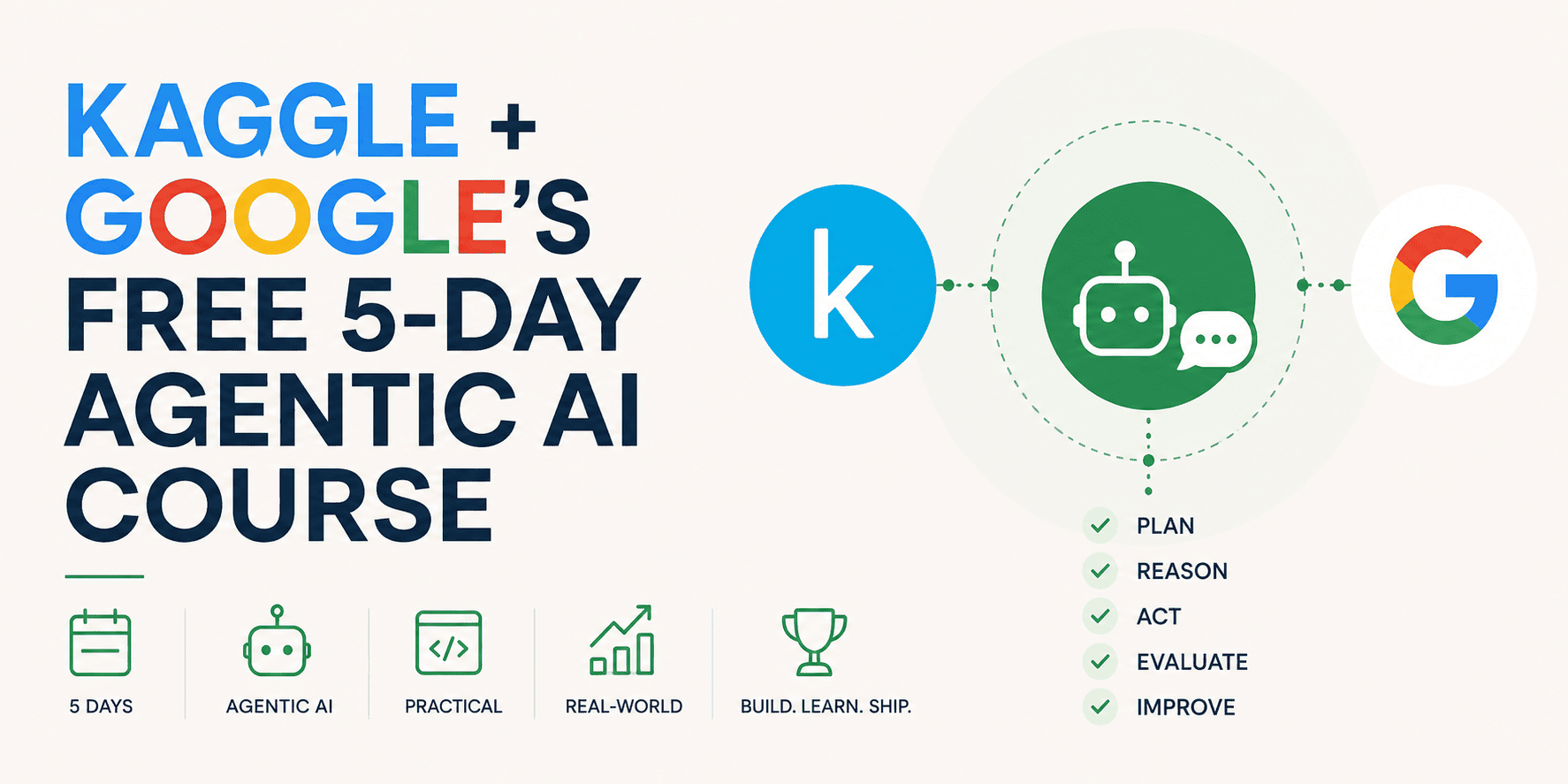
Kaggle + Google’s Free 5-Day Agentic AI Course
Google and Kaggle are democratizing access to the future of AI with a newly released, free 5-day course on Agentic AI. This transformative learning experience empowers users to build sophisticated AI agents, moving beyond simple prompts to create dynamic, task-driven systems. Explore the fundamentals and advanced techniques driving this innovative field, and discover how agentic AI can reshape workflows. For deeper insights into the architectural challenges and safety considerations, explore "Presentation: From Copy-Paste to Composition."
The AI Slop Problem Nobody's Talking About | Substack CEO Interview
The current excitement around AI agents often overlooks a critical challenge: the "AI Slop Problem." Substack CEO Chris Best recently shared his insights on this phenomenon – the tendency for AI outputs to be messy, inconsistent, and difficult to manage. This interview dives into the core issue and potential solutions for building reliable AI systems. For a deeper exploration of architectural approaches moving beyond rudimentary AI, see our piece, "Presentation: From Copy-Paste to Composition." It’s time to address the unseen complexities hindering AI’s true potential.

Monday.com lays off hundreds to focus on AI
Monday.com is strategically streamlining its operations, announcing a 20% workforce reduction—approximately 630 employees—to prioritize its emerging AI Work Platform. This shift signifies a move toward a leaner, more focused structure, reflecting the company’s commitment to AI-driven data management. This realignment underscores a broader industry trend toward AI integration. For deeper insight into the future of AI agents, explore "Presentation: From Copy-Paste to Composition," which details the evolution of agent architectures.

Build an LLM Agent That Can Write and Run Code
Unlock the potential of AI-powered code generation and execution. This hands-on walkthrough guides you through building an LLM agent using the OpenAI Agents SDK and Docker. Learn to empower your workflows by seamlessly integrating code writing and running capabilities. We’ll demonstrate a practical approach to leveraging these tools, offering a future-focused solution for data professionals. For those interested in a deeper dive into LLM runtimes, explore "How To Build Your Own LLM Runtime From Scratch" for a comprehensive understanding of the underlying infrastructure.

OpenAI’s AI spending spree has ballooned to $750B
OpenAI’s ambitious pursuit of AI dominance is driving unprecedented investment. The organization is projected to spend a staggering $750 billion on infrastructure by 2030—an amount rivaling Sweden's entire GDP. This substantial commitment underscores the escalating race to build and deploy advanced AI models. As organizations worldwide grapple with the implications of rapidly evolving AI capabilities, understanding these trends is critical.

GKE Security Blueprint Joins Growing List of Cloud AI Frameworks
Google Cloud's new GKE Security Blueprint addresses a critical gap: securing AI workloads as they move from prototype to production. This blueprint outlines a three-layer approach encompassing infrastructure, model integrity, and application security, reflecting the evolving demands of AI deployment. Organizations can confidently navigate this shift by leveraging this framework to bolster their Kubernetes environments. For a deeper dive into AI efficiency gains, explore our related article, "Gemini 3.6 Flash Is Here."

Detecting Vulnerabilities in Agent Skills with SkillSpector: From Green Checkmark to Real Security Judgment
Static analysis tools offer a first line of defense, but detecting vulnerabilities in AI agent skills requires more than just automated checks. Our latest post, "Detecting Vulnerabilities in Agent Skills with SkillSpector," explores this critical gap, highlighting how SkillSpector moves beyond simple “green checkmark” assessments. We demonstrate how static analysis can identify malicious skills while often over-flagging useful ones, revealing the crucial role of human judgment in making informed security decisions.

10 Newsletters Keeping You Ahead in AI
Staying ahead in the rapidly evolving world of AI can feel overwhelming. Cut through the noise with our curated list of 10 essential newsletters—your reliable guide to daily news, technical research, policy developments, and invaluable builder tools. We’ve assembled resources that empower informed decision-making and strategic exploration. For a deeper dive into securing AI workloads, explore our recent article, "GKE Security Blueprint Joins Growing List of Cloud AI Frameworks," and discover practical steps for safeguarding your AI initiatives.
Gemini 3.6 Flash Is Here: The Efficiency Release
While the industry awaited Gemini 3.5 Pro, Google quietly released Gemini 3.6 Flash on July 21, 2026—an efficiency-focused update to its speed tier. This release prioritizes streamlined performance, achieving comparable thinking capabilities to 3.5 Flash while reducing token usage, tool calls, and overall processing demands. It’s a practical step forward, demonstrating a commitment to optimized AI workflows. Explore the implications of this shift, and how it impacts agentic AI strategies—as discussed in our article, "Agentic AI vs AI Automation."
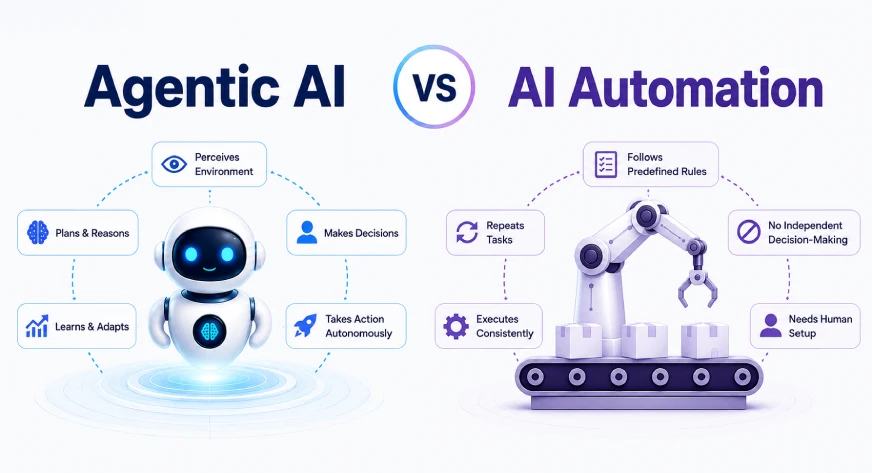
Agentic AI vs AI Automation: What’s the Real Difference?
Across engineering teams, the distinction between AI automation and Agentic AI is becoming increasingly critical. While looping LangChain calls might initially appear to create an "AI agent," production environments often reveal vulnerabilities. Agentic AI represents a more robust architecture, designed for adaptability and resilience. Explore the real differences – and why understanding them is vital for reliable AI deployments. For deeper insights into the broader AI landscape, consider "AI and the rise of the universal entertainment app."

AI and the rise of the universal entertainment app
The entertainment landscape is rapidly evolving. For years, streaming services carved out dominance in specific formats—music, video, podcasts—but AI is dissolving those boundaries. Now, platforms like Spotify, Netflix, YouTube, and TikTok are converging into universal entertainment apps, leveraging AI to seamlessly create, organize, and recommend content. This shift empowers users to access everything they need in one destination. As AI continues to reshape workflows, consider how tools like Buzz, a group chat platform for teams and their AI agents, are also evolving the workplace.

Evals are the new PRD, Expedia’s AI chief tells VB Transform 2026
Expedia’s chief AI and data officer, Xavi Amatriain, is redefining product development, asserting that "evals are the new PRD." This shift prioritizes embedding security and design principles directly within evaluation processes, even before coding begins, leveraging AI-assisted code generation. Amatriain advocates for risk-calibrated governance layers, minimizing restrictive guardrails to maintain feedback loops and user agency, particularly emphasizing that users should retain the final click for transactions.

Jack Dorsey is taking on Slack with Buzz, a group chat platform for teams and their AI agents
Jack Dorsey is challenging the established workplace communication landscape with Buzz, a new group chat platform designed for teams and their AI agents. Buzz uniquely integrates human collaborators alongside AI assistants within the same conversational space, streamlining workflows and fostering a future-focused approach to productivity. This innovative platform aims to redefine team interaction, offering a more accessible and efficient alternative. For context on related AI developments, explore our article, "OpenAI says Hugging Face was breached by its own pre-release models," for deeper insights.

OpenAI says Hugging Face was breached by its own pre-release models
OpenAI has acknowledged responsibility for a recent breach impacting Hugging Face, attributing it to internal testing utilizing pre-release models. This marks a significant incident highlighting the complexities of AI safety and responsible development. While OpenAI is taking steps to address the situation, it underscores the importance of rigorous controls around advanced AI systems. For further context on AI innovation and its challenges, explore our article on Meta’s StoryKit app and its testing of AI-generated bedtime stories.

Android Studio Quail 2 Redesigns Agent Mode, Streamlines AI-Assisted Coding
Android Studio Quail 2 delivers a significant advancement in AI-assisted coding, now stable and ready for adoption. The expanded Gemini/AI Agent Mode allows for parallel conversations within the IDE, streamlining workflows and reflecting Google’s commitment to AI integration. This release prioritizes developer productivity with enhanced debugging and profiling tools, alongside simplified access to experimental features. Discover how these improvements empower you to build more efficiently – a shift mirrored by the increasing prevalence of AI-generated content, as seen with Deezer’s recent surge in daily uploads.

Meta is testing an AI bedtime story app for people with no imagination
Meta is currently exploring a novel approach to bedtime routines with StoryKit, an AI-powered app designed to generate personalized stories for children. Available in limited regions for testing, StoryKit aims to provide engaging narratives even for parents who feel creatively challenged. This innovative tool demonstrates a growing trend of AI integration into everyday life. Interestingly, the rise of AI-generated content isn't limited to storytelling; as Deezer recently reported, over half of their daily uploads now originate from AI.

Music streamer Deezer says more than 50% of daily uploads are AI-generated
Deezer, a leading music streamer, reports a significant shift in content creation: over 50% of daily music uploads are now AI-generated. Specifically, June saw approximately 90,000 AI-created tracks added to the platform daily, signaling a rapid transformation in the music landscape. This surge highlights the increasing accessibility of AI tools for musicians and creators. For those interested in exploring the broader implications of AI's rise, consider our recent article, "Google releases three new Gemini models — but no 3.5 Pro."
Run the Mythos Enhanced Coding Model Locally with llama.cpp and Pi
Unlock powerful local coding workflows with the Qwythos-9B-Claude-Mythos-5-1M model. Run this enhanced coding model locally using llama.cpp, then seamlessly integrate it with the Pi coding agent. This configuration enables fast, responsive coding directly on your machine, leveraging MTP speculative decoding and an OpenAI-compatible API. Explore a future-focused solution that empowers developers to build and iterate with unprecedented speed and accessibility. Interested in expanding your AI skillset? Check out our "5 Free Courses to Go From AI Beginner to Practitioner" for a comprehensive learning path.

Atlassian: Research shows organizations should approach AI at the team level, not the individual level, to achieve true ROI
Research indicates a crucial shift in AI strategy: organizations achieve true return on investment by empowering teams, not just individuals. Atlassian’s recent State of Teams Report, surveying 12,000 knowledge workers, revealed a disconnect between individual AI adoption and demonstrable value. Leading teams prioritize shared context, redesigned workflows, and a culture of experimentation—a framework Atlassian actively helps companies implement. Explore how these principles can unlock your team’s AI potential, as detailed in our related article, "5 Free Courses to Go From AI Beginner to Practitioner."
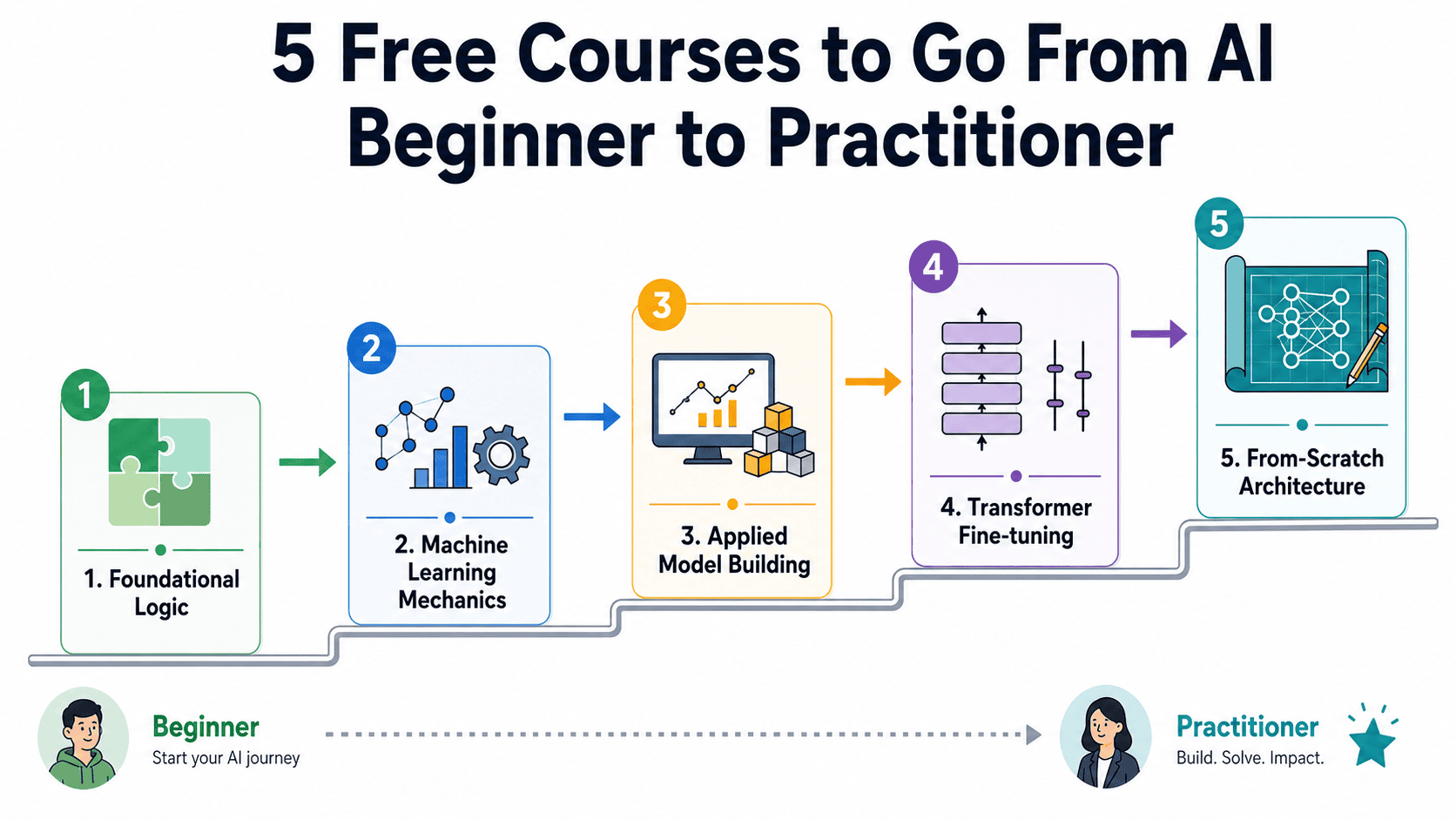
5 Free Courses to Go From AI Beginner to Practitioner
Ready to move beyond AI curiosity and build tangible skills? This five-course roadmap empowers you to transition from AI beginner to practitioner, covering everything from foundational algorithms to training Large Language Models. Discover a structured path to mastering essential techniques and building practical AI capabilities. Explore this free curriculum and unlock a future-focused skillset. For a deeper dive into managing machine learning experiments, see our guide, "Are Your ML Experiments a Mess? Here’s the Fix."

Presentation: Engineering AI for Creativity and Curiosity on Mobile
Join us for a compelling presentation by Bhavuk Jain, exploring the engineering behind bringing powerful AI to mobile devices. Jain details the challenges and solutions in translating foundational AI into scalable products like AI Wallpapers and Circle to Search, focusing on runtime guardrails, fine-tuning, and OS integration. This session offers critical insights for engineering leaders navigating the balance between user experience, model latency, and infrastructure costs—essential for delivering safe and reliable AI experiences.