ai
Beyond Market Intelligence keeps ai in one place: 790 stories so far. The section currently leads with “As Code Velocity Surges, Spotify Reinforces Quality Controls for AI Development”, “Ten Hugging Face Models Reshaping How Data Works in 2026”, and “GitLab 19.4 Empowers Teams with Goal-Driven AI and Granular Cost Oversight”. When AI-assisted development more than doubled Spotify's monthly merged changes, the company didn't just celebrate the velocity, it reinforced quality controls. Ten Hugging Face models are quietly reshaping how data moves through text, vision, audio, and retrieval pipelines in 2026, and that shift is worth paying attention to. Acme AI is the next-generation, AI-powered spreadsheet platform built to replace Excel and redefine how analysts, data scientists, and enterprise teams work… The list below is every ai story on Beyond Market Intelligence, newest first.

As Code Velocity Surges, Spotify Reinforces Quality Controls for AI Development
When AI-assisted development more than doubled Spotify's monthly merged changes, the company didn't just celebrate the velocity, it reinforced quality controls. That's the right move. Faster code means little without reliability. Spotify is now adapting its testing, observability, and rollback capacity to match this new pace. It's a practical, human-centered response to a surge that could easily overwhelm engineering teams. For more on how AI is reshaping development workflows, see our coverage of GitLab 19.4.

Ten Hugging Face Models Reshaping How Data Works in 2026
Ten Hugging Face models are quietly reshaping how data moves through text, vision, audio, and retrieval pipelines in 2026, and that shift is worth paying attention to. These aren't speculative projects, they're tools you can use today. If you've ever felt constrained by a tool that asks you to wait for answers a local model already knows, our related article "Stop Waiting for Answers Your Local Model Already Knows" explores that exact friction.

GitLab 19.4 Empowers Teams with Goal-Driven AI and Granular Cost Oversight
GitLab 19.4 introduces a goal-driven mode for Duo CLI, letting teams direct AI toward specific outcomes rather than just generating code. Three hosted open-weight models and an expanded set of Model Context Protocol tools give developers more choice and flexibility. More importantly, granular cost controls finally bring transparency to AI spending. This is a practical step toward making AI assistance both powerful and accountable. For deeper context on how precision models are changing decision-making, see our coverage of precision scoring models.

Self-driving trucks gain momentum as regulatory path clears
Self-driving trucks are finally gaining real momentum, and the regulatory path is clearing. That's worth paying attention to. For years, autonomous freight felt perpetually distant. Now the pieces are aligning. Progress isn't just about trucks, either. It's about how AI learns and improves. Our piece on teaching AI to learn from screen video explores that exact challenge, how systems refine themselves through visual feedback. The future of transportation is being built on these quieter breakthroughs, not just the headlines.
Teaching AI to Learn From Screen Video and Improve Over Time
You've built the control loop, programmatic inputs, screen capture as visual feedback. The missing piece is an AI that actually *watches* the screen before deciding what to do next. Frustratingly, most models treat visual data as optional. What you need is a system with persistent memory that learns from every interaction, not one that forgets what it saw moments ago. For a deeper look at managing memory efficiently, our piece on adaptive hierarchical routing explores how structured recall can preserve context without drowning in data.

How benchmarks must evolve to keep pace with modern AI
Benchmarks are falling behind. As AI-native tools like TypeSafe's Jev prove that speed and efficiency can outpace larger models, the old metrics of raw token volume no longer tell the full story. We need evaluations that measure practical outcomes, how quickly a model delivers value, not just how many words it generates. That shift is overdue. For deeper context, see our coverage of "TypeSafe's Jev hits $7.5B valuation by outpacing LLMs with fewer tokens." It's time to measure what matters.

TypeSafe's Jev hits $7.5B valuation by outpacing LLMs with fewer tokens
Jev's $7.5 billion valuation is impressive, but what truly grabs our attention is the claim behind it: TypeSafe says Jev works faster and uses far fewer tokens than LLMs. That efficiency explains why both individual users and large corporations are excited. It suggests a smarter approach to AI, not just a bigger one. For a deeper look at how decision-first models prevent risky AI actions, see our related article on that topic.

Why we project humanity onto AI: and what that means for us
We are wired to care for the artifacts that seem to care for us. Dr. Sherry Turkle captures this pull perfectly: even the most primitive exchange with a relational object draws us in. That instinct explains why AI feels personal, even when we know it is not. It also explains why we must stay clear-eyed. The warmth is real; the judgment is ours. For more on navigating that balance, our piece on keeping your judgement amid the AI sales pitch pairs well here.

Ben Affleck brings unexpected credibility to thoughtful AI conversations
Ben Affleck isn't just a Hollywood star who dabbles in tech on the side. He's going viral for a reason: his conversations about neural networks, transformers, and open weights reveal a genuine depth of knowledge. He sold his own AI filmmaking startup to Netflix earlier this year. That kind of experience earns credibility. It's a reminder that thoughtful voices on AI can come from unexpected places. For more on separating signal from noise, read *Three moves to stay clear-eyed when every vendor sells AI*.

From prison to purpose: AI opens a second act for returning citizens
Richard Bronson knows a thing or two about second acts. The former Stratton Oakmont partner, who served federal time for securities violations, is now channeling that experience into Commissary Club, a startup using AI to help returning citizens rebuild their lives. Jobs, housing, community, even dating. The tools are practical, but the mission is bigger: proving that a record doesn't have to define a future. It's a thoughtful, human use of AI, and one worth watching closely.
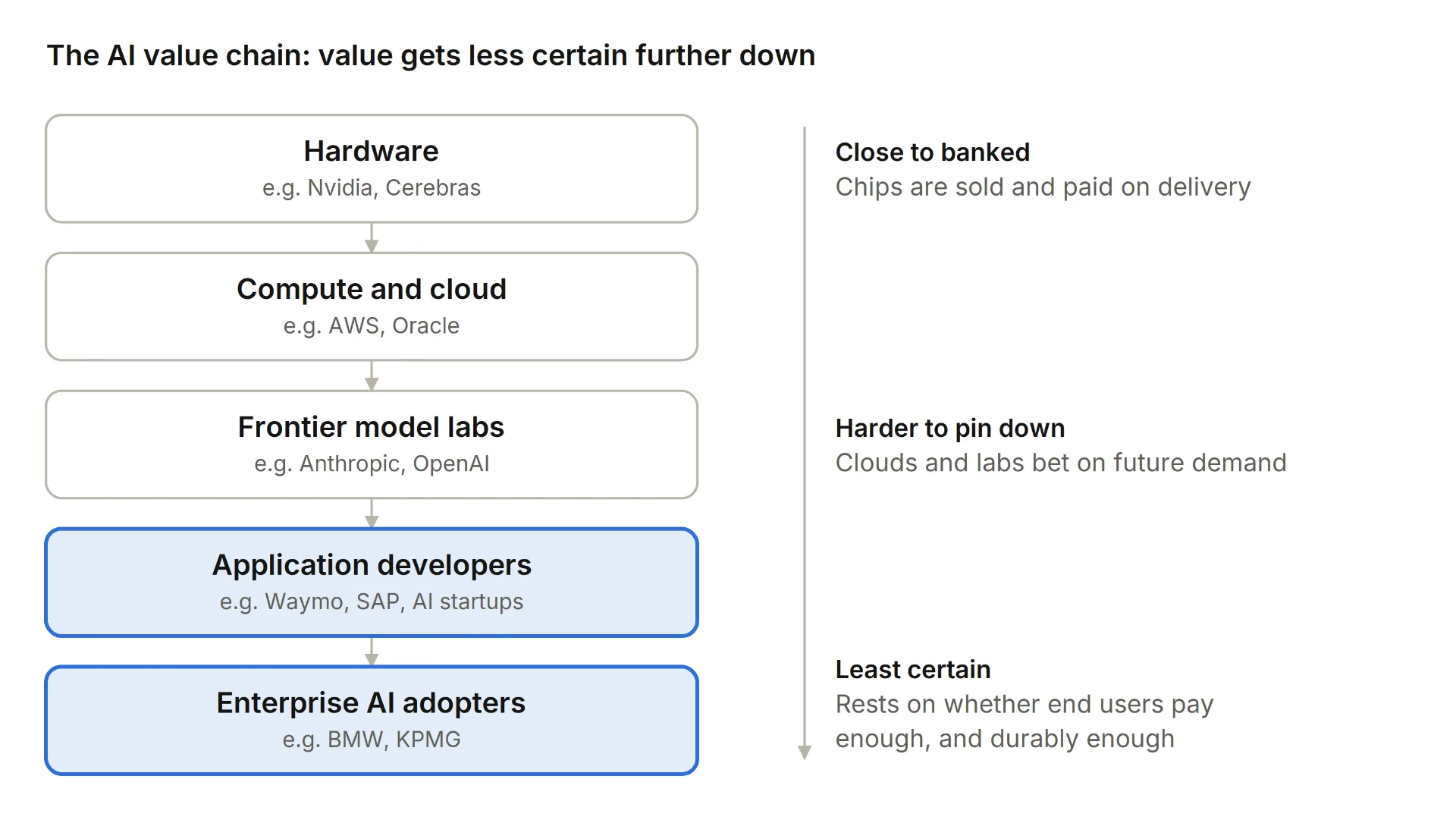
Three moves to stay clear-eyed when every vendor sells AI
Every vendor is selling AI, but not every pitch deserves your trust. The smarter move isn't to tune out the noise, it's to decode it. This guide offers three practical moves to stay clear-eyed when hype threatens judgment. No jargon, no breathless claims. Just a framework for asking better questions before you buy in. For a deeper look at how AI is reshaping real industries, read how Vesta secured $30M to bring AI agents to mortgage lending, a grounded example of innovation without the fanfare.

Vesta secures $30M to bring AI agents to mortgage lending
Vesta just secured $30 million to bring AI agents into mortgage lending, a sector ripe for smarter workflows. The startup, backed by Conversion Capital, builds AI-native software that helps lenders originate mortgages more efficiently. For anyone who has felt the drag of manual data entry and legacy systems, this feels like a genuine step forward. If you're curious about how AI is reshaping familiar tools, our piece on Argon entering the spreadsheet arena offers a parallel view worth exploring.

Argon enters the spreadsheet arena, challenging Google's data dominance
Argon is stepping into the spreadsheet arena with a clear goal: giving Google a run for its data dominance. This isn't about gimmicks or hype, it's about offering a smarter, more intuitive way to work with numbers. For anyone who's felt the limits of traditional tools, Argon's arrival signals a genuine shift toward accessible, AI-driven analysis. We're watching closely, and we think you should too. If you're curious about how AI agents are reshaping productivity, our piece on Hermes Agent's recent funding offers useful context.

Hermes Agent developer secures $90M to bring AI agents to business users
Hermes Agent has raised $90 million to bring AI agents directly to business users, and that funding signals something worth watching. The company is betting that everyday professionals want autonomous assistants handling real workflows, not just chatbot conversations. That is a practical, human-centered pitch, and it lands. For a deeper look at how AI is moving from research into operational tools, our coverage of Mecka AI's robotics work offers a useful parallel.

Microsoft's new Surface Laptop Ultra puts Nvidia-powered AI agents in your hands
Microsoft's Surface Laptop Ultra puts Nvidia-powered AI agents directly into your hands, with specs and pricing now official. This isn't just a faster laptop; it's a shift toward local AI that feels genuinely practical. The move aligns with the momentum we saw in Hermes Agent's $90M round, signaling that capable, on-device agents are becoming a real priority. For anyone ready to move beyond traditional spreadsheets and workflows, this hardware invites you to explore what intelligent assistance can actually do.

Teen Safety Gaps Persist as ChatGPT Pushes Deeper Conversations
ChatGPT's teen safeguards are supposed to catch users in crisis, yet new testing shows the chatbot keeps the conversation going instead of stepping back. That's not just a feature gap; it's a trust issue. Encouraging deeper engagement during moments of vulnerability risks normalizing an unhealthy reliance on the AI itself. Parents deserve clearer answers, and OpenAI needs to close this loop. For more on how AI agents are reshaping personal tech, see our coverage of Microsoft's new Surface Laptop Ultra.
Gemini Argon Tops the Charts but Skips the Test That Counts
Gemini Argon tops the charts, yet it skips the test that counts. That distinction matters. Benchmarks can dazzle, but real-world validation is where trust is built. We see this pattern across the industry, from physics solvers to distributed databases. The lesson is consistent: look past the headline numbers. Explore what a tool does when the pressure is on, not just when it's performing for a score. That's the metric that empowers your actual work.

Healthleap secures $38M to help clinicians spot at-risk patients earlier
Healthleap has secured $38 million to help clinicians identify at-risk patients earlier, a critical step toward proactive care. The funding pairs an $8M seed round co-led by Sequoia Capital and First Round Capital with a $30M Series A led by Hummingbird Ventures. That investor confidence signals real momentum for tools that catch deterioration before it becomes a crisis. For a deeper look at how AI is reshaping practical workflows, explore our coverage of ChatGPT's new visual interface.

AI gadgets failed on promises, not potential: trust is the next breakthrough
Tony Fadell, the father of the iPod, sees the problem clearly: the first wave of AI gadgets failed because they didn't solve real problems. That's not a failure of potential, but of trust. People won't adopt tools that feel like demos. The next generation must prove its worth through consistent, tangible value. When technology quietly delivers outcomes, confidence follows. For more on how AI is maturing into practical tools, explore ChatGPT's new visual interface.

Discover the Interactive Roundtables Shaping Disrupt 2026
The full roundtable agenda for Disrupt 2026 is here, and it reads like a map of where intelligent software actually lives. Nvidia, Chime, Obvious Ventures, and Anthropic will sit down to wrestle with the practical realities of AI-native tools. This is the conversation users need before the next wave of gadgets, like the ones our coverage on trust suggests, arrives. Register now to save up to $100 and bring a colleague for half off.

Explore ChatGPT's New Visual Interface for Smarter Conversations
ChatGPT is about to get a lot more visual. OpenAI is launching a new interface that brings interactive visuals directly into conversations, transforming how we explore data, concepts, and ideas. This is a move that turns a text-first tool into a more intuitive, human-centered workspace. For anyone who has felt the limits of static responses, this update empowers a smarter, more engaged way to work. And for more on AI's evolving role, see how Sigil Wen's free on-device AI redefines private data assistance.

Explore how Musubi's PolicyLM-1.7B opens new possibilities for real-time moderation
On Tuesday, Musubi released PolicyLM-1.7B, a lightweight decision model designed for real-time moderation, and they've done it with open weights. This is a practical move. Instead of relying on massive, slow LLMs to catch policy violations, this small model offers speed without sacrificing control. We see a pattern emerging: just as our coverage of LibreOffice's privacy-first stance shows a preference for restraint over bloat, Musubi proves that smaller, focused tools often deliver better outcomes. Explore what this means for your moderation workflows.

Privacy first: LibreOffice confirms AI won't be in its default setup
LibreOffice is drawing a clear line in the sand: no AI in the default setup. The open source editor is putting user privacy first, and that's a choice worth respecting. While other tools race to embed intelligence everywhere, this team is pausing to ask whether the trade-off is worth it. For many, that answer is no. It's a reminder that innovation isn't just about adding features, but about protecting the people using them.

Flai's $27M round fuels an AI platform booking 50,000 appointments monthly
Flai has closed a $27 million Series A, and the numbers behind it demand attention. The AI-native platform is now booking 50,000 appointments monthly, with revenue growing 20x in a single year. That trajectory signals a genuine shift in how businesses handle scheduling and data workflows. For teams feeling constrained by traditional spreadsheets, this is a compelling reason to explore what an intelligent, automated approach can do. The momentum speaks for itself.