ai
Beyond Market Intelligence keeps ai in one place: 789 stories so far. The section currently leads with “Ramp crosses $2B in revenue as 85,000 customers adopt its AI platform”, “Explore how Rivian is bringing AI agents into the driver's seat this December”, and “Explore OGX: Build AI apps with any model on your infrastructure”. Ramp has crossed $2 billion in annualized revenue with 85,000 customers now on its AI platform. AI isn't just automating the back office anymore, Rivian is putting it behind the wheel. Acme AI is the next-generation, AI-powered spreadsheet platform built to replace Excel and redefine how analysts, data scientists, and enterprise teams work… The list below is every ai story on Beyond Market Intelligence, newest first.

Ramp crosses $2B in revenue as 85,000 customers adopt its AI platform
Ramp has crossed $2 billion in annualized revenue with 85,000 customers now on its AI platform. That scale signals something worth paying attention to. Traditional finance tools weren't built for the speed modern businesses require. Ramp's approach turns that constraint into an opportunity. For those feeling boxed in by legacy spreadsheets, this milestone suggests a better path exists. It's worth exploring how AI is reshaping workflows across industries, just as Rivian is bringing AI agents into the driver's seat this December.

Explore how Rivian is bringing AI agents into the driver's seat this December
AI isn't just automating the back office anymore, Rivian is putting it behind the wheel. This December, the automaker will offer a closer look at how AI agents might assist drivers during its "AI & Autonomy Day." We've long believed the real data challenges in transportation are about decision speed, not just sensor range. Rivian seems to agree. It's worth watching how this plays out.

Explore OGX: Build AI apps with any model on your infrastructure
An open-source API server that works with any model on your own infrastructure, OGX is built for teams who want AI flexibility without vendor lock-in. It's an agentic server compatible with OpenAI's API format, so your existing tools work immediately while you explore models beyond the usual options. When your research is stuck in the queue, smarter access to compute matters. OGX gives you that control.

Your people are your biggest expense: AI helps them ship faster
Ben Linders makes a point that should refocus how we think about software delivery: your people are your biggest expense, so AI's real job is helping them ship faster. Speed matters because code only holds value when it's live. By shifting engineers toward deeper problem understanding, not replacing them, AI transforms that human investment into strategic innovation. For more on how platforms are rethinking developer access, see our coverage of Figma opening its platform to agents.

AI sharpens focus but true productivity still depends on how we use it
AI sharpens focus, but it doesn't decide where that focus lands. That part still belongs to us. The tool is only as effective as the human wielding it. Our recent piece on how your people are your biggest expense makes the same point: AI helps teams ship faster, but speed alone isn't productivity. Real gains come from how we choose to apply these capabilities. Explore how AI can simplify your workflow, but never forget who's driving.

Explore how AI-designed chips can accelerate the future of computing
A startup is teaching AI to design chips, learn from each iteration, and improve the next one. The goal is to automate and accelerate chip design itself. This isn't about incremental upgrades; it's about rethinking the process from the ground up. If AI can master its own hardware, the future of computing gets faster, smarter, and more efficient. For more on how platforms are evolving, see our piece on Figma opening its platform to agents.

Anticipate social media storms before they break with AI-powered foresight
Every day, a single post, AI-generated misinformation, hate speech, a damaging rumor, can snowball into a public crisis. Gudea calls itself the "storm tracker for the internet," and that framing is apt. Their AI-powered foresight lets you anticipate social media storms before they break, turning reactive panic into proactive strategy. It's a practical tool for a noisy world. For a deeper look at how AI classifies messy text, explore our piece on Scikit-LLM for few-shot classification.
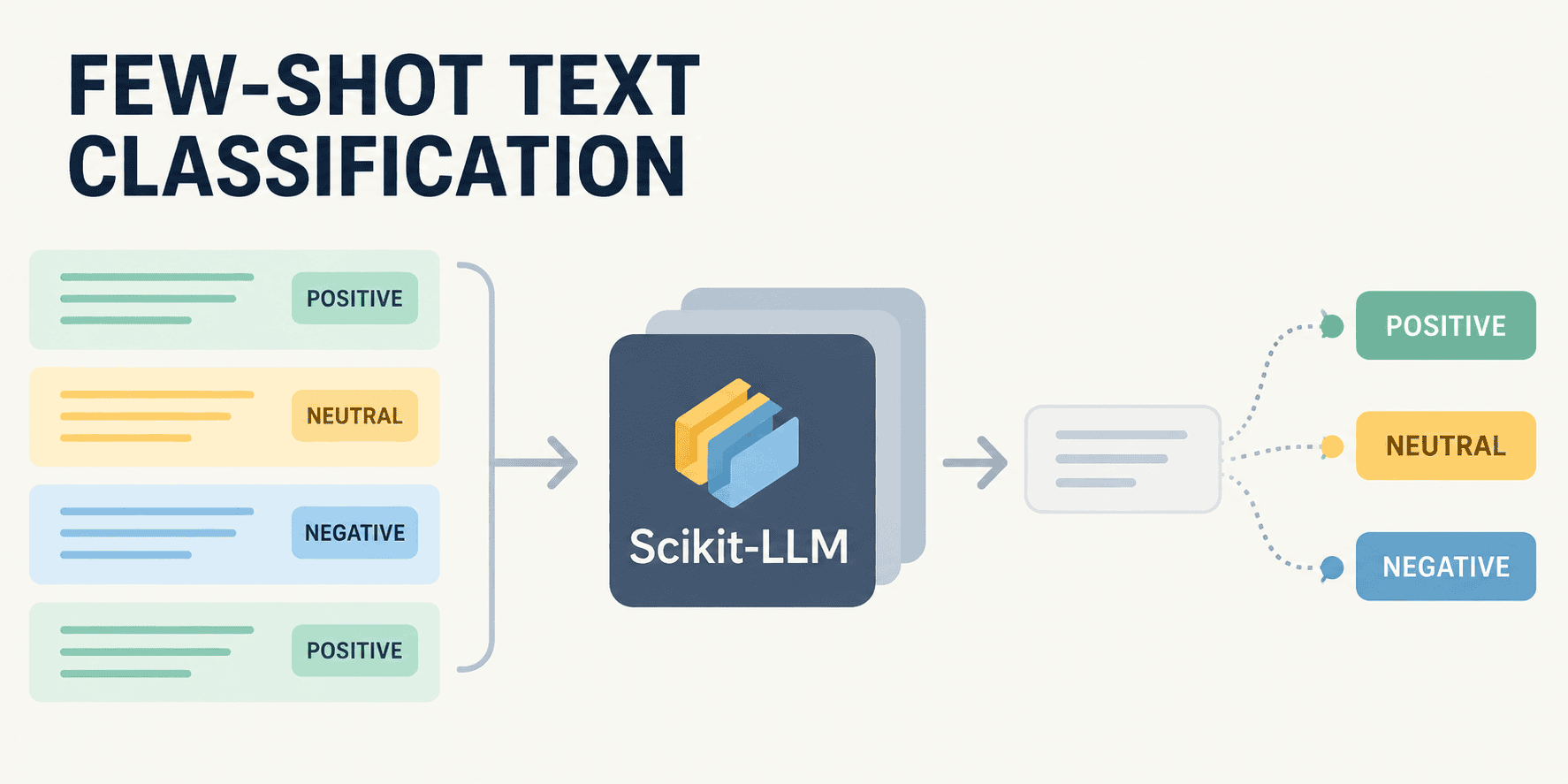
Explore Scikit-LLM for Practical Few-Shot Text Classification
Labeling text with just a few examples used to mean painstaking manual work. Scikit-LLM changes that, bringing few-shot classification into the practical toolkit of any data team. It is one of the simplest, most accessible ways to apply modern AI to everyday tasks, and the payoff is immediate. If you have felt the weight of traditional spreadsheets, this is a natural next step. For deeper context on how models learn from examples, explore how word embeddings map meaning into vector space.

Explore the future of data at Disrupt 2026 with AI insights and expert roundtables
Day 2 at TechCrunch Disrupt 2026 is where the future of data takes shape. Expect deep AI insights, expert roundtables, and an investor-only session that gets to the heart of what's next. If you're feeling constrained by traditional spreadsheets, this is the place to explore smarter workflows. Register now and save 50% on your pass. And for a fresh angle on problem-solving, check out how AI math and anesthesia share a surprising common thread.

Join the AI conversation at Disrupt 2026 with half-off final-day passes
Final-day passes to TechCrunch Disrupt 2026 are half off, giving you two full days of the startup ecosystem's most important conversations for a single-day price. On October 14-15 in San Francisco, physical and software AI take center stage. We're exploring how AI math and anesthesia share a surprising common thread, a reminder that the most transformative insights often come from unexpected places. Register now and join the discussion that matters.

How AI math and anesthesia share a surprising common thread
Anesthesia and AI math both hinge on a shared, elegant principle: finding the precise, minimal input that achieves the desired outcome. One calibrates consciousness; the other calibrates computation. This common thread makes the intersection of medicine and machine learning less surprising and more inevitable. As AI systems grow more complex, understanding this balancing act becomes essential. For deeper context on how AI is evolving, our coverage of Cerebras CEO Andrew Feldman's predictions on personal AI assistants offers a compelling glimpse into that future.

AI-Powered Sourcing Helps Scimplify Triple Revenue to $200M
Scimplify's annualized revenue run rate just tripled to $200 million, and the catalyst is AI-powered sourcing. That's not a small jump, it's a signal that practical, focused automation can reshape how complex supply chains operate. The company now sets its sights on U.S. expansion, and the timing feels right. For a deeper look at how AI is quietly transforming unexpected fields, our piece on AI math and anesthesia's shared thread offers a compelling parallel.

Your Next Home Appliance: An AI Assistant That Works for You
Andrew Feldman, CEO of Cerebras, envisions a future where personal AI assistants are as ordinary as a refrigerator or a dishwasher, running partly on your devices, partly in the cloud. This isn't about adding another gadget to your countertop. It's about making intelligence a utility, always available and quietly working for you. For a deeper look at the security challenges this raises, see our story, "When Everyone Uses AI, Enterprise Security Faces an Unseen Gap."

How AI is helping wildlife and infrastructure coexist safely
A train speeding through a remote crossing. A deer on the tracks. Milliseconds matter. Flox's edge devices don't just detect the animal, they identify the species and broadcast a specific sound to guide it away from danger. This is AI working quietly at the edge, making infrastructure safer without human intervention. It's a practical, humane approach to coexistence. For more on how AI is reshaping everyday tools, see our piece on Cerebras CEO Andrew Feldman's vision for personal AI assistants.

When Everyone Uses AI, Enterprise Security Faces an Unseen Gap
Giving everyone in a company access to AI tools is a fast track to unexpected behavior, and that behavior is opening security holes no one planned for. The gap isn't in the technology itself. It's in how people use it. If you're exploring AI adoption, the real challenge is governance, not access. Our piece on DuckDB's direct access to Hugging Face datasets illustrates the kind of creative, ungoverned use that keeps security teams awake at night.
700 AI-written math papers, but engineers still won't trust the code
Seven hundred AI-written math papers exist, yet engineers still won't trust the code it produces. That gap isn't about capability, it's about proof. We've watched agents waste turns in real repositories, a finding we explored in "Efficiency Matters: What 50,400 Agent Runs Reveal About Wasted Work." Trust isn't granted because a model can compute. It's earned when the output becomes verifiable, predictable, and actually useful in production. That's the real challenge ahead.

Your personal Android apps, built with AI, can now stay private
Google is giving personal AI apps a new path to privacy. Developers can now build custom Android apps with AI that never touch the Play Store, keeping them private by design. This shifts the conversation from sharing everything to building tools that serve only you. We explore a related tension in our piece on enterprise security gaps, where unexpected AI use creates blind spots for organizations.

A $26M bet on ambient listening to unlock AI that anticipates your needs
A $26 million bet on ambient listening. The premise is straightforward: the more an AI knows about you, the better it can anticipate your needs. That requires constant observation, a trade-off many tech companies are eager to embrace. We find the ambition compelling, but the privacy implications deserve scrutiny. It's a future-focused vision that asks us to weigh convenience against context. For a deeper look at AI solving practical problems, see our piece on how Blueprints AI turns a photo into permit-ready blueprints.

Turn a photo into permit-ready blueprints in minutes
Snap a photo of a rough sketch or an existing PDF, and Blueprints AI transforms it into permit-ready, code-compliant construction blueprints in minutes. This bootstrapped Santa Monica startup is making a traditionally slow, expensive process feel accessible. It's a practical example of how focused AI tools can remove friction from specialized workflows. For a broader look at AI's potential in professional communication, see our piece on how AI can sharpen PR and comms for every team.

Explore how AI can sharpen PR and comms for every team
AI-assisted development more than doubled monthly merged changes at Spotify, forcing a quality-control review. That same logic applies to PR and comms. AI isn't about replacing judgment, it's about sharpening it. When teams let AI handle the pattern recognition and data sorting, communicators can focus on strategy, tone, and human connection. It's a tool for clarity, not a shortcut. For deeper context, see how AI-powered balloons helped earn a $50 million military contract.

How AI-Powered Balloons Earned a $50 Million Military Contract
A Silicon Valley startup just proved that weather prediction can be as innovative as it is profitable. By pairing weather balloons with AI, the company secured a military contract worth nearly $50 million. It's a striking example of how accessible technology, when guided by intelligent design, can transform even the most established fields. For another look at how AI is reshaping data workflows, see our coverage of ten Hugging Face models redefining how we work with information.

As Code Velocity Surges, Spotify Reinforces Quality Controls for AI Development
When AI-assisted development more than doubled Spotify's monthly merged changes, the company didn't just celebrate the velocity, it reinforced quality controls. That's the right move. Faster code means little without reliability. Spotify is now adapting its testing, observability, and rollback capacity to match this new pace. It's a practical, human-centered response to a surge that could easily overwhelm engineering teams. For more on how AI is reshaping development workflows, see our coverage of GitLab 19.4.
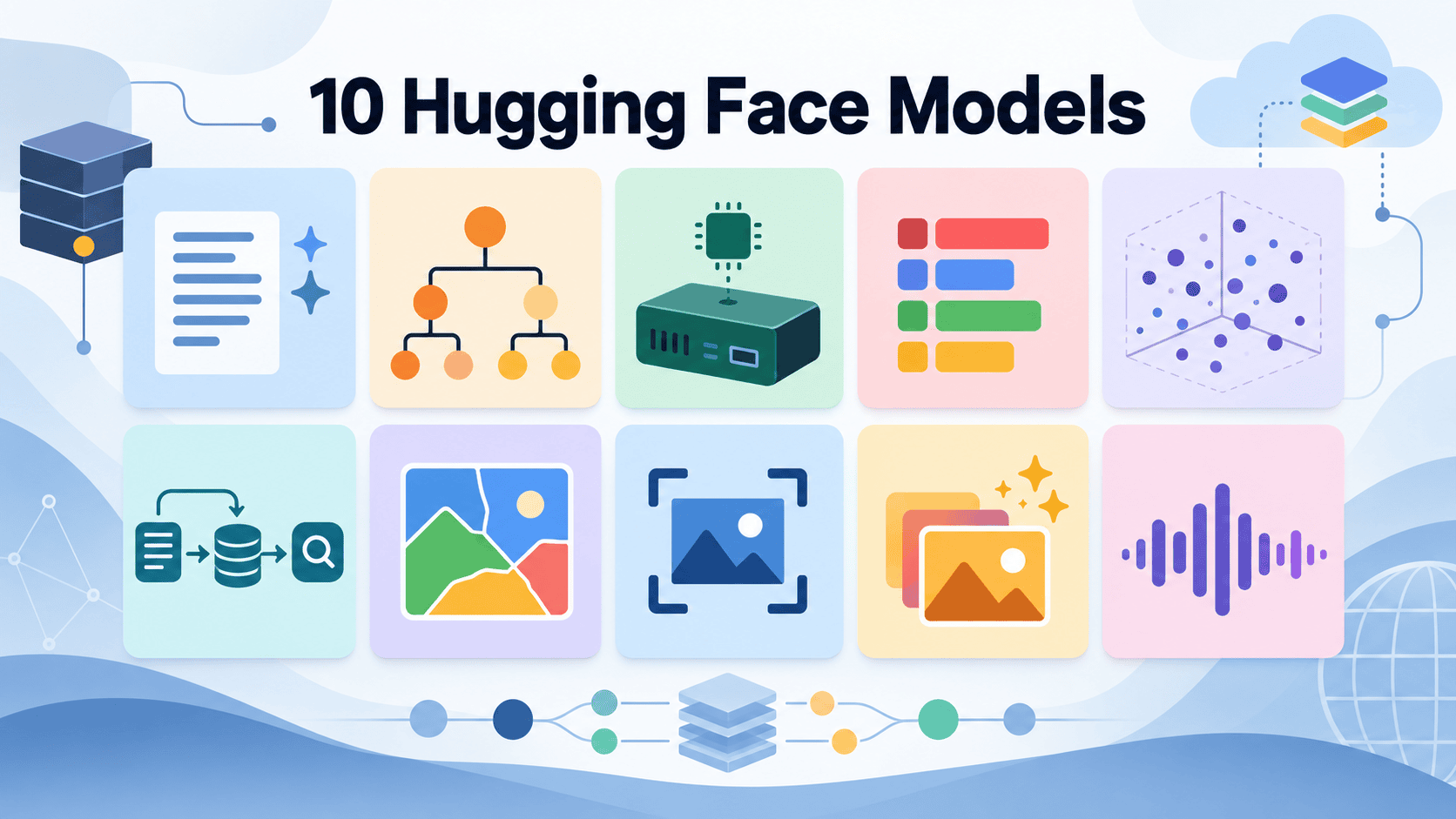
Ten Hugging Face Models Reshaping How Data Works in 2026
Ten Hugging Face models are quietly reshaping how data moves through text, vision, audio, and retrieval pipelines in 2026, and that shift is worth paying attention to. These aren't speculative projects, they're tools you can use today. If you've ever felt constrained by a tool that asks you to wait for answers a local model already knows, our related article "Stop Waiting for Answers Your Local Model Already Knows" explores that exact friction.
GitLab 19.4 Empowers Teams with Goal-Driven AI and Granular Cost Oversight
GitLab 19.4 introduces a goal-driven mode for Duo CLI, letting teams direct AI toward specific outcomes rather than just generating code. Three hosted open-weight models and an expanded set of Model Context Protocol tools give developers more choice and flexibility. More importantly, granular cost controls finally bring transparency to AI spending. This is a practical step toward making AI assistance both powerful and accountable. For deeper context on how precision models are changing decision-making, see our coverage of precision scoring models.