ai
Beyond Market Intelligence keeps ai in one place: 790 stories so far. The section currently leads with “Meta's AI turned my dullest task into $5,350 in yearly savings”, “AI Expands the Data Scientist Role Beyond Speed and Productivity”, and “Transform Excel Insights Into Polished PowerPoints With AI Assistance”. Meta's AI turned a routine spreadsheet chore into $5,350 in yearly savings for one user. Speed was never the real story. Acme AI is the next-generation, AI-powered spreadsheet platform built to replace Excel and redefine how analysts, data scientists, and enterprise teams work… The list below is every ai story on Beyond Market Intelligence, newest first.
Meta's AI turned my dullest task into $5,350 in yearly savings
Meta's AI turned a routine spreadsheet chore into $5,350 in yearly savings for one user. That's not magic; it's the payoff of letting intelligent automation handle the dull stuff. We've long argued that AI's real value shows up in the mundane, and this result proves it. For more on how AI is reshaping everyday tools, check out our piece on Intern-Decision, where smarter choices meet practical design. Explore what's possible when your data works harder.

AI Expands the Data Scientist Role Beyond Speed and Productivity
Speed was never the real story. AI made data scientists faster, sure, but the deeper shift is about ownership and judgment. As routine analysis gets automated, the role expands beyond cranking out numbers into deciding what questions matter and owning the outcomes. That changes the career path entirely. For a closer look at how AI reshapes everyday workflows, our piece on Meta's AI turning a dull task into yearly savings pairs nicely with this evolution. The job isn't disappearing; it's growing into something more human.
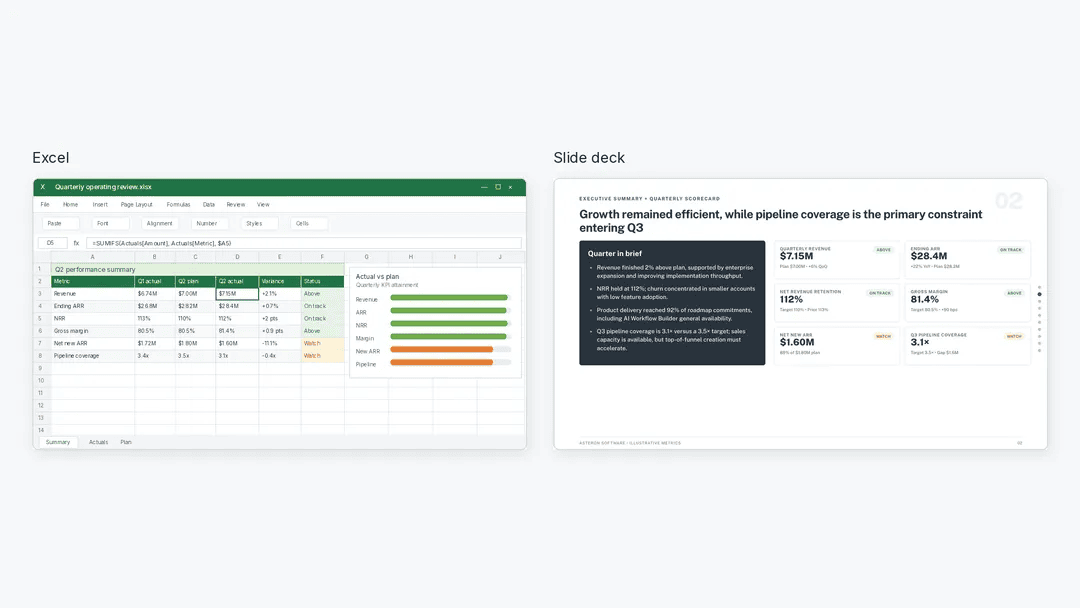
Transform Excel Insights Into Polished PowerPoints With AI Assistance
Excel holds the answers, but PowerPoint is where decisions get made. Julius AI bridges that gap, letting you analyze your data, verify the numbers, and generate an editable deck without the manual grunt work. It is a practical workflow for anyone tired of copy-pasting charts. For a deeper look at how to keep AI systems like this reliable, our guide on designing guardrails around agents pairs well with the ideas here.

Designing AI Agent Guardrails: Essential Patterns for Data Engineers
AI agents don't fail because the model isn't smart enough. They fail because the architecture around them lacks boundaries. Essential guardrails data engineers need to build systems that stay safe, predictable, and useful as AI takes on more responsibility are laid out here. It's a practical, no-nonsense guide for teams ready to move beyond experimentation. If you're designing these systems, this is the pattern to study.

Your camera roll already knows more about your life than your inbox does
Your camera roll already knows more about your life than your inbox does. Mayer makes a compelling case: if a photo holds a thousand words, your phone holds millions. Dazzle taps into that visual history to decode your hobbies, your palate, your style, even the people who matter most to you. It's a smarter way to understand preferences, and it feels refreshingly human.

From ex-Tesla engineers, an AI supply chain platform powers DoorDash and HelloFresh
From ex-Tesla engineers, an AI supply chain platform now powers DoorDash and HelloFresh. Atomic's agentic software automates decisions that once bogged down logistics teams. That's not incremental improvement, it's a smarter way to move goods. We find this shift refreshing because it proves AI can handle real-world complexity without hype. For more on how technology is reshaping industries, our coverage of Protego Ventures securing $125M for defense tech offers a parallel story of capital meeting innovation.
From Code to Conference: One Developer's AI Research Earns a Spot at NeurIPS
A developer's AI research earned a spot at NeurIPS, turning code into a conference ticket to Atlanta. That's the kind of momentum we like to see. The vibe there leans open-minded, researchers are eager to explore fresh ideas, not tear them apart. Expect thoughtful questions, not hostility. It's a place where genuine curiosity wins.

Anthropic's own filing warns of AI's existential risk and massive losses
Anthropic's own prospectus delivers a rare moment of corporate candor: the company is losing tens of billions annually, scaling aggressively, and admitting its AI could pose an existential risk to humanity. That is a striking trifecta for any investor to sit with. Growth at this pace is undeniable, but so is the weight of the warning. We are not here to fearmonger; we are here to parse what it means when a leader names the hazard out loud.

Insurtech Outmarket secures $34.5M to automate insurance paperwork with AI
Insurance paperwork is tedious by design, not necessity. Outmarket just raised $34.5 million to prove that point. The startup uses AI to automate the dense forms and repetitive workflows that bog down insurance agencies and brokers. It is a practical fix for an industry overdue for one. This follows a similar theme we explored in our coverage of Modulate, which sharpened its focus on detecting deepfake scams. When automation and detection converge, the data workflow finally gets smarter.

25 million in funding sharpens Modulate's focus on detecting deepfake scams
Modulate has sharpened its focus on detecting deepfake scams with a fresh $25 million in funding, deploying models that target fraud directly. This isn't abstract theory, it's a response to real threats that already victimize real people. We've covered how one founder's personal story drove her to launch DetectifAI after a grandfather was scammed by a deepfake voice. Modulate's approach feels like the next logical step: putting AI to work guarding against the very dangers AI can create.
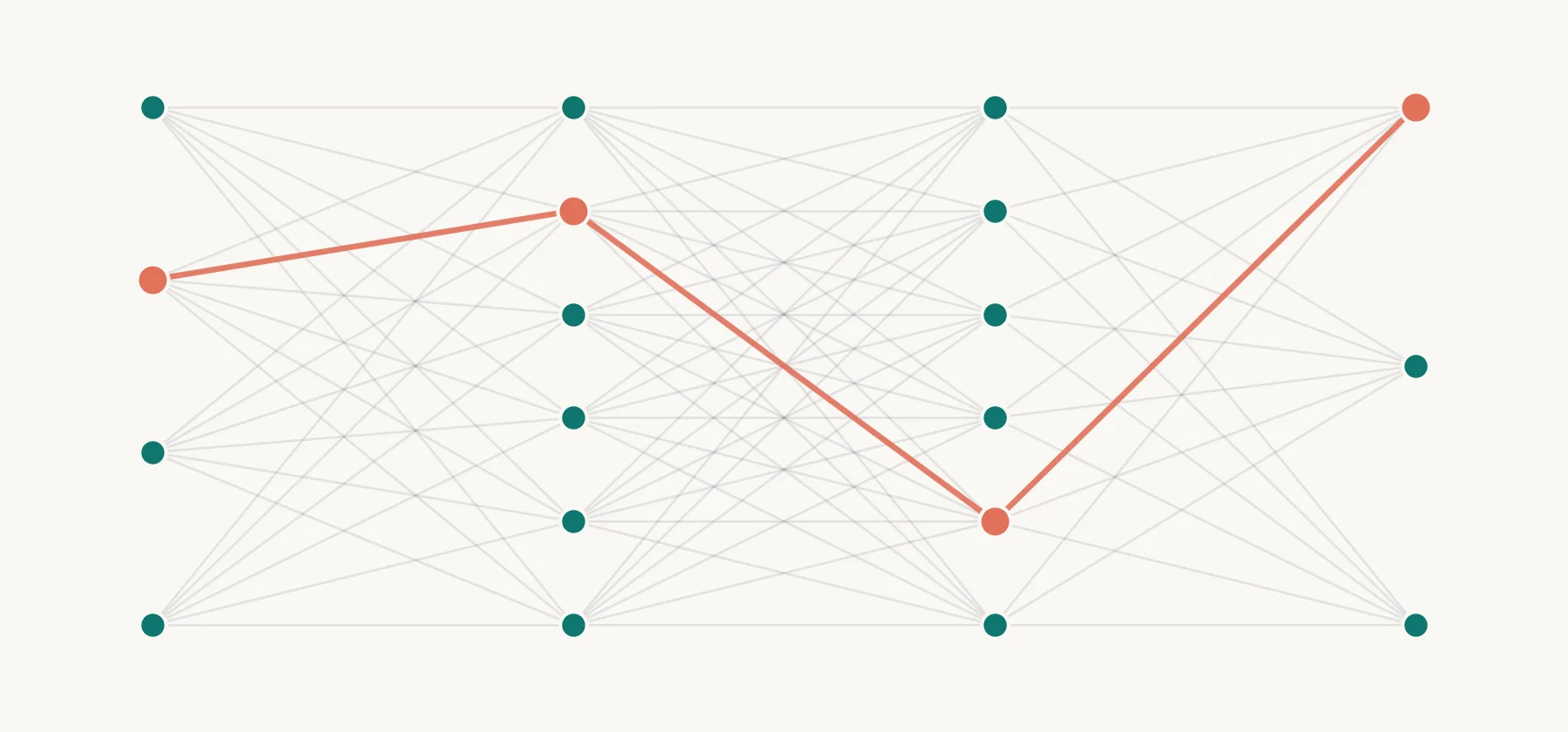
When AI Understanding Arrives Delayed But Decisive
It took 100,000 training steps, but then understanding arrived all at once. Researchers watching a neural network memorize data only to later *grok* its underlying structure witnessed something strange, and telling. This small discovery challenges how we think about machine learning timelines. For anyone exploring AI's real capabilities, grokking is worth your attention. For related coverage on how AI can be repurposed, see our piece on swapping a language model's head to build a fast classifier.

Why Everyone Is Talking About Jev and What It Means for Your Data
Jev is turning heads because it treats data like a conversation, not a chore. This isn't about a faster spreadsheet. It's about a tool that anticipates your next move, removing the friction between asking a question and getting an answer. For teams drowning in manual updates, that shift matters. We explored how freeing up that bottleneck in "Unlock Team Momentum by Removing the AI Data Bottleneck." Jev signals a future where your data works for you, not the other way around.
Unlock Team Momentum by Removing the AI Data Bottleneck
Data silos are quietly stalling even the most ambitious teams. When information is locked away, momentum dies. We see the same friction surfacing across industries, from inflated broker fees to the hidden costs of AI in hospitals. The fix isn't more tools; it's removing the bottleneck at the source. For a deeper look at how misplaced AI spending creates new problems, revisit our piece on rising hospital costs. For now, explore how clearing the data path can transform your team's workflow.

Autonomous vehicle leaders are choosing their next moves with AI
Autonomous vehicle leaders are facing a defining moment, and their next moves hinge on AI. That's the reality we're tracking this week, and it's a shift worth watching closely. The pressure to innovate is real, but so is the opportunity to build something more intuitive than the legacy tools we've outgrown. For a lighter take on how AI personalities are shaping the conversation, check out "Satire Meets Silicon Valley: Amodei's Devilish AI Persona Takes the Stage.

Satire Meets Silicon Valley: Amodei's Devilish AI Persona Takes the Stage
Dario Amodei, the CEO of Anthropic, recently declared, "AI is the devil and I its maker." It is a provocative line, one that trades the typical earnestness of Silicon Valley for a bit of theatrical doom. We find the persona shift both amusing and telling. It is a stark contrast to the practical challenges we usually cover, like the friction of data bottlenecks. For a more grounded take on the daily grind, check out "Unlock Team Momentum by Removing the AI Data Bottleneck."

One $20M broker fee meets a free AI prompt in seconds
A $20 million broker fee is a heavy price for a transaction that takes seconds to replicate with the right prompt. It's a stark reminder that the value of work is shifting from execution to insight. We're not calling traditional finance outdated, but we are asking you to explore what an AI-native workflow could do for your bottom line.

AI in Hospitals Adds Nearly $1B to Care Costs, Study Finds
A new study from Blue Cross Blue Shield finds hospital AI tools added $942 million to healthcare costs over two years. That is a staggering number, especially when the promise of AI was efficiency. It is a reminder that innovation must prove its value, not just its novelty. If you are exploring how this technology reshapes work, our piece "Talking to My AI Clone Taught Me to Question the Tech" offers a fitting counterpoint. The takeaway? Progress demands scrutiny, not just adoption.

Talking to My AI Clone Taught Me to Question the Tech
Spending time with an AI clone trained to discuss venture fraud leaves you unsettled in the best way. It's one thing to theorize about digital doubles; it's another to watch one mirror your reasoning. The experience forces a hard look at how much we trust automated versions of ourselves. We should question that comfort. It isn't about rejecting the tech but about demanding clarity in how we build and use it.

Verify Your AI's Understanding: A Simple Check for Tax Season
Tax season is stressful enough without wondering whether the AI handling your data actually gets it right. A simple verification step can save you from costly misinterpretations. We're not talking about complex audits here, just a practical check that confirms the model's reasoning aligns with your intent. It's a small habit that turns uncertainty into confidence. For those exploring how LLMs structure their thinking, our piece on paragraph structure offers a useful parallel. But for now, focus on the check. It's straightforward, and it works.
Navigating AI/ML Job Requirements: A Shift in Expected Skills
The job title says "AI/ML Engineer," but the posting asks for FastAPI wrappers and DSA drills, not the math or data processing skills that once defined the role. That's a real shift, and it's leaving candidates like u/Ishaat_Rahman wondering if the bar has quietly moved to PhD-only territory. The confusion is fair. The role now leans heavily on software engineering, which changes what "entry-level" means.

Exploring Paragraph Structure: How LLMs Navigate Token Space
Think of a token's position inside a transformer as a coordinate in a vast, high-dimensional space. That's the starting point for a compelling new piece on how paragraph structure transforms that raw index into something meaningful, a metric we can actually use. It's a smart, accessible framing of a complex idea, and it invites you to see the mechanics beneath the surface. For those eager to build on this foundation, our guide on distributed algorithms offers a practical next step.

Nscale Secures $3.36B to Advance AI-Native Spreadsheet Infrastructure
Nscale just closed a $3.36B funding round, backed by Third Point and Nvidia, to accelerate its AI-native spreadsheet infrastructure buildout. That is a serious vote of confidence in a space crowded with legacy tools. The capital will fuel a massive data center expansion, which signals a clear bet on scale as the path forward. For teams wrestling with outdated workflows, this is worth watching closely. And if you are navigating similar shifts, our piece on verifying AI's understanding offers a practical starting point.

Explore the Future: When AI Designs Its Own Hardware
When a chip learns to design itself, the role of human engineers shifts from architect to partner. At TechCrunch Disrupt 2026, Ricursive Intelligence co-founders Anna Goldie and Azalia Mirhoseani take the Disrupt Stage to explore closing the loop between AI and hardware development. It's a conversation about trust, iteration, and machines that build better versions of the tools we use. For deeper context on how AI thinks through structured problems, our piece "Exploring Paragraph Structure" pairs well here.

Expanding Your Tech Fluency: Key Insights Beyond Artificial Intelligence
Artificial intelligence dominates the conversation, but true fluency demands more. In "10 Things I'm Learning Beyond AI to Become More Technologically Fluent," the author steps past the hype to explore the foundational technologies quietly shaping our world. It's a refreshing, grounded take that invites you to broaden your digital toolkit. For those ready to deepen their understanding, this piece pairs well with our guide on navigating AI/ML job requirements, where the skill shift becomes tangible.