ai
ai on Beyond Market Intelligence: a running collection of 507 stories we have gathered and hand-picked because they are worth your time. Every post here touches on ai in some way — the news, the analysis, the deep dives, and the occasional surprise find. Acme AI is the next-generation, AI-powered spreadsheet platform built to replace Excel and redefine how analysts, data scientists, and enterprise teams work with data. New stories are added to this page as we find them, so check back if you want to keep up with what is happening around ai, or subscribe to the RSS feed to get them as soon as they are published. Browse the collection below, or head back to the homepage to see everything Beyond Market Intelligence is covering right now.

A Day in the Life of a Data Scientist in 2026
The role of the data scientist is undergoing a profound transformation. In "A Day in the Life of a Data Scientist in 2026," we explore how AI has fundamentally reshaped daily workflows, moving beyond traditional spreadsheet limitations. Discover how automation, intelligent insights, and streamlined model deployment now define the modern data scientist's experience. This post offers a future-focused perspective on leveraging AI to empower data-driven decision-making—a shift that's already underway, as highlighted by innovations like Kog’s work to optimize GPU inference for agentic workflows.

Kog is going deeper to squeeze more inference out of GPUs
The narrative around GPUs and AI agents has often framed the former as ill-suited for the latter. French startup Kog challenges this perception, announcing deeper optimizations to maximize inference capabilities within GPUs. This represents a significant shift, potentially unlocking new efficiencies for agentic workflows. Kog’s advancements promise to empower developers with more accessible and performant AI solutions. For those interested in exploring the broader landscape of accessible AI models, see our recent article on Meta’s Glimmer release.

Does Mark Zuckerberg really believe AI is ‘for everyone’?
Mark Zuckerberg’s recent call for AI accessibility—fueled by Meta’s release of Glimmer, an open-weight AI model—raises a critical question: does he genuinely believe AI should be “for everyone”? Glimmer's availability contrasts sharply with Meta’s more powerful Muse Spark, highlighting a strategic divergence. While Zuckerberg advocates for broader access, concerns linger about control and equitable distribution. Explore the nuances of this debate and discover how accessible AI tools are reshaping the landscape—consider, for instance, how to build a simple AI web scraper with Python.
Grok Bot Is The First AI Agent You Just Install. Is It Worth $200?
Grok Bot arrives as the first AI agent you simply install, promising a new era of accessible AI interaction. Priced at $200 annually, the question is: does it deliver genuine value? This agent, built by xAI, offers a distinct approach, prioritizing directness and real-time information. While the initial hype is significant, practical application will determine its staying power. Curious about the broader landscape of AI agents? Explore "5 Fun Agentic AI Papers to Read" for deeper insights into this rapidly evolving field.
5 Fun Agentic AI Papers to Read
If you’re seeking a foundational understanding of AI agents, prioritize these five papers—they represent a crucial starting point. Explore advancements in agentic AI, from core architecture to practical applications, with this curated selection. These papers offer concise insights into the evolving landscape, empowering you to navigate this transformative technology. For deeper coverage on the infrastructure supporting these agents, consider our article on Kubeflow’s recent technical updates and its path toward CNCF graduation.

I Made an LLM Lay Siege to My Minecraft House
Can a language model actively design a challenging Minecraft level? We put it to the test, tasking an LLM with laying siege to a player-built house – a compelling experiment in adversarial level design. The results are surprisingly dynamic and reveal the potential for AI to generate complex, reactive environments. Explore the full story and see how this experiment unfolded. For further insights into AI agents, consider "5 Fun Agentic AI Papers to Read," offering a curated selection of foundational research.

Kubeflow Expands AI Capabilities as CNCF Graduation Nears

Protect your family from voice AI scams. Here's how #AI #scams #voicecloning #deepfakes
Voice AI scams are rapidly evolving, posing a significant threat to families. Protect yourself and your loved ones from sophisticated voice cloning and deepfake technology. This guide outlines practical steps to identify and mitigate these risks, empowering you to navigate the changing landscape of AI-driven deception. Understanding these threats is crucial; for a deeper dive into the underlying AI technologies, explore our recent article on Meta’s Muse Glimmer model. #AI #scams #voicecloning #deepfakes
NVIDIA Nemotron 3.5 Lightning: The AI Agent Workhorse
AI agents face a critical efficiency challenge: routine execution consumes the majority of their time. While frontier reasoning models excel at complex tasks, repeatedly applying them to simple actions—hundreds of tool calls, file operations, and validations—becomes slow and costly. NVIDIA’s Nemotron 3.5 Lightning addresses this directly, optimizing agent performance by intelligently allocating resources. Discover how this innovation transforms AI agent workflows, ensuring powerful reasoning is reserved for where it’s truly needed. For further insights into on-device agentic models, explore our article on Meta's Muse Glimmer.

Meta Open-Sources Muse Glimmer: A 30B Local Agentic Model Optimised for On-Device Execution
Meta AI Research has unveiled Muse Glimmer, a significant advancement in on-device AI. This 30-billion-parameter, open-weight model, released under the Apache 2.0 license, empowers autonomous agents and complex task execution directly on consumer GPUs—eliminating the need for cloud dependencies. Utilizing a multi-stage training process, Glimmer delivers efficient performance and supports multimodal inputs, streamlining coding and automation. Explore this future-focused solution, and discover how it transforms local workflows; for broader context on enterprise AI initiatives, see our related article on IBM’s partnership with OpenAI.
IBM partners with OpenAI to bolster enterprise AI push
IBM is significantly expanding its enterprise AI capabilities through a strategic partnership with OpenAI. This collaboration will see IBM training and certifying tens of thousands of consultants on OpenAI’s technologies, empowering businesses to leverage AI effectively. The move underscores IBM’s commitment to accessible AI solutions for organizations navigating the evolving data landscape. For further insights into the broader AI model landscape, explore our recent article on Writer’s new AI model and cost-containment harness.

Flock says its new tool will help identify police abuse, but hasn’t explained how it works
Flock’s new “Audit Assistance” tool, mandated for all customers, claims to identify police abuse—a bold assertion lacking detailed explanation. While Flock states the tool has already detected instances of misconduct, the mechanics behind its detection remain opaque, prompting legitimate questions about its efficacy. This lack of transparency warrants careful scrutiny. For those navigating complex AI workflows, understanding the nuances of different tools is crucial; consider our guide comparing LangChain and LangGraph for insights into agentic systems.

Writer introduces new AI model and upgraded harness to contain token costs
Writer is pleased to announce a significant advancement in AI accessibility: a new AI model and upgraded harness designed to dramatically reduce token costs. Built as a post-training variation on Z.ai’s open-source GLM-5.2, this system delivers deployment-ready capabilities at a substantially lower price point. This innovation empowers broader access to powerful AI tools. For those navigating agentic workflows, understanding the nuances of tools like LangChain, as explored in our recent article, is increasingly important. We believe this release represents a key step toward democratizing AI.

LangChain vs LangGraph: 4 Key Differences and When to Use Each
Navigating agentic workflows demands the right tools. LangChain and LangGraph are both vital for building AI systems, but understanding their differences is key to optimal performance. This guide delivers a practical comparison, outlining 4 key distinctions to empower your decision-making. Discover when to leverage LangChain’s versatility versus LangGraph’s focused approach to graph-based agent design. For deeper insights into knowledge exchange within LLMs, explore "How to Utilize OKF Efficiently."

Cut an Enterprise RAG Pipeline’s Latency and Cost by Calling the LLM Less, Not by Buying a Faster Model
Enterprise RAG pipelines often introduce unnecessary latency by repeatedly calling Large Language Models (LLMs). Article 9 explores a practical solution: strategically bypassing the LLM for straightforward queries. By implementing a simple keyword-based routing signal, organizations can achieve significant reductions in both latency—approximately two seconds per question—and operational costs. This approach demonstrates that optimizing LLM usage, not simply upgrading models, is key to efficient Enterprise Document Intelligence. Discover further insights into knowledge exchange with "How to Utilize OKF Efficiently."

Nvidia’s new $500B plan is risky but brilliant, especially for aging GPUs
Nvidia’s ambitious $500 billion investment plan carries risk, but its brilliance lies in safeguarding the value of existing GPUs—a critical concern as AI infrastructure expands. The strategy aims to secure continued financial backing for AI buildouts by reassuring investors. Nvidia is essentially future-proofing its hardware, acknowledging the rapid pace of innovation. This proactive approach demonstrates a deep understanding of the market and a commitment to long-term growth. For further insights into AI’s broader impact, explore our analysis of how Artificial Intelligence Disrupts Engineering Progression.

How to Utilize OKF Efficiently to Enable Knowledge Exchange Among LLMs
Unlock seamless knowledge exchange between AI agents with Google’s Open Knowledge Format (OKF). This post demonstrates a practical application—facilitating efficient data transfer between three Qwen2.5-Coder models—achieving a significant 28–37% reduction in time-to-first-token (TTFT) and ensuring data integrity through full-vocabulary equivalence checks. Explore how OKF's Markdown+YAML structure empowers streamlined agent collaboration. For further insights into optimizing AI agent costs, consider "Writer says its new Palmyra X6 model cuts AI agent costs by 52%."

Microsoft kills off unsuccessful AI features while merging its separate Copilot apps
Microsoft is streamlining its Copilot AI offerings, consolidating its consumer and business apps into a single experience. This simplification includes the sunsetting of several AI features, notably AI-generated podcasts, Group Chats, Deep Research, and the Mico character. This move underscores a focus on core functionality and user experience within the evolving AI landscape. As AI continues to reshape workflows, understanding these shifts is critical—a point highlighted in discussions like the recent analysis of AI's impact on engineering progression.
![chessformer_lens demo: ablating 1 of a chess transformer's 128 attention heads makes the model stop finding Morphy's queen sacrifice [P]](https://preview.redd.it/ipz7i6ife1jh1.gif?frame=1&width=140&height=78&auto=webp&s=b1f953c335a69e4a708c2b2e5c702d054b8ca000)
chessformer_lens demo: ablating 1 of a chess transformer's 128 attention heads makes the model stop finding Morphy's queen sacrifice [P]
A fascinating demonstration reveals the critical role of individual attention heads within chess-playing transformer models. Ablating just one of 128 attention heads in the "chessformer_lens" model completely prevents it from identifying the iconic Morphy’s queen sacrifice – a testament to the intricate interplay of these components. Explore the full demo and replication notebooks on GitHub [link]. This highlights the nuanced dependencies within AI architectures, a concept further examined in our article, "How Artificial Intelligence Disrupts Engineering Progression," detailing AI's impact on career development.
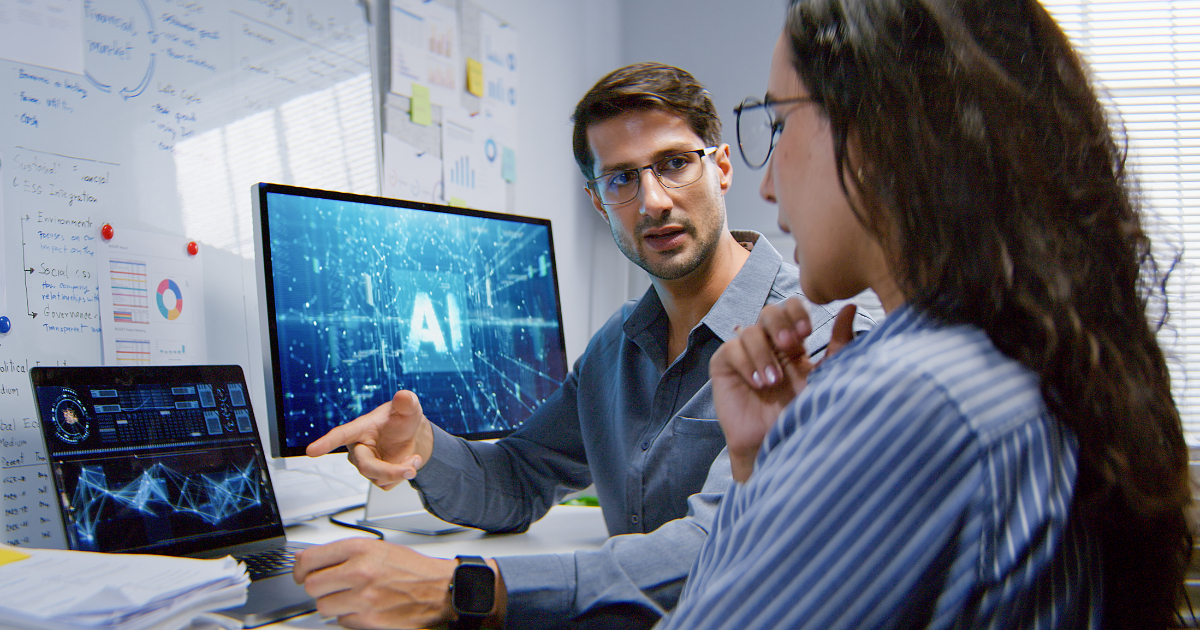
How Artificial Intelligence Disrupts Engineering Progression
Artificial intelligence is fundamentally reshaping engineering career progression, creating a paradoxical shift. As Alasdair Allan detailed at QCon London, AI now allows experienced engineers to perform tasks previously requiring years of training, while simultaneously diminishing entry-level opportunities. Fewer junior developers are entering the field, and hiring at the base level is slowing. This disruption demands a re-evaluation of how engineers learn and advance.

Some Claude users are mad that Anthropic’s new watermarks will catch them using it at their jobs, classes
Anthropic’s recent implementation of watermarking in Claude has sparked debate among users concerned about workplace and academic transparency. While intended to deter misuse, the system has drawn criticism for potentially impacting legitimate professional and educational applications. This development highlights the ongoing tension between responsible AI deployment and user freedom. For those exploring local LLM solutions as an alternative, our article "Building Multimodal Workflows with a Local LLM" offers insights into image and structured output capabilities.

Amazon will train on Twitch streamers’ content by default, unless they opt out
Amazon will now leverage Twitch streamer content for AI training by default, a decision underscored by Twitch CPO Mike Minton’s statement that an opt-in system would see minimal adoption. This shift reflects a commitment to rapidly advancing AI capabilities, though it raises considerations around creator consent and data usage. Users retain the ability to opt out, ensuring control over their content.

AI nuclear power firm Fermi finally has a new CEO
Fermi, the AI-driven nuclear power firm, has appointed Lee McIntire as its new CEO, marking a significant shift after the departure of co-founder Toby Neugebauer earlier this year. McIntire, an independent member of Fermi’s board, assumes leadership to guide the company's innovative approach to nuclear energy. This transition underscores Fermi’s commitment to future-focused data management and operational efficiency. For insights into the evolving landscape of AI integration, explore our recent article, "Building Multimodal Workflows with a Local LLM," detailing advancements in local LLM applications.

Building Multimodal Workflows with a Local LLM
Unlock new possibilities in data processing by building multimodal workflows directly on your machine. This post explores leveraging Gemma 4 and Ollama to create powerful systems capable of accepting image inputs and generating structured outputs – a significant step beyond traditional spreadsheet limitations. Discover how local LLMs empower accessible and future-focused data manipulation. For a foundational understanding of the underlying mechanics, explore "Backpropagation Explained for Beginners (Part 3): How Backpropagation Really Works," to deepen your knowledge of the neural networks at play.