ai
ai on Beyond Market Intelligence: a running collection of 507 stories we have gathered and hand-picked because they are worth your time. Every post here touches on ai in some way — the news, the analysis, the deep dives, and the occasional surprise find. Acme AI is the next-generation, AI-powered spreadsheet platform built to replace Excel and redefine how analysts, data scientists, and enterprise teams work with data. New stories are added to this page as we find them, so check back if you want to keep up with what is happening around ai, or subscribe to the RSS feed to get them as soon as they are published. Browse the collection below, or head back to the homepage to see everything Beyond Market Intelligence is covering right now.

Why Stream ring-maker Sandbar says the future of AI wearables is voice
AI-powered notetaking wearables have rapidly evolved, from earbuds to pendants, promising effortless meeting summaries. Now, a new wave, particularly ring-based devices like Sandbar, are betting on capturing spontaneous thoughts and ideas. Sandbar’s approach prioritizes voice interaction, anticipating a future where AI wearables seamlessly integrate into daily life. This shift reflects a growing desire for accessible, always-on data capture. Explore the broader implications of AI in the enterprise, as seen in Thrive Holdings' recent $2 billion funding round.

OpenAI-backed Thrive Holdings raises $2B to bring AI to the enterprise
Thrive Holdings, backed by OpenAI, has secured a substantial $2 billion in funding, achieving a $12 billion valuation and solidifying its position at the forefront of enterprise AI solutions. This significant investment, led by SoftBank, D1 Capital Partners, and Altimeter Capital, underscores the growing demand for accessible AI tools within businesses. Thrive's approach focuses on transforming data management, empowering organizations to leverage AI’s potential without complexity.

Facebook officially rolls out its stand-alone Creator Studio app with AI tools for creators
Facebook has officially launched a standalone Creator Studio app, integrating AI tools to empower creators. This new app features Facebook’s AI creator assistant, delivering personalized recommendations tailored to individual content styles, performance metrics, audience engagement, and overarching goals. Creators can now leverage AI to optimize their workflows and maximize impact. For deeper insights into the broader AI landscape, explore our article, "OpenAI-backed Thrive Holdings raises $2B to bring AI to the enterprise."
Three OpenAI Engineers Shipped A Million Lines. Your Ten-Hour Agent Run Starts Here.
Three OpenAI engineers recently achieved a significant milestone: shipping a million lines of code, paving the way for extended agent runs—now available for you. This marks a pivotal shift towards more autonomous and capable AI workflows. Explore the possibilities of ten-hour agent executions, designed to tackle complex tasks with unprecedented efficiency. For deeper insights into the challenges of automated evaluation, consider our article, "Why You Shouldn’t Always Trust LLMs as Judges," available on our site. Discover how this advancement empowers your data journey.
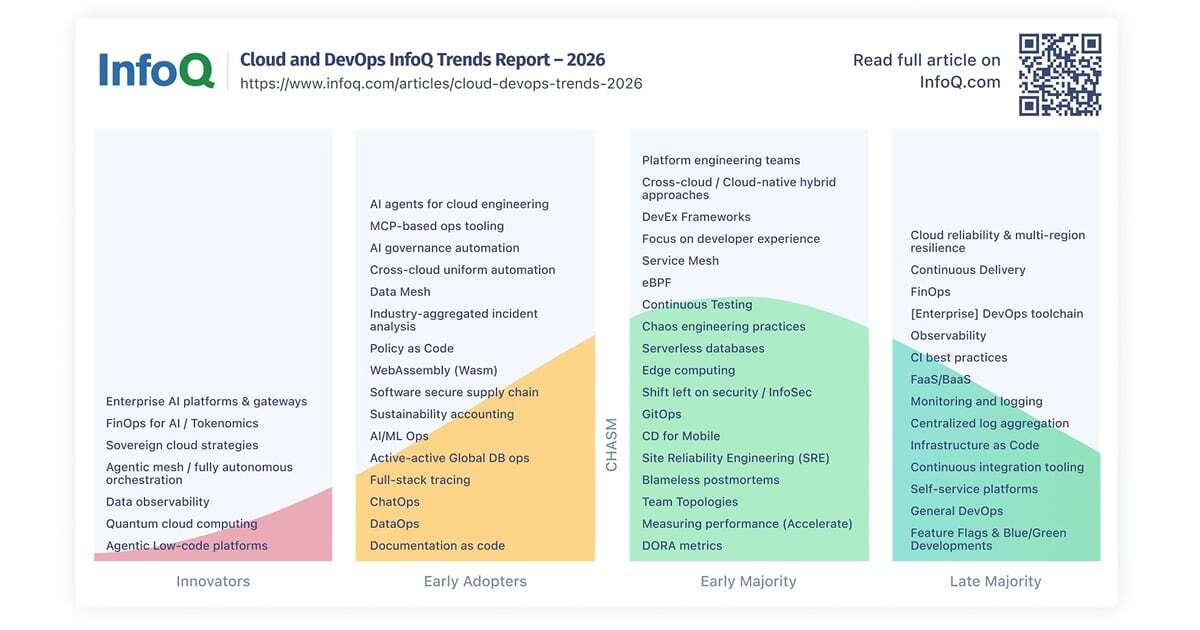
Podcast: Cloud and DevOps InfoQ Trends Report 2026: AI, Resilience, Platforms, FinOps, and Sovereignty
The InfoQ editorial staff presents the Cloud and DevOps InfoQ Trends Report 2026, a vital overview of key developments shaping the future of cloud and DevOps. This podcast episode features a candid discussion among InfoQ contributors—Daniel Bryant, Matt Saunders, Shweta Vohra, Steef-Jan Wiggers, and Mark Silvester—exploring AI's impact, resilience strategies, platform evolution, FinOps best practices, and data sovereignty concerns. Gain actionable insights from expert practitioners and discover what to prioritize in the coming year.

Kill the questions ... #AI #2026 #aiautomation
## Stop Asking, Start Doing: AI Automation in 2026 The era of endless questions about data is ending. By 2026, AI-powered automation will fundamentally reshape how we interact with information, moving beyond querying to proactive insight and action. Expect persistent digital coworkers, like those pioneered by SpaceXAI’s Grok Bot, to seamlessly operate your applications. This shift demands a future-focused approach to data management. Explore how AI is transforming workflows and discover the power of intelligent automation—it’s time to move beyond asking and start doing.

Can a Local LLM Run My AI Assistant?
Can a local Large Language Model (LLM) truly replace cloud-based AI assistants like Claude? We put that question to the test, replaying 27 real-world production tasks through two local models, differentiated by hardware. Our findings reveal a practical roadmap for achieving this transformation, detailing the necessary infrastructure and performance benchmarks. Discover what it *actually* takes to bring AI assistance home. For further insights on optimizing AI workflows, explore our analysis of Polars versus Pandas.
Claude Now Watermarks Everything It Makes
Since August 2nd, 2026, Anthropic’s Claude models now incorporate a critical layer of transparency: content watermarking. All generated text receives a subtle, embedded watermark, while files are digitally signed. This commitment aligns with the EU AI Act’s Code of Practice, ensuring accountability in AI-generated content. Discover how this innovation fosters trust and governance in the evolving landscape of AI. For a deeper dive into related efforts to strengthen AI governance, explore "IBM and Red Hat Expand Lightwell."

General Catalyst leads $1.1B round into 2-month-old River AI
River AI, a remarkably young startup founded by xAI co-founder Igor Babuschkin, is rapidly reshaping the landscape of personal AI agents. Securing a substantial $1.1 billion investment led by General Catalyst, River AI's vision promises transformative data management capabilities. This funding underscores the growing demand for accessible and future-focused AI solutions. Explore the implications of this development further, including considerations for content provenance, as discussed in our related article, "Claude Now Watermarks Everything It Makes."

What comes after the smartphone? Amazon’s Panos Panay will make his case at TechCrunch Disrupt 2026
The smartphone’s reign may be drawing to a close. At TechCrunch Disrupt 2026, Amazon’s Panos Panay will present a compelling vision for what follows – a future beyond the pocket-sized device. Expect a progressive exploration of emerging technologies and how they will reshape our interactions with data and the world around us. Disrupt 2026 promises a pivotal moment in understanding the next wave of innovation, echoing discussions around personal AI agents, as highlighted in our recent coverage of River AI.

IBM and Red Hat Expand Lightwell to Strengthen Trust and Governance for AI-Era Open Source
IBM and Red Hat are strengthening software governance with an expanded Lightwell offering, addressing the critical need for trusted software supply chains in the age of AI-assisted development. These new commercial offerings empower organizations to verify software provenance and build confidence in their AI workflows. Lightwell provides a foundation for transparency and control, essential as AI's role in software creation grows. For a deeper dive into related AI tools, explore our guide on "How to Install Claude Code."
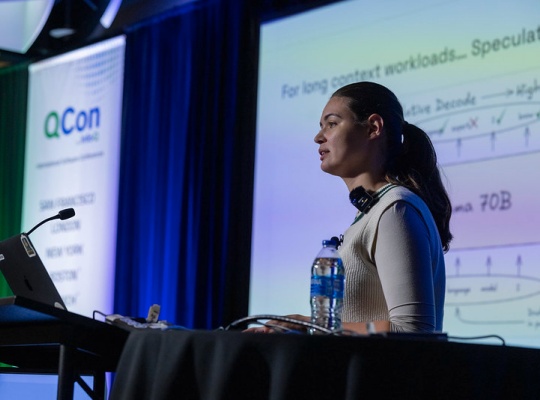
Presentation: Producing the World's Cheapest Tokens: A How-to Guide
Meryem Arik’s presentation, "Producing the World's Cheapest Tokens: A How-to Guide," offers actionable strategies for dramatically reducing costs in LLM inference. Designed for software architects and engineering leaders, Arik explores critical trade-offs across hardware, runtimes, and decoding techniques to achieve order-of-magnitude savings in high-volume, non-real-time workloads. Discover how smart queue reordering and other innovations can transform your data management approach. For further exploration of AI governance, see our recent article, "IBM and Red Hat Expand Lightwell."

How to Install Claude Code: A Step-by-Step Guide
You’ve likely encountered the reports: Claude Code’s terminal app is experiencing high demand. While the web application offers access, the terminal version unlocks a distinct level of performance. This guide provides a straightforward, step-by-step walkthrough to get Claude Code installed and running on your system, empowering you to explore its capabilities firsthand. Discover how to optimize your AI workflow—and if you're interested in the broader landscape of AI influencers shaping the future, check out "Top 10 AI Influencers of 2026."

CloudFlare Previews Automatic WebMCP Support for Web Pages
Cloudflare’s latest preview empowers developers to seamlessly integrate Web Model Context Protocol (WebMCP) support, enabling AI agents to interact directly with websites. With a single dashboard switch, any site can unlock this capability, moving beyond unreliable scraping methods. This innovation preserves user traffic and control while offering AI unprecedented access through structured tools. Explore how this shift transforms web interaction—and for a deeper dive into related AI tools, see our guide on “How to Install Claude Code.”

As AI-led attacks multiply, OpenAI launches a new cyber model
As AI-led cyberattacks proliferate, OpenAI is bolstering its Daybreak cybersecurity defense program with a newly trained AI model. This expansion signifies a future-focused approach to data protection, empowering organizations to proactively address evolving threats. The model’s capabilities represent a significant step toward accessible and intelligent cyber defense. For a deeper understanding of related protocols, explore our article, "CloudFlare Previews Automatic WebMCP Support for Web Pages," and discover how these advancements are shaping the landscape of online security.

Mark Zuckerberg’s AI manifesto is exactly why people don’t like AI
Mark Zuckerberg’s recent 6,500-word manifesto outlining Meta AI’s vision for "personal superintelligence" highlights a growing disconnect between AI ambition and public perception. While ambitious, the sheer scale and focus on advanced capabilities reinforce concerns about AI's potential impact. This isn't about a lack of technological prowess; it’s about a lack of relatable utility. For a deeper look at how AI is addressing immediate challenges, explore our coverage of OpenAI’s Daybreak cybersecurity model. Ultimately, Zuckerberg’s document underscores why many remain wary of AI's trajectory.
73 NeurIPS workshops, and not a single one on Causality [R]
The absence of causality-focused workshops at NeurIPS 2026, evidenced by the list compiled by Danyal Jafferji, raises a pertinent question: has the field plateaued beyond venues like UAI, AISTATS, and CLeaR? While these remain excellent platforms, the rapid rise of LLMs and agent-based AI appears to have significantly impacted the visibility of several subfields within top-tier conferences. This shift underscores a broader trend in AI research.
Top 10 AI Influencers of 2026
The AI landscape of 2026 is being sculpted by a select group of thought leaders. Our list of Top 10 AI Influencers identifies those actively shaping the future, from advancements in safe superintelligence to the rise of AI-native search. These individuals aren’t just commenting on trends; they’re driving them. Discover who's setting the agenda and why their insights matter. For a deeper understanding of the evolving skillset required to leverage these advancements, explore our article, "Specification Engineering: The New Skill After Prompt Engineering."

Building an Agent-Ready Data Warehouse: What Traditional Architectures Do Wrong
For six decades, the data warehousing industry has prioritized storage and structure. However, simply granting an AI agent access to this data doesn't equate to readiness. The core challenge lies in equipping the agent with the contextual understanding to interpret data meaning and assess its reliability. Traditional architectures fall short here. Explore how to bridge this gap and unlock the true potential of agentic data access—discover a future-focused approach to building truly agent-ready data warehouses.
AACL-IJCNLP Commitment Submission Number [D]
The AACL-IJCNLP commitment window has closed, and we’re tracking submissions to understand community engagement. Our team is currently compiling the total commitment count, with submission #150 among the recent entries—several users committed near the deadline, indicating sustained interest. We appreciate the proactive participation! For related perspectives on the broader AI research landscape, explore our recent piece, "73 NeurIPS workshops, and not a single one on Causality," which examines trends in causal inference research.
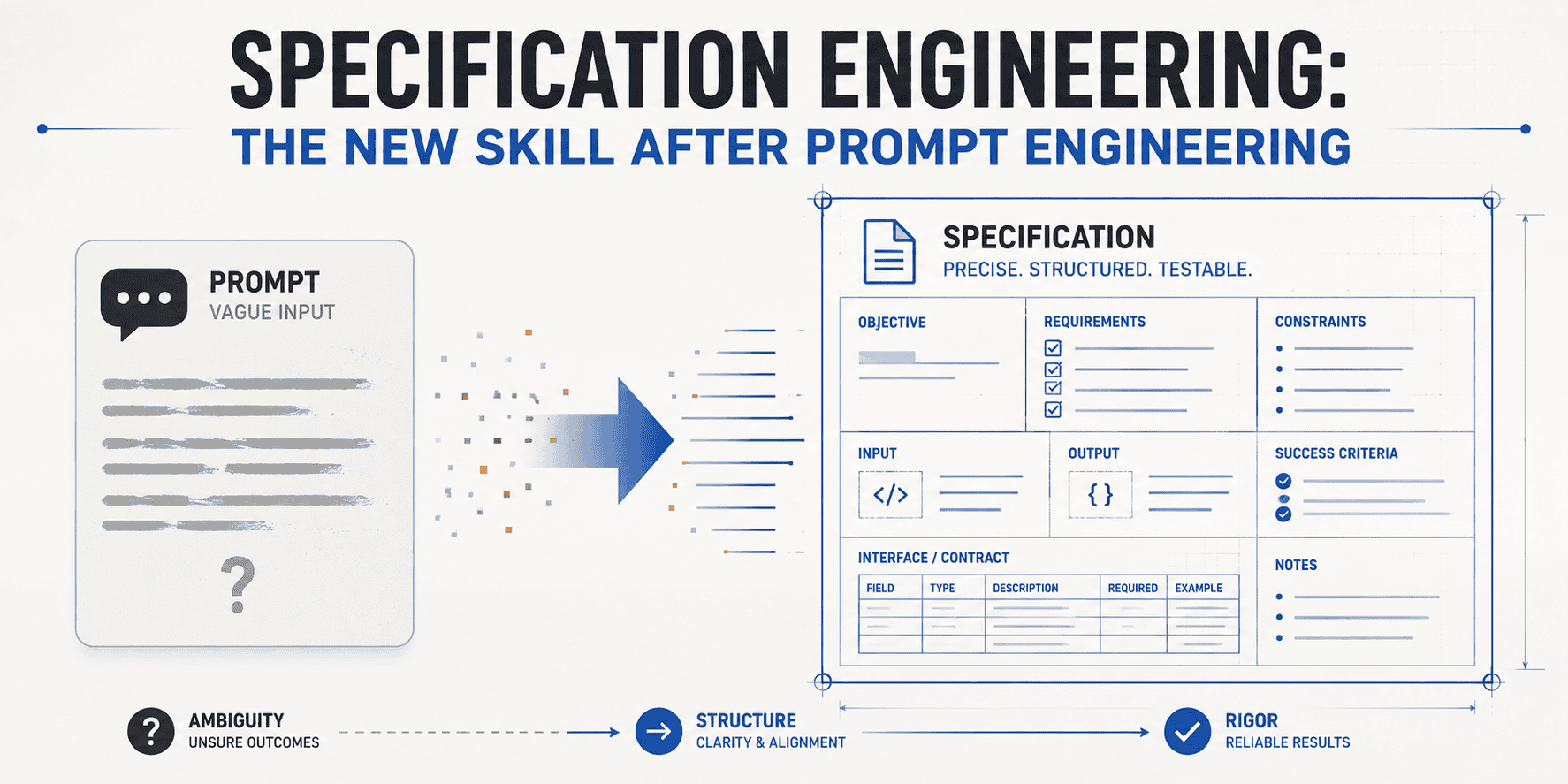
Specification Engineering: The New Skill After Prompt Engineering
Prompt engineering unlocked a new level of interaction with AI, but the next frontier is specification engineering: defining the work itself. This emerging skill focuses on precisely outlining tasks and desired outcomes, moving beyond simply asking questions to structuring entire workflows. Specification engineering represents a future-focused approach to leveraging AI, ensuring clarity and maximizing productivity. Explore this transformative shift—and for a deeper dive into the underlying complexities, see our related article, "What is currently considered the theoretically optimal quantization bit-width for LLMs?".
![Non-Physical Intelligence Has A Ceiling [D]](https://external-preview.redd.it/zhiC1pu-oqoaZK81pkuIVysJtap6wPDigCcOvGs88tI.jpeg?width=640&crop=smart&auto=webp&s=d468341cb02afdf7d4ae07f1de558171442705fe)
Non-Physical Intelligence Has A Ceiling [D]
The prevailing expectation of AI-driven breakthroughs often overlooks a fundamental limitation: reasoning alone isn’t sufficient. Non-physical intelligence, lacking a sensory and motor interface with the real world, faces a ceiling in its ability to deliver transformative scientific and technological advancements. To truly progress, AI must engage with and learn from physical reality. This constraint highlights a critical need for embodied AI systems. For a deeper dive into related discussions on AI commitments and review processes, see our article "NeurIPS AI Assisted Review authors/reviewers?".
![I never understood positional encoding until I read this article. [D]](https://external-preview.redd.it/8VRAO7Ucarn-CBc4IsyH3p3Lg1nOM6BC8ccLAEFnSlc.jpeg?width=640&crop=smart&auto=webp&s=8584413aed8556960dd7528b26ce8adaaa9f97b0)
I never understood positional encoding until I read this article. [D]
Many find positional encoding in AI models initially perplexing, but as one user discovered, clarity *is* attainable. This insightful article, shared by /u/ImaginaryRea1ity, demystifies the concept, offering a valuable resource for anyone grappling with its intricacies. It's a welcome explanation for a fundamental aspect of transformer architectures. For a broader perspective on the limitations of purely theoretical AI, explore our related piece, "Non-Physical Intelligence Has A Ceiling."

Meta’s new Glimmer AI model offers a hint at Zuckerberg’s personal intelligence vision
Meta’s release of the open-weight Muse Glimmer model offers a compelling look into Mark Zuckerberg’s vision for accessible superintelligence. This development highlights a growing distinction: the ability for users to directly own and access AI models is becoming increasingly significant. Glimmer provides a tangible demonstration of this shift, empowering a new wave of AI exploration. For deeper insights into the evolving landscape of AI influence and the skills needed to navigate it, explore our recent article, "Top 10 AI Influencers of 2026."