ai
ai on Beyond Market Intelligence: a running collection of 507 stories we have gathered and hand-picked because they are worth your time. Every post here touches on ai in some way — the news, the analysis, the deep dives, and the occasional surprise find. Acme AI is the next-generation, AI-powered spreadsheet platform built to replace Excel and redefine how analysts, data scientists, and enterprise teams work with data. New stories are added to this page as we find them, so check back if you want to keep up with what is happening around ai, or subscribe to the RSS feed to get them as soon as they are published. Browse the collection below, or head back to the homepage to see everything Beyond Market Intelligence is covering right now.
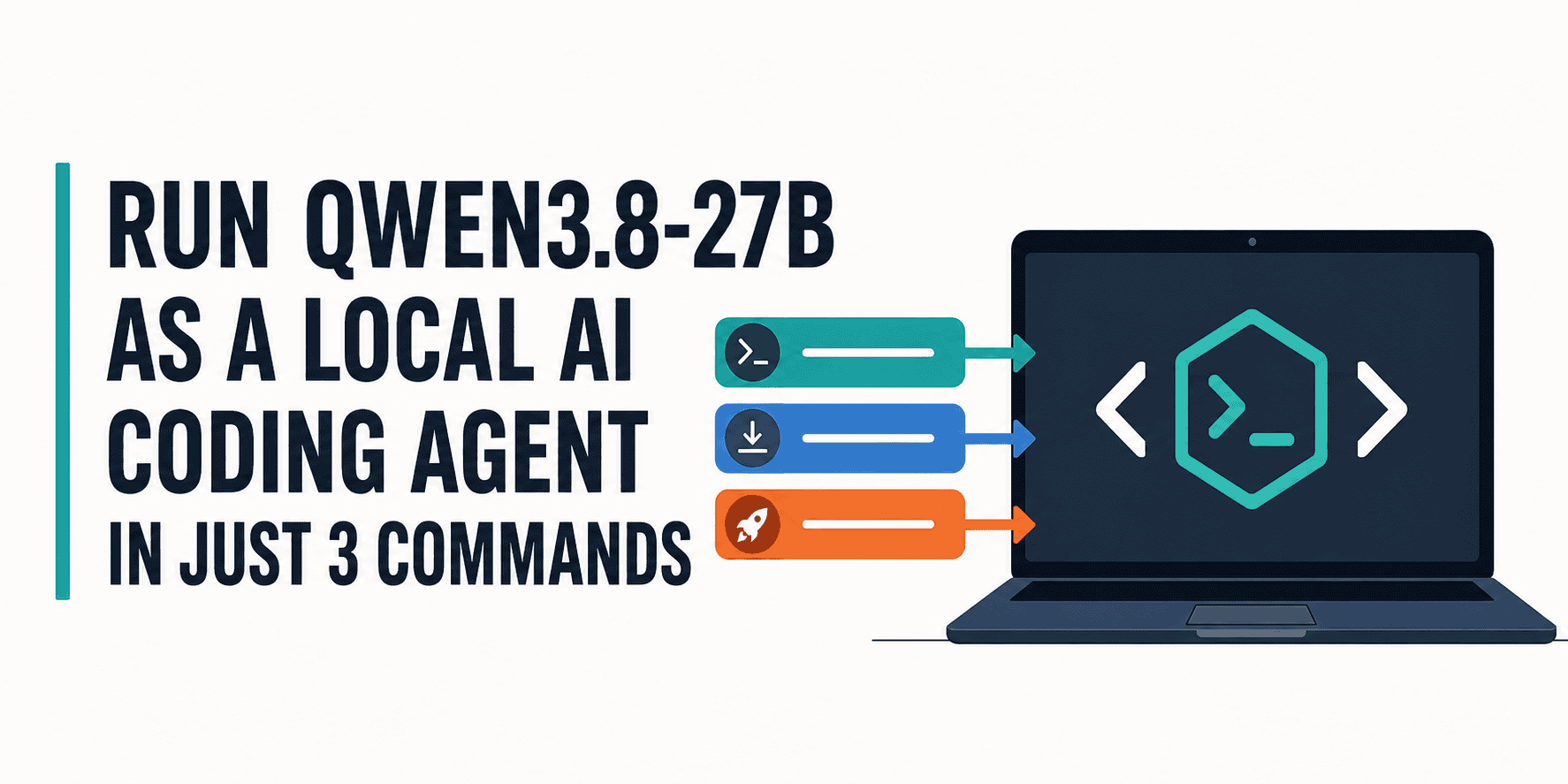
Run Qwen3.8-27B as a Local AI Coding Agent in Just 3 Commands
Unlock powerful AI coding assistance locally with just three commands. Download Ollama, pull the Qwen3.8-27B model, and launch it seamlessly with OpenCode – no complex setup required. This streamlined process empowers developers to leverage a robust language model for coding tasks directly on their machines. For those exploring the broader landscape of agentic workflows, consider our article on Netflix’s recent open-source agentic workflow for causal inference. Experience the future of local AI development today.

Reach Capital raises $265M Fund V to back AI founders building to ‘expand human potential’
Reach Capital has secured $265 million for Fund V, demonstrating strong investor confidence in the future of AI-driven innovation. This oversubscribed fund will specifically support founders building AI solutions designed to expand human potential—a critical focus as organizations tackle the complex engineering challenges of building accurate, secure, and reliable AI. The investment underscores a progressive vision for data management, echoing the rapid growth seen in companies like Higgsfield, which recently achieved a $5.4 billion valuation.

Amazon, which started off selling books, is destroying rare texts to train AI
Amazon’s expansion into AI is raising critical questions about data sourcing. Reports indicate the company is destroying rare books—incredibly valuable resources for training Large Language Models—to feed its AI systems. This practice highlights a growing tension: while vast datasets are essential for LLM development, the reliance on irreplaceable historical materials presents a significant ethical and preservation concern.

How Heidi built production-ready AI for healthcare at global scale
Building production-ready AI for healthcare at scale demands a robust architecture, particularly when navigating stringent compliance requirements. Australian AI Care Partner, Heidi, provides a compelling case study. Its AI Scribe automates administrative tasks for clinicians across 190 countries, processing roughly 2.7 million patient interactions weekly. This global reach is underpinned by a data-first approach, leveraging MongoDB Atlas for flexible data management and AI-ready features like Vector Search. As Heidi’s co-founder, Yu Liu, emphasizes, "Reliability engineering is trust engineering.”

Groq raises $350M to fuel its pivot from AI chips to neocloud
Groq has secured $350 million in funding, achieving a $3.5 billion valuation, signaling a significant shift in the AI landscape. The company, previously known for its specialized AI chips, is now strategically pivoting to a “neocloud” business model while simultaneously expanding its data center infrastructure, powered by Nvidia. This move underscores a growing trend toward integrated hardware and software solutions. For a deeper understanding of AI's impact on data workflows, explore our article on how Grab is leveraging AI agents to streamline analytics.

How to Perform Effective Project Management with AI
Software engineers, reclaim your time and elevate your project management. This post explores how Large Language Models (LLMs) can transform your workflow, moving beyond traditional spreadsheet limitations. Discover actionable strategies to leverage AI for task prioritization, progress tracking, and risk mitigation—ultimately boosting productivity and reducing burnout. We'll examine practical applications and demonstrate how to integrate AI tools seamlessly into your existing processes. For a deeper dive into the complexities of autonomous agents and capacity planning, see our related article, "Three Generations of Autoscaling."

Nvidia investing $1.5B in SoftBank data center developer behind OpenAI project
Nvidia is strategically bolstering its AI infrastructure, investing $1.5 billion in SoftBank’s data center developer, a move that guarantees Nvidia’s chips will power a dedicated OpenAI data center. This significant investment underscores the escalating demand for specialized hardware to support advanced AI models. The move positions Nvidia at the forefront of this rapidly evolving landscape, ensuring its technology remains central to groundbreaking AI initiatives. For a broader perspective on the shifting landscape of AI hardware, explore our article on Groq’s recent funding round.
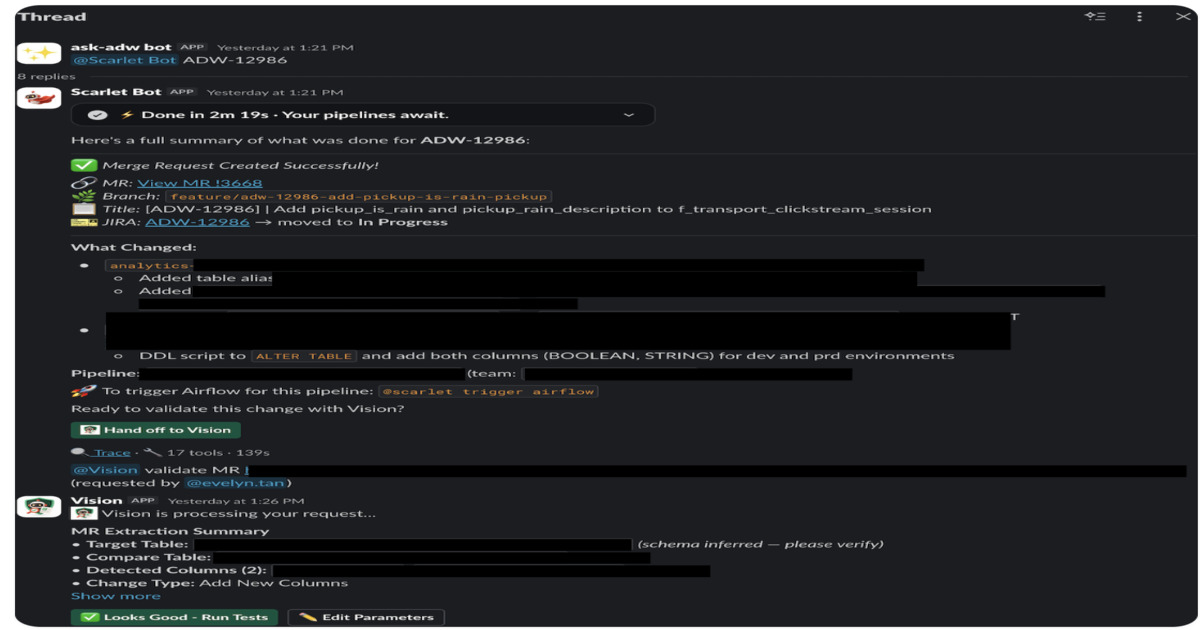
Grab Cuts Mechanical Analytics Work From 44% to 30% with AI Agents
Grab has demonstrably transformed its analytics workflows with AI agents, achieving a significant 30% reduction in mechanical analyst work since February – a 44% decrease. This progress stems from a powerful combination of agent autonomy, certified data, contextual awareness, and crucial human oversight. Self-service analytics are increasingly handling routine metric, data, and SQL requests, freeing analysts for higher-value tasks. Interested in the underlying architectural principles? Explore "Agentic Fitness Functions" for a deeper dive into extending evolutionary architecture.

Article: Agentic Fitness Functions: Extending Evolutionary Architecture Beyond Deterministic Rules
Traditional evolutionary architecture relies on deterministic rules to protect key metrics, but often struggles with broader architectural intent. Our latest research, "Agentic Fitness Functions," explores a transformative approach: combining AI agents with versioned rubrics to evaluate complex concerns like boundary fidelity and semantic contract drift. Discover how this innovation enables continuous, calibrated feedback loops, elevating governance and fostering more robust system design. For a deeper dive into optimizing AI selection, see our article, "Stop overthinking which AI to use. Do this."

Stop overthinking which AI to use. Do this.
Stop second-guessing which AI tool to leverage. The landscape is vast, and choosing can feel overwhelming. Our solution streamlines this process, empowering you to focus on results, not experimentation. We offer a curated, integrated environment designed to optimize your workflows and unlock data insights efficiently. Explore a future where AI selection is seamless—discover how to transform your productivity today. For deeper context on navigating the evolving AI landscape, see our recent article, "Why people aren’t buying Mark Zuckerberg’s AI future."

Why people aren’t buying Mark Zuckerberg’s AI future
Many remain skeptical of Mark Zuckerberg’s ambitious AI future, a sentiment explored in the latest episode of Equity. While Meta invests heavily, questions linger about practical applications and widespread adoption. Concerns extend beyond technological feasibility to encompass broader trust issues within the AI landscape. As Anthropic CEO Dario Amodei recently noted, a “crisis of trust” is impacting the field. Explore deeper insights into the evolving AI ecosystem, including Stripe’s reported acquisition of OpenRouter, a potential “Stripe for AI.”

Stripe will reportedly acquire AI gateway startup OpenRouter for $7B+
Stripe is reportedly acquiring OpenRouter, an AI gateway startup, in a deal exceeding $7 billion, signaling a significant shift in the burgeoning AI infrastructure landscape. OpenRouter’s CEO has notably positioned the company as "Stripe for AI," suggesting a similar approach to simplifying access and integration for a complex technology. This acquisition underscores the growing demand for streamlined AI tool access. For a deeper understanding of building robust AI applications, explore our article, "Designing a Persistent Knowledge Layer That Refuses to Guess."

Designing a Persistent Knowledge Layer That Refuses to Guess
Traditional Retrieval-Augmented Generation (RAG) struggles with a fundamental limitation: it retrieves but doesn’t remember. Our blueprint, "Designing a Persistent Knowledge Layer That Refuses to Guess," offers a vendor-neutral solution for applications requiring accumulated understanding. This comprehensive guide details a complete Azure-native implementation—leveraging Microsoft Foundry, Azure AI Search, Cosmos DB, and FastAPI—demonstrated with a property-insurance corpus. Explore how building a persistent knowledge layer elevates RAG beyond simple retrieval, ensuring contextually relevant and consistently informed responses.

Anthropic CEO says AI backlash is ‘fundamentally a crisis of trust’
Anthropic CEO Dario Amodei contends the recent AI skepticism isn't a reflection of inherent danger, but rather “fundamentally a crisis of trust.” Pushing back against perceptions of pessimism, Amodei emphasizes the need to rebuild confidence in AI’s development and deployment. This perspective arrives as the field rapidly evolves, with companies like SpaceX integrating AI coding tools—as evidenced by their recent acquisition of Cursor. Explore the technical details of AI transparency initiatives, like Claude’s watermarking system, for a deeper understanding of this evolving landscape.

Anthropic shares more details about how Claude’s new watermarks will work
Anthropic has unveiled further details regarding Claude’s new AI-powered watermarking system, designed to identify AI-generated text. The technology embeds subtle, statistically improbable patterns undetectable to the human eye, yet reliably detectable by a verification tool. While basic editing may alter the text, the watermark’s underlying structure remains intact, hindering circumvention. This system notably addresses concerns regarding code generation, ensuring provenance.

How to Shine as a Data Scientist in the Vibe Coding Era
The rise of AI coding tools like those explored in "How to Install Codex CLI" signals a significant shift for data scientists. Coding proficiency is increasingly becoming a commodity; the future belongs to those who leverage these tools strategically. This post outlines how to thrive in this "Vibe Coding Era," focusing on higher-level skills like problem framing, insightful analysis, and communicating data-driven narratives. Discover how to evolve beyond coding and become the indispensable data scientist of tomorrow.

SpaceX officially closes its Cursor acquisition
SpaceX has finalized its acquisition of Cursor, the AI coding startup, integrating its capabilities into the company’s expanding technological ecosystem. This move signals SpaceX’s continued commitment to leveraging artificial intelligence to streamline workflows and accelerate innovation. Cursor’s AI-powered coding assistance tools promise to empower engineers and developers, enhancing productivity across various projects. For those familiar with Codex, Cursor's functionality will feel intuitive – explore a deeper dive into using Codex with our guide, "How to Install Codex CLI."
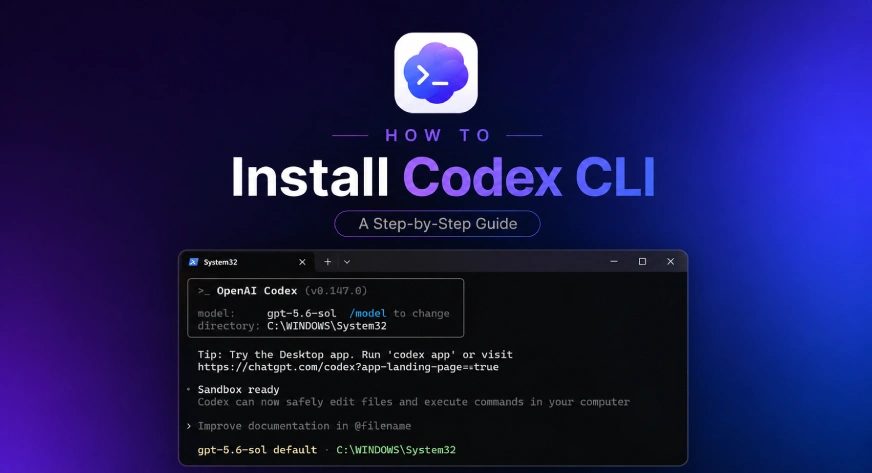
How to Install Codex CLI: A Step-by-Step Guide
Unlock the power of Codex AI directly within your development environment. If you’re already familiar with Codex in ChatGPT, the CLI will feel intuitive, allowing seamless integration with your repository, shell, and testing tools. Installation is remarkably simple – a single command gets you started. However, carefully reviewing the subsequent setup choices is crucial for optimal performance. Explore the full installation process in our step-by-step guide, and consider “I'm looking to pull text from schematics…” for related insights.
How much does adding an honest limitations section hurt the paper? [D]
Addressing limitations honestly in research papers—while generally beneficial—raises critical questions about reviewer bias and potential requests for remediation. Does openly acknowledging constraints negatively impact perception, or will reviewers demand fixes outlined in the limitations section? Furthermore, the introduction of AI reviewers introduces a novel consideration: could these limitations inadvertently bias algorithmic assessment? Exploring these nuances, as discussed in "My Model Was Cheating on Its Own Test," highlights the complexities of transparency in AI research.
How to build an adaptive learning/recommendation system for a question bank? [D]
Building an adaptive learning system for your question bank is achievable through a carefully designed recommendation engine. This system leverages AI/ML to understand individual student performance, identifying strengths and weaknesses to tailor question selection. The core involves continuously assessing knowledge gaps and strategically reintroducing previously covered material to reinforce retention. To avoid demotivation, difficulty levels are dynamically adjusted based on ongoing performance. For a deeper dive into related AI applications, explore our article, "How to Build a Simple AI Web Scraper with Python."

Self-driving trucks are officially testing on California highways
The future of freight is arriving on California highways. Aurora Innovation and Kodiak AI, leading developers of self-driving truck technology, have secured permits from the California Department of Motor Vehicles to begin official testing. This marks a significant step toward wider adoption of autonomous trucking, promising increased efficiency and potentially reshaping the logistics landscape. Interested in the broader implications of AI-driven systems?
For the people who got reviews back from neurips, cvpr, eccv, etc and also tested their paper through an agentic reviewer like the stanford one, how different were the reviews? [D]
For those who recently received reviews from NeurIPS, CVPR, ECCV, or similar conferences, and also utilized agentic reviewer tools like the Stanford model, a compelling question arises: how do the reviews compare? We're exploring the divergence between human and LLM assessments, seeking insights into this evolving landscape. Early indications suggest significant variations, prompting a deeper understanding of how AI-assisted review impacts the peer review process. For further context on related challenges, see our article, "My Model Was Cheating on Its Own Test."

Thrive’s Joshua Kushner chides Silicon Valley VCs over AI euphoria
Thrive Capital’s Joshua Kushner is urging caution amidst the current AI investment frenzy. In his inaugural investment letter, Kushner acknowledges the immense opportunity within AI but stresses the importance of maintaining rigorous investment discipline. He cautions against allowing excitement to overshadow sound financial judgment. This perspective arrives as the broader tech landscape rapidly explores AI’s potential, exemplified by advancements like Aurora Innovation and Kodiak AI's self-driving truck testing on California highways—a development we recently covered.
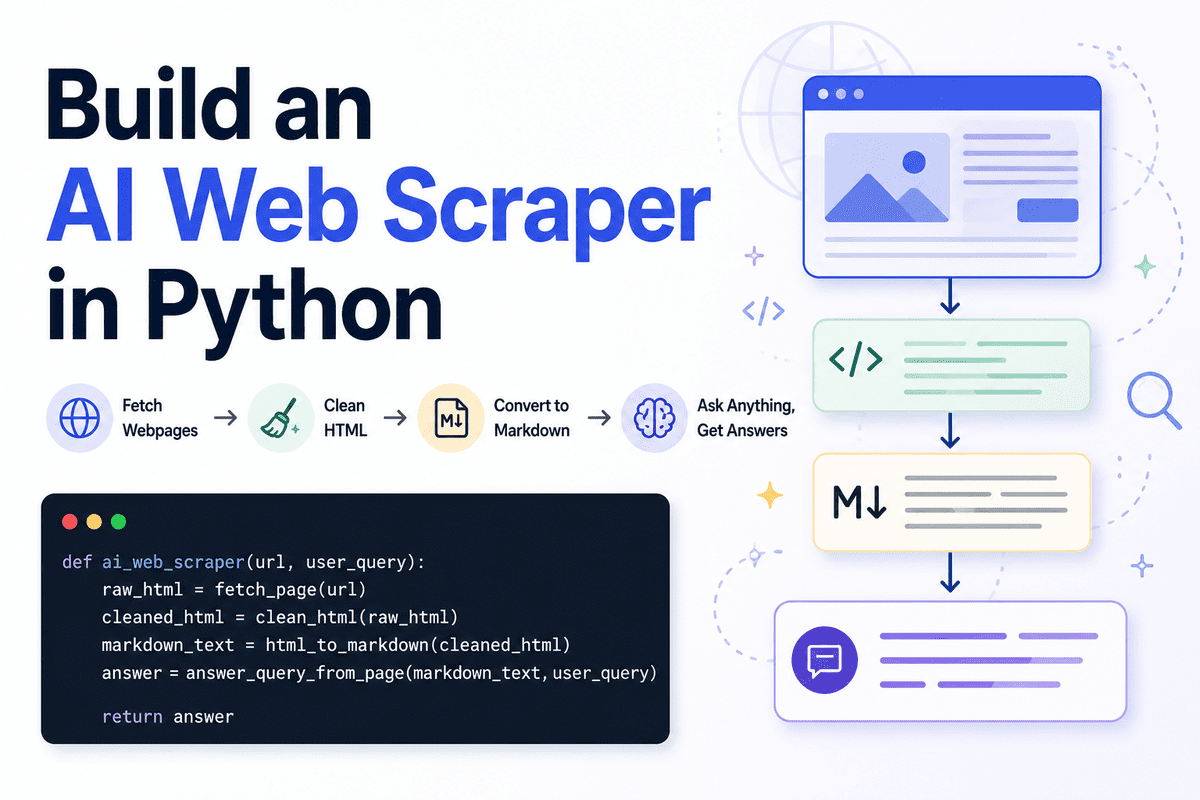
How to Build a Simple AI Web Scraper with Python
Unlock the power of any webpage with a simple AI web scraper built using Python. This guide demonstrates how to transform ordinary websites into lightweight, LLM-powered QA engines. By efficiently cleaning HTML, converting content to Markdown, and refining prompts, you can extract focused answers while minimizing token usage. It’s an accessible entry point to agentic AI—much like the exploration of AI agents discussed in "5 Fun Agentic AI Papers to Read." Discover a practical approach to harnessing AI for targeted data extraction and insightful question-answering.