algorithm
111 stories filed under algorithm on Beyond Market Intelligence. The newest of them: “Test your model's foundation before trusting its results”, “Discover how Apple Intelligence transforms health data into actionable insights.”, and “Discover how AI transforms data work into intuitive conversations”. Every model leans on assumptions, but how often do we pause to check if they still hold? Apple's revamped Health app is stepping up, using Apple Intelligence to turn raw data into two numbers that actually matter: your health age and readiness score. Acme AI is the next-generation, AI-powered spreadsheet platform built to replace Excel and redefine how analysts, data scientists, and enterprise teams work… The list below is every algorithm story on Beyond Market Intelligence, newest first.

Test your model's foundation before trusting its results
Every model leans on assumptions, but how often do we pause to check if they still hold? This piece tackles that question head-on, arguing that reliability isn't a one-time achievement but a habit of revisiting what we take for granted. It's a sharp reminder that data work rewards curiosity over complacency. If you're building systems, this is worth your attention. For a deeper look at how similar principles apply in practice, our related article on real-world computer vision deployments offers a fitting follow-up.

Discover how Apple Intelligence transforms health data into actionable insights.
Apple's revamped Health app is stepping up, using Apple Intelligence to turn raw data into two numbers that actually matter: your health age and readiness score. That's a smarter way to think about where you stand daily. It moves beyond passive tracking toward something actionable. If you're exploring how AI reshapes everyday tools, this is worth a look. And for more on Apple's momentum, our coverage of Secure Photos Start at the Source: Apple's New Camera Provenance System shows similar care for data integrity.

Discover how AI transforms data work into intuitive conversations
Asking Astra to handle a task is a reasonable impulse, but it deserves a moment of reflection first. The real question is whether you trust the output enough to act on it. We see AI as a tool for empowerment, not a substitute for judgment. It can streamline the mundane, but you remain the decision-maker. For those wanting to understand the underlying mechanics better, our guide on distributed algorithms offers a solid starting point.

Discover how AI could transform the $1 million math challenge
A $1 million bounty for the Navier-Stokes problem is serious stakes, and a NYU mathematician claims OpenAI didn't play fair. The accusation suggests the lab may have leveraged its AI resources to gain an unfair edge in a contest designed to reward individual genius. That feels less like innovation and more like a workaround. If true, it undermines the spirit of the challenge. For those tracking how far AI can push boundaries, this raises questions about competition and ethics.
AI Evolves: GPT-6 Astra Redefines Data Exploration.
GPT-6 Astra isn't just another step forward; it's a leap into how we interact with data. This new model doesn't merely answer questions, it explores the relationships hidden in your spreadsheets, turning raw numbers into narratives you can act on. For anyone who has felt buried under columns and formulas, this is an invitation to work smarter, not harder. We're eager to see how you'll use it.
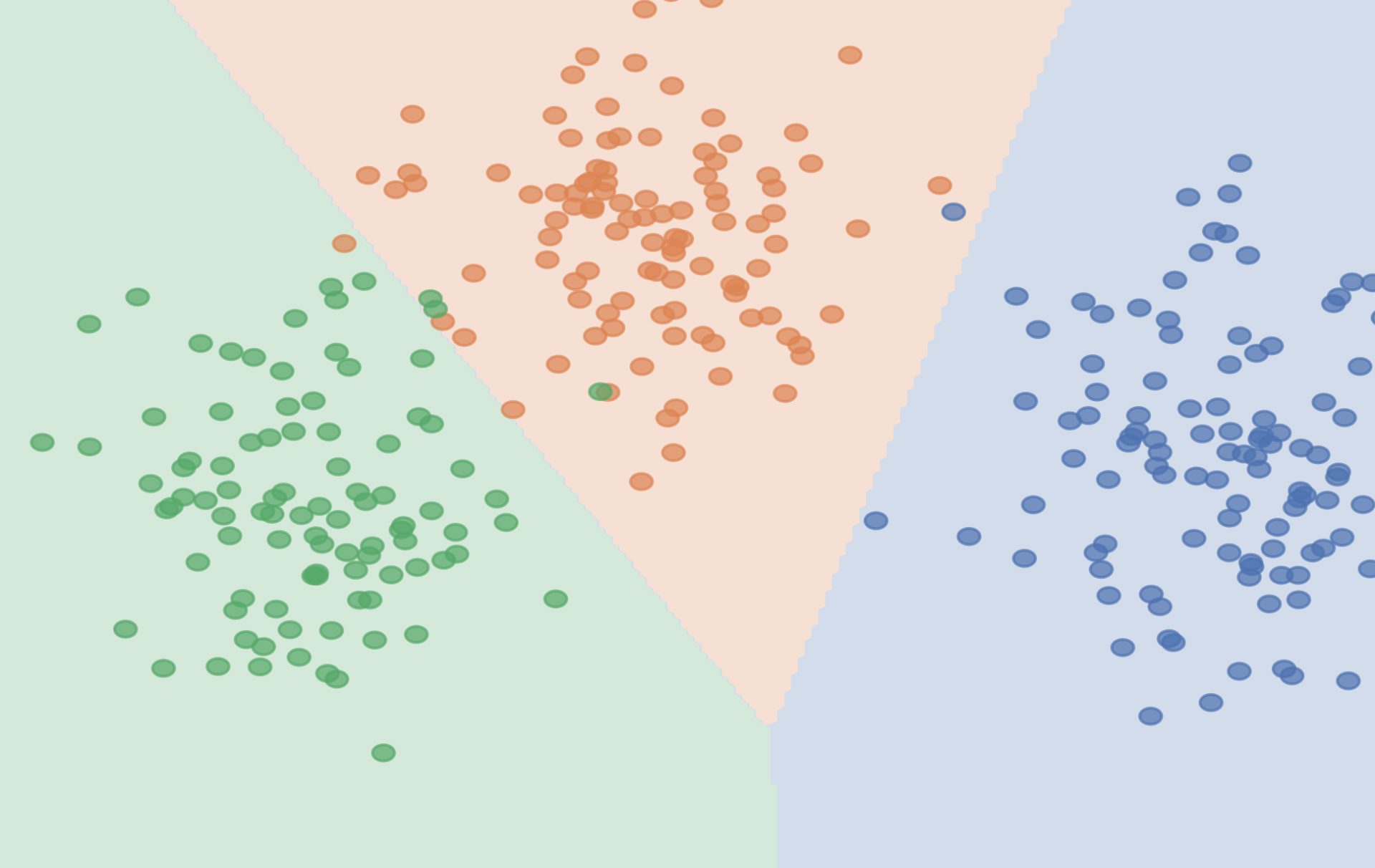
Simplify Complex Real Estate Data with Linear Discriminant Analysis
A real-estate dataset rarely gives you the luxury of clean, low-dimensional features. When classification tasks start drowning in noise, Linear Discriminant Analysis steps in to cut through the clutter. Applying LDA for dimensionality reduction sharpens class separation rather than just shrinking data. It's a practical reminder that reducing dimensions is about preserving what matters most for prediction. For those ready to push further into advanced modeling, our guide on distributed training offers a natural next step.
Discover how AI turns code into a film in under a minute.
A 37-second film is a tight constraint, and Claude Fable 5.1 is making waves by turning a code challenge into a miniature cinematic moment. It's a clever stress test, one that shows how far AI has come in handling creative, time-bound tasks. We're watching a shift in what's possible, and it's worth exploring how these models handle pressure. If you're curious about the mechanics behind such feats, our guide on distributed algorithms offers a solid foundation.

Shopify's Gisting Technique Compresses AI Prompts for Faster Inference
Shopify's engineering team has introduced gisting, a technique that compresses long LLM prompts into a smaller set of learned tokens. The result? Better throughput and lower inference costs without sacrificing performance. That's a practical step toward making AI more accessible, especially for teams wrestling with unwieldy system prompts. We see this as a meaningful move for developers who want efficiency without complexity.

From Notebook to API: Making Your Churn Model Actually Usable
Training a churn classifier that performs flawlessly is one thing. Making it useful to the rest of your software is where the real work begins. This story follows that exact pivot: moving from a perfect model to a practical FastAPI service that other systems can actually call. It's a grounded, honest look at the gap between building and deploying. If you're wrestling with similar transitions, you might also appreciate our piece on navigating AI/ML job requirements.

Explore the architecture that makes OpenCode a smarter choice for AI coding.
OpenCode has outgrown the conversation about model choice. That freedom matters, but it's no longer the headline. What draws us in is the architecture underneath, and the deliberate trade-offs that shape how it works, especially if you're coming from Claude Code. This isn't just another agent. It's a different way to think about building. If you're also exploring how distributed systems power modern AI, our guide to distributed training offers a useful parallel. For now, let's look at what makes OpenCode's design genuinely different.
Discover how modern AI builds on HMMs for unsupervised data exploration
Hidden Markov Models still earn their place in unsupervised exploration, especially when your dataset's structure isn't neatly labeled. They're not flashy, but they're interpretable and reliable for spotting hidden states in sequential data. That said, deep learning approaches have stepped in for larger-scale semantic discovery, offering more flexibility at the cost of transparency. For your baseline, HMMs remain a solid starting point, not a relic. Pairing them with modern techniques could give you the best of both worlds.

Instagram limits AI profiles that hide their artificial nature
Instagram is putting new limits on undisclosed AI profiles, and that's a move worth paying attention to. As frustration over AI influencers grows, the platform is quietly curbing their reach unless they're clearly labeled. It's a practical step toward honesty in a space where synthetic personas often blur the line between entertainment and deception. For users tired of guessing who's real, this adds a layer of clarity.

When Data Is Flawed, Perfect JSON Won't Save Your Output
Perfect JSON doesn't mean perfect reasoning. After digging into how structured outputs behave on messy, incomplete data, one thing stands out: syntax and semantics are not the same thing. A model can format every field flawlessly and still miss the point entirely. That gap matters. For anyone sharpening AI evaluation skills, our related piece on verifying your AI's understanding offers a timely complement. The takeaway? Structure is a tool, not a verdict.

Discover how AI transforms video search across massive datasets.
Clipto just crossed $250 million in valuation, and it's easy to see why. The three-year-old startup hit $15 million in annual recurring revenue and turned profitable before raising another $15 million. That's a discipline most founders skip. It proves you can build sustainable AI tools without burning through capital first. If you're curious how such systems handle massive video data, our piece on real-world computer vision deployments pairs well with this story.
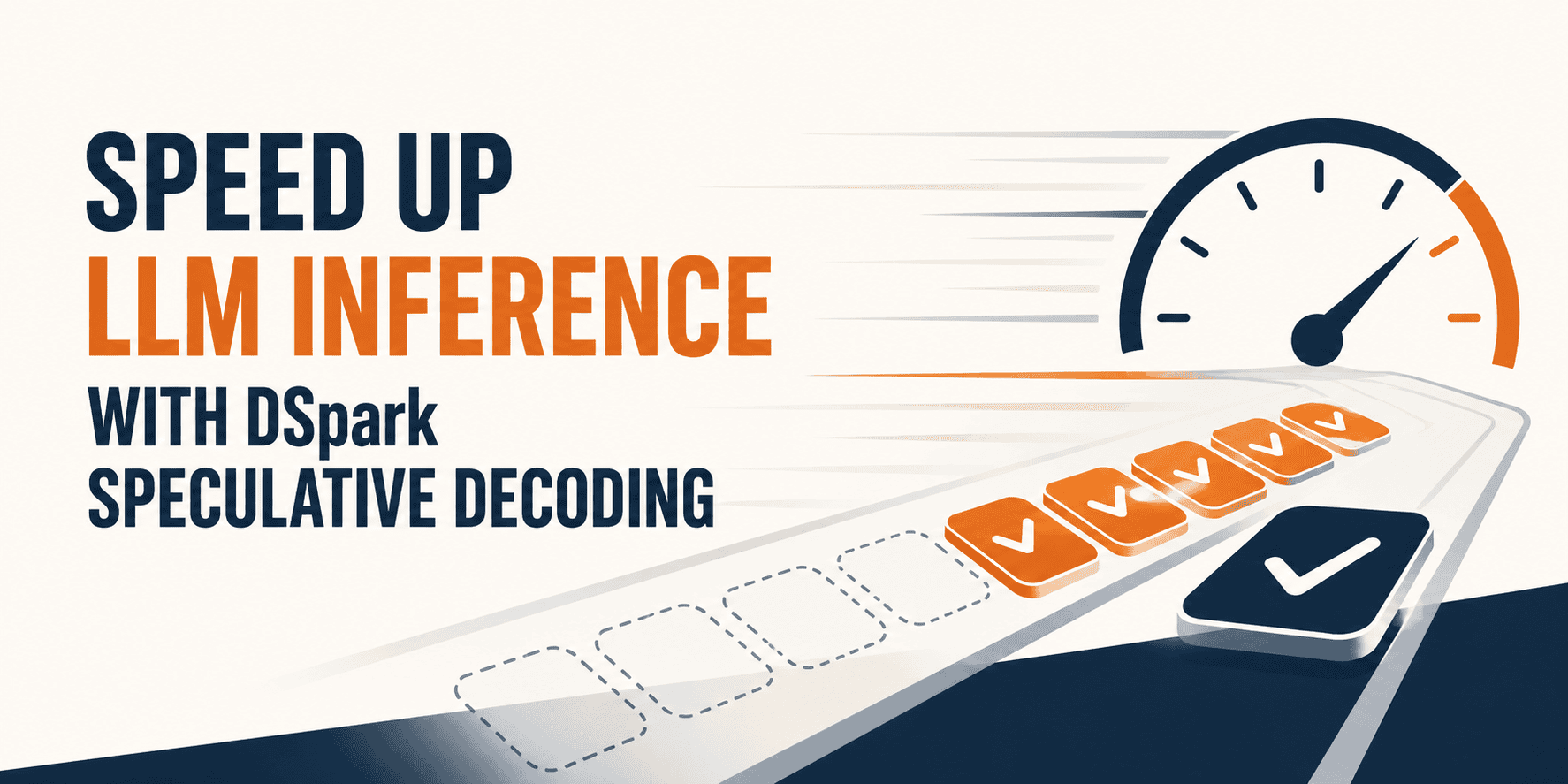
Unlock faster local LLM inference with DSpark speculative decoding
Waiting for the local model to generate its next token can feel like watching paint dry. DSpark speculative decoding changes that. By using a smaller draft model to propose candidates and the larger Qwen3-8B to verify them, it accelerates generation on the same GPU. We appreciate that this works directly with llama.cpp and CUDA, making it practical for your own hardware. It is a straightforward approach to reclaiming speed. For more on the broader concepts, our guide to distributed training is a helpful companion.

Discover how a century-old algorithm outperforms modern anomaly detection methods.
A 100-year-old statistical process control method is outperforming state-of-the-art time series anomaly detection on a popular benchmark. Eamonn Keogh tested the TSB-AD datasets and found his simple SPC approach achieved perfect results where published papers claim progress. That should give the community pause. If a century-old algorithm trivializes your benchmark, the benchmark is the problem, not the solution. Keogh has done most of the work to build harder datasets. It is time we paid attention to that challenge instead of celebrating illusionary wins.
7,000 papers leaked early: What that GitHub list actually means
A leaked GitHub link claiming to list NeurIPS accepted papers has surfaced, and it's raising more questions than answers. The HTML file reportedly contains around 7,000 submissions, some anonymized, with details that appear suspiciously accurate. If this is real, it's a significant early leak. But it's just as plausible this is a coincidence or a well-constructed guess. We'd advise caution before treating it as fact.

Choose Your Coding Agent: A Practical Guide to Claude and Codex
Choosing the right coding agent can feel like navigating a maze, especially when both Claude Code and Codex promise to streamline your workflow. This guide cuts through the noise, offering a clear breakdown of where each tool shines. It's a practical read for anyone tired of guessing which assistant fits which task. I appreciate how it prioritizes real-world application over hype.
Explore how a simple model estimates NeurIPS acceptance from your scores.
A quick, practical tool just landed for anyone tired of refreshing review portals. A Reddit user built a small model that estimates NeurIPS acceptance odds from scores and an assumed acceptance rate. It is a simple calculator, not a crystal ball, but it gives researchers a useful sense of where they stand before decisions land. That sort of accessible, data-driven clarity is exactly what the future of academic tools should look like.

Understanding AI Code Estimates for Better Communication
If you've leaned on Claude for coding, you've likely noticed its time estimates can miss the mark. That's not a flaw to fix; it's a signal about how LLMs process complexity. We think that gap actually makes you a sharper communicator, pushing you to clarify scope and break work into smaller steps. It's a practical lesson in collaboration. For more on building that technical foundation, our guide to distributed training algorithms pairs well with this mindset.

Bluesky gives users control over who sees their posts
Bluesky's new algorithmic opt-out feature gives users a quieter path forward, letting them post without chasing virality. It's a simple acknowledgment that not everyone wants the feed's spotlight; sometimes, reaching your own followers is the goal. That's a refreshing shift toward user agency in a space often dominated by engagement metrics. If you're exploring intentional tech choices, our piece on a smartphone alternative for intentional living pairs well with this mindset. This move feels less like a limitation and more like a return to control.

Meta's settlement trades kids' data for age-detection privacy tools
Tucked inside Meta's $18 billion settlement with 29 states sits a clause that deserves a closer look: a legal pass allowing the company to keep certain data from children under 13, specifically to train and test its age-detection models. That is a trade-off worth pausing over. Protecting kids while quietly retaining their information for model refinement feels less like a clean win and more like a compromise with sharp edges. For anyone tracking how AI companies navigate consent, this deal sets a revealing precedent.

Discover how to guide AI agents toward code you can trust
Writing code with AI agents is about more than generating lines faster. It's about steering the output toward quality. This practical guide cuts through the noise, showing you how to work with these tools to get better code, not just more of it. We appreciate the focus on real workflows over hype. For a deeper look at the underlying mechanics, you might also explore our piece, "Unlock LLM Training: A Practical Guide to Distributed Algorithms."

Why Your Best Fraud Model Might Not Belong in Production
Six models trained for fraud detection, yet the one with the best metrics never made it to production. That's the honest hurdle this final-year project exposes: evaluation scores don't always translate into real-world deployment. It's a grounded lesson in how operational constraints, not just accuracy, shape what actually ships. For anyone moving from academic benchmarks to practical systems, this is a useful reality check.