analysis
19 stories filed under analysis on Beyond Market Intelligence. The newest of them: “From 719 Math Papers: Data Science Gets Smarter at Matching Messy Data”, “Let Coding Agents Handle the Work So You Can Focus on Insight”, and “Unlocking Text's Potential: Exploring Vector Spaces and Classification”. OpenAI tackled 719 math papers to prove that AI can reliably match messy data, choose representative examples, and generate comparison sets. Data science runs on insight, not output volume. Acme AI is the next-generation, AI-powered spreadsheet platform built to replace Excel and redefine how analysts, data scientists, and enterprise teams work… The list below is every analysis story on Beyond Market Intelligence, newest first.
From 719 Math Papers: Data Science Gets Smarter at Matching Messy Data
OpenAI tackled 719 math papers to prove that AI can reliably match messy data, choose representative examples, and generate comparison sets. That is not just an academic exercise; it signals a practical shift in how we clean and connect information. Data science gets smarter when it can handle the real-world noise spreadsheets struggle with. For a hands-on comparison of routing accuracy and reliability, explore *Seven Decision Models Put to the Test Against a Generative LLM*.

Let Coding Agents Handle the Work So You Can Focus on Insight
Data science runs on insight, not output volume. That's the argument in "Insight Is Still the Currency of Data Science," and it lands with refreshing clarity. Let coding agents handle the grunt work so you can focus on analysis, then build review practices that match that new rhythm. It's a smart reframing of automation as a tool for deeper thinking, not faster production.

Unlocking Text's Potential: Exploring Vector Spaces and Classification
Text classification only works when words become numbers. That transition, from raw text into vector space, is where the real thinking happens. TF-IDF and the mechanics of turning language into something a model can actually use are walked through. It's a clear, grounded explanation of a step most people skip. If you're ready to move past the basics, this is a solid next stop. And for a different angle on machine learning, check out "Exploring Real-World Computer Vision" for more hands-on lessons.
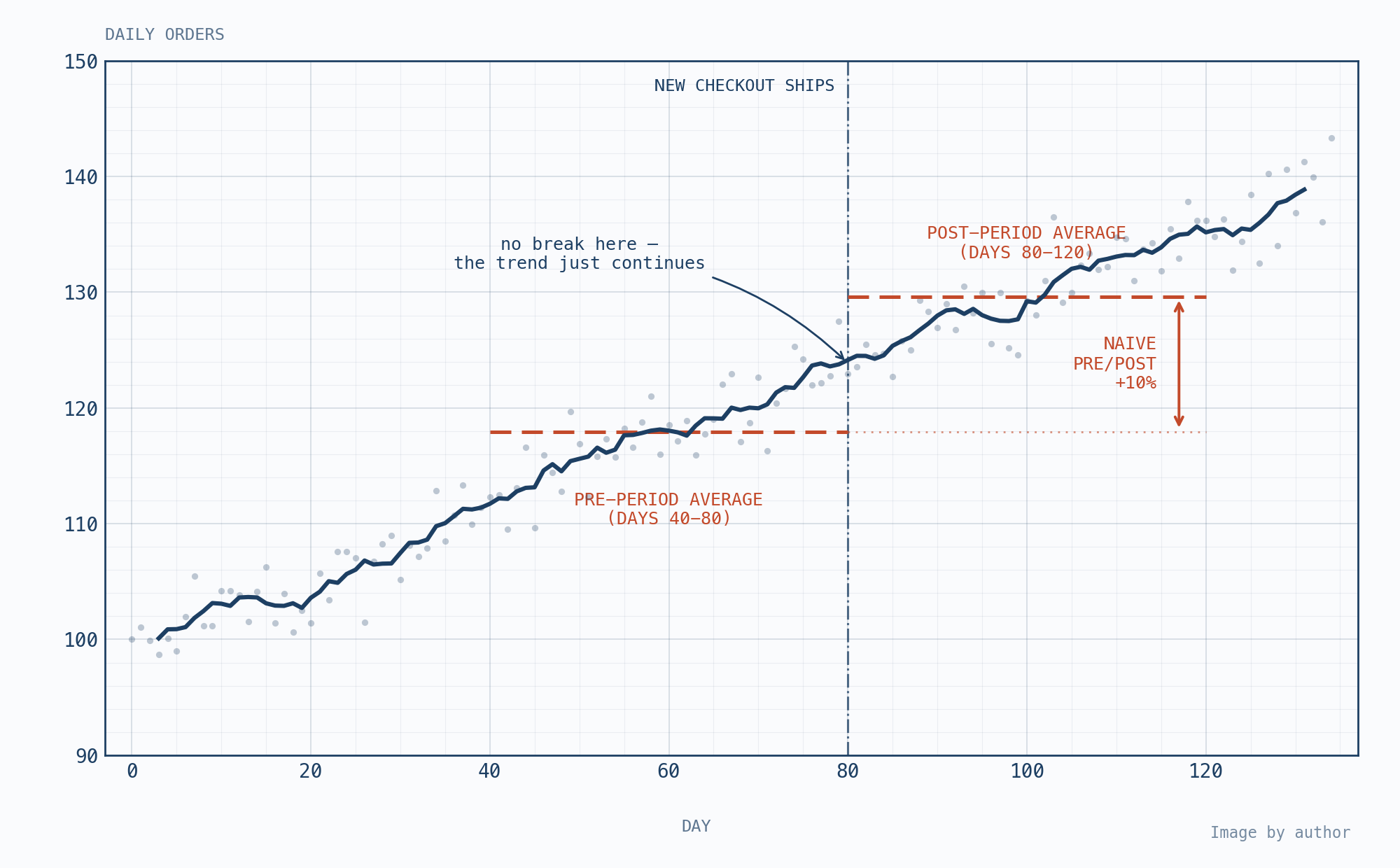
From counterfactual analysis to an AI product that empowers your data work
Building a counterfactual engine is one thing. Turning it into a multi-agent product is another. This walkthrough shows exactly what it takes to move interrupted time series analysis from a manual research task into an AI-driven workflow. It's a practical, honest look at the engineering and design choices that matter. If you're curious how structured reasoning gets automated, this is worth your time. For a deeper dive into the underlying mechanics, our guide to distributed algorithms pairs well with the concepts explored here.
An insider's view on why the US: China AI rivalry may be overstated
A former insider who has worked on both sides of the US, China AI landscape argues that the so-called arms race is more perception than reality. It's a rare perspective, one that cuts through the noise and challenges the assumption that the two superpowers are locked in a zero-sum contest. The real story is more nuanced, and more human. For readers still wrapping their heads around how AI is reshaping technical roles, our piece on shifting ML job expectations offers a grounded follow-up.
Even AI can repeat mistakes. Here's what that means for your data.
ChatGPT analyzed three datasets and made the same mistake every time: it counted rows incorrectly and signed off on two wrong conclusions. The review pass fixed the row count, but approving those flawed findings points to a deeper issue. AI can process data quickly, but it doesn't yet handle verification with the care your own judgment requires. That's worth remembering as you explore these tools. For more on checking AI's work, our guide on verifying understanding before tax season pairs well with this lesson.

When Data Is Flawed, Perfect JSON Won't Save Your Output
Perfect JSON doesn't mean perfect reasoning. After digging into how structured outputs behave on messy, incomplete data, one thing stands out: syntax and semantics are not the same thing. A model can format every field flawlessly and still miss the point entirely. That gap matters. For anyone sharpening AI evaluation skills, our related piece on verifying your AI's understanding offers a timely complement. The takeaway? Structure is a tool, not a verdict.
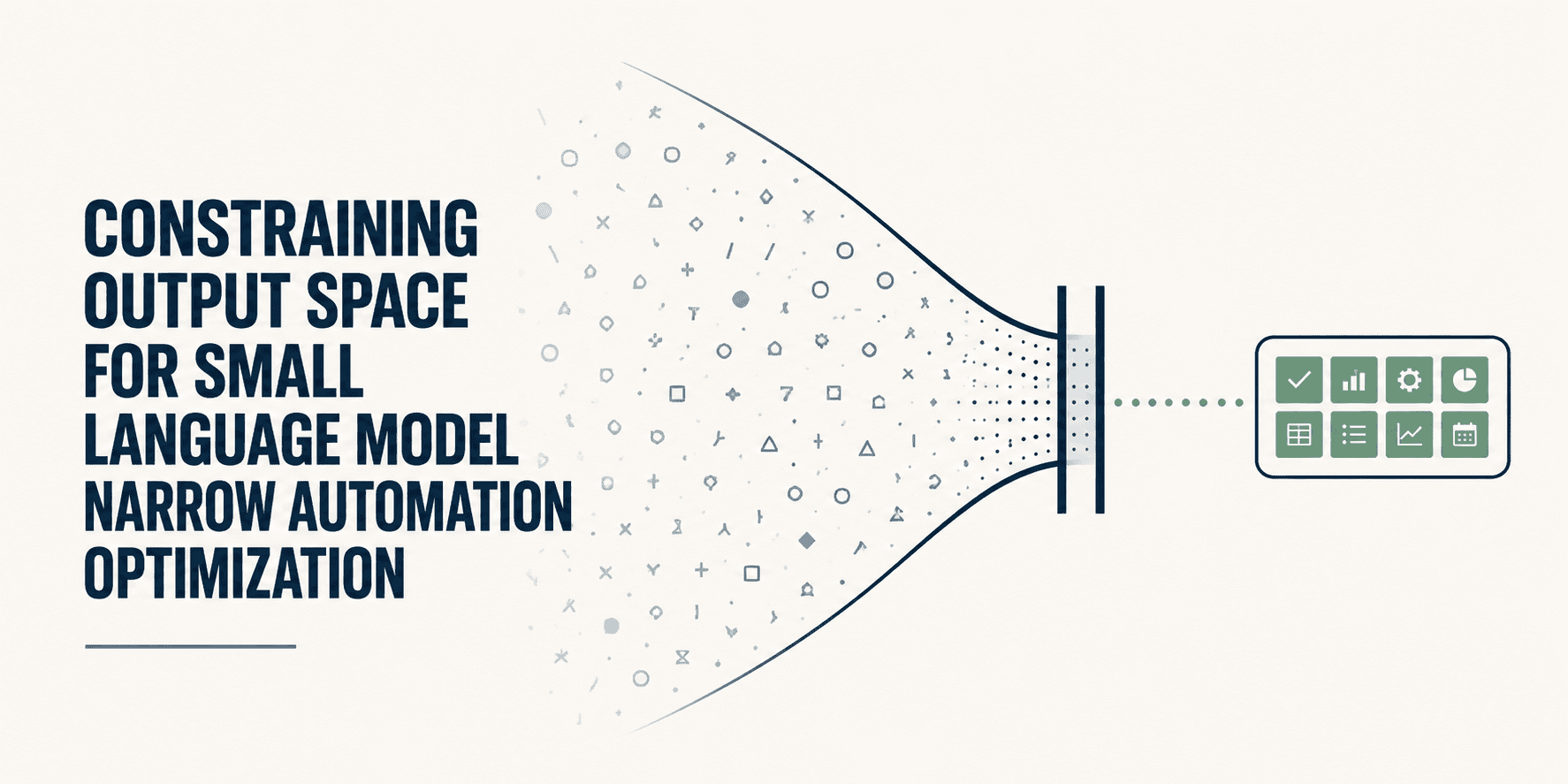
Tame Small Language Models by Constraining Their Output Space
Parsing generated text is a losing game. Every format variation you forget to handle becomes another silent failure. This first entry in our narrow automation optimization series tackles the real solution: constraining the output space from the start. It's a practical technique that saves time and spares you the headache of brittle regex. For a broader take on connecting systems, our piece on bridging retrieval and action offers a useful companion. This approach is simpler than it sounds, and it works.

Your data pipeline isn't complete until analysis is effortless.
Loading data feels like crossing the finish line. You've built the pipeline, the tables are populated, and the job is done. Then you start building your first dbt models and realize the real work begins. Making data genuinely analysis-ready is where the journey starts. It's an honest look at moving from delivery to discovery, and it pairs well with our piece on catching AI slop before it skews your model.
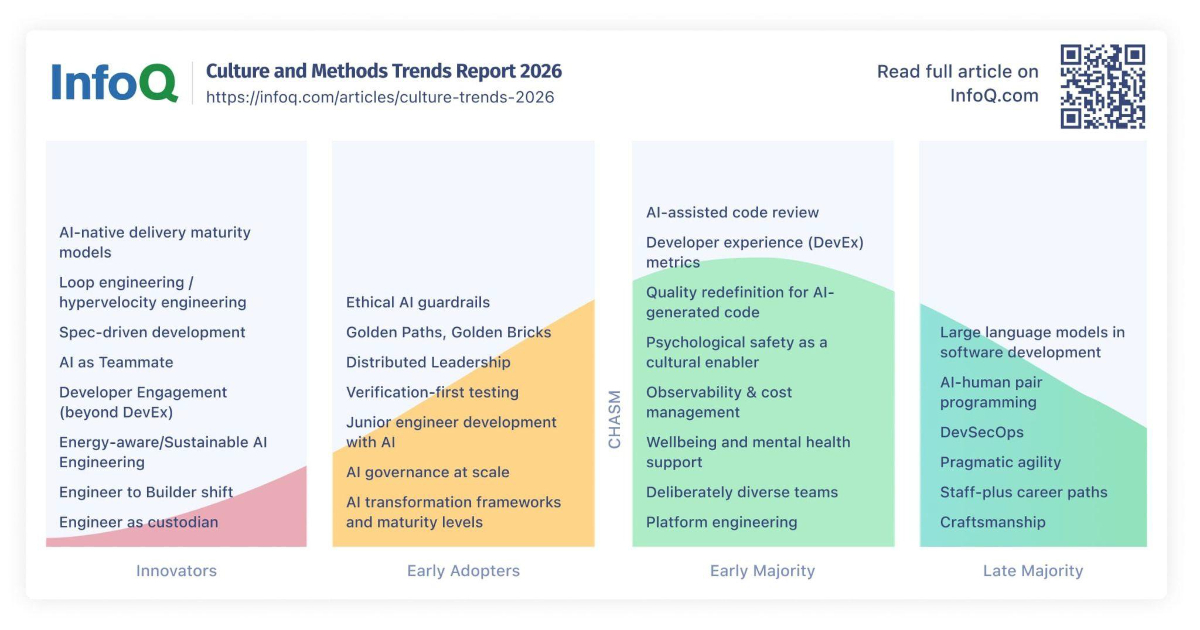
Explore the 2026 culture and methods trends shaping collaborative work
The InfoQ Culture and Methods editorial team has mapped where software delivery is heading in 2026, and the picture is less about tools and more about trust. The report digs into how teams are reshaping workflows around human outcomes, not just throughput. It's a grounded read, especially when so much tech commentary leans on hype. For practical context on how these cultural shifts play out in daily work, the related guide on unlocking ChatGPT for work offers a useful, hands-on starting point.

Musk's focus shifts from cars to AI in Tesla earnings calls
Elon Musk now spends half of Tesla's earnings calls talking about robots and AI, not cars. An analysis of the past seven years shows how far the conversation has drifted from the company's core business. That focus is bold, but it raises a real question: what happens to the vehicles while he chases the next machine? For a clearer look at where this tech obsession can lead, our piece on talking to an AI clone offers a grounded counterpoint.

Explore how margin of error shapes what polls actually tell us
Polls dominate how we talk about elections, yet their numbers often feel deceptively solid. A margin of error isn't a flaw or a hedge; it's a measure of honesty. Pew's explainer cuts through the noise, showing why that 3-point swing is less about bad polling and more about the limits of any sample. It's a useful reality check for anyone reading a crosstab like a fortune teller. For more on how data tools shape our understanding, explore the Forrester Function piece.
Explore how deeper math in operations research can reshape your data career
You're weighing a real fork in the road: stay deep in data science or branch into operations research. That's not just a title decision; it's about how you want to solve problems. OR is math-heavy, but not beyond what you've already got. Calcs 1-3, linear algebra, and stats are the foundation. You'll add optimization and probability, which are more applied than theoretical. Earning potential is comparable, so let the work itself guide you.

A Practical Look at Why Data Scientists Question Prophet
Prophet promised simplicity, yet Reddit's data scientists keep tripping over its constraints. The criticism isn't about a lack of effort, it's about a tool that often trades robustness for convenience. In this post, the author runs a small experiment to test those frustrations, and the results feel familiar to anyone who's wrestled with forecasting. We appreciate the hands-on approach. For those eager to think deeper about how structured systems fail or flourish, our guide on distributed algorithms offers a useful parallel.

Your prompts need a safety net before one rename breaks production.
One variable rename broke every live call. That's the failure mode prompt engineering can't solve. Writing better prompts matters, but managing them safely at scale is where production systems actually live. Treating prompts like contracts, backed by lightweight static analysis that catches breaking changes before they ship, prevents production failures. It's a practical, grounded take on a real operational gap. For a deeper look at how LLMs navigate structure, our related piece on paragraph token space pairs well here.

Discover the surprising power of the mean in modern data analysis
The mean is easy to dismiss as ordinary, yet it keeps surfacing in ways that surprise us. This piece traces its history and the science behind its quiet power, showing how such a simple calculation proves useful in unexpected corners of data work. We found it a compelling read, a reminder that foundational tools often hold the most depth. For those intrigued by how basic mathematical concepts extend into modern applications, exploring the Forrester function offers a natural next step.
Solve Data Case Studies with a Clear Framework That Drives Real Business Impact
Data science case study interviews are not about reciting syntax. They test how you think through a problem, analyze data, and explain your reasoning in a way that solves a real business challenge. That's a skill worth building. This guide introduces a simple framework called SCOPE to help you approach almost any case with clarity and confidence. It's practical, not theoretical.

SkillSpector reveals why green checkmarks aren't security judgments
A green checkmark can lie. SkillSpector's take on agent skills proves that point, showing how static analysis nails a malicious skill while tripping over a useful one. That gap between automated results and actual judgment is where the real work happens. It's a practical reminder that security isn't a binary pass or fail. For anyone wrestling with similar trust issues, our piece on talking to an AI clone offers a fitting companion on questioning what the machine tells you.

Founders Fund adds a partner known for sharp analysis, not hype.
Founders Fund just added Ryan Beiermeister as a partner, and her appeal has nothing to do with being part of any so-called "Mafia." Her sharp, composed analysis on the firm's own YouTube series, "Mafia," showed a mind built for spotting what matters in complex systems. That kind of clarity is exactly what smart investing demands. It is a deliberate hire, one that signals a focus on substance over spectacle.