anomaly detection
anomaly detection at Beyond Market Intelligence is a file of 10 stories. The newest of them: “Building Guardrails for Safer AI Data Access”, “Optimize anomaly detection by using all training data in Isolation Forest”, and “Spot Hidden Data Drift When Individual Features Seem Stable”. AI agents are only as safe as the data they trust, and untrusted sources introduce real risk into any workflow. Using all your benign training data in Isolation Forest improved recall from 91% to 94% while cutting false positives from 10% to 7.6%. Acme AI is the next-generation, AI-powered spreadsheet platform built to replace Excel and redefine how analysts, data scientists, and enterprise teams work… The list below is every anomaly detection story on Beyond Market Intelligence, newest first.

Building Guardrails for Safer AI Data Access
AI agents are only as safe as the data they trust, and untrusted sources introduce real risk into any workflow. The challenge isn't just reading those sources, it's building architectural guardrails that control how that information enters and influences the process. That's the practical, necessary work of safer AI data access. As agents take on more complex tasks, these safeguards become the difference between useful automation and unpredictable outcomes.
Optimize anomaly detection by using all training data in Isolation Forest
Using all your benign training data in Isolation Forest improved recall from 91% to 94% while cutting false positives from 10% to 7.6%. That's a meaningful gain for just 30 extra seconds of training time. The standard advice to keep `max_samples` low applies when anomalies contaminate the training set, your approach is cleaner. Keep `max_samples=1.0`. For deeper insight on detecting subtle shifts in feature relationships, see our related article on spotting hidden data drift.

Spot Hidden Data Drift When Individual Features Seem Stable
Your features look stable, but your model is quietly failing. That's the problem this post tackles head-on. Hidden data drift often hides in the relationships between features, not the features themselves. Adversarial validation with scikit-learn can catch those subtle shifts before they undermine performance. It's a smart, practical technique for anyone who suspects their model is degrading but can't find the cause.

From Alert Fatigue to Action: Smarter Service Assurance for Telecom
Alarm fatigue is a silent bottleneck in telecom service assurance. Large operators have learned that chasing individual alerts wastes time and masks real network incidents. The hard-won lessons distill into an incident-first blueprint that prioritizes what actually matters: faster, safer resolution. It is a practical, no-nonsense read for teams ready to move beyond reactive noise. For a deeper dive into how distributed systems underpin modern AI operations, explore *Unlock LLM Training: A Practical Guide to Distributed Algorithms*.

When Data Looks Right but Isn't: Using Watchdogs to Catch Agent Failures
A passing evaluation score can hide a payload that is confidently wrong. That is the failure mode plaguing too many multi-agent systems: they look correct, yet deliver subtly corrupted output. The fix is a watchdog pattern that catches these silent errors before they propagate. This shows you how, with working Python, to build that safety net. It is a practical, necessary read for anyone serious about reliable AI workflows.

Predict infrastructure failures before they disrupt your workflow.
Empirik has launched with $21M in funding, backed by Sequoia, to predict IT outages before they strike. The mission is straightforward: give infrastructure the same proactive intelligence that Cursor brought to software engineering. That comparison matters because it signals a shift from reacting to problems to preventing them. For teams tired of firefighting, this is a practical step toward calmer operations. And if you're curious how similar predictive logic plays out in other fields, our piece on adaptive recommendation systems offers a useful parallel.

Why Your Best Fraud Model Might Not Belong in Production
Six models trained for fraud detection, yet the one with the best metrics never made it to production. That's the honest hurdle this final-year project exposes: evaluation scores don't always translate into real-world deployment. It's a grounded lesson in how operational constraints, not just accuracy, shape what actually ships. For anyone moving from academic benchmarks to practical systems, this is a useful reality check.
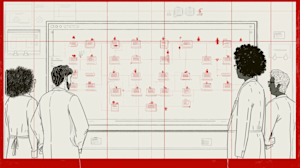
Why enterprises double down on AI automation after being burned
Enterprises that have watched an AI agent pass its evals and then fail in front of customers aren't retreating from automation, they're moving faster toward removing humans from deployment decisions. That's the counterintuitive core of the latest VB Pulse research. Confidence in automated evaluation is climbing, yet the share of companies burned by test-passing failures remains stubbornly near half. The lesson isn't that agents are unreliable; it's that a passing score marks the start of monitoring, not the end of it.
When Anomaly Detection Meets Sparse Data: Rethinking Performance Regressions
Evaluating anomaly detection with only ten healthy samples is a tightrope walk, and the questions here show a solid grasp of the risks. Leave-one-out is the right call for threshold setting, but it does not replace a true test set. Using regression runs as your unseen test is a practical move, but it risks optimism if those runs share hidden conditions. Collecting a second independent healthy dataset for final false-positive checks is the stronger validation.

When Your Cloud Bill Reads Like a Nation's GDP, Trust Breaks
A trillion-dollar estimate on an AWS bill is the kind of jolt no finance team needs, especially when the company's own alarms stayed silent. For over 24 hours, customers saw astronomical figures while internal alerts failed to halt generation or page engineers. It took customer escalations to get attention. That gap between detection and action is worth examining. For more on how observability should work, our piece on monitoring Cypress tests with Grafana offers a practical contrast.