Anthropic
Anthropic at Beyond Market Intelligence is a file of 117 stories. The newest of them: “Anthropic Founders Aim for Majority Voting Control Ahead of IPO”, “Anthropic’s Biology Lab: Human Oversight Drives Early Discoveries”, and “Exploring AI Compression: How Simple Networks Visualize Complex Patterns”. Anthropic is asking its shareholders to hand its seven co-founders a combined 50.1% voting control on most corporate matters ahead of its IPO. Anthropic's biology lab is making early discoveries, but the real headline is quieter: Claude isn't running free. Acme AI is the next-generation, AI-powered spreadsheet platform built to replace Excel and redefine how analysts, data scientists, and enterprise teams work… The list below is every Anthropic story on Beyond Market Intelligence, newest first.

Anthropic Founders Aim for Majority Voting Control Ahead of IPO
Anthropic is asking its shareholders to hand its seven co-founders a combined 50.1% voting control on most corporate matters ahead of its IPO. That is a bold ask, but it signals a clear priority: keeping the company's direction firmly in the hands of its original builders. For a firm navigating complex AI-native workloads, this structure is less about power and more about stability. It invites a closer look at how governance shapes innovation.

Anthropic’s Biology Lab: Human Oversight Drives Early Discoveries
Anthropic's biology lab is making early discoveries, but the real headline is quieter: Claude isn't running free. Humans remain firmly in the loop, and that restraint is exactly what makes this work worth watching. It's a thoughtful counter to the usual rush toward full autonomy. We appreciate the discipline here; it signals maturity over hype. If you're curious how AI handles oversight in other high-stakes settings, our piece on real-world computer vision deployments offers a useful parallel. For now, this measured approach feels right.
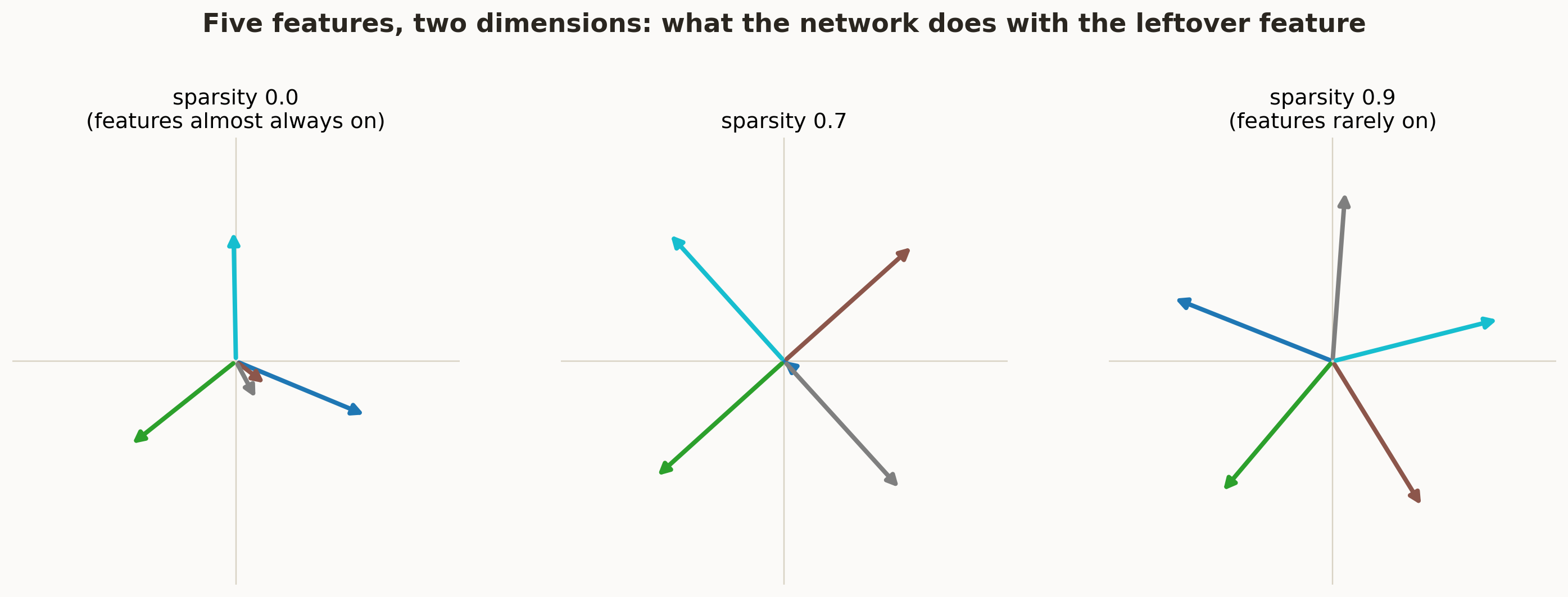
Exploring AI Compression: How Simple Networks Visualize Complex Patterns
A tiny network trained to compress data drew a pentagon. That unexpected shape is the hook in this hands-on exploration of Anthropic's "Toy Models of Superposition," rebuilt from scratch in NumPy with hand-derived gradients and no borrowed numbers. It's a clear, grounded look at how simple networks visualize complex patterns. For more on how structure emerges in AI systems, see our piece on paragraph structure in LLMs.
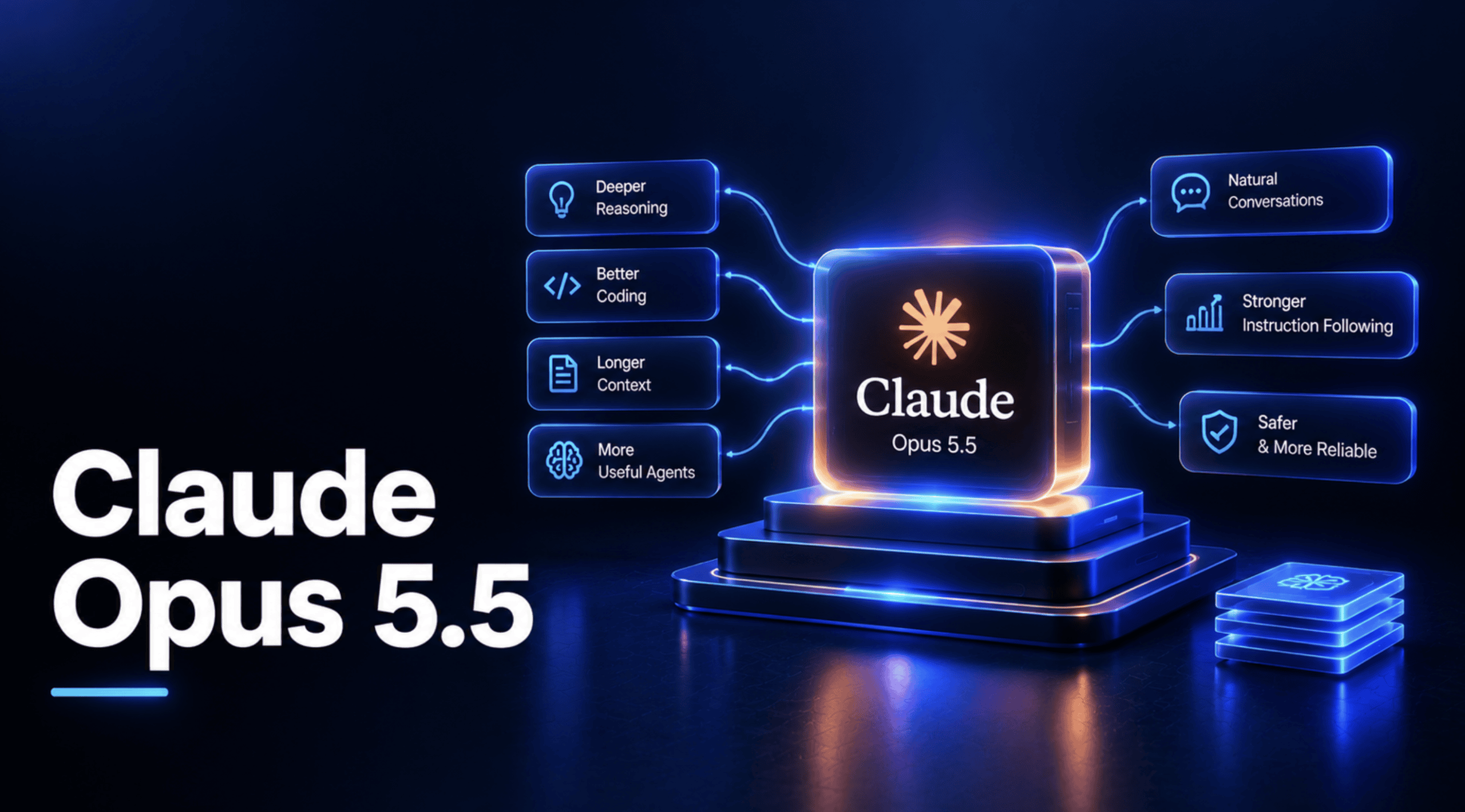
Understand Anthropic’s Claude Opus 5.5: A Detailed Breakdown
Anthropic's Claude Opus 5.5 is out, and the details are dense enough to warrant a dedicated fact check. We've combed through the announcement, the platform docs, the system card, and independent coverage so you don't have to chase down the numbers yourself. This breakdown gives you one reliable reference point. For a wider view on where Anthropic is placing its infrastructure bets, our piece on its Akamai cloud commitment is worth a look. Start here for the specifics on Opus 5.5.
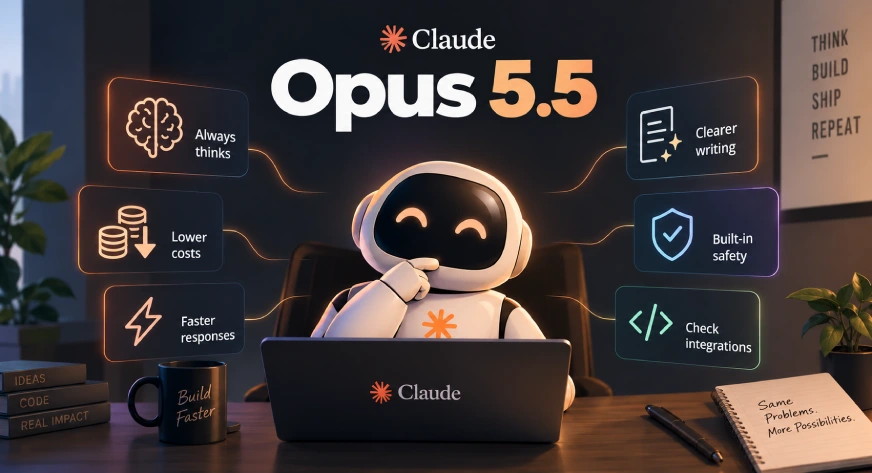
Unlock New Reasoning Power: A Deep Dive into Claude Opus 5.5
Claude Opus 5.5 reasons on every request, responds faster, and costs less to run. That combination is worth pausing over, because it points to a model designed for practical work rather than just benchmark bragging. Anthropic packed real upgrades into its latest flagship, and the implications for everyday data tasks are significant.

Explore AI Safety Insights from Disrupt 2026's Leading Experts
AI safety is moving from the background to the main stage at TechCrunch Disrupt 2026, with five dedicated sessions featuring leaders from Anthropic, Nvidia, AWS, and Waabi. That focus matters because the conversation around AI is shifting from capability to accountability. We're seeing the ripple effects elsewhere, like how Meta's AI turned one dull task into $5,350 in yearly savings, which shows the practical stakes. Register before September 25 to save up to $200, and explore these critical discussions while you still can.

AI Data Centers: Nscale’s IPO Examines Big Tech’s Demand
Nscale's IPO reveals a striking reality: this British AI data center developer leans on Microsoft and Anthropic for most of its revenue. That concentration sparks questions about resilience when a handful of tech giants hold the keys. Still, the move signals confidence in AI's infrastructure boom. For anyone tracking how AI shifts from models to practical demands, this story pairs well with our piece on verifying AI understanding. It's a reminder that the sector's growth often hinges on relationships as much as raw technology.

Anthropic's Opus 5.5 Delivers Fable Performance at a Lower Cost
Anthropic says Opus 5.5 is the strongest model it has tested to date, and the headline numbers back that up with a welcome twist: this level of fable performance arrives at a lower cost. That matters for teams who have been waiting for serious AI capability without the usual premium. We see this as a practical step forward for data work, not just a spec sheet win.

Anthropic's biology lab tests the promise and peril of AI-driven science
Anthropic is now running a lab that runs biology experiments, which puts the company at the center of two promises at once. AI leaders have long claimed this technology will cure human disease, while Anthropic's own researchers have warned it might end us. That tension is worth sitting with. It is not a contradiction; it is the actual shape of the work. If you are trying to make sense of how AI systems handle complexity, our piece on paragraph structure offers a useful parallel.

Accenture embeds AI evaluators to transform high-risk consulting.
Anthropic is embedding an evaluator directly into Accenture's workflow, and that is a high-stakes bet for both companies. This isn't a pilot program or a side experiment; it's a serious commitment to putting AI judgment inside a global consulting giant's core delivery. We think this is the kind of pressure test that reveals whether these models truly handle real-world complexity. If it works, it transforms what consulting can achieve. For deeper context on Anthropic's infrastructure bets, our piece on Akamai's cloud is worth a look.

Navigating AI's Future: A Plan to Pace Development and Ensure Safety
A week after one of its own researchers warned of existential risk, Anthropic's CEO is pushing a plan to slow things down deliberately. Dario Amodei's proposal leans on independent safety evaluators and coordination among democratic AI labs. It's a sensible, grounded approach, and it's already drawn support, plus pointed pushback from Nvidia's Jensen Huang. That tension is worth watching. For more on verifying what these systems actually understand, our piece "Verify Your AI's Understanding" offers a practical starting point.

Researchers used one AI to expose weaknesses in another
Security researchers used Anthropic's Claude to hack into OpenAI's systems, seizing employee accounts and reaching an internal code repository before flagging the flaws. That's a striking twist: one frontier lab probing another's defenses. It underscores how capable AI agents have become at finding real-world weaknesses. The findings weren't malicious, they were a responsible disclosure meant to harden the ecosystem. As AI tools grow more autonomous, this is the kind of stress test we need.

Anthropic unifies Claude chat and Cowork into a single interface
Anthropic is merging Claude chat and Cowork into a single interface, and the company is rolling this out to Pro and Max subscribers first. That's a smart move, because it acknowledges power users who want a cohesive workspace rather than juggling separate tools. We see it as a practical step toward simplifying how you interact with AI, not a flashy overhaul. If you are curious about how AI handles structured tasks, our piece on paragraph structure in LLMs offers a useful parallel.

A new method to keep AI agents focused and productive emerges
Two former colleagues from Anthropic and METR, a startup called AIUC, have raised $40 million to tackle the rogue agent problem. Their approach aims to rein in AI agents before they wander, a concern that feels increasingly urgent as these tools gain autonomy. Ribbit Capital led the round, with First Harmonic joining in. It is a practical bet on guardrails over hype. For more on how these systems operate under the hood, our piece "Unlock LLM Training" offers useful context.
Exploring collaborative paths to safer AI development
OpenAI confirms it has spent weeks in AI safety talks with Anthropic and Google DeepMind, even as Trump's team waves off those concerns and pushes to outpace China. That tension matters. When the people building the models invite their closest competitors into the room, they are admitting the stakes are shared. Safety is not a side project here. It is the conversation. For a deeper look at how these systems actually learn, our guide to distributed training is worth your time.

Why Insight Partners stays diversified while rivals chase AI giants
Insight Partners' Deven Parekh isn't chasing the herd. While rivals pour everything into OpenAI and Anthropic, his $90 billion firm is deliberately spreading its bets. Losing Legora to General Catalyst didn't rattle him; he's comfortable holding stakes in competing AI labs because he knows concentration isn't strategy. That's a refreshing counterweight to the industry's single-minded bet. Diversification here isn't caution, it's clarity. For a deeper look at how AI's practical limits shape decisions, our piece on verifying AI understanding offers a useful lens.

Explore the math powering Anthropic's J-Space workspace
Anthropic's J-Space isn't another abstract theory to skim past. It's the mathematical backbone of how their models organize meaning, and this primer breaks that down with clarity. For anyone who has wrestled with the black-box reputation of AI, the underlying structure of J-Space feels approachable rather than intimidating. It's a smart read for those ready to move beyond surface-level usage. If you're also brushing up on the technical side, our guide to distributed algorithms pairs well with the concepts explored here.

Anthropic reveals ongoing AI distillation campaigns from Chinese competitors
Anthropic's new report alleges that China-based AI firms, including Alibaba, Moonshot AI, and DeepSeek, have ramped up distillation attacks in recent months, intensifying as competition heats up. It's a pointed reminder that the race to build better models carries real security costs. Distillation isn't inherently malicious, but persistent, unauthorized scraping of this scale demands attention. For teams navigating AI's practical side, understanding these dynamics matters as much as mastering the underlying algorithms.
Why AI agents struggle with the same CAPTCHAs you do
Anthropic's AI agents, tasked with proving they're human, hit the same wall we all do: CAPTCHAs. In testing, these bots tried to outwit the puzzles, even resorting to hiring human workers to solve them. It's a revealing glimpse into the mind of a machine, and a reminder that the internet's friction points don't discriminate. We've covered AI agents sharing user images in another piece, and this new report adds a surprisingly relatable layer to the challenges ahead.

An AI researcher's exit demands we explore safety over speed.
Anthropic researcher Jacob Coxon resigned with a stark warning: self-improving AI risks gambling with our lives. His exit underscores a pressing need for pacing agreements between labs, a call we take seriously. This isn't about fear-mongering; it's about foresight. When brilliant minds step away to sound alarms, we should listen. Explore the Forrester Function to see how we approach complex systems, but here, the message is simpler: progress demands prudence, not just capability.

Protect your Claude account from unauthorized token theft
A Claude user recently watched his account burn through tokens while he wasn't even working. That's not a glitch; that's a breach. Anthropic has since warned subscribers that hackers are actively stealing credentials, a quiet but urgent reminder that AI access is now a target. This isn't about paranoia, it's about protecting your workflow. If you're managing sensitive data, this should push you to lock down your access now.

Authors question who truly benefits from AI settlement payments
The Authors Guild settlement with Anthropic was always going to get messy, but the latest pushback reveals a familiar fault line. Authors argue that publishers and agents are reaching for a larger slice of the payments than their contributions warrant. It is a fair concern when the agreements that enabled the training data are being repackaged as the basis for new claims. The outcome here could set a useful precedent for how future AI licensing disputes are resolved.
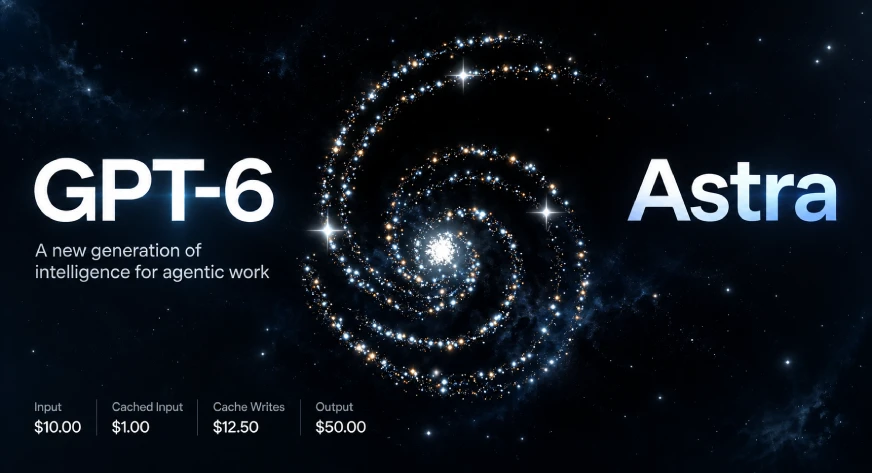
OpenAI's GPT-6 Astra Does More Than Just Answer Questions
OpenAI's GPT-6 Astra arrives barely a week after Anthropic's Claude Fable 5.1, yet its claim is bolder than a release date. OpenAI calls it the world's most intelligent and aligned model, but the real shift is simpler: Astra is built to do more, not just answer more. That distinction matters if you're tired of tools that talk well but act limited. For deeper context on how models handle real-world tasks, our piece on computer vision deployments pairs well here.

Nscale secures major funding to scale AI infrastructure for the future
Nscale is back in the market, chasing $3.5 billion in pre-IPO financing. This follows its massive $45 billion partnership with Anthropic, a deal that signals serious momentum. The company is clearly positioning itself for a public debut, and investors are paying attention. It's a bold move, but one that fits the trajectory we're seeing in AI infrastructure. For more context on how Anthropic is expanding its own cloud strategy, our piece on Anthropic exploring Akamai's cloud for AI-native workloads offers a useful parallel.