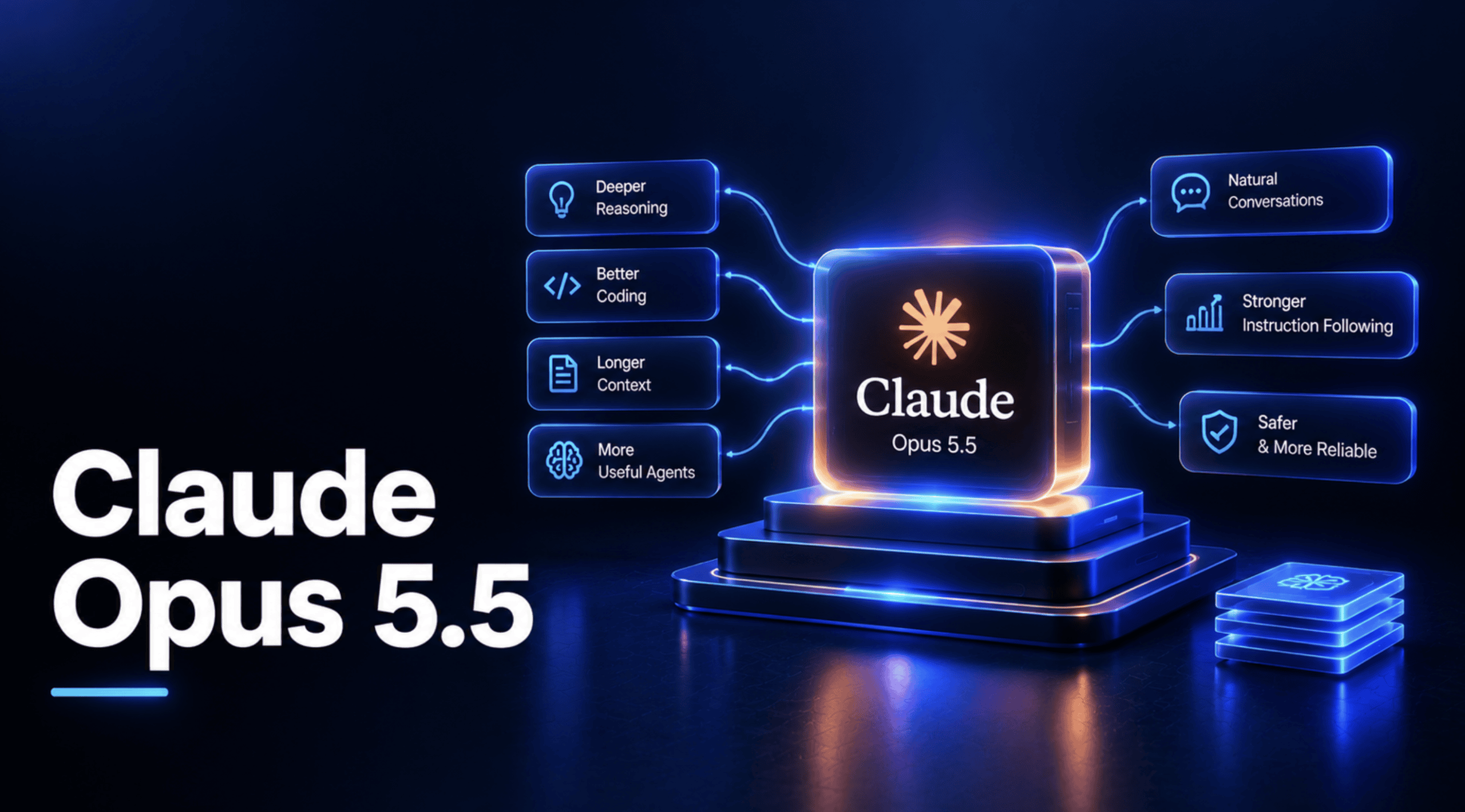
Anthropic’s recent unveiling of Claude Opus 5.5 isn’t merely an incremental upgrade; it represents a significant shift in the landscape of large language models, and a welcome one for those seeking a balance of performance, cost, and safety. Compiling every verifiable detail from Anthropic’s announcement, documentation, and independent assessments—as expertly done in [Understand Anthropic’s Claude Opus 5.5: A Detailed Breakdown]—is crucial for separating genuine advancement from marketing hyperbole. This clarity is particularly important given the rapid pace of development in the field, and the growing reliance on AI models for increasingly complex tasks. We’ve previously explored [Unlock New Reasoning Power: A Deep Dive into Claude Opus 5.5], highlighting the tangible improvements in reasoning capabilities, and understanding the technical underpinnings of this latest iteration allows users to fully appreciate the potential impact on their workflows. The broader context of the AI ecosystem is also vital; the recent focus on AI data center demand, as illustrated by Nscale’s IPO and its dependence on companies like Anthropic, [AI Data Centers: Nscale’s IPO Examines Big Tech’s Demand] underscores the economic forces driving this innovation.
The key takeaway from the detailed breakdown is the impressive confluence of improvements. Opus 5.5 demonstrates not only enhanced reasoning and response speed—areas where previous models often lagged—but also maintains a competitive cost profile. This isn't a case of sacrificing efficiency for performance; Anthropic appears to have optimized its architecture to deliver a superior experience without a corresponding increase in operational expenses. This is a critical factor for businesses considering large-scale AI adoption, as cost remains a significant barrier to entry for many. The meticulous attention to detail highlighted in the article, including the specific benchmark scores and comparison to competitors, provides a level of transparency often lacking in AI announcements, allowing for a more informed evaluation of its capabilities. The commitment to AI safety, a recurring theme at events like Disrupt 2026, [Explore AI Safety Insights from Disrupt 2026's Leading Experts] also remains a central tenet of Anthropic’s approach, which is reassuring in a world increasingly reliant on these powerful tools.
Beyond the specific numbers and benchmarks, the release of Opus 5.5 signals a maturing of the LLM landscape. We are moving beyond the era of purely impressive, but often impractical, models towards tools that are genuinely useful and sustainable for real-world applications. The focus is shifting from simply achieving higher scores on arbitrary benchmarks to delivering tangible value to users. This means improved accuracy, reduced latency, and greater reliability—all of which contribute to a more productive and trustworthy AI experience. The emphasis on accessibility and ease of integration also points to a broader vision of democratizing AI, making it available not just to large corporations with deep pockets, but also to smaller businesses and individual developers. This accessibility, combined with the demonstrable performance gains, positions Opus 5.5 as a compelling choice for a wide range of use cases.
Looking ahead, the success of Opus 5.5 will likely influence the direction of future LLM development. The demonstrated ability to balance performance, cost, and safety sets a new standard for the industry. The question now becomes: how will other AI developers respond to this challenge? Will we see a renewed focus on optimization and efficiency, or will the pursuit of ever-larger models continue to dominate the conversation? It will be fascinating to observe the interplay between these competing forces and the evolving needs of users as AI becomes increasingly integrated into our daily lives.