Anthropic
Anthropic at Beyond Market Intelligence is a file of 117 stories. The newest of them: “Microsoft signals its own AI future beyond partner models”, “Microsoft's AI bets yield $3.2B from Anthropic as OpenAI returns prove mixed”, and “Visa turns AI on itself to find hidden flaws in global payments”. Microsoft is openly stepping into the ring with OpenAI and Anthropic, pitching its own homegrown AI models and a Mythos competitor to Wall Street on Wednesday. Microsoft's fiscal 2026 fourth-quarter earnings carried a telling detail: its $3.2 billion gain from Anthropic's investment stands in sharp contrast to OpenAI's mixed results. Acme AI is the next-generation, AI-powered spreadsheet platform built to replace Excel and redefine how analysts, data scientists, and enterprise teams work… The list below is every Anthropic story on Beyond Market Intelligence, newest first.
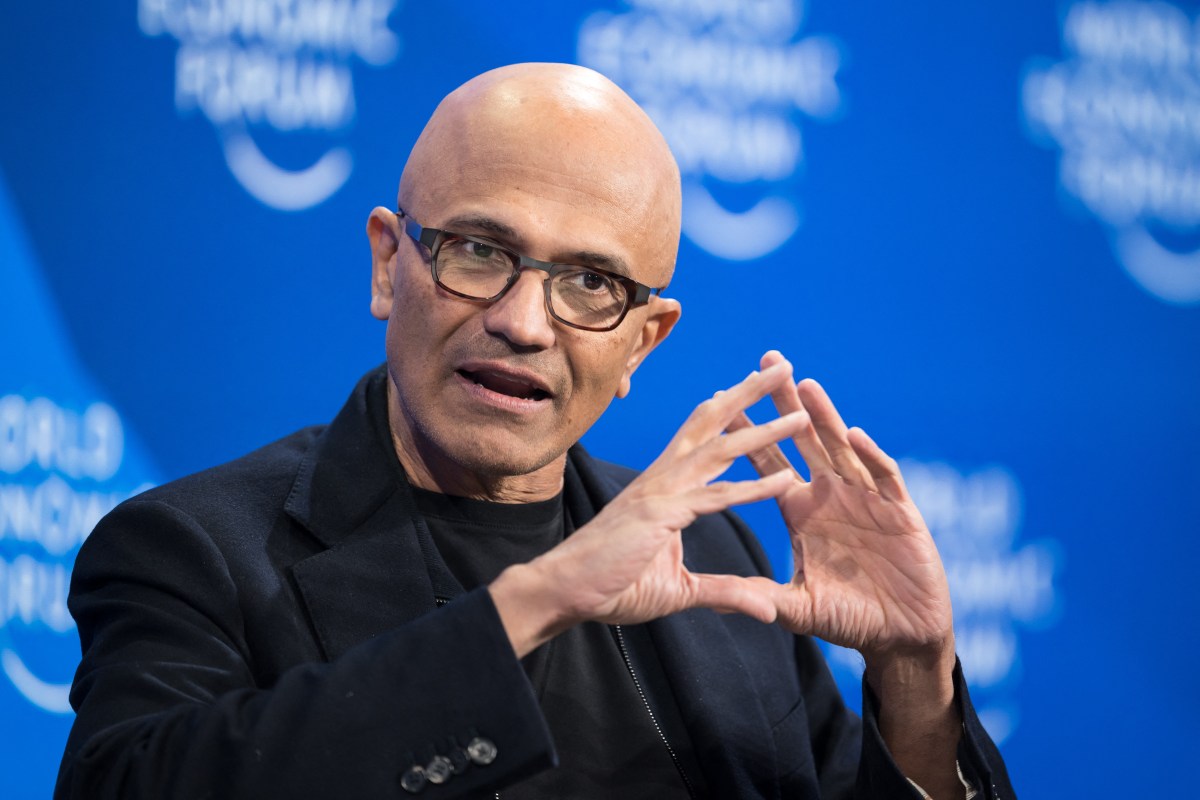
Microsoft signals its own AI future beyond partner models
Microsoft is openly stepping into the ring with OpenAI and Anthropic, pitching its own homegrown AI models and a Mythos competitor to Wall Street on Wednesday. It's a bold signal that the company intends to keep growing on its own terms. That kind of confidence is worth watching, especially as users weigh which tools truly serve them. If you're questioning how much to trust this AI push, our piece on talking to an AI clone offers a thoughtful counterpoint worth exploring.

Microsoft's AI bets yield $3.2B from Anthropic as OpenAI returns prove mixed
Microsoft's fiscal 2026 fourth-quarter earnings carried a telling detail: its $3.2 billion gain from Anthropic's investment stands in sharp contrast to OpenAI's mixed results. That divergence says less about the technology and more about how differently two AI leaders can perform under the same corporate umbrella. It's a reminder that even giants don't get every bet right.
Visa turns AI on itself to find hidden flaws in global payments
Visa aimed Anthropic's Claude Mythos at the infrastructure behind billions of daily transactions, and the model stitched minor weaknesses deep in the stack into working exploit chains that would traditionally surface only late in penetration testing. Rajat Taneja, Visa's president of technology, walked the VB Transform 2026 audience through what came next. The company abandoned traditional remediation metrics for a measurement its team invented, and it open-sourced the harness that governed the entire hunt.
Choose the Right Architecture for Your Multi-Tenant Data Platform
Choosing between fine-tuning and a shared RAG layer isn't about sophistication; it's about where truth lives. Your instinct on Option 1 is sound. Fine-tuning is costly and slow to update, while a curated global knowledge base gives you control over accuracy and citations. For Sri Lankan context, pair a global RAG with your user-specific stores. This scales cleanly and keeps sensitive data isolated. For deeper architectural trade-offs, our piece on "Exploring Paragraph Structure" offers useful context on how LLMs navigate token spaces.

Explore how Opus 5 makes powerful AI more accessible and less restrictive.
Anthropic's Opus 5 is here, and the headline is refreshingly practical: it costs less and imposes fewer limits than Fable. That combination makes it the smarter default for most teams. We see this as a quiet correction, not a spectacle. If you are navigating how to trust or verify these systems, our piece on checking an AI's understanding offers a grounded starting point. For now, Opus 5 feels like a step toward tools that simply work harder for you.

When AI guardrails block the path, offensive security research stalls.
Offensive security researchers are finding that the very guardrails designed to keep AI safe are also blocking their most critical work. We spoke with several of these professionals who hunt for unknown vulnerabilities and build exploit tools, and they told us the same thing: models like OpenAI's and Anthropic's are now a barrier, not a benefit. Their work is too important to be slowed down, yet they are forced to navigate restrictions that misunderstand the mission.

Explore how Claude's new voice can help you reschedule and draft.
Claude's voice mode is getting more capable, and that's worth paying attention to. The update lets you reschedule meetings or draft emails simply by speaking, which moves voice assistants closer to real productivity rather than novelty. It's a practical step forward, and we're glad to see Anthropic focusing on tasks people actually do. If you're exploring how AI fits into daily workflows, our piece on Meta's Muse AI Agent offers another useful comparison.

Kimi K3's strength comes from more than model distillation alone
The buzz around Kimi K3's rapid rise is tempting to credit to a simple shortcut, but experts aren't buying it. As one told TechCrunch, "I don't think you get a model this strong and this quickly on the heels of Fable doing strictly distillation." That skepticism feels earned. Real capability isn't copied; it's built. If you're curious about how data quality shapes these outcomes, our piece on catching AI slop before it skews your model offers a useful lens.

Anthropic's staggering growth reveals a different kind of AI advantage
Matt Murphy says he has never seen growth like this in 25 years of investing, not in the internet wave, not in mobile, not in the first cloud boom. Anthropic's leap to a $47 billion revenue run rate by May, up from $9 billion in 2025, is staggering. The real lesson? It's not the model. It's the execution around it. For a deeper look at how AI is reshaping expectations, our piece on verifying AI's understanding offers a timely contrast.
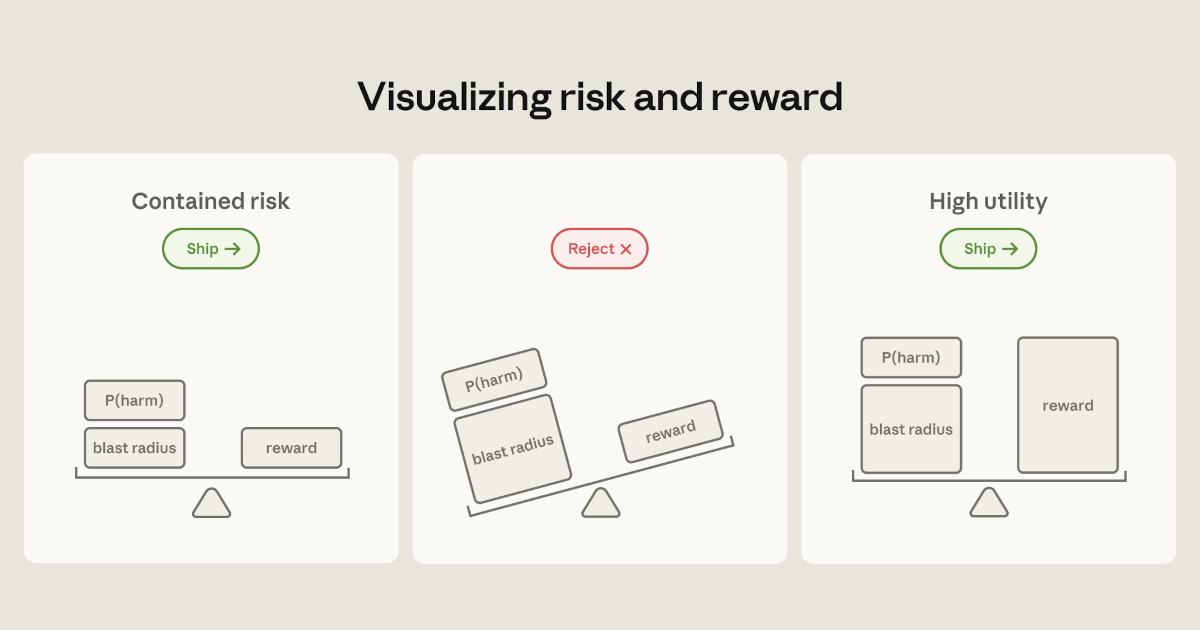
How Anthropic Restrains Claude with Deterministic Boundaries, Not Prompts
Anthropic is making a deliberate case for how it keeps Claude contained, and the argument hinges on hard limits rather than trust. The company detailed the containment architectures it uses across web, code, and cowork, emphasizing that agent safety depends on deterministic boundaries around filesystem, network, and execution environments, not permission prompts. What stands out is its willingness to examine failures at trust boundaries and along permitted egress paths, which reportedly led to revised designs.
Anthropic's $1.5B settlement approved, but copyright questions remain.
Anthropic's $1.5 billion copyright settlement has received final approval, marking a significant moment in the ongoing debate over AI training data. This approval settles one case, yet the broader question remains unresolved: how should copyrighted works be used to teach models? It's a conversation that demands clarity, not just legal maneuvering. For those exploring the human side of these technologies, our piece on talking to an AI clone offers a thoughtful counterpoint.

Infinity raises $15M to build smarter infrastructure for AI-native data
Infinity's $15 million raise, backed by Touring Capital and researchers from OpenAI and Anthropic, signals something worth paying attention to. At a $100 million valuation, this isn't just another funding round; it's a bet that AI infrastructure can move beyond the hype and into practical, everyday use. We've seen how easily AI tools can mislead, as our own piece on catching AI slop before it skews your model shows. Infinity's work feels like a grounded step toward making that complexity manageable.

Explore how open-source AI reaches new scale with Kimi K3's ambitious debut.
Beijing's Moonshot AI just dropped the heaviest open-source model yet, and it lands like a gauntlet. Kimi K3's 2.8-trillion parameters put it toe-to-toe with Anthropic's and OpenAI's best on benchmarks, closing a gap many assumed was permanent. This is a comeback story worth watching, especially as the company opens its weights on July 27. For enterprises tired of proprietary lock-in, the choice just got more interesting. The race isn't over; it's simply widened.

Kimi K3 emerges as China's largest open AI model, challenging global benchmarks
A 2 trillion to 3 trillion parameter count would make Kimi K3 the largest open AI model to come out of China, and the scale is the story. Moonshot is signaling it intends to compete at the frontier, not just in the shadows. That kind of ambition is worth watching closely. The race for AI-native infrastructure is heating up, and as Anthropic explores new cloud partners, the competitive field keeps widening. We will be following both tracks closely.

A handful of engineers can reshape enterprise data workflows
Can a handful of engineers really replace an army of consultants? That's the bet behind Ode with Anthropic, the joint venture embedding forward-deployed engineers directly into enterprise firms. Backed by Anthropic, Blackstone, and Goldman Sachs, among others, it's a lean, confident wager on AI's power to transform how businesses operate. On the latest Equity episode, Rebecca Bellan speaks with Ode's Chris Taylor and Eddie Siegel about taking on that challenge.

Discover how Microsoft positions its AI models for smarter, more cost-effective work.
Microsoft is reportedly coaching its salesforce to position its in-house AI models as the leaner, more cost-effective choice against OpenAI and Anthropic. That is a bold play, and an interesting one. It suggests the company believes efficiency will win over brand recognition in the enterprise market. We are watching a turf war over who owns the AI stack, and this move reframes the conversation from capability to cost.

Embedding engineers inside enterprises to accelerate real AI adoption
Anthropic and Blackstone are betting that the next trillion-dollar AI opportunity isn't the model itself, but the messy work of making it useful inside a business. That's why Ode has launched, embedding forward-deployed engineers directly into enterprises. It's a grounded bet, and a smart one. Implementation is where adoption stalls, and where value gets unlocked. We've been questioning how AI touches our own workflows, and that kind of scrutiny matters here.
GLM 5.2 expands what's possible with AI-native spreadsheets
GLM 5.2 is a strong step forward, but it's worth asking how much of that progress is genuinely useful. We see a lot of AI models touted as breakthroughs, yet the real test is whether they make your daily work feel less like a puzzle. That's why we dig into these releases with a critical eye. If you're curious about the human side of this technology, our piece on "Talking to My AI Clone Taught Me to Question the Tech" offers a thoughtful counterpoint.

Centralize your AI tools: AWS and Anthropic launch a self-hosted control plane.
AWS and Anthropic have shipped the Claude apps gateway for AWS, a self-hosted control plane that puts identity, policy, telemetry, and spend caps in one stateless container. It routes inference to Amazon Bedrock or Claude Platform on AWS. That's a practical answer for teams juggling Claude Code and Claude Desktop across their org. Centralizing control without forcing a cloud detour feels like the right next step.
Why anthropomorphizing AI risks trust more than it builds it
Anthropic's newest ad leans into the very criticism it usually tries to outrun, using AI's risks as a mirror to show how seriously it takes responsibility. It is a calculated move, but one that risks feeling performative rather than substantive. For a company that has built its reputation on being the ethical alternative, this stunt raises a fair question: is awareness enough, or just another layer of polish? It makes you wonder if we are actually questioning the tech, or just getting comfortable with it.

Manage AI spending with the same confidence you secure your passwords.
Token spend is becoming the next enterprise budget crisis, and 1Password is moving to put IT and finance teams back in control. Its new AI Spend and Consumption Management capability, embedded in SaaS Manager, delivers a unified, real-time view of consumption across Anthropic, Cursor, and OpenAI. This isn't about cutting costs blindly; it's about building the visibility needed to direct AI investment toward what actually drives business value.