API
API at Beyond Market Intelligence is a file of 59 stories. The newest of them: “jQuery's Legacy Shows How Accessible Tools Empower Web Innovation”, “From Notebook to API: Making Your Churn Model Actually Usable”, and “Explore an open dataset of billions of TikTok videos on Hugging Face.”. When jQuery arrived in 2006, it handed developers a bridge across the browser wars. Training a churn classifier that performs flawlessly is one thing. Acme AI is the next-generation, AI-powered spreadsheet platform built to replace Excel and redefine how analysts, data scientists, and enterprise teams work… The list below is every API story on Beyond Market Intelligence, newest first.

jQuery's Legacy Shows How Accessible Tools Empower Web Innovation
When jQuery arrived in 2006, it handed developers a bridge across the browser wars. John Resig's library made HTML manipulation, events, and Ajax approachable when the web felt fragmented. It didn't just solve problems; it invited a generation to build without fear. Its decline alongside modern frameworks isn't a failure, but a legacy. Most of the web still runs on its shoulders. That staying power matters. For more on how legacy tools shape today's skill demands, explore our related piece on navigating AI/ML job requirements.

From Notebook to API: Making Your Churn Model Actually Usable
Training a churn classifier that performs flawlessly is one thing. Making it useful to the rest of your software is where the real work begins. This story follows that exact pivot: moving from a perfect model to a practical FastAPI service that other systems can actually call. It's a grounded, honest look at the gap between building and deploying. If you're wrestling with similar transitions, you might also appreciate our piece on navigating AI/ML job requirements.
Explore an open dataset of billions of TikTok videos on Hugging Face.
5.94 billion TikTok videos. 3.23 billion profiles. In three weeks. That's the scale of what one developer just uploaded to Hugging Face, free for anyone to explore. It's a bold move, and a practical one. The data is public, but the method behind it is the real story. If you're curious about the mechanics of such large-scale collection, our guide on distributed algorithms offers useful context. This is a dataset that invites serious tinkering.
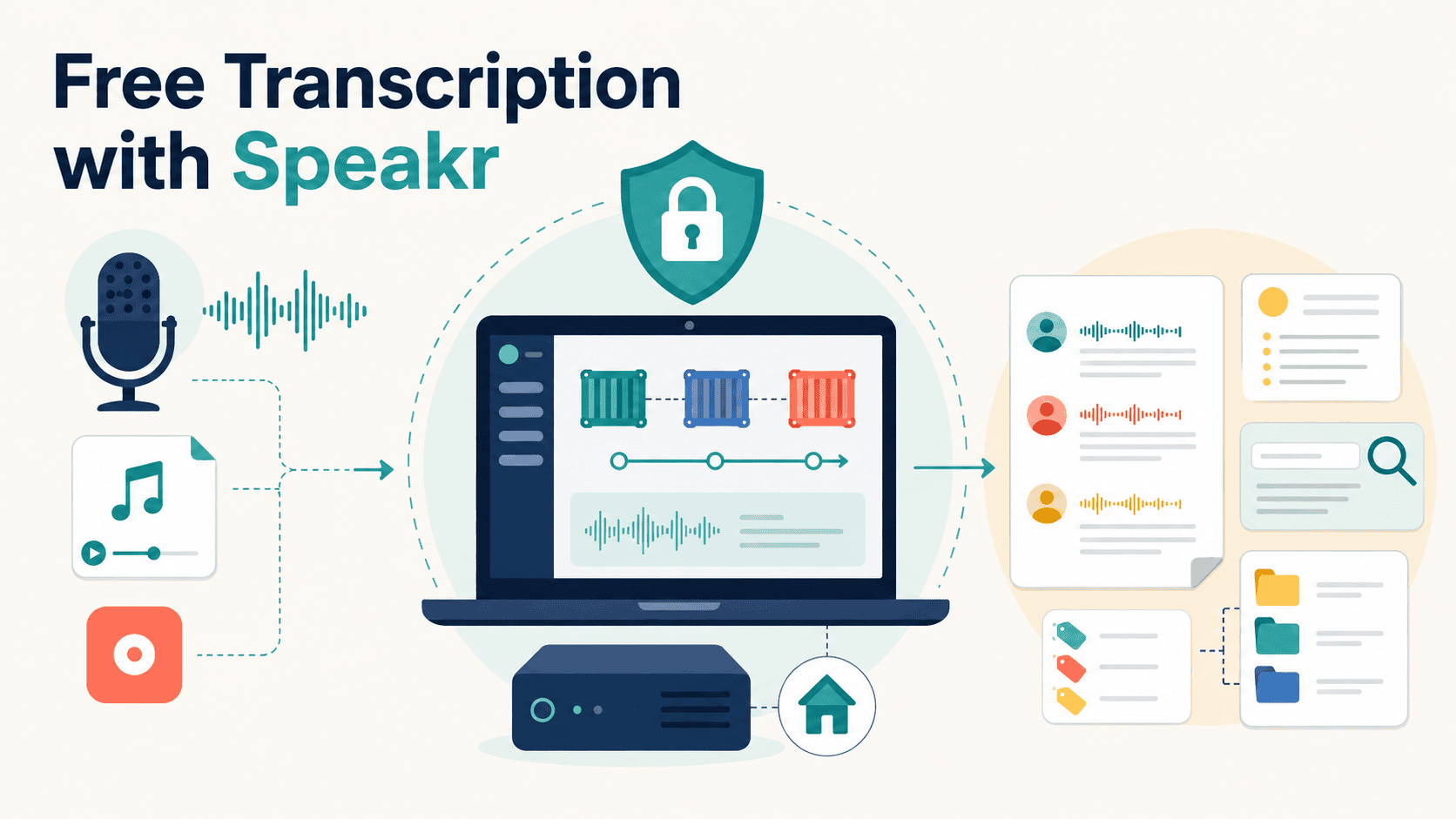
Your Data, Your Transcription: A Private Self-Hosted Guide
If you're tired of sending sensitive recordings to third-party servers, Speakr offers a private, self-hosted alternative. Setup is straightforward, and the real payoff is full control over where your audio lands. We think that matters more as transcription becomes routine. For a broader look at how AI tools handle real-world constraints, our piece on computer vision deployments offers a useful parallel. Start with Speakr's basics, then experiment with its settings to match your workflow.

Choose Your Coding Agent: A Practical Guide to Claude and Codex
Choosing the right coding agent can feel like navigating a maze, especially when both Claude Code and Codex promise to streamline your workflow. This guide cuts through the noise, offering a clear breakdown of where each tool shines. It's a practical read for anyone tired of guessing which assistant fits which task. I appreciate how it prioritizes real-world application over hype.

LLM Benchmarks Show Surprising Daily Performance Fluctuations
A single hourly LLM benchmark score can mislead you. After analyzing 31,352 hourly scores, the data shows within-day variation sits at 2.8 points, while between-day variation jumps to 8.4 points. That threefold gap matters. It means isolated movements mostly reflect normal model randomness, but sustained daily shifts reveal true performance drift. This is the missing observability layer for production AI. You cannot manage what you only sample once. Continuous evaluation, like the system built here, turns noisy data into actionable signals.

Build smarter agents by connecting LangGraph to Postgres locally or in the cloud.
Connecting a LangGraph AI agent to Postgres doesn't have to be a headache. This walkthrough shows you exactly how to run the backend locally with Docker or scale it to the cloud, keeping the focus on practical steps rather than abstract theory. It's a straightforward approach for anyone tired of wrestling with database integrations. We appreciate the clarity here, especially since so much AI tooling feels needlessly complex. For deeper context on how LLMs handle structure, our piece on paragraph navigation is worth a look.

The hidden risk in AI is not agents but the chaos between them
The real risk in enterprise AI isn't a rogue agent. It's the tangled web between a hundred of them, each quietly calling APIs and triggering handoffs no human approved. That complexity compounds faster than your governance can track it. Gravitee's Rory Blundell makes a sharp case: identity alone won't save you, and monitoring isn't enforcement. The fix is building visibility and control into the chain itself.

Your CRM now lives inside Claude, transforming how you manage relationships.
Salesforce just told the world its own screens are optional. The company spent 27 years perfecting the CRM interface, then spent Tuesday arguing sellers should live inside Claude instead. That takes nerve, and it's also the smartest thing they've done in years. The value was never the buttons; it's the data and workflow logic buried underneath. By handing that to Anthropic's model, they're betting on usage over seats. For anyone tired of clicking through a deal pipeline, that's not a threat. It's relief.

Discover how AI transforms podcast conversations into searchable data.
Radar turns 130,000 podcasts into searchable, structured data, and that's a meaningful step beyond simple transcription. Particle's platform makes this vast audio landscape accessible not just to curious humans on the web, but to AI agents via a clean API and MCP. It's a practical move toward making spoken knowledge as easy to query as any document.
AI infrastructure deals reveal a new era for startup scale
Stripe's $7.5 billion acquisition of OpenRouter is a bold declaration that the infrastructure behind AI access is now core infrastructure. It signals that the companies routing and managing model traffic are as essential as the models themselves. For founders, this is a clear invitation to build aggressively in that layer. We are living in the age of startups, where capital is flowing toward those who own the pipes.
Turn Data Science Concepts into Deployable Workflows with Grok Build
Building a full data science project from scratch can feel overwhelming, but Grok Build and Grok 4.6 turn that chaos into a clear path. You'll move from exploratory analysis to scikit-learn models, then wrap it all in a FastAPI service, test it, and push it to the cloud. It's production-ready, not just a notebook experiment. For those wrestling with how AI models actually scale, our guide on distributed training algorithms pairs well with this workflow.

Ramp Router lets you switch AI models with a single API
Ramp's new Router takes a pragmatic step forward in how teams handle AI. Instead of locking users into a single large language model, Router lets you switch between options through one API. That's a smart move for companies that want flexibility without rebuilding their workflows. It's not about hype; it's about control and practicality. For anyone tired of vendor constraints, this feels like a meaningful shift.

Stripe's OpenRouter move is about practical AI infrastructure, not hype
When Stripe says it acquired OpenRouter because of "the singularity," that's a headline, not the whole story. The real motive is far more grounded: owning the payment rails for the exploding ecosystem of AI model routing. It's a smart, forward-looking play that prioritizes infrastructure over ideology. This isn't about chasing a sci-fi future. It's about positioning for the practical, messy reality of how AI is deployed today. For a deeper look at the underlying mechanics, our guide to distributed training algorithms offers useful context.

GLM-5.3 API opens for developers to build with advanced AI agents.
GLM-5.3 has landed on Z.ai's API at the same $1.40/$4.40 per-million-token rate as its predecessor, and that's a bold move. Developers get the new model's stronger coding and agent performance without paying a posted premium. It's not the cheapest option on the board, but at $5.80 per million combined tokens, it undercuts heavyweights like Claude Opus 5 and GPT-5.6 Sol. The catch? It's more verbose, so flat rates don't tell the whole cost story. For teams exploring frontier work, it's a practical entry point.
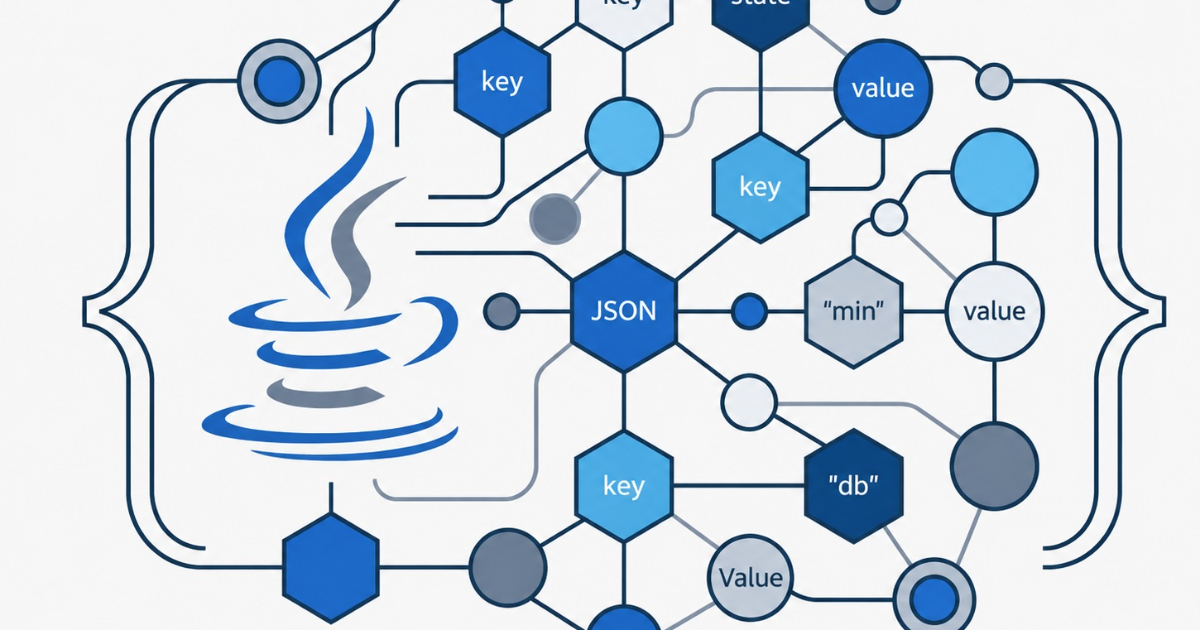
Explore how a native JSON API simplifies data handling in JDK 28.
JEP 540 has moved to Target status for JDK 28, and that's worth paying attention to. It brings a compact JSON API that handles parsing and generating documents without dragging in external dependencies. The immutable value hierarchy keeps things clean, and strict syntax rules mean fewer surprises. What stands out is the focus on core tasks, not endless features. Feedback during incubation will refine it further. For developers tired of bolting on libraries for basic JSON work, this feels like a step toward simpler workflows.
Jakarta EE 12 and Groovy 6 Beta Lead This Week's Java Roundup
The Java community is moving with purpose this August, and the latest roundup reflects that momentum. The Simple JSON API proposal targeting JDK 28 stands out, signaling a thoughtful push toward cleaner, more native data handling. Alongside it, updates across Jakarta EE 12, GlassFish 9.0, and Groovy 6.0 show steady, practical progress. For developers exploring AI integration, the LangChain4j point release is worth a look. If you're weighing career moves, our related piece on navigating AI/ML job requirements offers useful perspective.

Stripe's reported $7B OpenRouter deal signals a new era for AI payments.
OpenRouter's CEO calls it "Stripe for AI," and Stripe's reported $7B+ acquisition talks suggest that framing is more than ambition. It signals a clear bet on simplifying how AI model access gets paid for. For teams tired of stitching together gateways and billing, this could be the consolidation that makes the ecosystem feel less fragmented. It's a bold move, and one worth watching closely. If you're exploring how AI tools reshape workflows, our piece on questioning AI clones offers a useful counterpoint.

Explore how Grok 4.6 brings capable AI agents at a more accessible price.
Grok 4.6 is here, and it's a meaningful step forward for teams building with AI agents. The model now ranks third globally on the Artificial Analysis Intelligence Index, surpassing Kimi K3 and matching GPT-5.6 Sol Max. More importantly, it delivers significant gains in coding, knowledge work, and long-running agent tasks, while keeping API costs at $2 per million input tokens. That combination of capability and economics is worth exploring, especially for enterprises weighing performance against the real cost of completing complex workflows.

MCP Drops the Handshake to Let Agents Route Without JSON Parsing
The MCP 2026-07-28 spec drops the initialize handshake and session header, adding required method and tool-name headers so gateways route traffic without parsing JSON. Some developers call it a rediscovery of REST, while others argue the standard was always the point. Both sides have merit, though the shift feels less like a regression and more like a practical concession. For a deeper look at how statelessness changes deployment, our piece on scaling AWS server deployments with stateless MCP is worth a read.

OpenAI launches a specialized model to empower approved cybersecurity defenders.
OpenAI's latest release, GPT-5.6-Cyber, marks a deliberate step forward for defenders who need more from their AI. Fine-tuned from GPT-5.6 Sol, this model completes 95% of advanced cybersecurity tasks, finding zero-days, chaining exploits, where general models often stall or refuse. Access stays tightly controlled through the new Daybreak Red tier, requiring real credentials and authorization. It's a focused tool for approved teams, not a broad upgrade. For enterprises, the question isn't capability; it's whether your workflows can qualify for the access.

Azure API Management shifts control plane from APIs to AI models and tools
Microsoft's dedicated AI Gateway tier for Azure API Management is a thoughtful step forward, shifting the control plane from APIs to models, MCP servers, and tools. It's a consolidation that architects have long needed, especially with Foundry, Bedrock, Vertex AI, and OpenAI behind one endpoint. Policy cards replacing XML feels right. Still, the governance boundary invites scrutiny. Where does oversight truly begin and end? That question matters as much as the convenience.
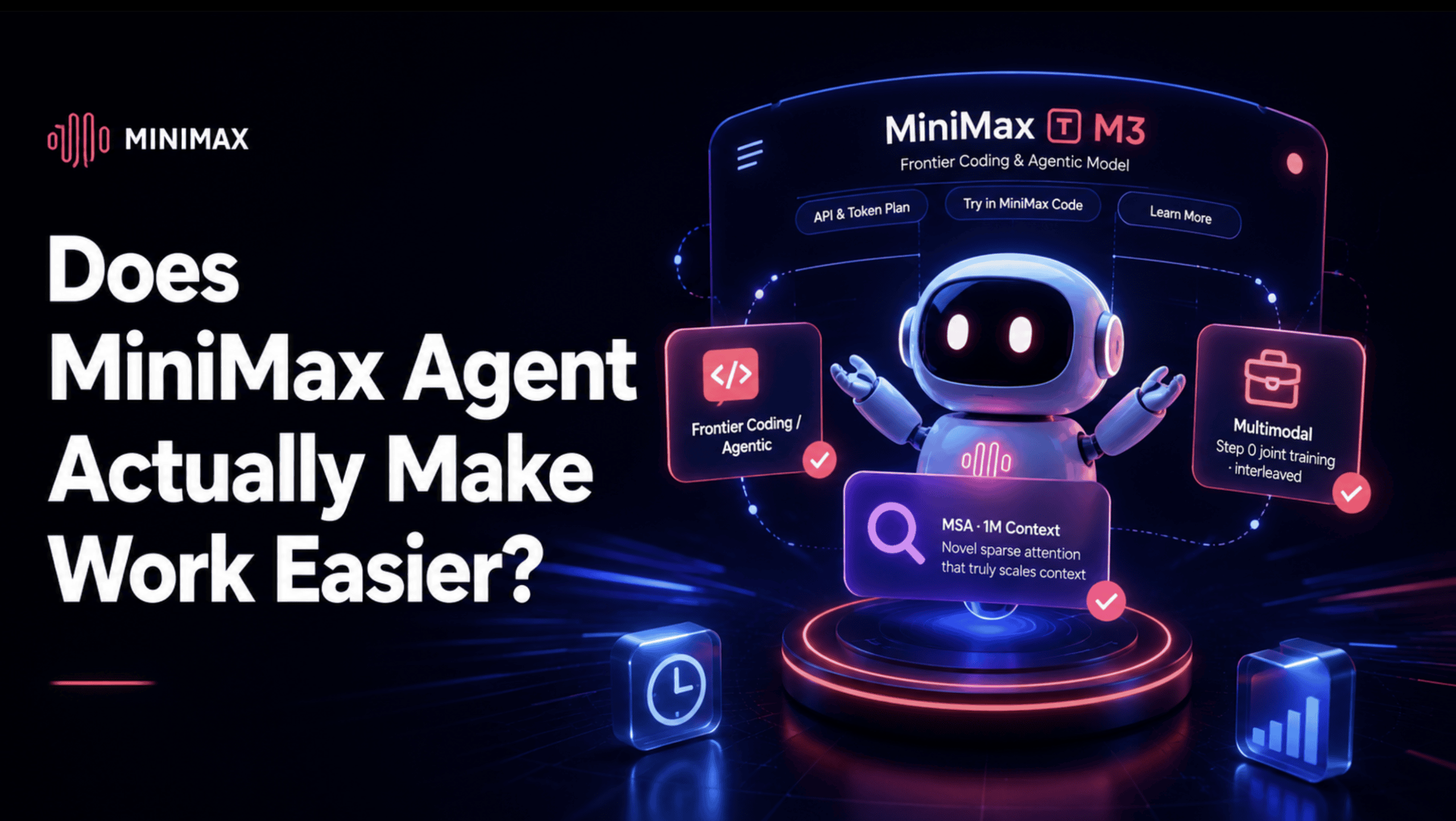
Explore how MiniMax Agent transforms complex tasks into simpler workflows
MiniMax's own architecture is the story here, not just the promises. We read how their agent handles a real task against the actual API, and the details matter. It's one thing to claim simplicity; it's another to trace the workflow and see where the friction actually disappears. This piece fills in the gaps the launch post skipped, giving you a clearer lens on whether the tool genuinely lightens the load.
Why I Stopped Installing Skills and Found a Smarter Workflow
There's a quieter path past the constant churn of installing Claude Skills. I stopped adding them to my workflow, and the shift has been liberating. Instead of stacking tools, I'm focusing on direct conversations with the model, letting it adapt to my specific needs in the moment. It feels less like managing a toolbox and more like collaborating. If you're curious about the limits of this kind of interaction, our piece on talking to an AI clone offers a useful counterpoint.