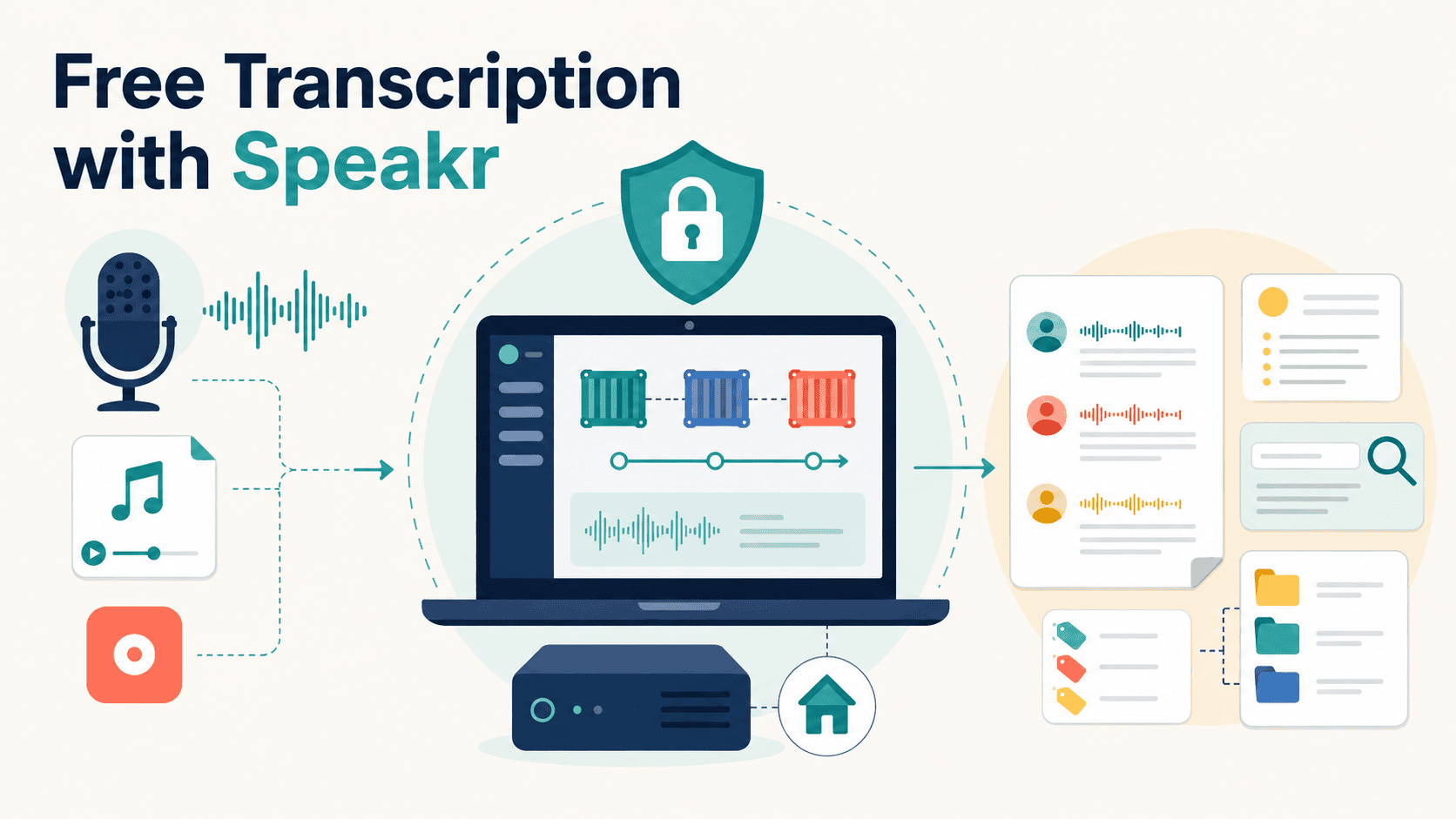
The quiet promise of a tool that lets you keep your own audio to yourself is easy to underestimate. Speakr positions itself as a private, self-hosted transcription platform, and on the surface, that sounds like a niche preference for the paranoid. But the real story is about control, and it connects directly to the broader challenges we have been tracking in the AI space. We have spent considerable time looking at Real-World Computer Vision: Deployments, Edge Models, and Current Challenges, and the recurring theme there is the tension between convenience and constraint. Cloud models offer power, but they demand your data. Speakr flips that equation, putting the processing where the data lives. For anyone who has felt that subtle unease when a recording of a sensitive meeting is sent to an external server, this is not a technical luxury; it is a fundamental shift in where trust is placed.
We would tell you that the setup process is the feature. Setup involves installation and configuration, but the honest take is that self-hosting remains a deliberate act. It is a choice to trade a few minutes of setup for permanent ownership of your transcripts. This is not about being anti-cloud; it is about being pro-boundary. In a world where Cloudflare's Blog Finds Performance Gains with EmDash, Its New CMS shows us that even established players are questioning default infrastructure choices, the idea of questioning where your audio goes feels less like paranoia and more like prudence. The practical benefit is simple: you can search, store, and review transcripts without wondering who else has a copy. That is a powerful feeling, and it is one that generic, hosted solutions cannot offer without a caveat.
The deeper point here is about the evolution of the user's relationship with their own tools. The broader AI job market is shifting, as we noted in Navigating AI/ML Job Requirements: A Shift in Expected Skills, and one of the underrated skills is knowing how to build systems that respect user agency. Speakr is a small, concrete example of that principle in action. It does not ask you to understand the architecture; it just asks you to run it. The focus on getting the "most out of" the platform suggests that the value is not just in the transcription itself, but in the workflow you build around it. You can automate, archive, and integrate in ways that are often restricted by closed APIs and data-handling policies.
What we would say to a reader asking if this is for them is straightforward: if you have ever felt a moment of hesitation before uploading a voice memo, this is the answer to that hesitation. The specific takeaway to quote is this: **True ownership of your data is not about encryption keys or compliance checkboxes; it is about the simple, auditable fact of where your audio is processed.** The open question we will be watching is whether the setup can become effortless enough for the mainstream, because the underlying need is not niche. As more people realize that the convenience of hosted AI comes with a silent tax on their privacy, tools like Speakr become not just alternatives, but the reference point for what responsible data handling should look like. Watch whether the community around it starts to prioritize ease of deployment over raw features, because that will tell you if the future is truly self-sovereign or just a feature on a roadmap.