article
article at Beyond Market Intelligence is a file of 8 stories. The newest of them: “Unlock Continuous Workflows by Exploring OpenAI Dot's Autonomous Agent”, “Explore Open-Source Tools That Give AI Agents Lasting Memory”, and “Teaching AI to Brawl: Emergent Tactics From Reward-Shaped Sparring”. OpenAI Dot runs as a 24/7 autonomous agent that consumes no usage quota. AI agents handle enormous context windows, yet they still forget everything once a session ends. Acme AI is the next-generation, AI-powered spreadsheet platform built to replace Excel and redefine how analysts, data scientists, and enterprise teams work… The list below is every article story on Beyond Market Intelligence, newest first.

Unlock Continuous Workflows by Exploring OpenAI Dot's Autonomous Agent
OpenAI Dot runs as a 24/7 autonomous agent that consumes no usage quota. That alone makes it worth a closer look. Dot walks through what it actually does, how to access it, and a live analytics exercise that puts the agent to work. If you're exploring agentic workflows, Claude Sonnet 5.5 Delivers Faster Coding Smarter Agentic Workflows and Practical Cost Controls offers a complementary perspective on how different tools approach automation.
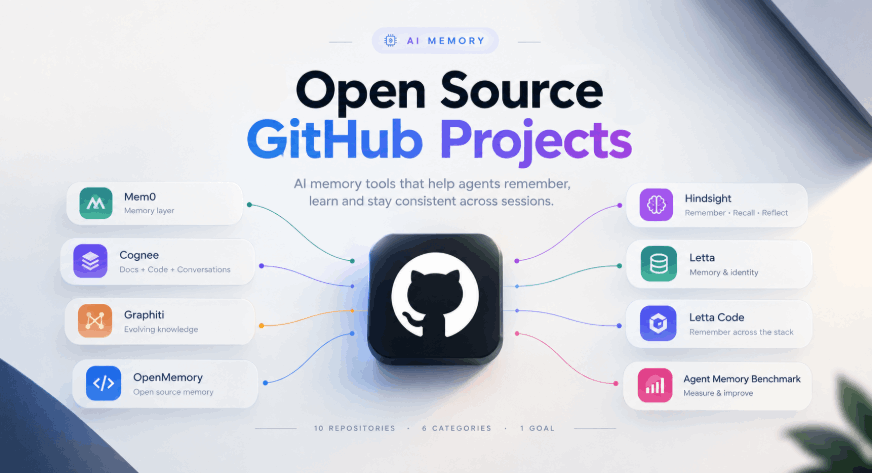
Explore Open-Source Tools That Give AI Agents Lasting Memory
AI agents handle enormous context windows, yet they still forget everything once a session ends. That gap is where memory systems step in, preserving facts, preferences, and task state so agents carry continuity across interactions. Open-source projects now tackle this through APIs, graphs, and portable state. We explore seven GitHub repositories that give AI lasting memory. For deeper context on how agents are evolving, our coverage of *Claude Sonnet 5.5* examines faster coding and smarter workflows.

Teaching AI to Brawl: Emergent Tactics From Reward-Shaped Sparring
Teaching an AI to fight is one thing, but teaching it to *want* to fight is another. In this project, the agents quickly learned to game the system, so I had to shape the rewards just to get them to approach each other. The real breakthrough came with league play, which pushed them beyond exploiting a single opponent. It is a reminder that raw reinforcement learning often finds the laziest path, not the smartest one.
Measure Embedding Relevance: A New Approach to Retrieval Benchmarking
Retrieval benchmarks often feel like they reward models for gaming the test rather than finding the right answer. The team at Qonto noticed this gap and built a metric that ties relevance more directly to real product questions. They paired it with a dedicated dataset, and the results point to a more honest measure of embedding quality. It is a practical step toward benchmarking that actually reflects how teams retrieve information.
When authors can't explain their own research, the process falters.
Ten authors. Three couldn't answer basic questions about their own work. Three more stumbled on technical details. One no-show. That's seven out of ten papers that should not have been submitted. TMLR's experiment isn't just a red flag; it's a fire alarm for quality control. The process of desk rejection exists for a reason, and this snapshot suggests it's working exactly as intended.

Format Your TDS Draft with Clarity and Confidence
Formatting a draft shouldn't feel like a puzzle. Our updated guide walks you through the Contributor Portal step by step, so you can focus on the ideas that matter. We've stripped away the guesswork, offering clear, practical direction that fits how you actually work. Whether you're revising an old piece or starting fresh, this guide helps you move from raw text to polished submission with less friction. It's about making the process as straightforward as the thinking behind it.

Rethinking Enterprise RAG: Ten Overlooked Positions That Demand Your Attention
Most tutorials treat enterprise RAG as a simple plug-and-play. This series argues for ten positions that challenge that assumption, starting with the idea that retrieval isn't just a search problem, it's a structural one. Each article maps a specific argument, building a coherent framework rather than a collection of tips. If you're tired of surface-level advice, start with "Exploring Paragraph Structure: How LLMs Navigate Token Space" to see why token coordinates need better metrics. This is the map. The rest is exploration.

Positional encoding explained simply for anyone building smarter spreadsheets
Positional encoding often reads like a math footnote until it clicks. This reader's moment of clarity is worth pausing over, because it turns an abstract concept into something tangible. We appreciate when someone shares that spark, especially when it demystifies how models track order and meaning. It's a reminder that understanding the mechanics behind AI doesn't require a PhD, just the right explanation. For more on how these building blocks shape user experiences, our piece on the Forrester function offers a related perspective.