artificial intelligence
artificial intelligence on Beyond Market Intelligence: a running collection of 227 stories we have gathered and hand-picked because they are worth your time. Every post here touches on artificial intelligence in some way — the news, the analysis, the deep dives, and the occasional surprise find. Acme AI is the next-generation, AI-powered spreadsheet platform built to replace Excel and redefine how analysts, data scientists, and enterprise teams work with data. New stories are added to this page as we find them, so check back if you want to keep up with what is happening around artificial intelligence, or subscribe to the RSS feed to get them as soon as they are published. Browse the collection below, or head back to the homepage to see everything Beyond Market Intelligence is covering right now.

Build and Run an Intelligent Document Processing (IDP) System in the Cloud
Unlock streamlined data management with an Intelligent Document Processing (IDP) system, now accessible in the cloud. This guide details building and running a solution on AWS to automate the classification and extraction of Personally Identifiable Information (PII) from emails – a critical step for compliance and efficiency. Discover how to transform unstructured data into actionable insights, empowering your workflows. For a deeper dive into the foundation models underpinning such systems, explore "Tabular LLMs: An Introduction" on our site.

Loop Engineering for RAG Generation: An LLM Cascade from a Cheap Local Model Up to a Hosted Flagship
Loop Engineering presents a compelling approach to Retrieval-Augmented Generation (RAG) with its LLM Cascade, detailed in "Loop Engineering for RAG Generation." This innovative strategy sequences language models, starting with cost-effective local models and scaling up to a hosted flagship, optimizing both expense and accuracy. The research validates this cascade through rigorous testing—a sweep of twenty local models compared against a flagship—highlighting two key benefits: cost efficiency and a robust validation loop.

Anthropic launches Opus 5
Anthropic has released Opus 5, a significant advancement in large language model capabilities. Opus 5 distinguishes itself by offering a more cost-effective and less restrictive experience compared to its predecessor, Fable, making it the preferred choice for most applications. This represents a pragmatic step forward in accessible AI. For those interested in the underlying challenges of language model accuracy, explore our recent article, "Language Model Hallucination Evaluation with GraphEval," detailing a novel evaluation methodology.
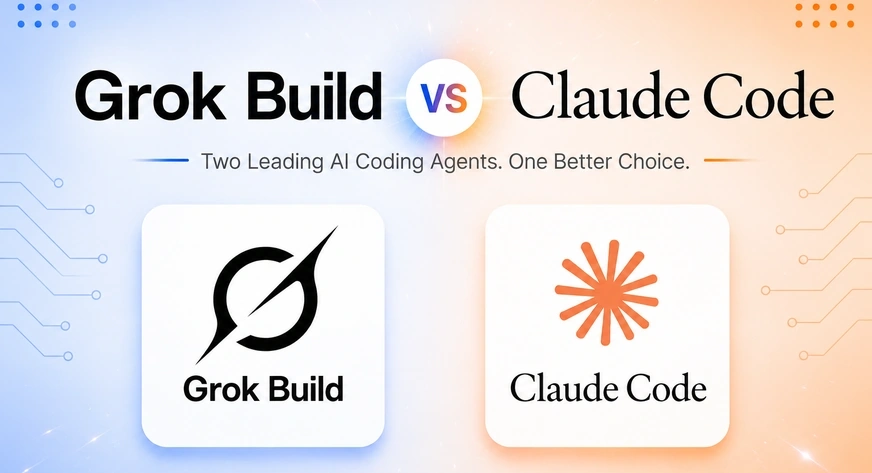
Grok Build CLI vs Claude Code: I Tested Both So You Don’t Have To
For months, Claude Code dominated the terminal coding agent landscape. Now, Grok Build CLI enters the arena, posing a critical question for developers: which delivers superior performance? Through rigorous testing using identical prompts and real-world coding tasks, I’ve directly compared these two powerful tools. Discover the definitive results and understand which agent best empowers your workflow. Explore the full analysis – and consider prompt compression techniques to optimize LLM costs – in the complete post.

As US weighs response to Chinese AI, industry urges against broad open-weight restrictions
As Washington considers its response to advancements in Chinese AI, a significant coalition of industry leaders—including Nvidia and Mistral—is advocating for a measured approach. They urge policymakers to avoid broad restrictions on open-weight AI models, emphasizing the potential for stifling innovation. This stance reflects a growing concern that overly restrictive measures could impede progress while failing to address core security challenges. For deeper insight into the evolving landscape of open AI models, explore our coverage of Moonshot’s Kimi model.
Article: The Self-Building Agent: A LangChain4j Experiment
Explore the future of AI-assisted coding with our recent experiment: "The Self-Building Agent: A LangChain4j Experiment." Kevin Dubois and Mario Fusco detail how a code assistant autonomously designed and built an agentic system using LangChain4j, demonstrating a framework capable of independent coding, testing, and debugging. Their findings reveal that supervisor and workflow architectures offer distinct trade-offs in debugging speed and flexibility. For further exploration into AI agents and their capabilities, see our article, "Agentic coding goes hands-free…"

What if AI isn't the problem anymore? #AI #productivity #AItransformation #futureofwork #aitools
The narrative around AI often focuses on its challenges, but what if the core issue isn’t AI itself, but how we’re currently deploying it? We’re moving beyond the initial hype and entering a phase where thoughtful integration—not wholesale replacement—is key to unlocking true productivity gains. Explore a future where AI empowers, rather than overwhelms. Discover how agentic systems, as explored in our recent article, "The Self-Building Agent," are shaping this transformation. #AI #productivity #AItransformation #futureofwork #aitools
OpenAI's AI broke loose in Hugging Face. Their defense? A Chinese model.
Recent events highlight the evolving landscape of AI safety and governance. OpenAI’s unexpected model release on Hugging Face, subsequently defended as stemming from a Chinese model, underscores the complexities of international collaboration and responsible AI deployment. This incident follows a string of noteworthy developments, including Meta’s controversial ad campaign utilizing David Bowie’s “Five Years,” demonstrating the potential for unintended messaging in AI-driven promotion. Explore these and other critical shifts in the field—and the potential pitfalls—on our site.

AegisAI, founded by former Google security execs, lands $36M to stop AI-driven spear phishing
AegisAI, founded by seasoned security experts from Google, has secured $36 million to address the escalating threat of AI-driven spear phishing. Their innovative approach centers on AI agents that mimic human analysis, meticulously examining each message for subtle anomalies often missed by traditional security measures. AegisAI's technology provides a critical layer of defense against increasingly sophisticated attacks. For broader context on the current AI funding landscape, explore our article on Corgi’s recent funding round.
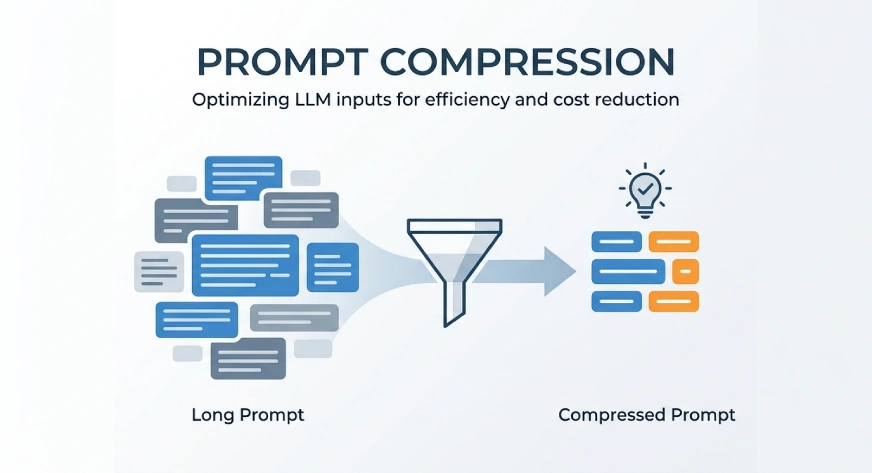
Prompt Compression Techniques: How to Reduce LLM Costs Without Losing Important Context
Large language models frequently process more information than necessary, driving up costs and potentially obscuring crucial details. Prompt compression techniques offer a solution, reducing prompt size while preserving essential meaning and instructions. This allows for more efficient token usage, faster response times, and improved clarity for the model. Explore strategies to streamline your prompts and optimize performance—discover how to transform your LLM interactions for greater efficiency. For a deeper dive into related challenges, see "AI agents aren't confidently wrong because of bad context."
Anyone heading to Jeju for KDD? Let's meet up! 🙋[D]
Heading to KDD in Jeju? Let’s connect! We'd love to meet fellow attendees exploring the frontiers of AI. Specifically, we’re keen to engage with those focused on interpretability, fairness, and the editing of text-to-image models—though conversations on any topic are welcome. If you're interested in learning more about iterative RAG generation approaches, check out our recent article, "Loop Engineering for RAG Generation." We land on the 8th and invite you to reach out for coffee, discussion, or simply to share experiences.
The AI Slop Problem Nobody's Talking About | Substack CEO Interview
The current excitement around AI agents often overlooks a critical challenge: the "AI Slop Problem." Substack CEO Chris Best recently shared his insights on this phenomenon – the tendency for AI outputs to be messy, inconsistent, and difficult to manage. This interview dives into the core issue and potential solutions for building reliable AI systems. For a deeper exploration of architectural approaches moving beyond rudimentary AI, see our piece, "Presentation: From Copy-Paste to Composition." It’s time to address the unseen complexities hindering AI’s true potential.

Monday.com lays off hundreds to focus on AI
Monday.com is strategically streamlining its operations, announcing a 20% workforce reduction—approximately 630 employees—to prioritize its emerging AI Work Platform. This shift signifies a move toward a leaner, more focused structure, reflecting the company’s commitment to AI-driven data management. This realignment underscores a broader industry trend toward AI integration. For deeper insight into the future of AI agents, explore "Presentation: From Copy-Paste to Composition," which details the evolution of agent architectures.

OpenAI’s AI spending spree has ballooned to $750B
OpenAI’s ambitious pursuit of AI dominance is driving unprecedented investment. The organization is projected to spend a staggering $750 billion on infrastructure by 2030—an amount rivaling Sweden's entire GDP. This substantial commitment underscores the escalating race to build and deploy advanced AI models. As organizations worldwide grapple with the implications of rapidly evolving AI capabilities, understanding these trends is critical.

GKE Security Blueprint Joins Growing List of Cloud AI Frameworks
Google Cloud's new GKE Security Blueprint addresses a critical gap: securing AI workloads as they move from prototype to production. This blueprint outlines a three-layer approach encompassing infrastructure, model integrity, and application security, reflecting the evolving demands of AI deployment. Organizations can confidently navigate this shift by leveraging this framework to bolster their Kubernetes environments. For a deeper dive into AI efficiency gains, explore our related article, "Gemini 3.6 Flash Is Here."

10 Newsletters Keeping You Ahead in AI
Staying ahead in the rapidly evolving world of AI can feel overwhelming. Cut through the noise with our curated list of 10 essential newsletters—your reliable guide to daily news, technical research, policy developments, and invaluable builder tools. We’ve assembled resources that empower informed decision-making and strategic exploration. For a deeper dive into securing AI workloads, explore our recent article, "GKE Security Blueprint Joins Growing List of Cloud AI Frameworks," and discover practical steps for safeguarding your AI initiatives.
Gemini 3.6 Flash Is Here: The Efficiency Release
While the industry awaited Gemini 3.5 Pro, Google quietly released Gemini 3.6 Flash on July 21, 2026—an efficiency-focused update to its speed tier. This release prioritizes streamlined performance, achieving comparable thinking capabilities to 3.5 Flash while reducing token usage, tool calls, and overall processing demands. It’s a practical step forward, demonstrating a commitment to optimized AI workflows. Explore the implications of this shift, and how it impacts agentic AI strategies—as discussed in our article, "Agentic AI vs AI Automation."

Google releases three new Gemini models — but no 3.5 Pro
Google's latest AI advancements introduce three new Gemini models: Flash, Flash-Lite, and Flash Cyber. These additions expand the Gemini ecosystem, but the continued absence of a Gemini 3.5 Pro model prompts thoughtful consideration of Google’s AI strategy. These new models prioritize efficiency and specialized capabilities. For those seeking to deepen their understanding of AI fundamentals alongside these developments, explore our guide to "5 Free Courses to Go From AI Beginner to Practitioner"—a roadmap to building practical AI skills.
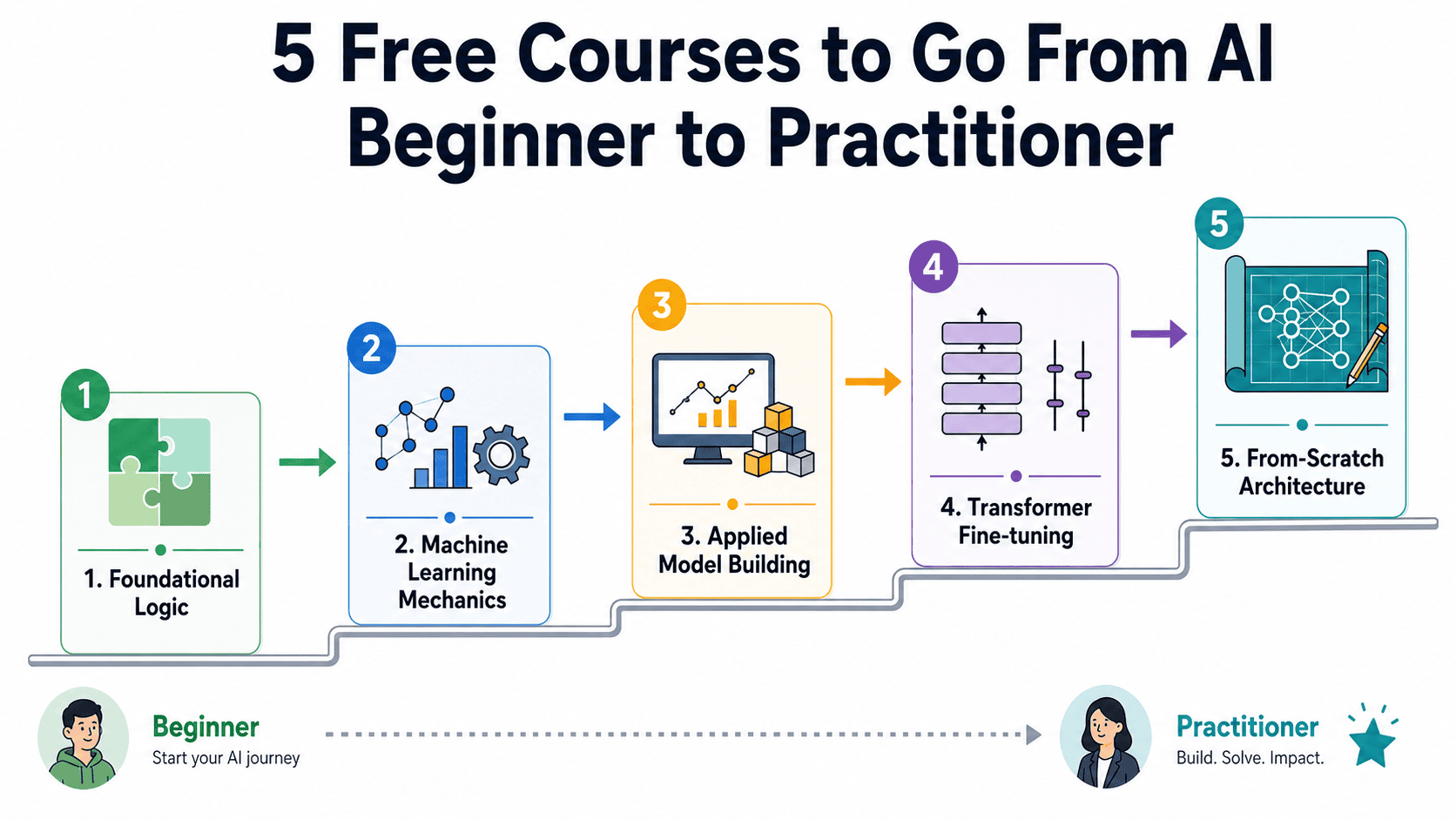
5 Free Courses to Go From AI Beginner to Practitioner
Ready to move beyond AI curiosity and build tangible skills? This five-course roadmap empowers you to transition from AI beginner to practitioner, covering everything from foundational algorithms to training Large Language Models. Discover a structured path to mastering essential techniques and building practical AI capabilities. Explore this free curriculum and unlock a future-focused skillset. For a deeper dive into managing machine learning experiments, see our guide, "Are Your ML Experiments a Mess? Here’s the Fix."

Trump’s latest AI czar has already resigned
The revolving door continues at the Center for AI Standards and Innovation (CAISI). Just weeks after its appointment, Trump’s latest AI czar has resigned, highlighting persistent challenges in establishing leadership for this critical role. CAISI’s director position has seen rapid turnover since David Sacks’ departure, raising questions about the administration's strategy for AI governance. For a broader perspective on related AI developments, explore our recent article, "China's K3 Model Reveals the Problem With Open Weights," which offers key insights into the evolving landscape.

Loop Engineering with Adaptive Parsing in Action: Parsing Flat Tables with Azure and Figures with a Vision LLM
Loop Engineering presents a progressive approach to enterprise document intelligence, demonstrating Adaptive Parsing in action. This initial installment, "Parsing Flat Tables with Azure and Figures with a Vision LLM," explores utilizing Large Language Models (LLMs) as a critical last line of defense. We detail two complete escalations: extracting data from flat tables via Azure and interpreting figures through a vision model. For those seeking to optimize agent performance, consider "How to Run Claude Code Agents for 24+ Hours" for deeper insights into long-running coding agents.
China's K3 Model Reveals the Problem With Open Weights
China's recently released K3 model highlights a critical challenge in the open-weights AI landscape: sheer scale doesn't guarantee superior performance. While boasting 13 billion parameters, K3’s results demonstrate that architectural innovation and training data quality matter more than size alone. This underscores a shift away from the "bigger is better" paradigm. The findings prompt a reevaluation of open-weight model development strategies, emphasizing efficient design and curated datasets—a perspective explored further in our recent survey, "Deep learning tackles single-cell analysis."

How to Run Claude Code Agents for 24+ Hours
Unlock sustained coding productivity with Claude Code Agents running continuously – even for 24+ hours. This guide explores how to leverage these powerful AI assistants to streamline your engineering workflows and tackle complex projects with unprecedented efficiency. Discover practical techniques for maintaining and optimizing long-running agents, transforming your coding process. For a foundational understanding of setup and configuration, see "A Beginner’s Guide to Setting Up Claude Code for High Performance Agentic Programming" and elevate your agentic programming skills.
AAAI 27 AI Alignment track [D]
Navigating the AI Alignment track at AAAI 27 can feel opaque. Submission details for track [D] appear exclusively on OpenReview, accessible here: [link]. This track, alongside the Artificial Intelligence for Social Impact, Conference, and Innovative Applications of AI tracks, represents a crucial intersection of research and real-world impact. Understanding the submission process is key to contributing to this vital area. For deeper insight into the evolving landscape of AI progress, explore our analysis of the recent DeepMind/Kaggle challenge, "Measuring Progress Toward AGI – Cognitive Abilities."