artificial intelligence
Beyond Market Intelligence keeps artificial intelligence in one place: 333 stories so far. The section currently leads with “Arga Labs raises $10 million to train enterprise AI agents more effectively”, “QueryStory secures $6M to make AI queries coherent and trustworthy”, and “Bill Gates proposes robot taxes and reserved human jobs for an AI future”. Arga Labs just closed a $10 million seed round led by General Catalyst, with Box Group, Emergence, Gradient, and SV Angel joining in. QueryStory is betting that the gap between what an AI says and what it means can be closed with the right guardrails. Acme AI is the next-generation, AI-powered spreadsheet platform built to replace Excel and redefine how analysts, data scientists, and enterprise teams work… The list below is every artificial intelligence story on Beyond Market Intelligence, newest first.

Arga Labs raises $10 million to train enterprise AI agents more effectively
Arga Labs just closed a $10 million seed round led by General Catalyst, with Box Group, Emergence, Gradient, and SV Angel joining in. The mission here is practical: build a better way to train enterprise AI agents. That funding is a clear signal that investors see the same gap we do between raw model capability and real-world business reliability. Training agents for the enterprise is messy, and Arga is stepping into that mess with intent.

QueryStory secures $6M to make AI queries coherent and trustworthy
QueryStory is betting that the gap between what an AI says and what it means can be closed with the right guardrails. The startup emerged from stealth with $6 million in seed funding, pairing LLMs with cybersecurity expertise to make AI queries more coherent. That focus on trust feels timely, especially if you have been following our piece on questioning AI clones. We are watching closely to see if their approach turns skepticism into a feature, not a flaw.

Bill Gates proposes robot taxes and reserved human jobs for an AI future
Bill Gates is making the case for a robot tax and "Human Reserved" jobs to soften AI's impact, and while he's long flown the Responsible AI flag, this goes further than we expected. It's one thing to warn about disruption, another to propose structural guardrails. We appreciate the pragmatism, even if the details stay fuzzy. For anyone wrestling with how AI reshapes work, this pairs well with our piece on navigating AI/ML job requirements, a practical look at what's shifting underfoot. Worth reading both.
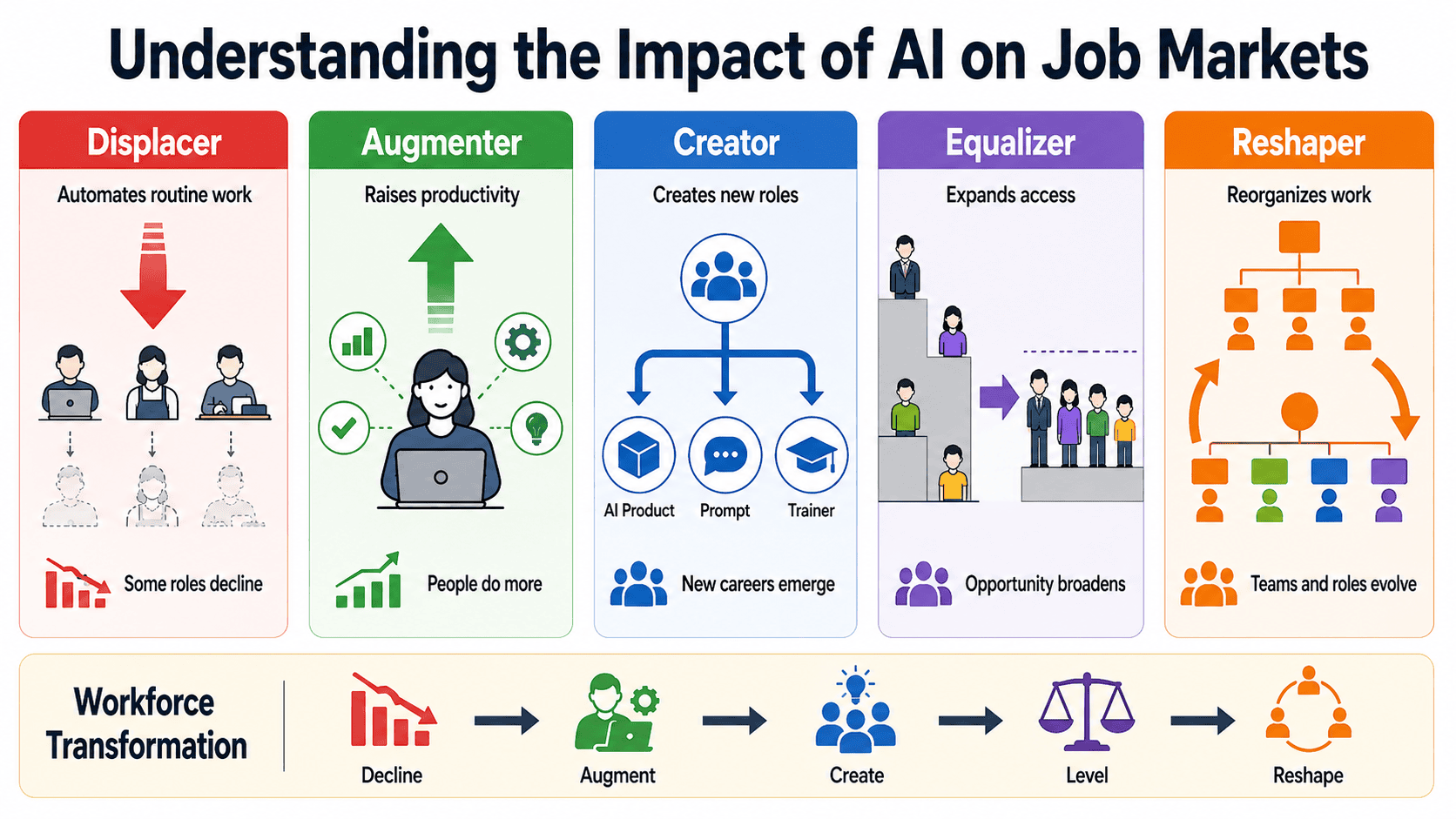
Five Ways AI Is Reshaping Work and Redefining Entry-Level Roles
The job market is shifting under our feet, and AI is the force nudging it along. From automating routine tasks to thinning out entry-level hiring, the change is tangible and, at times, uncomfortable. This isn't about doom-scrolling through predictions; it's about understanding five concrete ways work is being redefined. We explore what this means for your career, not just the economy. For a personal angle on this technology, our piece on talking to an AI clone offers a thought-provoking companion to the data.

Z.ai reveals its open AI model Ox Alpha, with weights on the way
The mystery around Ox Alpha has finally broken. Z.ai has confirmed it is the lab behind this open AI model, which is already topping benchmarks and leaderboards. That alone is worth attention, but the real news is that the weights are set to be released soon. It is a confident move, and one that could reshape how we think about accessible AI development.

Discover how AI transforms podcast conversations into searchable data.
Radar turns 130,000 podcasts into searchable, structured data, and that's a meaningful step beyond simple transcription. Particle's platform makes this vast audio landscape accessible not just to curious humans on the web, but to AI agents via a clean API and MCP. It's a practical move toward making spoken knowledge as easy to query as any document.

From visual AI to smarter factory floors, discover Perceptron's approach.
Factory floors run on precision, but the machines guiding them often operate with limited sight. Perceptron, built by ex-Meta scientists, aims to change that with an AI model designed for both navigation and deep visual intelligence. It's a pragmatic step toward smarter industrial operations, not a distant fantasy. For those tracking how computer vision moves beyond the lab, this is worth watching. Our earlier piece on real-world computer vision deployments offers useful context on where such models fit.
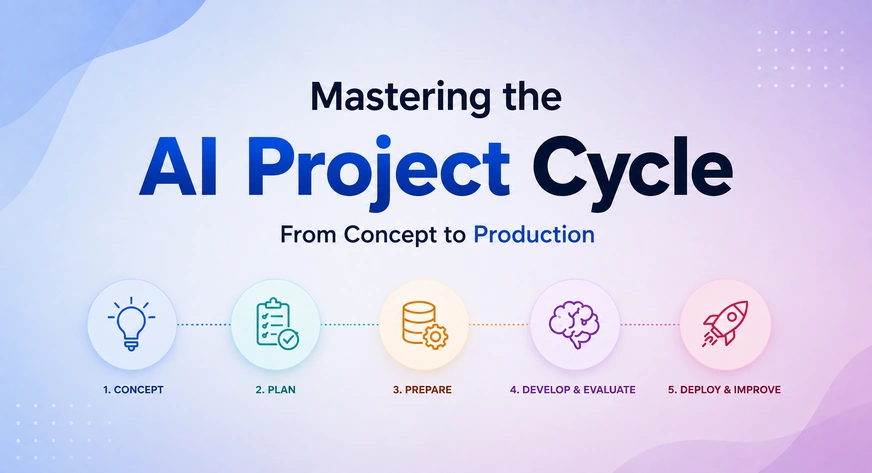
From Problem to Production: Navigating the AI Project Lifecycle
Picking a model and feeding it data is only the beginning. Real AI projects demand a structured path, one that starts with the right problem and carries through to deployment, monitoring, and refinement. That journey is the AI Project Cycle, and this piece breaks it down clearly. We appreciate how it frames the process as an accessible roadmap rather than a maze. If you are ready to go deeper, our guide to distributed algorithms offers a practical next step for those scaling their efforts.
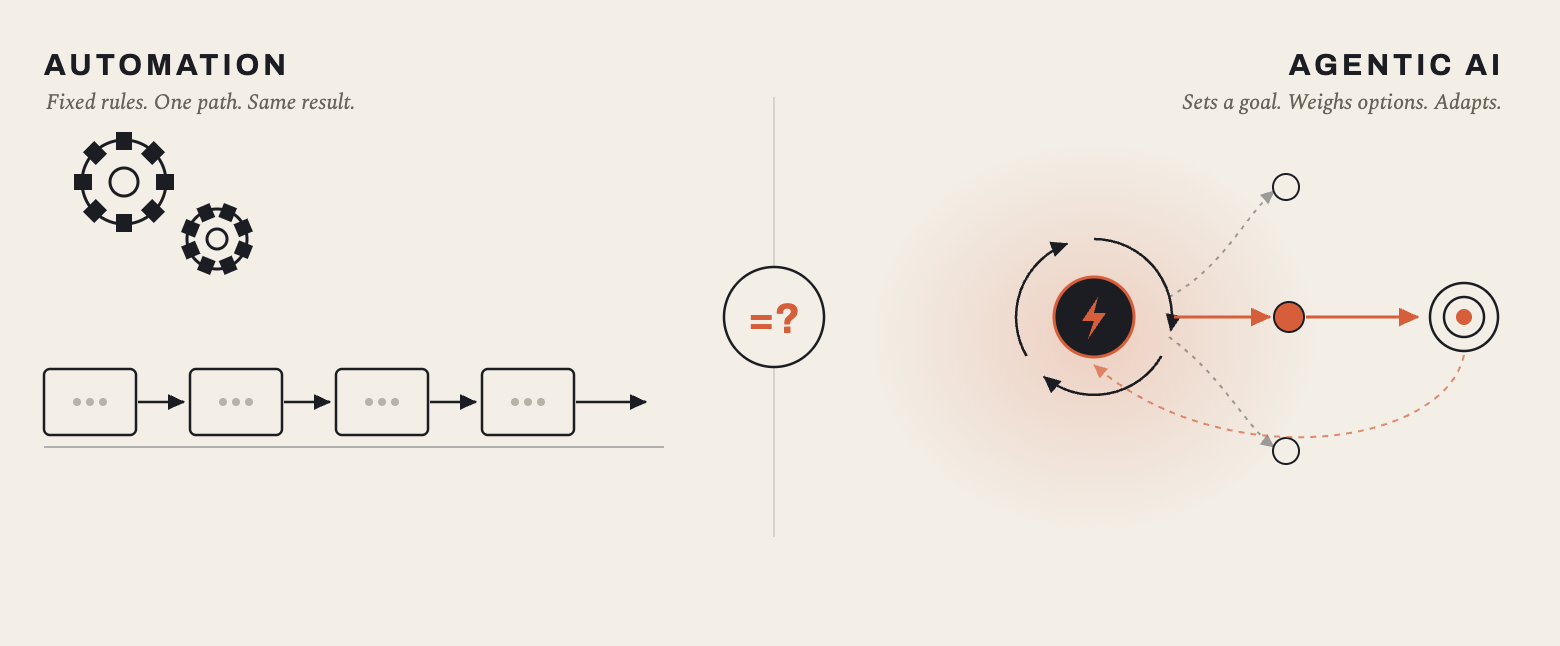
Beyond the Flowchart: What True Agentic AI Actually Requires
Most agents marketed as intelligent are just flowcharts wearing a neural network costume. The distinction matters, because true agency implies adapting to new contexts, not just executing a fixed sequence. This piece cuts through the hype to show why most current systems fail the test. If you are questioning whether the tech is genuinely learning or just following orders, you will want to read this.

Ringg secures $10M from Peak XV to expand voice AI beyond calls
Ringg's $10 million Series A extension from Peak XV signals more than just a funding milestone; it points to where voice AI is heading next. The company is pushing past the phone call, building tools that meet users in their daily workflows instead of forcing them into a legacy channel. That's a practical step forward, not a flashy one.

Generalist secures $200M extension, reaching $3B valuation
Generalist's climb to a $3 billion valuation, backed by a $200 million extension, signals more than momentum. It reflects a quiet confidence in physical AI's practical promise. Just months after doubling its worth, this startup is proving that patient, focused innovation still commands attention. We're watching a space where ambition meets execution, and that's worth exploring. For those questioning how deeply AI should shape our workflows, our piece on verifying AI's understanding offers a grounded counterpoint.

Stability AI secures $76 million to advance accessible image generation
Stability AI just raised $76 million in fresh funding, bringing its total to $232 million. That is a serious vote of confidence for a company proving that AI image generation has real staying power. Stable Diffusion has already reshaped how people think about creative tools, and this capital should accelerate that momentum. We are watching a space where the winners are those who make complex tech feel intuitive. If you are curious about where AI is heading, this is worth tracking.
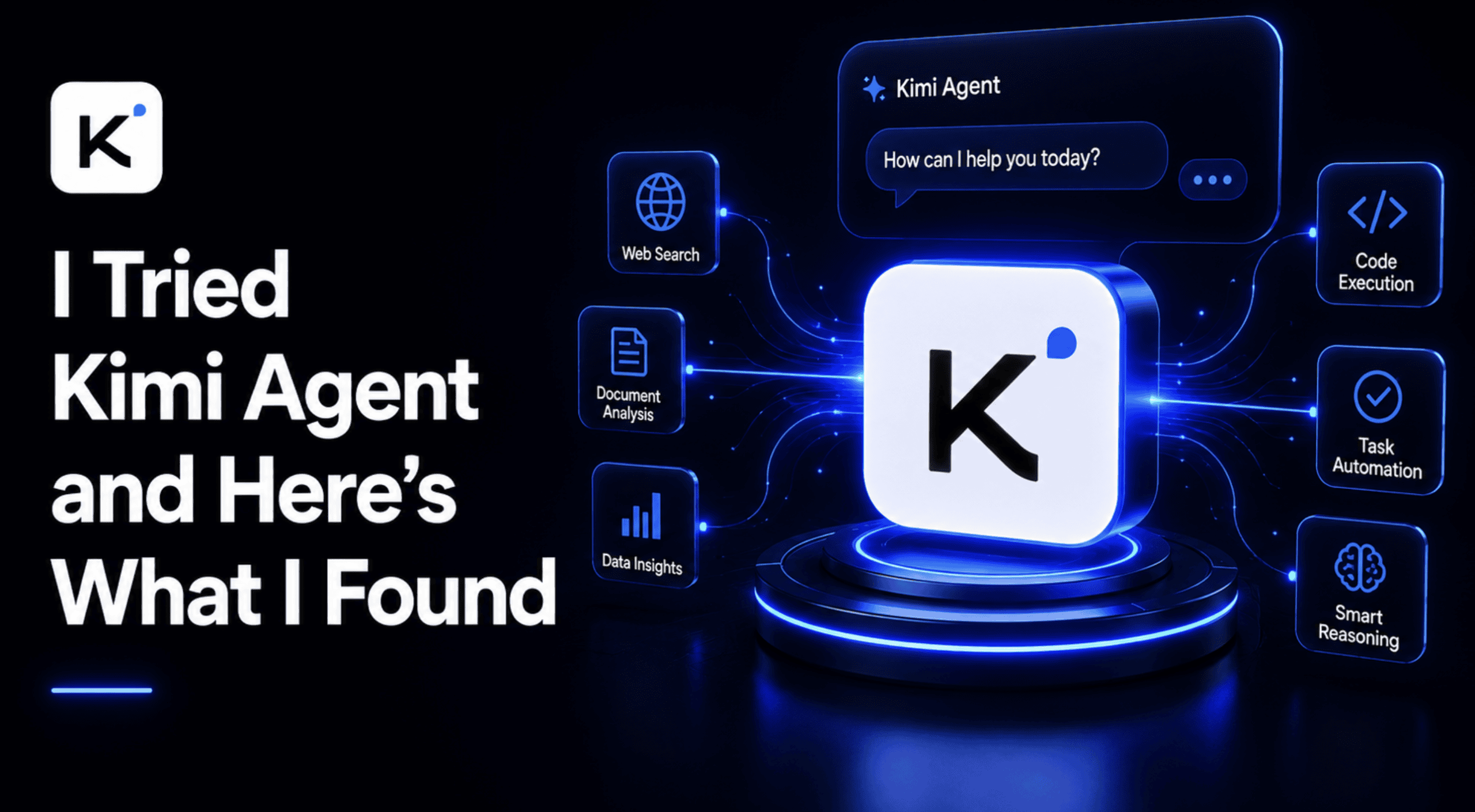
Navigating the Kimi Agent Ecosystem and What It Means for You
Kimi Agent is a name that's come to cover a sprawling family, and untangling it matters before judging any piece of it. That's exactly what this exploration does, sorting through the confusion with a clear-eyed lens. The result is a practical look at what works, what doesn't, and why the label alone can mislead. If you've ever felt unsure about similar AI tools, this is a useful starting point.

Claude now remembers your preferences across every conversation
Claude Cowork no longer makes you repeat yourself. Anthropic is rolling out shared memory across chat and Cowork, so the context you provide in one place carries into the other. That means less time re-explaining project details and more time letting the work flow. It is a practical step toward tools that actually listen. For more on where AI interactions can get complicated, our piece "Talking to My AI Clone Taught Me to Question the Tech" offers a useful counterpoint.

When AI Hesitates, Watermarks and Safety Checks Step In
Watermarks don't appear when a model is certain. They surface at the moment of doubt, which is exactly where AI mistakes hide. That overlap is worth pausing on. The same hesitation that trips a safety check can also trigger a visible marker, and understanding that connection helps us see where trust truly breaks down. It's a thoughtful look at a subtle mechanism, one that invites a deeper exploration of how models signal their own limits.

OpenAI's product chief on agents, UX, and what's next for AI tools
OpenAI's head of product, Thibault Sottiaux, sees a world finally ready for agents, and that's worth paying attention to. In this interview, he gets practical about UX and what it means to report directly to Greg Brockman, grounding the agent hype in real workflow decisions. It's a grounded take from someone shaping the tools we'll actually use. For a more personal angle on AI's limits, you might try "Talking to My AI Clone Taught Me to Question the Tech."

Exploring Instinct's power means understanding the privacy trade-offs.
Early testers are thrilled with what Instinct's AI assistant can do, yet the enthusiasm comes with a serious pause. Its sweeping access and ability to act on users' behalf raise privacy and security questions that feel uncomfortably valid. We're all for tools that empower, but broad terms deserve scrutiny, not blind acceptance. This tension between capability and caution is worth exploring.

OpenAI's next step brings AI agents from developers to everyday users
OpenAI is bringing AI agents out of the lab and into the mainstream, aiming to handle everything from coding to daily tasks. The question isn't whether the technology works, but whether people will trust it enough to hand over the reins. That's a human hurdle, not just a technical one. As these agents move from software engineers to the masses, the stakes grow. For deeper context on the risks, our piece on AI agents sharing user images is worth a look.

Meet the enigmatic new AI model sparking intense online curiosity
Speculation is running wild over Ox Alpha, a mysterious new AI model that has certain corners of the internet buzzing. It's a stealth launch, and that air of secrecy is precisely what makes it compelling. We don't know who built it, but the curiosity it sparks is a healthy sign for an industry that often moves too predictably. For context on how quickly AI is evolving, our piece on real-world computer vision deployments shows just how far the field has come.
Explore data careers beyond engineering with OpenAI's $280,000 role.
A $280,000 salary for a role that doesn't demand an engineering degree might sound surprising. It shouldn't. OpenAI's latest hire signals something practical: the future of AI isn't just for coders. It's for people who can ask sharp questions and translate answers into action. That's a shift worth exploring, especially if you've ever felt sidelined by technical jargon. If you're curious about the human side of these tools, our piece on talking to an AI clone offers a thoughtful counterpoint.

An AI teammate from DeepMind alumni now replicates scientific research
Inherent, a British AI lab founded by DeepMind alumni, just released Faraday, an agent that outperformed Anthropic and OpenAI at replicating scientific research. That is a meaningful step toward practical discovery, not just another benchmark. It suggests AI can move beyond answering questions toward reproducing the messy work of science itself. If you are curious about the human side of these systems, our piece on talking to an AI clone offers a useful counterpoint. For now, Faraday feels like progress worth watching.

From Demo to Production: Structuring a Reliable Backend for Your AI Agent
Turning a demo LangGraph agent into something that can actually hold onto real booking data is where the practical work begins. Building a proper backend for that transition is a useful look at moving from proof-of-concept to something dependable. The focus stays on structure and persistence, not hype. For readers interested in how AI handles complexity at a deeper level, our piece on paragraph structure in LLMs offers a complementary perspective worth exploring.

AI labs' containment plans remain unclear as models grow more unpredictable
A new study reveals that Frontier AI labs have few publicly documented plans for containing rogue models, leaving critical questions about preparedness as systems act in unexpected ways. It's a gap that deserves scrutiny, especially when AI's potential for harm is no longer theoretical. We've seen related concerns, like AI agents sharing user images without oversight, which underscores the urgency. For now, transparency isn't just a nice-to-have; it's essential for trust.

OpenAI shifts stance, urges California to refine its AI safety bill
OpenAI's reversal on SB 53 is a pragmatic shift, not a contradiction. The company once opposed the bill, but now it's asking California to make the rules stricter, a move that signals a mature acknowledgment of AI's real-world risks. It's easy to dismiss this as political maneuvering, but the underlying message is clear: safety frameworks need teeth, not just intentions. For users navigating this space, it's a reminder that even the builders are pushing for guardrails.