Prompt Compression Techniques: How to Reduce LLM Costs Without Losing Important Context
Our take
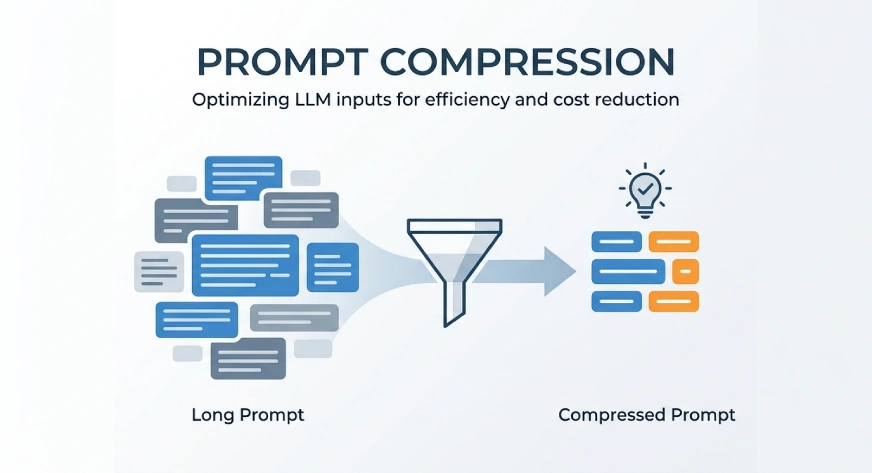
The relentless march of innovation in large language models (LLMs) continues to present both exciting possibilities and practical challenges. As we increasingly rely on these models for complex tasks, the cost and efficiency of their operation become paramount. The Analytics Vidhya article, "Prompt Compression Techniques: How to Reduce LLM Costs Without Losing Important Context," highlights a crucial area of optimization that’s often overlooked: prompt engineering itself. We’ve seen firsthand, as demonstrated in our own exploration of Building an AI-text detector from scratch, that even subtle adjustments in input can significantly impact model performance. This article rightly focuses on the growing issue of “prompt bloat” – the tendency to feed LLMs excessive information, leading to increased token usage, slower response times, and a dilution of the key instructions the model needs to execute. It’s a welcome reminder that effective LLM utilization isn’t solely about model size or architecture, but also about the art and science of crafting concise and impactful prompts. Related discussions around the complexities of AI agent design, as explored in AI agents aren't confidently wrong because of bad context — they're wrong because of bad data engineering, further underscore the importance of data engineering and prompt optimization in ensuring reliable outputs.
The techniques discussed—summarization, distillation, and selective inclusion of context—represent a practical and accessible approach to addressing this challenge. While sophisticated reinforcement learning methods might offer even greater compression potential, the article’s focus on readily implementable strategies makes it particularly valuable for a wide range of users. The core concept – stripping away extraneous information while preserving the semantic core of the prompt – is fundamental to efficient data management, a principle applicable far beyond the realm of LLMs. Consider the parallel to traditional database design; we wouldn't include redundant or irrelevant data fields in a database, and the same logic applies to prompts. Furthermore, the observation that excessive information can actually hinder a model’s ability to identify critical details is particularly insightful. It highlights a counterintuitive truth: less can often be more when it comes to interacting with these powerful AI systems. The potential for improvement through techniques like iterative refinement, as demonstrated in articles like Loop Engineering for RAG Generation: iterate top-k one at a time, is significant, and prompt compression clearly fits within that broader engineering philosophy.
The broader significance of prompt compression extends beyond simple cost savings. By reducing token usage, we can unlock greater scalability for LLM applications, enabling them to handle more complex tasks and larger datasets. This is particularly relevant for Retrieval-Augmented Generation (RAG) systems, where the efficiency of retrieving and incorporating relevant context is paramount. A leaner prompt translates directly to faster response times and a more fluid user experience. Moreover, a more focused prompt can improve the reliability and consistency of LLM outputs, reducing the likelihood of irrelevant or inaccurate responses. As LLMs become increasingly integrated into business workflows, the ability to optimize their performance and minimize operational costs will be a critical differentiator for organizations. It's not just about building the most powerful model; it’s about deploying it effectively and sustainably.
Looking ahead, we anticipate that prompt compression will evolve from a manual optimization process to an automated one. AI-powered tools that can intelligently analyze and condense prompts, while preserving their semantic meaning, are likely to emerge. This automation will democratize access to prompt engineering best practices, empowering a wider range of users to harness the full potential of LLMs. The question is not *if* prompt compression will become standard practice, but rather how quickly the tooling and methodologies will mature to meet the growing demands of this rapidly evolving field. It’s a space ripe for innovation, and one that will fundamentally shape the future of human-AI collaboration.
Large language models often receive more information than they need. A prompt may include long instructions, retrieved documents, chat history, examples, and tool descriptions. This increases token usage, cost, and response time. It can also make important details harder for the model to identify. Prompt compression reduces the prompt while keeping the key meaning, instructions, […]
The post Prompt Compression Techniques: How to Reduce LLM Costs Without Losing Important Context appeared first on Analytics Vidhya.
Read on the original site
Open the publisher's page for the full experience