Claude Code
Claude Code at Beyond Market Intelligence is a file of 35 stories. The newest of them: “Claude Code gains autonomy to streamline your programming workflow”, “Guiding AI from Code to Context to Cost-Effective Action”, and “Three Lessons from 400,000 Sessions on What Actually Works”. Anthropic is flipping the default: Claude Code's auto mode is turning on, and that means less hands-on oversight for developers who use it. The real skill with Claude Code and Codex CLI isn't just getting answers; it's getting them within budget and on target. Acme AI is the next-generation, AI-powered spreadsheet platform built to replace Excel and redefine how analysts, data scientists, and enterprise teams work… The list below is every Claude Code story on Beyond Market Intelligence, newest first.

Claude Code gains autonomy to streamline your programming workflow
Anthropic is flipping the default: Claude Code's auto mode is turning on, and that means less hands-on oversight for developers who use it. It's a confident step toward letting AI handle more of the programming grind, and honestly, it feels overdue. We've seen how much headroom smart tooling can free up, and this nudges that further. If you're curious about the human side of leaning on AI, our piece on talking to an AI clone offers a useful counterpoint.
Guiding AI from Code to Context to Cost-Effective Action
The real skill with Claude Code and Codex CLI isn't just getting answers; it's getting them within budget and on target. It's about guiding these tools with clear context and shaping their output into something you can actually use. This list cuts through the noise, focusing on practical moves rather than endless possibilities. For a deeper look at how context shapes AI behavior, our piece on how agents learn by editing context pairs well here. Start with the essentials and build from there.
Three Lessons from 400,000 Sessions on What Actually Works
For years, we treated Claude Code workflows as personal preference. Pick your mode, set your memory, move on. That thinking was comfortable, but it was also wrong. Anthropic analyzed roughly 400,000 sessions from over 235,000 users, scoring them against hard evidence of success: passing tests, landed commits, and confirmed user satisfaction. The result? Best practices are not a matter of taste. They are measurable, and they can be learned. This is what the data actually shows, and it is worth your attention.

Meta enters the AI coding arena with agent tools and smarter models.
Meta is entering the AI coding race with intent. Today's beta release of Muse Code, a terminal-based agent built for large repositories, pairs with Muse Spark 1.2, a model co-trained alongside its own harness. The pitch is practical: persistent background agents, parallel worktrees, and a replay-exact audit log. Pricing undercuts rivals significantly, though the contributor tier trades tokens for training data. It's a calculated move from a company that once championed open weights. For now, the frontier just got more crowded.
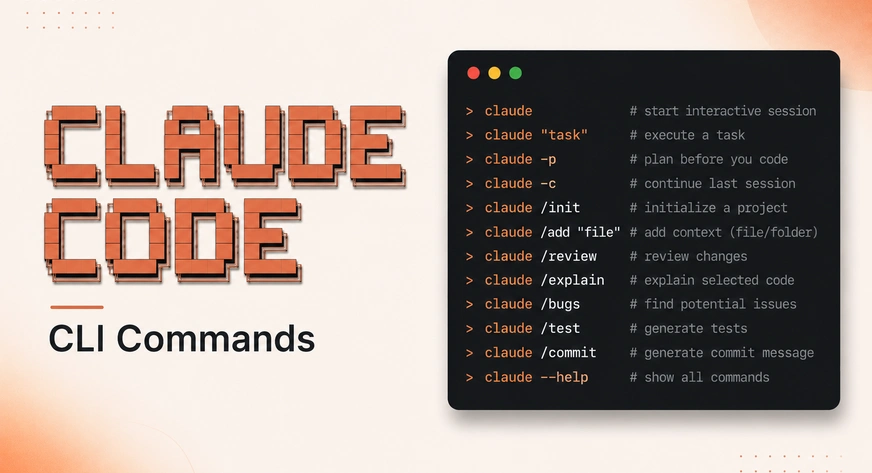
Unlock Hidden Commands to Transform Your CLI Workflow
Months of daily use, and the real power of Claude Code only surfaced by accident. This author kept restarting sessions, re-explaining the same project structure, simply because `claude --help` hides the full picture. It's a familiar frustration, and their discovery of a deeper CLI reference is a practical win for anyone tired of repetitive setup. Digging past the surface reveals a smoother workflow. For more on questioning AI's limits, our piece on talking to an AI clone offers a fitting follow-up.

How AI masters new math problems reveals its true reasoning potential
The IMO 2026 benchmark results reveal a clear hierarchy: frontier models like sol and fable handle the math olympiad with near-perfect scores, while others, including sonnet and opus, lag without a harness. We tested AutoFyn, our multi-agent system, and it consistently boosted performance, though it couldn't close the gap to the top tier. Hallucinations persist, even in verifiable domains, as seen with sonnet's false solution on P3. For those exploring practical AI applications, our guide on distributed training offers a grounded starting point.
Bring AI coding agents to your machine learning projects in the cloud.
The question of running AI coding agents against a remote GPU is the right one to ask. You want the flexibility of your local editor with the horsepower of the cloud, and that setup absolutely exists. The key is using a platform that treats the remote machine as a seamless extension of your workspace. Docker Cloud Sandboxes offer a consistent environment for this, and exploring that approach is a solid starting point for building your ML workflow without leaving your preferred tools behind.
Two AI coding agents face off in a practical head-to-head test
For months, Claude Code has been the default terminal coding agent, but Grok Build's beta arrival on May 14, 2026, changes that dynamic. I ran both through identical prompts on the same real-world tasks to see which genuinely delivers. The results are practical, not theoretical. If you are weighing your options, this comparison cuts through the noise. And for a deeper look at how AI agents refine their approach, check out our piece on Agentic Context Learning.
Explore smarter CLI coding tools beyond Claude Code
Claude Code has earned its reputation, but that doesn't mean it's the only path forward. If you're feeling constrained by its limits, whether the cost or the closed ecosystem, it's time to explore what else is out there. We've rounded up seven alternatives that are often cheaper and faster, with open-source options, local models, and stronger MCP support. This is about giving you better control over your context and your workflow.
From Fresh Install to Reliable Agentic Workflow in Minutes
Most setups of Claude Code work well enough, until the work gets real. Then permissions stall, hooks misfire, and momentum dies. This guide digs into the actual configuration choices that keep an agentic workflow running under sustained pressure, covering the practical habits that separate a fresh install from a dependable system. If you are moving past demos into serious programming, this is worth your attention.

Centralize your AI tools: AWS and Anthropic launch a self-hosted control plane.
AWS and Anthropic have shipped the Claude apps gateway for AWS, a self-hosted control plane that puts identity, policy, telemetry, and spend caps in one stateless container. It routes inference to Amazon Bedrock or Claude Platform on AWS. That's a practical answer for teams juggling Claude Code and Claude Desktop across their org. Centralizing control without forcing a cloud detour feels like the right next step.