compute
Beyond Market Intelligence keeps compute in one place: 36 stories so far. The section currently leads with “Discover how idle GPU power can accelerate your AI research”, “Compute is AI's biggest cost. Finally, a way to price it.”, and “Persistent compute gives AI agents the stamina for complex workflows.”. Eight 16GB GPUs with 256GB of RAM and 50TB of storage is a serious research asset, not a toy. Hundreds of billions of dollars flow into data centers and GPUs each year, yet compute remains the industry's biggest cost without a clear pricing mechanism. Acme AI is the next-generation, AI-powered spreadsheet platform built to replace Excel and redefine how analysts, data scientists, and enterprise teams work… The list below is every compute story on Beyond Market Intelligence, newest first.
Discover how idle GPU power can accelerate your AI research
Eight 16GB GPUs with 256GB of RAM and 50TB of storage is a serious research asset, not a toy. The offer to share it via SLURM is generous, but the real question is whether 200 GPU-hours on that hardware moves the needle for serious work. It handles 500M parameter models and RLVF capably, which is more than enough for experimentation. I'd use that time to test distributed training algorithms or explore parameter-efficient fine-tuning. It's not a stargate cluster, but it's a practical sandbox.
Compute is AI's biggest cost. Finally, a way to price it.
Hundreds of billions of dollars flow into data centers and GPUs each year, yet compute remains the industry's biggest cost without a clear pricing mechanism. Silicon Data is stepping in to fix that, giving Wall Street a way to value and hedge AI infrastructure. It's a necessary evolution for an industry spending at scale. For deeper context on how AI tools shape decision-making, our piece on verifying AI's understanding offers a timely parallel. The buildout is real; pricing it was long overdue.

Persistent compute gives AI agents the stamina for complex workflows.
Amazon Bedrock AgentCore now gives AI agents persistent compute through runtime instances, a practical upgrade for teams wrestling with long-running workflows. This isn't about flashy demos; it's about infrastructure that finally keeps up with multi-agent coordination without constant hand-holding. We see this as a step toward less friction in complex data tasks, which pairs well with our own exploration of AI's limits, like in "Talking to My AI Clone Taught Me to Question the Tech.

Anthropic invests $10 billion in Volta to reshape AI infrastructure
Anthropic is placing another massive bet on infrastructure, reportedly signing a $10 billion deal with AI cloud startup Volta. This move extends a partnership spree that signals something important: the company is serious about scaling its models without relying on a single provider. It's a pragmatic play, not a flashy one. For users, it means more resilience and capacity behind the tools they depend on.

Apple explores paid iCloud tiers for advanced Siri AI features.
Apple's plan to put Siri AI behind a paywall for power users is a bold bet, and Tim Cook's iCloud+ integration idea makes sense for those already invested in Apple's ecosystem. It's a straightforward way to fund more compute, but it raises a fair question: will casual users feel left behind? We're watching how this unfolds. For a deeper look at AI's human side, our piece "Talking to My AI Clone Taught Me to Question the Tech" offers a thoughtful counterpoint worth exploring.
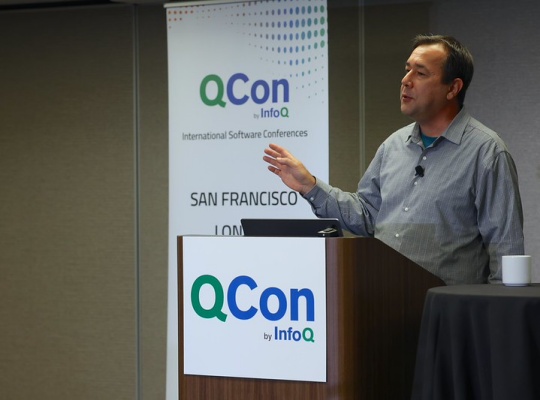
How Cloud Databases Gain Agility by Separating Compute from Storage
Cloud economics are reshaping how we think about databases, and Murat Demirbas is here to show us the way. His presentation on disaggregated systems reveals how decoupling compute from storage unlocks elastic scaling, cost efficiency, and fault isolation. What's striking is how classical Paxos roles foreshadowed this shift, proving the blueprint was always there. He doesn't shy away from network tradeoffs or the evolution of shared memory, either.

Meta expands enterprise AI beyond agents into APIs and internal tools
Mark Zuckerberg sees Meta's enterprise opportunity as far bigger than selling AI agents. On the company's second-quarter earnings call, he pointed to a broad field spanning APIs, compute, and internal software. That is a smart read of the market. Businesses do not need one flashy tool; they need practical infrastructure that fits how they already work. If you want to question how far this technology should go, our piece "Talking to My AI Clone Taught Me to Question the Tech" offers a useful counterpoint.
Recursive Superintelligence invests $410 million in compute to automate product development
Recursive Superintelligence just committed $410 million to Amazon for compute, and that number says more about their strategy than any product roadmap could. By steering what would traditionally go toward headcount and operations straight into infrastructure, they're betting that self-improving AI can automate its own development. It's a bold wager on a future where the company scales with algorithms, not armies. For anyone wrestling with how far AI can genuinely take over complex work, this deal reframes the question.
Small labs can still drive meaningful ML research with single GPU setups
A single RTX 3090 powered InfiniteDiffusion, an independent researcher's terrain-generation model, and that alone should reframe the conversation about compute access. It is easy to feel dwarfed by frontier labs, but this work proves meaningful ML contributions still emerge from constrained setups. Small teams can focus on clever problem framing rather than raw scale. For those questioning the path forward, this is a practical signal that single-GPU research remains viable.
Finding the Right Compute for Your AI Inference Workloads
Sourcing compute for inference workloads is a puzzle most teams know well, and this post gets straight to the point. The ask for real experiences with services like RunPod or Vast.ai is smart; those pain points are where practical answers live. It's a grounded way to cut through the noise. We appreciate the directness here, and the survey feels like a natural next step for anyone who's been there.

Science and compute converge as Dimension Capital raises $800 million fund
Dimension Capital's third fund at $800 million is a clear signal: the intersection of science and compute is no longer emerging, it's booming. The four-year-old firm's latest vehicle is 60% larger than its second, announced just 18 months ago. That pace of growth tells us investors see real momentum here, not hype. It's a space worth watching closely, especially as adjacent bets like Nscale's $3.36B infrastructure push gain traction.

Reflection AI secures $1 billion compute deal to advance open source models
Reflection AI's $1 billion compute deal with Nebius is a bold bet on open source AI, and it's one worth watching. The company, founded in 2024, is betting big on accessible infrastructure to power its work. That kind of scale signals confidence, not just in their own roadmap, but in the broader shift toward collaborative, transparent AI development. It's a reminder that progress isn't just about models, but the systems that run them.