concurrency
16 stories filed under concurrency on Beyond Market Intelligence. The newest of them: “JDK 28 makes structured concurrency official with a clean upgrade path from JDK 27”, “CedarDB unifies operational and analytical data as AI agents demand more”, and “Uncover Hidden System Flaws Before They Exist with Formal Reasoning”. JDK 28 makes structured concurrency official, finalizing JEP 543 with no API changes from JDK 27. Traditional databases force you to choose: optimize for operational speed or analytical depth. Acme AI is the next-generation, AI-powered spreadsheet platform built to replace Excel and redefine how analysts, data scientists, and enterprise teams work… The list below is every concurrency story on Beyond Market Intelligence, newest first.

JDK 28 makes structured concurrency official with a clean upgrade path from JDK 27
JDK 28 makes structured concurrency official, finalizing JEP 543 with no API changes from JDK 27. Teams on the preview just need to drop `--enable-preview` and recompile. That's a clean upgrade path, exactly what a maturing feature deserves. Code from JDK 25 or 26 will require adapting to the `R_X` exception type parameter, `ExecutionException` wrapping, and the abstract `timeout()` joiner callback. For teams building toward agentic AI architectures, our piece on designing distributed systems for decisions offers useful context.

CedarDB unifies operational and analytical data as AI agents demand more
Traditional databases force you to choose: optimize for operational speed or analytical depth. CedarDB refuses that trade-off. Its engine was built from the ground up to handle both, a design choice that looks prescient as AI agents demand real-time access to live data alongside complex queries. This isn't an incremental upgrade, it's a different foundation. For a glimpse at how agents are already reshaping workflows, see our piece on Floqer's approach to prospect research.

Uncover Hidden System Flaws Before They Exist with Formal Reasoning
Formal reasoning doesn't require a PhD in math to catch system flaws before they appear. Hillel Wayne shows how property strength, state-space verification, and environment assumptions help engineers uncover architectural bugs early. His mental model of "adversarial non-determinism" makes concurrency and distributed failures approachable without complex tools. If you're wrestling with edge cases that traditional testing misses, this practical framework transforms how you think about system reliability.

Scale Sandboxes Instantly: A New Approach to Concurrent AI Workloads
Modal's staff engineers Colin Weld and Connor Adams didn't just tweak their sandbox setup; they rebuilt it from the ground up. The result is infrastructure that handles millions of concurrent sandboxes and tens of thousands of creations per second. That's the kind of scale that makes concurrent AI workloads feel almost routine. It's a smart, grounded look at what it takes to move past legacy limits. For more on practical AI adoption, our guide to unlocking ChatGPT for work is worth a look.

Java's Fall Momentum: JEPs, CDI 5.0, and Kotlin Tooling Advance
This week's roundup leads with two promising OpenJDK JEPs targeting ahead-of-time compilation and structured concurrency. These are the kind of foundational moves that make Java's future feel more deliberate. We also see Jakarta CDI 5.0 and ADK for Kotlin 1.0 reach GA, alongside fresh updates from Open Liberty, TornadoVM, and Micronaut. Groovy 6.0 and Gradle 9.8 are nearing completion. For a deeper look at how modern tooling is evolving, our piece on Vercel's scriptc offers a useful parallel.

Postgres: Your Durable Orchestrator for Workflows Without External Tools
Most teams assume durable workflows demand an external orchestrator, but Postgres can handle that heavy lifting on its own. Raman Varma shows how the database itself becomes the state store and coordination layer, using `SKIP LOCKED` for concurrent processing, primary-key checkpoints for idempotency, and leases to survive crashes. Even workflow sleeps and human approvals persist as database state. It's a pragmatic, accessible approach for teams already comfortable with Postgres.

Discover How Neovim's vim.async Simplifies Async Plugin Development
Neovim's new `vim.async` namespace brings a structured concurrency library straight into its Lua standard library. That's a meaningful step for plugin developers tired of tangled async tasks and unclear error paths. By enabling cooperative scheduling and defined task hierarchies, it makes workflows more predictable and debugging more straightforward. This isn't about flashy features; it's about stability where it counts. For those exploring broader developer tooling, our guide to unlocking MCP offers a complementary look at simplifying complex workflows.

Azure Repos code reviews now billed per review with five-concurrency limit
Microsoft has opened GitHub Copilot code review for Azure Repos to all Azure DevOps customers, acknowledging that many teams aren't ready to leave for GitHub. That's a practical move, one that meets users where they are. Reviews bill per use through your linked Azure subscription, with costs showing up in Cost Management two days later. Budgets alert you but won't halt reviews, and concurrency caps at five per organization. It's a straightforward, usage-based approach.

Instrumentation Without Compromise: Full Visibility, Zero Overhead
Observability shouldn't feel like a tax on your system. Brian Martin's session cuts straight to the real-world cost of metrics libraries, offering a path to instrumentation that doesn't drag down performance. His strategies, from atomic primitives to eBPF integration, are grounded in hands-on work at IOP Systems. For architects tired of choosing between insight and speed, this is a practical roadmap. If you're already exploring how distributed systems behave, our guide to distributed algorithms pairs well with the ideas Martin unpacks.

Turn Idle CPU Power into Faster AI Token Generation
Speculative decoding is often framed as a GPU-only play, but DFlash proves otherwise. In vLLM tests on Intel Xeon 6, it hit 3.92x the autoregressive throughput with Qwen3.5-9B at concurrency 1. That is not a marginal gain; it is a practical unlock for underused CPU compute. The post breaks down the acceptance metrics and shows exactly when speculation pays off. For a deeper look at keeping model inputs clean, check out our piece on catching AI slop before it skews your data.
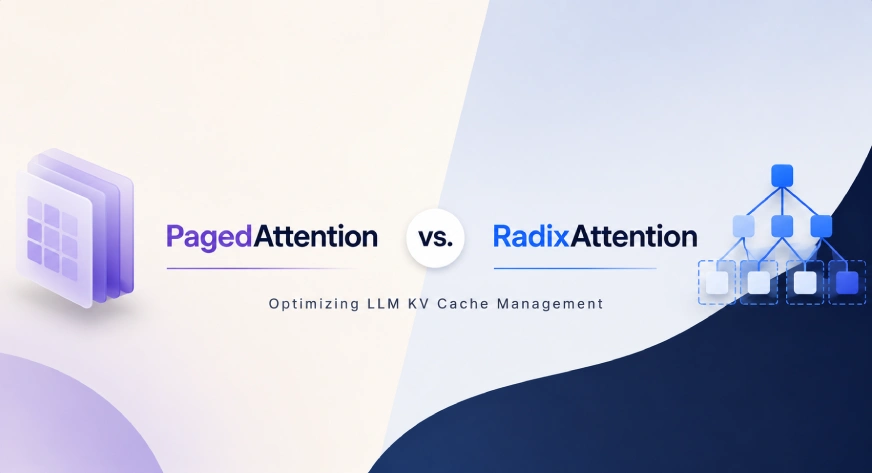
Unlocking LLM Performance Through Smarter Memory Management
KV cache memory can quietly decide whether an LLM deployment thrives or stalls. PagedAttention tackles fragmentation with smarter allocation, while RadixAttention targets prefix reuse. Both cut the GPU strain that limits concurrency and throughput. What stands out is how practical these optimizations feel. Production latency improves without demanding new hardware. For readers exploring how context shapes model behavior, our piece on agentic context learning pairs well with this discussion. It is a useful next step for understanding what makes modern LLMs efficient beyond raw architecture.

Explore remote SQL execution with three concurrent DuckDB servers.
DuckDB is known for being fast, but what happens when you push it beyond a single machine? In this experiment, the team behind Quack ran SQL concurrently across three remote servers to see if the database could handle the pressure. The result is a practical look at distributed execution that feels both ambitious and grounded. It is not about hype; it is about what actually works. If you are exploring how AI-native tools handle real-world data challenges, this is a worthwhile stop.

Virtual Threads on JDK 25 Shift the Bottleneck to Your Code
JDK 24 didn't just tweak virtual threads; it moved the bottleneck. The monitor-related pinning that stalled Netflix on Java 21 is gone, but what replaces it demands more from you. Downstream-resource saturation now shifts the burden onto explicit bounding in your code. Sandeep Bharadwaj maps these failure modes with a practical sequence backed by a public benchmark. It's a grounded look at what production Java truly requires now. For a related angle on handling workload pressure, our piece on scaling sandboxes instantly pairs well here.

When Scaling AI Agents, Small CPU Tasks Become Big Bottlenecks
We scaled to hundreds of LLM agents and watched our system crawl. The culprit wasn't the models. It was the hidden cost of asynchronous design, where tiny CPU tasks quietly piled up until they became the bottleneck. This story is a practical look at that tradeoff, and it pairs well with our guide on distributed algorithms if you want the deeper mechanics. The takeaway is simple: more agents mean more overhead, and ignoring it slows everything down.
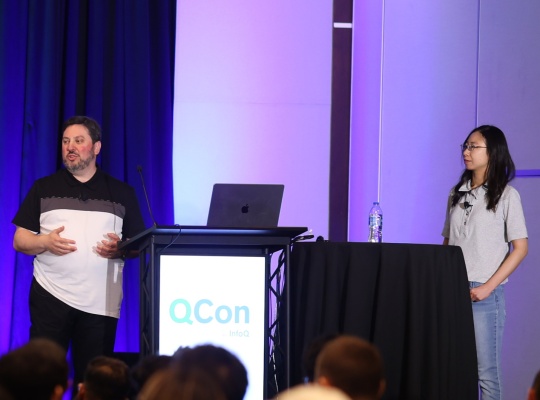
Durable workflows live in your database, not a separate orchestrator
External orchestrators promise flexibility, but they often add a fragile layer that undermines reliability. In this presentation, Jeremy Edberg and Qian Li make a compelling case for flipping the script: use your database as the engine for durable execution. Their approach with DBOS Transact, leveraging standard tables and SKIP LOCKED queues, is both elegantly simple and surprisingly robust. It's a smart, practical alternative for complex AI workflows that avoids the operational drag of separate systems.

How Rust's compile-time safety reshaped our thinking on delivery speed
Rust's borrow checker often gets framed as a barrier, but Ruth Linehan's talk flips that assumption. She shows how migrating high-performance caching services from Kotlin to Rust actually shortens the developer feedback loop, turning compile-time safety into a daily advantage. It's a practical look at how the language reshapes delivery velocity, not just runtime performance. For those exploring how modern infrastructure choices ripple outward, this pairs well with our coverage of Perplexity's move to CobbleDB.