context
Beyond Market Intelligence keeps context in one place: 31 stories so far. The section currently leads with “When AI Speaks in Code, Readability Gets Lost in the Noise”, “A $26M bet on ambient listening to unlock AI that anticipates your needs”, and “Production RAG's Missing Piece: Confident Answers, Honest Refusals”. The phrase "quiet single-source substitute" is exactly the kind of AI-generated nonsense that makes you stop reading and start decoding. A $26 million bet on ambient listening. Acme AI is the next-generation, AI-powered spreadsheet platform built to replace Excel and redefine how analysts, data scientists, and enterprise teams work… The list below is every context story on Beyond Market Intelligence, newest first.
When AI Speaks in Code, Readability Gets Lost in the Noise
The phrase "quiet single-source substitute" is exactly the kind of AI-generated nonsense that makes you stop reading and start decoding. When LLMs speak in code, readability vanishes into noise. This user is right to ask for applied research, linguistics offers theory, but the real need is practical. We all carry different lexicons and reading levels, making this a uniquely human problem. Simpler submissions often outperform flashy ones, a lesson that applies directly here.

A $26M bet on ambient listening to unlock AI that anticipates your needs
A $26 million bet on ambient listening. The premise is straightforward: the more an AI knows about you, the better it can anticipate your needs. That requires constant observation, a trade-off many tech companies are eager to embrace. We find the ambition compelling, but the privacy implications deserve scrutiny. It's a future-focused vision that asks us to weigh convenience against context. For a deeper look at AI solving practical problems, see our piece on how Blueprints AI turns a photo into permit-ready blueprints.
Production RAG's Missing Piece: Confident Answers, Honest Refusals
Moving a RAG prototype to production means confronting the gap between demos and dependable answers. The checklist we needed focuses on citations for every response, the confidence to refuse when context is insufficient, and access control that resists clever workarounds. Ingestion should never block a user. This is about building trust through honesty. For a deeper look at how systems handle uncertain inputs, our guide on multi-armed bandit simulations offers a useful parallel. Watch the full breakdown here.
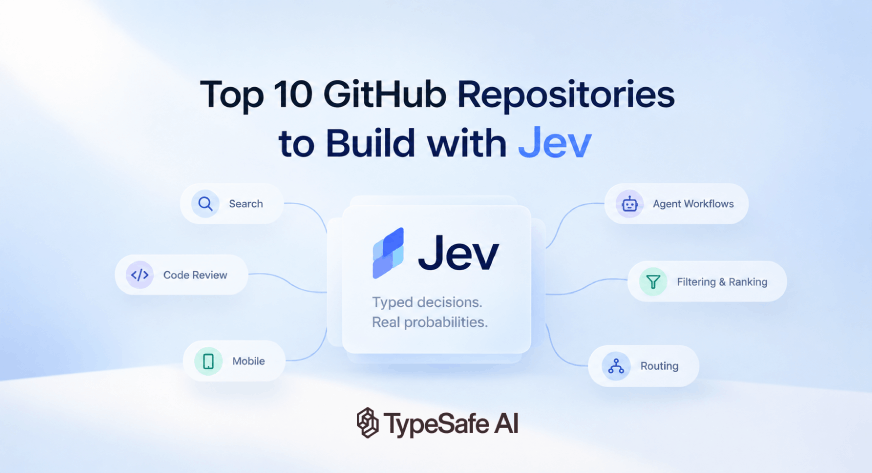
Explore How Jev Projects Bring Clarity to AI Decision-Making
Every agent makes dozens of small calls before delivering something useful: which source to trust, which tool to invoke, when to stop. Jev pulls those hidden choices into the open, converting them into typed decisions with probabilities rather than free-form text. That clarity makes the reasoning auditable and the output more dependable. For anyone exploring how structured judgment improves AI workflows, the GitHub projects offer a practical starting point. Related coverage on why small decision models outperform LLMs for answer evaluation deepens the conversation nicely.
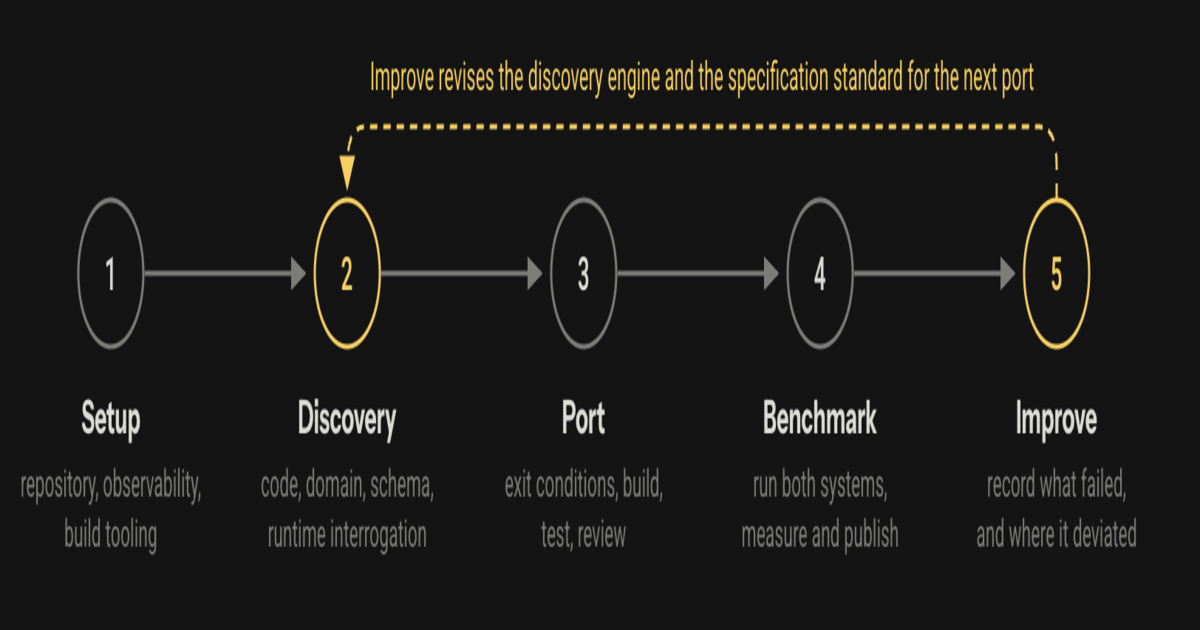
How Spec Design Shapes AI Performance Across 65 Open Source Projects
Spec structure matters more than most teams assume. Akka ran 65 open-source projects through a controlled experiment on AI-assisted software porting, measuring how specification design, context, model choice, validation, and guardrails, shifted outcomes in time, tokens, code size, test parity, and performance. The variation across models and project types was substantial. It's a practical reminder that how we frame a task directly shapes what AI delivers. For a deeper look at how models process context, see our related piece on hash-table-based copy layers.

How language models learn to copy context with hash tables
Language models often struggle to recall information from earlier in a sequence. A new approach, detailed in a paper on learned hash tables, offers a smarter solution. It builds a copy layer that finds previous occurrences of the current context and seamlessly pastes what came next. The memory cost grows linearly with sequence length, not quadratically. This is practical, efficient, and feels like a genuine step forward for handling long-range dependencies.

Treat Context Like Code to Scale AI Agents With Control
Patrick Debois proposes something quietly radical: treat context like code. For engineering leaders wrestling with non-deterministic AI agents, his argument lands with clarity. Apply testing, CI/CD, package managers, and security scanning to context itself. That approach promises control without stifling innovation. It's a practical path to scaling AI agents reliably while building lasting organizational knowledge. For deeper exploration, our coverage of Amazon CloudWatch Omni shows how AI-first observability platforms are already putting similar principles into practice.
NeurIPS Acceptance Raises Questions About AI Review Justifications
An acceptance at NeurIPS should feel like a victory, but this one reads more like a puzzle. The initial scores of 5/5/4 earned a positive meta-review, only for the final justification to flip negative, suggesting an AI-driven review process that doesn't add up. Even the flagged reference turned out to be a BibTeX copy-paste error. That's not rigor; it's noise. If the justification doesn't match the decision, we're not getting transparency, we're getting confusion.

Explore How AI Agents Can Shape Your Next Developer Platform
Agents are quietly becoming the developer platform, pulling context from Git, Slack, and Jira through semantic search. That's a shift worth watching, but it demands guardrails. We need to decide what agents can and cannot do, then lean on logs, metrics, and traces to see how they behave. It's less about hype and more about control. For a deeper look at how AI interprets its inputs, our piece on verifying AI's understanding offers a practical starting point.

Beyond Prompts and Loops: How Graph Engineering Shapes Smarter AI
The debate over loops versus graphs in AI agent design isn't just technical sparring; it's a signal of how far we've come. Graph engineering moves beyond the linear constraints of prompts and loops, offering a structured way to build workflows that adapt and scale. It's a practical evolution, not a buzzword. For those still wrestling with token-level nuances, our piece on paragraph structure offers a useful parallel. This shift matters because it redefines what we can build, and we're just beginning to explore its potential.
From Codebase to Dataset: Fine-Tuning AI on Your Own Projects
Turning a well-built React or Next.js project into a fine-tuning dataset is a puzzle worth solving, especially when you're aiming for quality over generic code dumps. The real challenge isn't just extracting files; it's crafting instructions that mirror how you'd actually ask for a component or a page. Pairing screenshots with code and preserving cross-file context are the hard parts, but they're where the value lives.
Let your spreadsheet define done before your data makes the choice.
Most of us assume our AI agent knows what we want. It does not. It will happily define success for you, often in ways you never intended. We build these systems to be efficient, yet we skip the one step that matters: clarity. If you are tired of guessing why your agent made a call, you will find this exploration of unspoken assumptions essential. It is a practical look at a problem we all share.
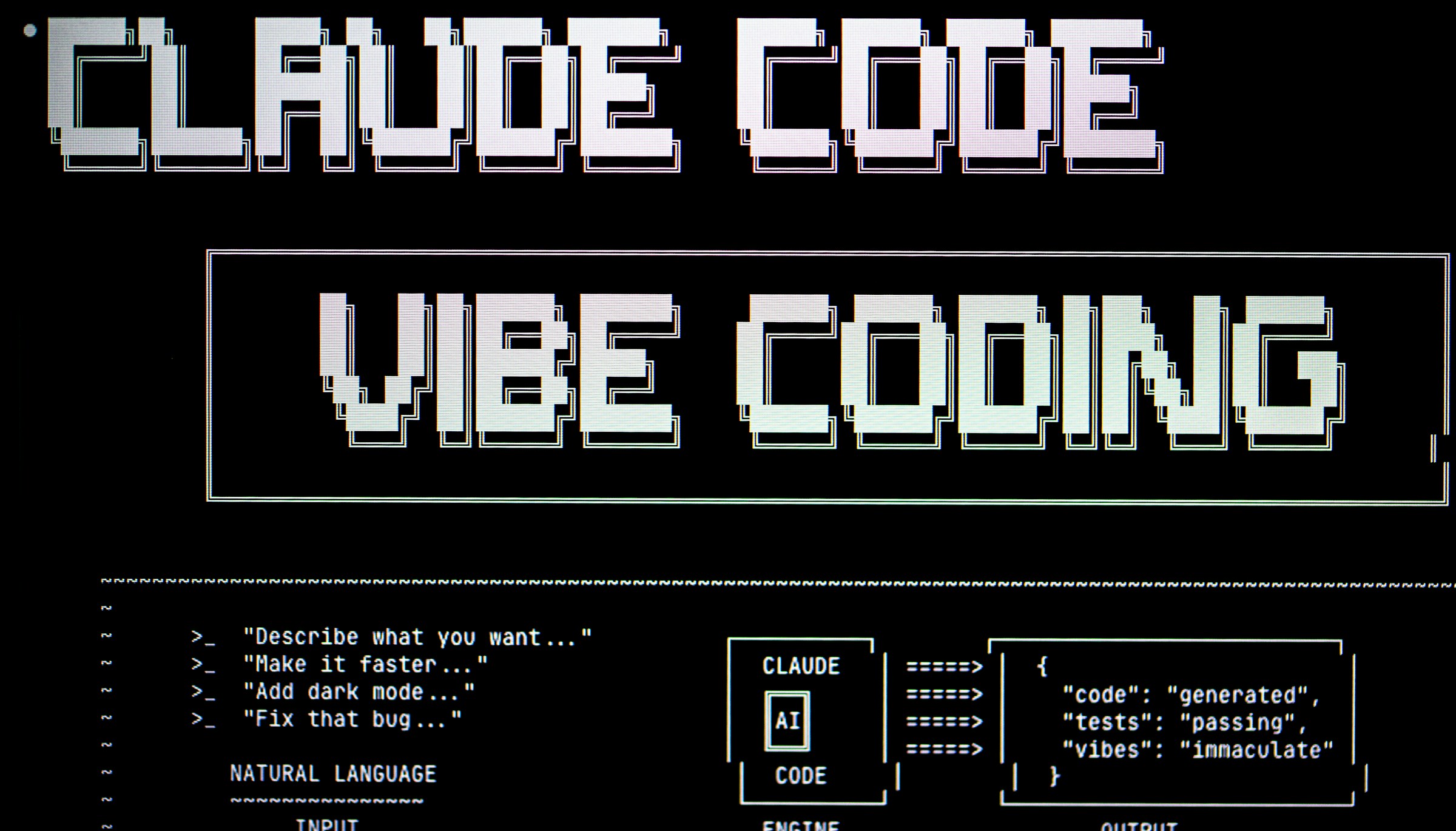
New context engineering guidelines to transform your data science workflow
Context engineering is no longer a behind-the-scenes concern for AI researchers; it is becoming a core skill for data scientists who want their models to act, not just generate. The latest guidelines push us past static prompts toward dynamic, structured reasoning. That shift is practical, not theoretical. We think it deserves your attention, especially if you are building workflows that need to scale.

Claude now remembers your preferences across every conversation
Claude Cowork no longer makes you repeat yourself. Anthropic is rolling out shared memory across chat and Cowork, so the context you provide in one place carries into the other. That means less time re-explaining project details and more time letting the work flow. It is a practical step toward tools that actually listen. For more on where AI interactions can get complicated, our piece "Talking to My AI Clone Taught Me to Question the Tech" offers a useful counterpoint.
From isolated context to shared knowledge: the next step for enterprise AI
Enterprise AI agents are only as reliable as the messiest documents behind them. Most teams treat knowledge as application-specific context, building separate pipelines for each assistant. That works for isolated copilots, but it fractures as agents multiply. Inconsistencies spread, changes propagate unevenly, and teams rebuild the same retrieval infrastructure repeatedly. These are knowledge management problems, not context engineering ones. The fix is architectural: manage knowledge once, as shared infrastructure, and publish reusable representations for every agent.
Explore the Hidden Geometry Inside Your Model's Working Memory
The KV cache isn't a flat list; it's a navigable vector space, and this researcher turned that observation into a working system. On a frozen Qwen3.5-2B at 32k context, geometric routing cuts physical KV reads by 16-31× while still retrieving the planted long-range needle. That's not a theoretical pitch; it's a reproducible demo. The insight is that attention is already similarity search, so indexing old context isn't a hack, it's the natural next step.

Design Your Spreadsheet to Evolve with Changing Conditions
Architecture is not a fixed choice made once; fitness is a moving target shaped by shifting regulations, technology, and markets. Even a sound design can silently stop fitting over time without any bad calls. This collection of seven articles treats architecture as an evolving sociotechnical craft, where teams deliberately shape friction and flow. It's a practical, human-centered lens on complexity. For more on how infrastructure decisions ripple outward, explore our piece on Perplexity's migration to CobbleDB.

Stop overpaying for AI queries with smarter model routing
Enterprises are discovering that one model for every task is a costly mismatch, simple queries often trigger the most expensive model, driving up both spend and latency. Snowflake's Cortex AI Gateway now sidesteps that with dynamic model routing, automatically matching each task to the cheapest capable model. The company reports token costs dropping by up to 3x in internal tests. That's a practical win, though the real differentiator is governance: routing that stays inside your security boundary.

Team memory alone can't fix AI agents that confidently get context wrong
Tencent's Team Memory lets a team of agents share one context hub, but the launch leaves a critical question open: what happens when the shared memory is wrong? A single bad fact no longer costs one user a repeated explanation, it propagates across every agent that reads the pool. That governance gap is exactly what practitioners flagged within hours. The access tiers handle who reads what, not how falsehoods get corrected or retired.
Guiding AI from Code to Context to Cost-Effective Action
The real skill with Claude Code and Codex CLI isn't just getting answers; it's getting them within budget and on target. It's about guiding these tools with clear context and shaping their output into something you can actually use. This list cuts through the noise, focusing on practical moves rather than endless possibilities. For a deeper look at how context shapes AI behavior, our piece on how agents learn by editing context pairs well here. Start with the essentials and build from there.

When your document says "see Section 7.2," AI can now follow the link.
A "see Section 7.2" answer is a dead end, not a destination. When a retrieval system points elsewhere instead of answering directly, the pipeline breaks trust. This piece tackles that exact failure with a loop-based fix: fetch the linked context, then return the real answer. It's a practical, human-centered solution for a frustrating problem. We appreciate the focus on user outcomes over technical spectacle. For more on how LLMs handle structure, explore *Exploring Paragraph Structure: How LLMs Navigate Token Space*.

Three Layers That Define Every RAG System You Build
Every RAG system stands on three engineering layers, each stacked on a single LLM call: the prompt that makes the call, the context that fills the model's window, and the loop that decides when the next call fires and when it stops. Knowing which layer you are on is half the battle in building and debugging. This breakdown keeps things practical and grounded. For deeper exploration of where AI understanding gets murky, our piece on verifying your AI's understanding offers a timely companion.

Move from Model Logic to Context Engineering for Faster Root Cause Analysis
The debate over root cause analysis is shifting. Engineers increasingly argue that modern LLMs can reason through the problem effectively, provided the context is prepared correctly. The real challenge, they say, lies in the pipelines that correlate telemetry. A Coroot experiment across eleven models offers early evidence for this claim. It is a pragmatic reframing of where the work actually happens. For those exploring how AI understands complex systems, this pairs well with our earlier piece on questioning AI's limitations.

Seven patterns to turn RAG extraction errors into honest answers
Calling a RAG mistake a "hallucination" misses what actually happened. If the model read the context and still got it wrong, that's an extraction error, not a creative invention. The piece breaks down seven typed-contract patterns that keep generation honest, plus a decomposition rule for smaller models. It's a sharper way to diagnose failures, and we're glad to see the framing. For a deeper look at how structure shapes model reasoning, "Exploring Paragraph Structure: How LLMs Navigate Token Space" pairs well with this analysis.