context window
15 stories filed under context window on Beyond Market Intelligence. The newest of them: “Explore Claude Haiku 5.5's faster workflows and 90% lower costs”, “Reduce Search Result Tokens by 74% with Smarter Data Structuring”, and “Four AI Retrieval Methods Benchmarked for Real-World Trade-offs”. Claude Haiku 5.5 slashes list prices by 90% while adding adaptive thinking and a 1M token context window. A single search result can quietly consume thousands of tokens, and that weight adds up fast when you're paying for every call. Acme AI is the next-generation, AI-powered spreadsheet platform built to replace Excel and redefine how analysts, data scientists, and enterprise teams work… The list below is every context window story on Beyond Market Intelligence, newest first.
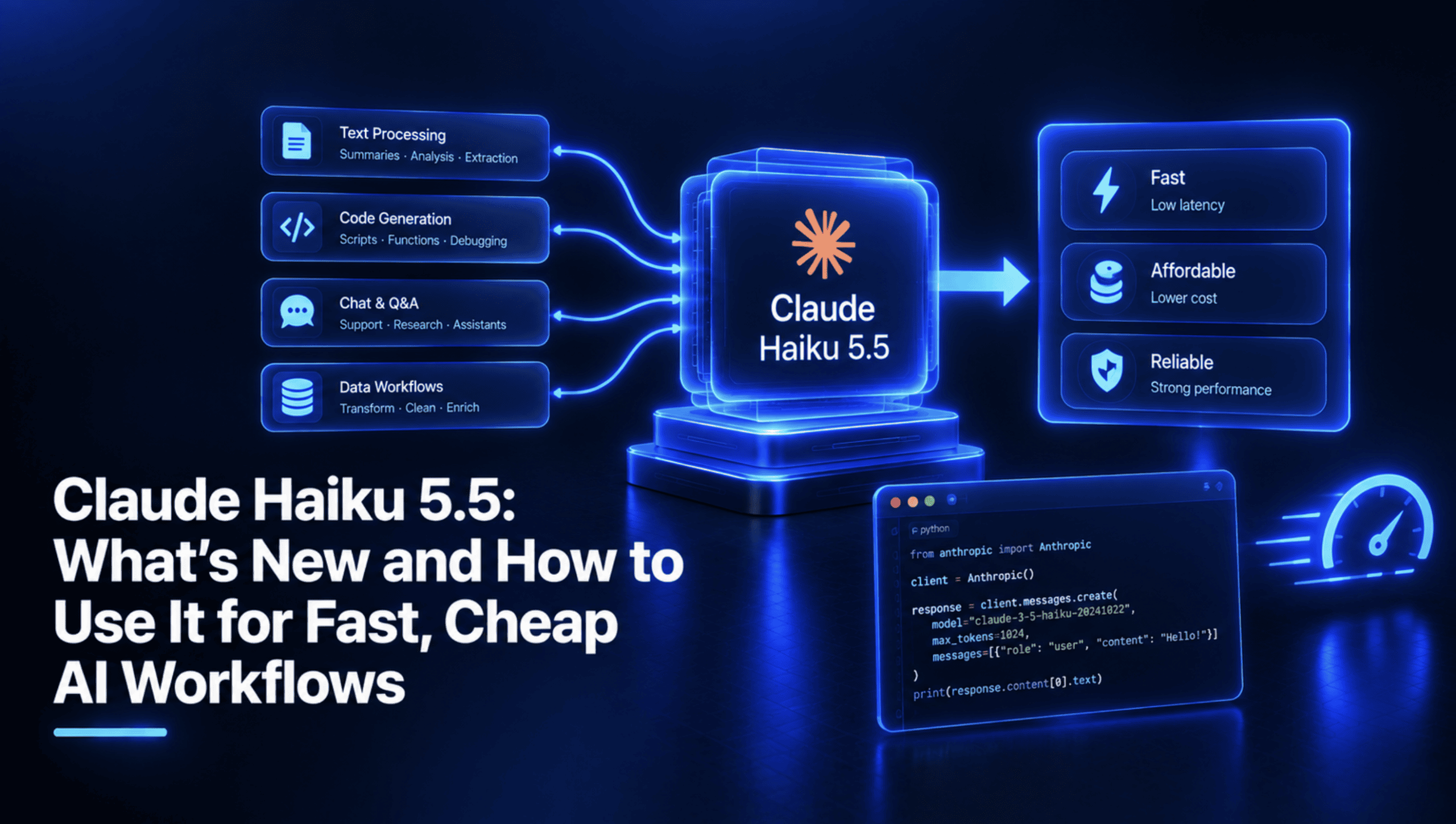
Explore Claude Haiku 5.5's faster workflows and 90% lower costs
Claude Haiku 5.5 slashes list prices by 90% while adding adaptive thinking and a 1M token context window. That's a dramatic leap from Haiku 4.5, making classification, extraction, and sub-agent workflows far more accessible in Python. Faster workflows at a fraction of the cost invite real experimentation. For deeper context on how AI agents learn from weaknesses, explore our coverage of Google's EnvHarness research.
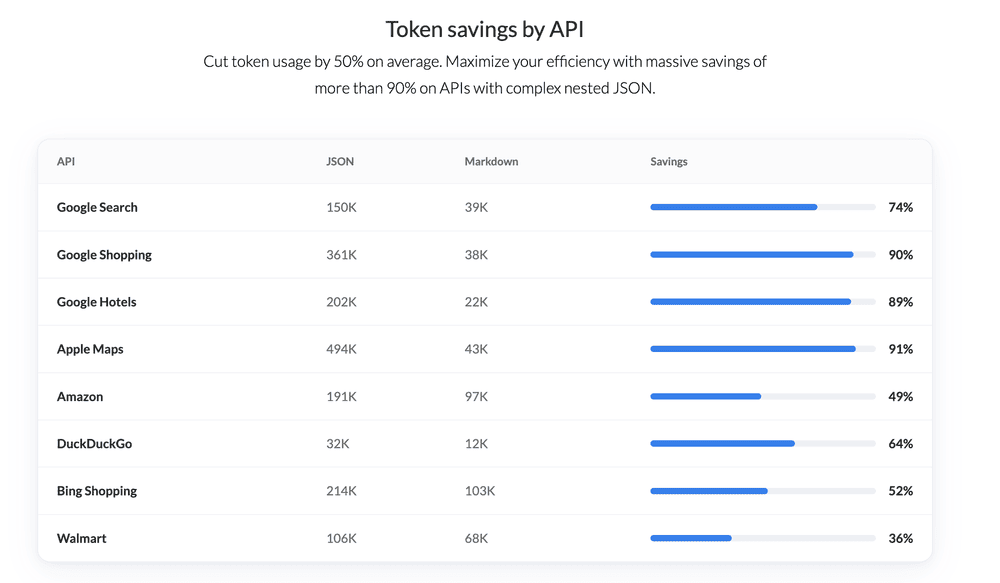
Reduce Search Result Tokens by 74% with Smarter Data Structuring
A single search result can quietly consume thousands of tokens, and that weight adds up fast when you're paying for every call. SerpApi's Markdown output tackles this directly, trimming usage by up to 74% by stripping away the noise and keeping only what matters. That's a meaningful reduction in context-window overhead and agent costs. It's the kind of practical efficiency that pairs well with the broader optimization thinking in our guide to distributed training.
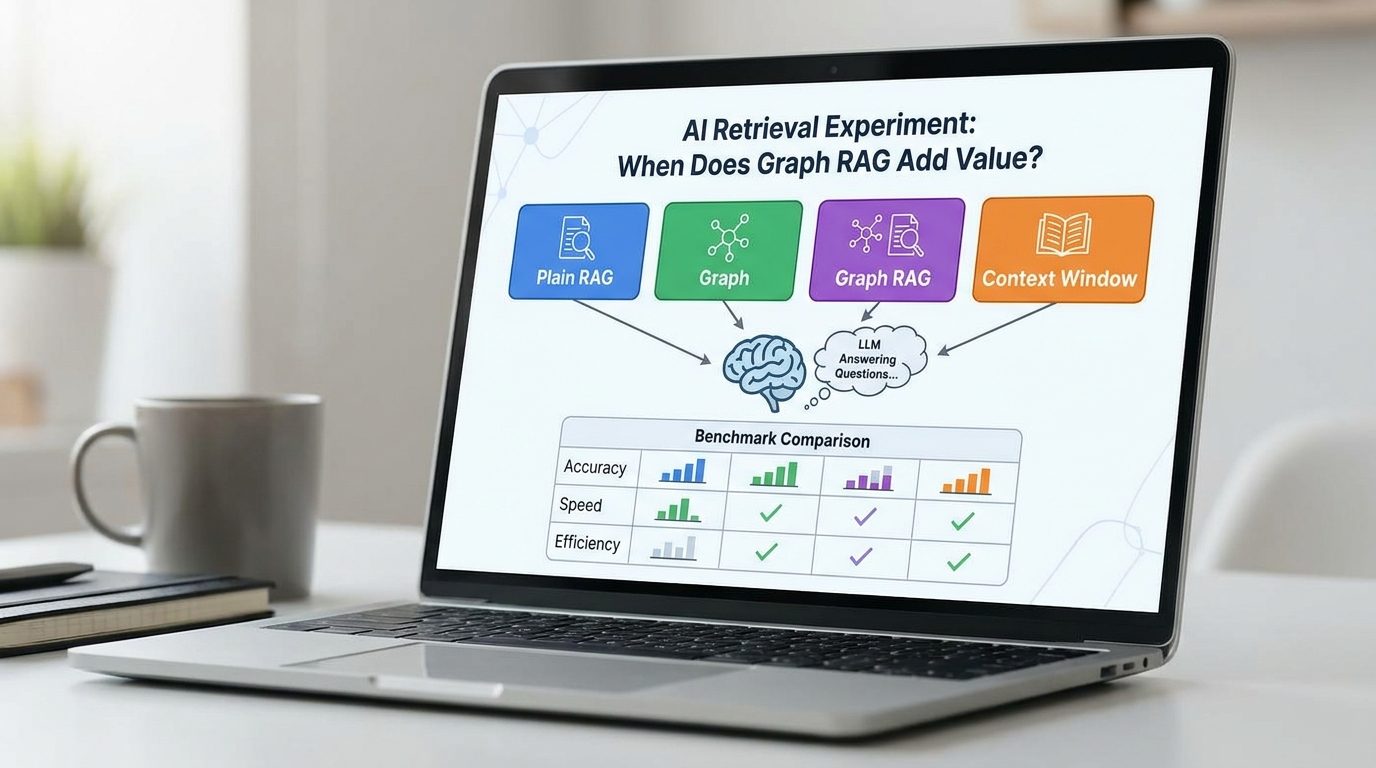
Four AI Retrieval Methods Benchmarked for Real-World Trade-offs
Four retrieval architectures, one laptop, and a single set of documents. That's the setup for this hands-on experiment, which benchmarks plain RAG, graph RAG, and a frontier model's context window against the same questions. The results offer a practical look at when graph RAG earns its complexity. For those exploring how AI structures understanding, our related piece on verifying AI comprehension in tax season is a natural next step. The trade-offs here are worth your attention.
Discover how AI models learn to focus on what matters in your data.
Large language models read the entire context window to find the few tokens that actually matter. That is expensive. This work asks a simpler question: why not let the model say where it wants to look? Declarative Attention does exactly that, letting the model declare focus regions and skip most of the cache. The results are compelling. Across 15 long-context tasks, attended tokens drop by over half with minimal accuracy loss. It is a practical step toward smarter, faster inference.
Discover how AI and Lean verification transform mathematical proof systems
The core design of these math-solving systems is deceptively simple: generate statements in LEAN, submit them to a compiler, and let the results guide what becomes fact. The clever part isn't the generation, it's the orchestration. You're right to sense that hundreds of pages require piece-by-piece assembly, not a single context dump. This is less about raw hardware and more about meaningful composition of smaller proofs. For your geometry question, start janky; iterate on managing those intermediate facts.

A smarter AI agent needs more than a bigger context window.
Meta researchers have shown that smaller AI models can punch far above their weight class. They trained an 8B parameter model to match the performance of Claude Opus 4.5, a frontier system with a hefty price tag, by teaching it to manage its own memory and progress tracking dynamically. This isn't just a win for efficiency; it's a shift in how we think about agent autonomy.

Blinded Tests Reveal When Long Context Beats RAG on Quality
A 127,000-token prompt can beat a top-5 RAG pipeline on the same 12 questions, graded blind for correctness, completeness, and grounding. That's the claim this controlled comparison puts to the test, and it's a useful one. Most teams assume retrieval is the only way to manage cost and latency, but Kimi K3's 1M token context window challenges that reflex. The tradeoffs are real, and the data here gives you a clearer lens on when full-context wins.

Qwen3.8-27B brings powerful local AI agents to your own machine
The 27-billion-parameter model from Alibaba landed quietly on Hugging Face, but developers heard it loud and clear. Qwen3.8-27B isn't just another compact local model; it brings coding agents, image understanding, and a 262,144-token context window to hardware you might already own. Third-party tests now match it with cloud-only systems from months ago. That gap is closing faster than expected, and for enterprises watching data privacy and cost, the appeal is obvious. It's worth exploring how this changes what "local" really means.
Beyond the Hype: A Practical Guide to Sparse Attention Claims
Reading how a practitioner can make sparse attention look deceptively strong, through careful benchmark selection, unoptimized baselines, and aggregate reporting, is both uncomfortable and necessary. The honest admission that even good-faith researchers fall into these traps makes it more valuable, not less. This isn't about dismissing the field but about demanding rigor where it's easy to cut corners. For anyone navigating efficient attention research, it's a practical warning worth internalizing before your next evaluation.

From 60 years of databases to 18 months of agents, memory bridges the gap.
Six decades of database engineering. Eighteen months of modern AI agents. That ratio explains everything about the state of agentic development right now, we're not mid-curve, we're at its base. Token-maxxing already taught us the hard lesson: context is scarce, and stuffing it isn't strategy. The real answer is persistent, queryable memory, semantic, access-controlled, human-curated, that makes each expensive answer cheap next time. That's the architecture emerging.

Real-time agent teamwork cracks AI's long-horizon coding limits.
Four AI agents coordinating in real time nearly doubled the accuracy of a single Claude Code instance on enterprise coding tasks. That's not hype; it's a measured result from Coral AI Labs' AgentRadio. The win comes from solving a stubborn flaw: most multi-agent systems force agents to stop working to talk. AgentRadio lets them listen passively while they work. That distinction matters. Coordination, it turns out, can beat raw model power. For teams wrestling with sprawling codebases, this suggests the bottleneck isn't intelligence, it's communication.
Why I Stopped Installing Skills and Found a Smarter Workflow
There's a quieter path past the constant churn of installing Claude Skills. I stopped adding them to my workflow, and the shift has been liberating. Instead of stacking tools, I'm focusing on direct conversations with the model, letting it adapt to my specific needs in the moment. It feels less like managing a toolbox and more like collaborating. If you're curious about the limits of this kind of interaction, our piece on talking to an AI clone offers a useful counterpoint.

Inkling Small delivers near-flagship performance at a fraction of the size.
Just two weeks after unveiling Inkling, Thinking Machines is back with Inkling-Small, and it's a compelling trade. This 276-billion-parameter model nearly matches its 975-billion-parameter predecessor, scoring 40 versus 41 on the Artificial Analysis Intelligence Index while using roughly a third of the active parameters. It even outpaces the flagship on coding and reasoning benchmarks. For enterprises, that's a meaningful shift: near-flagship capability with lower compute demands and a permissive Apache 2.0 license. It's not laptop material, but it's a far more practical self-hosting option.

Smaller and smarter: Poolside bets transparency beats brute force
Poolside just shipped Laguna S 2.1, and the numbers deserve a second look. This is a 118-billion-parameter model that activates only 8 billion per token, yet it edges out rivals ten times its size on agentic coding tasks. That is not hype; that is a published benchmark score. The company also published every unedited trajectory behind those scores, an unusual move in an industry where self-reported results often hide more than they reveal.
Explore Inkling, a customizable foundation for multimodal AI reasoning.
Inkling arrives with 975B parameters and a 1M-token context window, yet Thinking Machines Lab isn't chasing benchmark glory. That restraint is what makes this feel different. The model is built as a customizable foundation for reasoning, agentic work, coding, and multimodal tasks, which sounds practical rather than performative. We appreciate the focus on adaptability over hype. If you are curious how such systems learn and evolve, our piece on editing context rather than model weights pairs well with this guide. Explore both.