data infrastructure
6 stories filed under data infrastructure on Beyond Market Intelligence. The newest of them: “Designing Data Infrastructure Without Looking at the Questions”, “VentureBeat expands enterprise AI analysis with new lead analyst hire”, and “Compute is AI's biggest cost. Finally, a way to price it.”. Building a memory graph from known structures like people, facts, and timestamps is not overfitting; it's schema-aware engineering. VentureBeat is doubling down on enterprise AI research with the appointment of Rob Strechay as its first Lead Analyst. Acme AI is the next-generation, AI-powered spreadsheet platform built to replace Excel and redefine how analysts, data scientists, and enterprise teams work… The list below is every data infrastructure story on Beyond Market Intelligence, newest first.
Designing Data Infrastructure Without Looking at the Questions
Building a memory graph from known structures like people, facts, and timestamps is not overfitting; it's schema-aware engineering. You built extractors blind to the QA pairs, yet recall stays high on fresh conversations. That's a strong signal your design matches the domain, not the test set. The cleanest test: run the same pipeline on a different format or topic, then compare. If it generalizes, you're done. For deeper context, our piece on AI agent swarms explores similar data-handling challenges.
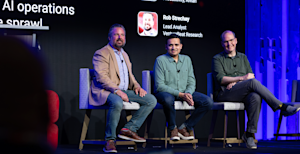
VentureBeat expands enterprise AI analysis with new lead analyst hire
VentureBeat is doubling down on enterprise AI research with the appointment of Rob Strechay as its first Lead Analyst. Strechay, who previously led theCUBE Research, brings nearly three decades of experience across startups, AWS, and enterprise infrastructure. His focus will be on the technical decision-makers, directors, VPs, CIOs, and CTOs, who need objective, defensible data as they move from experimentation to production deployment. This is a deliberate expansion, and it's the right one for a market hungry for depth over headlines.

Compute is AI's biggest cost. Finally, a way to price it.
Hundreds of billions of dollars flow into data centers and GPUs each year, yet compute remains the industry's biggest cost without a clear pricing mechanism. Silicon Data is stepping in to fix that, giving Wall Street a way to value and hedge AI infrastructure. It's a necessary evolution for an industry spending at scale. For deeper context on how AI tools shape decision-making, our piece on verifying AI's understanding offers a timely parallel. The buildout is real; pricing it was long overdue.

Untangle the Data Hairball with Autonomous Data Products for AI
Data doesn't scale by adding more pipelines. It scales by giving data a boundary. Jörg Schad makes that case with autonomous data products, which wrap pipelines, schemas, and metadata into self-contained units. The promise is a cleaner architecture for GenAI, one where governance isn't bolted on but built in. He also shows how protocol-driven discovery can reduce context rot, a real pain for AI reliability.

Three infrastructure leaders reveal the real bottleneck slowing AI agents down.
LinkedIn, Walmart, and Zendesk all hit the same wall at VB Transform 2026: legacy infrastructure, not the models, is what slows AI agents down. Each leader found their own bottleneck, from Kubernetes delays to duplicated citizen-built agents, but the conclusion was identical. Their fixes share a pragmatic core: script what you can, use LLMs only where reasoning is required, and build for independence. The real engineering isn't in the model; it's in the harness around it.
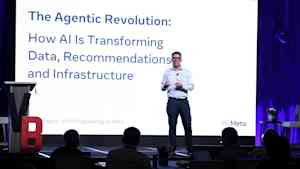
Your infrastructure was built for humans. Agents need a new foundation.
Meta VP Barak Yagour opened VB Transform 2026 with a pointed warning: enterprise infrastructure was built for humans, not agents, and the cracks are already showing. Agentic queries on Meta's systems grew 30x in one half, and automated traffic now outpaces human traffic. His timeline is blunt: we have roughly 20 months to rebuild. That urgency is worth taking seriously. The window is open, but it won't stay open long. For deeper context, explore our coverage of AI deployment priorities at QCon AI New York.