data science
Beyond Market Intelligence keeps data science in one place: 324 stories so far. The section currently leads with “Understanding AI Code Estimates for Better Communication”, “Meta's Custom AI Chip Targets Smarter, Faster Recommendation Models”, and “Explore How Bounded AI Agents Navigate Knowledge Graphs for Smarter Insights”. If you've leaned on Claude for coding, you've likely noticed its time estimates can miss the mark. Meta's move to build MTIA 300, its first in-house accelerator for ranking and recommendation models, signals a deliberate step beyond compute and into networking. Acme AI is the next-generation, AI-powered spreadsheet platform built to replace Excel and redefine how analysts, data scientists, and enterprise teams work… The list below is every data science story on Beyond Market Intelligence, newest first.

Understanding AI Code Estimates for Better Communication
If you've leaned on Claude for coding, you've likely noticed its time estimates can miss the mark. That's not a flaw to fix; it's a signal about how LLMs process complexity. We think that gap actually makes you a sharper communicator, pushing you to clarify scope and break work into smaller steps. It's a practical lesson in collaboration. For more on building that technical foundation, our guide to distributed training algorithms pairs well with this mindset.

Meta's Custom AI Chip Targets Smarter, Faster Recommendation Models
Meta's move to build MTIA 300, its first in-house accelerator for ranking and recommendation models, signals a deliberate step beyond compute and into networking. It's a smart evolution for a company that understands how much latency shapes user experience. By owning more of the stack, Meta isn't just chasing efficiency; it's reducing dependence on off-the-shelf parts. That kind of control tends to pay off.

Explore How Bounded AI Agents Navigate Knowledge Graphs for Smarter Insights
Most of us hand our AI agents a search box and call it a day. The approach argues for something sharper: typed tools, hard bounds, and a gate the model cannot talk past. The payoff is letting the agent wander a knowledge graph on its own, within strict limits. Four models and one wrong prediction later, the question is whether that discipline is worth it. We think it is, and the reasoning here is worth your attention.

Discover how to guide AI agents toward code you can trust
Writing code with AI agents is about more than generating lines faster. It's about steering the output toward quality. This practical guide cuts through the noise, showing you how to work with these tools to get better code, not just more of it. We appreciate the focus on real workflows over hype. For a deeper look at the underlying mechanics, you might also explore our piece, "Unlock LLM Training: A Practical Guide to Distributed Algorithms."

Why Your Best Fraud Model Might Not Belong in Production
Six models trained for fraud detection, yet the one with the best metrics never made it to production. That's the honest hurdle this final-year project exposes: evaluation scores don't always translate into real-world deployment. It's a grounded lesson in how operational constraints, not just accuracy, shape what actually ships. For anyone moving from academic benchmarks to practical systems, this is a useful reality check.

AI handles the execution but human judgment still leads analytics.
Agentic AI is rewriting the analytics stack, shifting execution to intelligent agents that handle the heavy lifting. But as this technology takes over the mechanical work, one skill remains untouchable: the human judgment to ask the right questions. The distinction matters because agents can process data, yet they can't decide what truly matters. This division of labor isn't about replacing people; it's about freeing them to focus on insight and strategy.
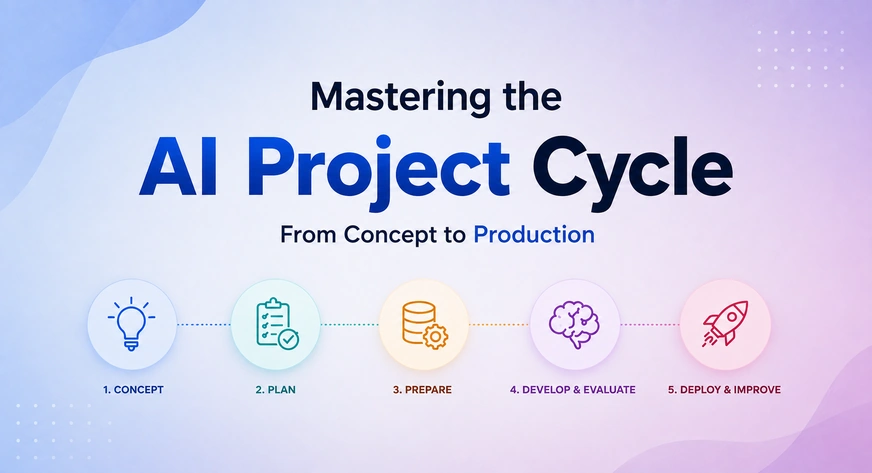
From Problem to Production: Navigating the AI Project Lifecycle
Picking a model and feeding it data is only the beginning. Real AI projects demand a structured path, one that starts with the right problem and carries through to deployment, monitoring, and refinement. That journey is the AI Project Cycle, and this piece breaks it down clearly. We appreciate how it frames the process as an accessible roadmap rather than a maze. If you are ready to go deeper, our guide to distributed algorithms offers a practical next step for those scaling their efforts.
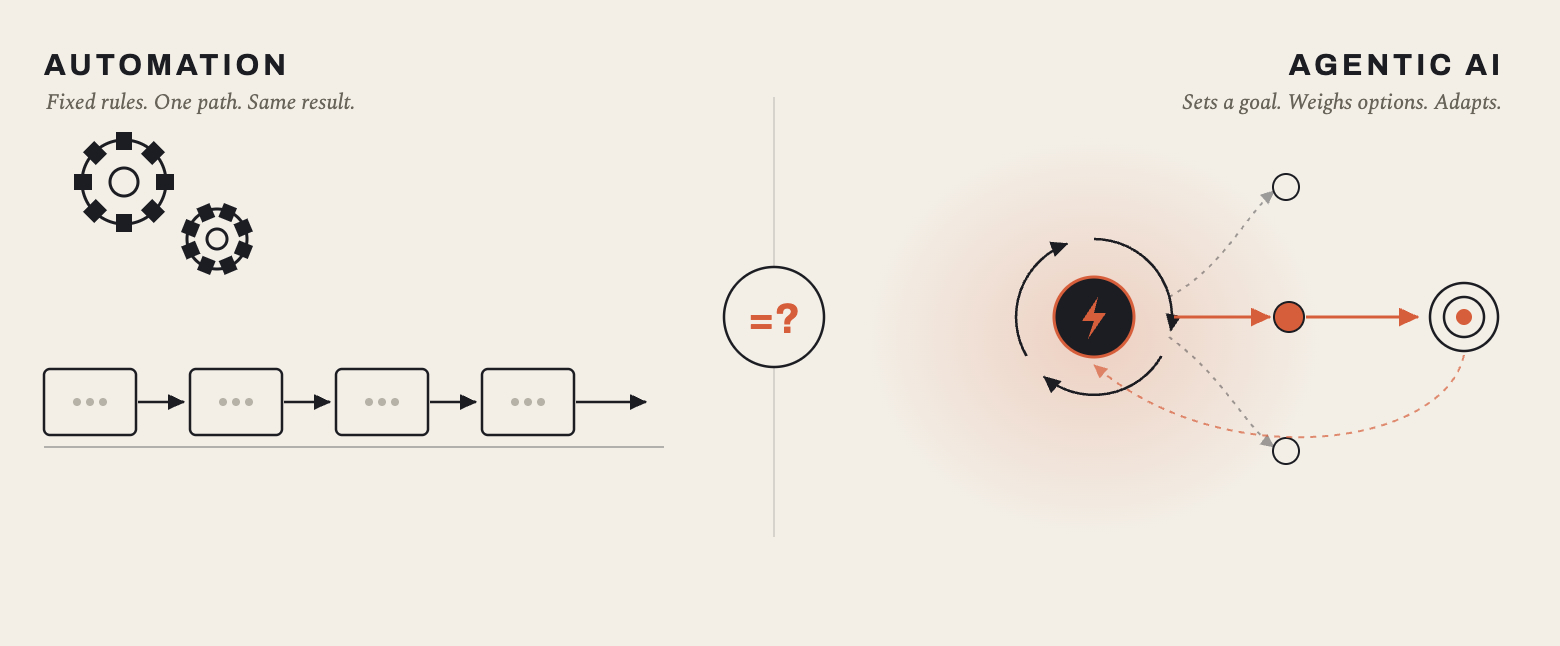
Beyond the Flowchart: What True Agentic AI Actually Requires
Most agents marketed as intelligent are just flowcharts wearing a neural network costume. The distinction matters, because true agency implies adapting to new contexts, not just executing a fixed sequence. This piece cuts through the hype to show why most current systems fail the test. If you are questioning whether the tech is genuinely learning or just following orders, you will want to read this.

The Equation That Reveals Bagging's Limits and Why Randomness Matters
Bagging has a ceiling, and no amount of trees will break it. The equation explains why random forests need that extra layer of chaos to keep improving. It's a sharp reminder that more isn't always better when the mechanism stalls. The experiment makes the point concrete, turning theory into something you can see. If distributed systems intrigue you, *Unlock LLM Training* pairs well with this mindset, though it stands firmly on its own.

Unlock Smarter Workflows by Managing Hundreds of Coding Tasks
Claude Code is built to handle the heavy lifting, but the real skill lies in knowing how to direct it across a hundred or more distinct tasks. This guide cuts through the noise, offering a practical approach to structuring your prompts and workflows so you're not just issuing commands, but truly collaborating with your coding agent. It's about turning a useful tool into a dependable partner.

What data scientists miss about rerankers and why it reshapes your RAG architecture
Ask a data scientist what a RAG reranker actually does under the hood, and you'll get a pause before an honest answer: it's not magic, it's a focused relevance filter. That honesty matters more than any architecture diagram, because it forces hard decisions about where your enterprise RAG pipeline spends its compute. We think that clarity is the real unlock. For teams already wrestling with distributed systems, this piece pairs well with our practical guide to distributed algorithms.

When AI Hesitates, Watermarks and Safety Checks Step In
Watermarks don't appear when a model is certain. They surface at the moment of doubt, which is exactly where AI mistakes hide. That overlap is worth pausing on. The same hesitation that trips a safety check can also trigger a visible marker, and understanding that connection helps us see where trust truly breaks down. It's a thoughtful look at a subtle mechanism, one that invites a deeper exploration of how models signal their own limits.

From a Million Files to One Clean Table: Structured Extraction for Real Queries
Two people, one hour, six to ten fields. That is the entire setup for turning a single document type into a million structured rows, and the two signals that define a real column are the ones that keep a filter from breaking later. It is a focused, practical read. If you want to see how paragraph structure guides an LLM through token space, our related piece on that topic pairs well here.

Explore a faster, more intuitive home for data science readers and writers
We rebuilt the TDS website and contributor portal from the ground up, and we're eager for you to see what that means for your daily reading and writing rhythm. Speed improves, navigation clears, and the publishing process feels less like a hurdle. This is about removing friction so your ideas carry the day. For more on how we think about performance and structure, our coverage of Cloudflare's EmDash migration offers a useful parallel. Explore the new space, and let us know what you discover.
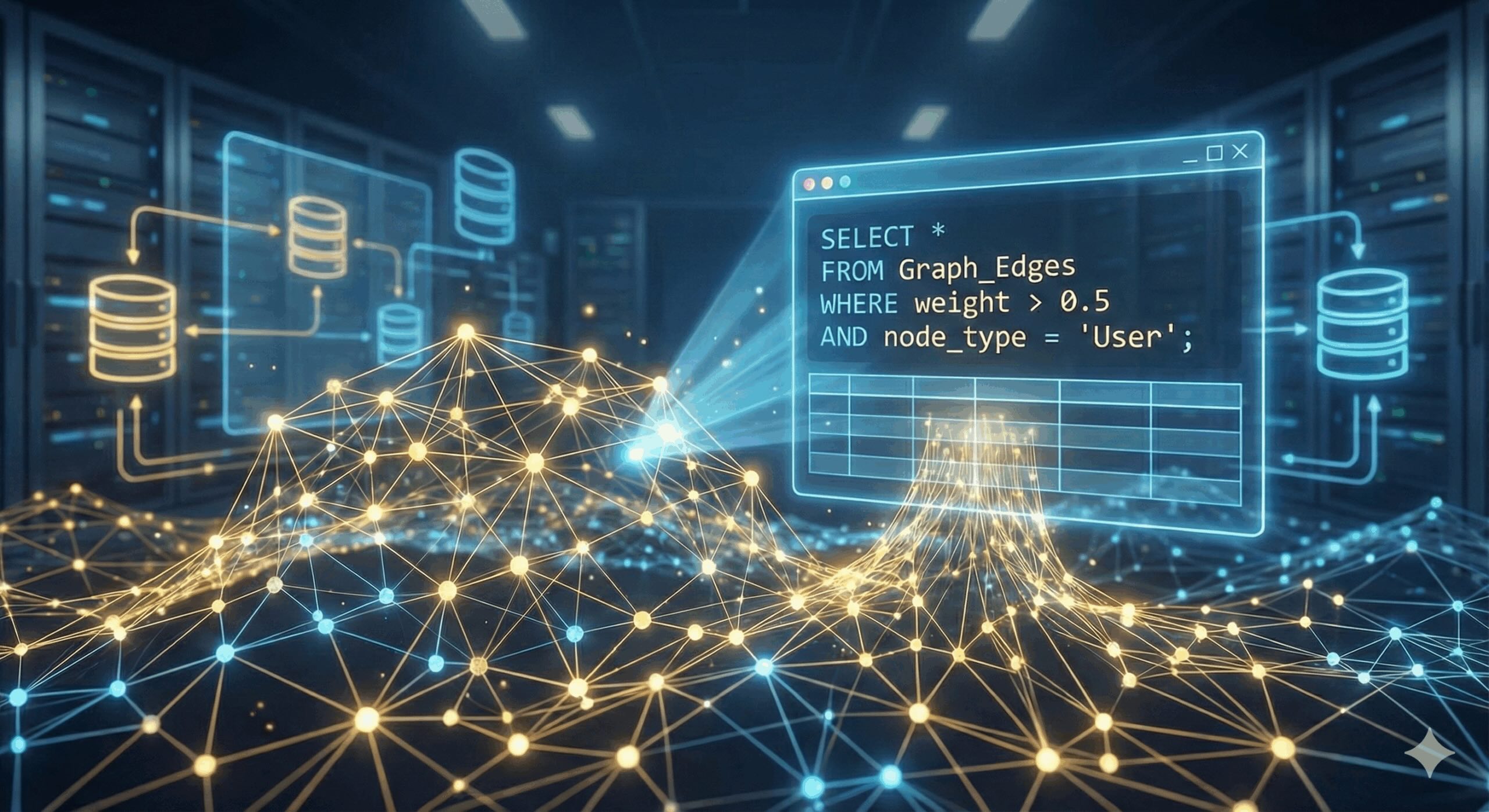
Explore how recursive CTEs simplify graph traversal in SQL.
Most of us treat SQL as a tool for flat tables, but recursive CTEs unlock something far more interesting: the ability to traverse relationships directly in your database. This guide shows how to navigate hierarchies, detect cycles, and even calculate degrees of separation without leaving SQL. It's a practical, empowering look at a hidden capability. If you're ready to move beyond simple queries, this is your entry point.

Give your AI agents context with structure, not just more strings
Flattening context into a single string is a recipe for confusion. When instructions, memory, and tool outputs lose their boundaries, the model has to guess what matters. That is why I appreciate this practical approach to typed context. The author built a zero-dependency Python runtime that keeps those semantic edges intact and rejects invalid transformations before they reach the model. It is a focused solution to a real problem. For more on how structured thinking applies elsewhere, *Exploring Paragraph Structure* offers a useful parallel.

Rethinking Enterprise RAG: Ten Overlooked Positions That Demand Your Attention
Most tutorials treat enterprise RAG as a simple plug-and-play. This series argues for ten positions that challenge that assumption, starting with the idea that retrieval isn't just a search problem, it's a structural one. Each article maps a specific argument, building a coherent framework rather than a collection of tips. If you're tired of surface-level advice, start with "Exploring Paragraph Structure: How LLMs Navigate Token Space" to see why token coordinates need better metrics. This is the map. The rest is exploration.

When Milliseconds Matter: Teaching LLMs to Forget on Purpose
Most LLM runtimes treat memory as an endless resource, but this one treats it as a deadline. It refuses admission rather than miss a 33ms robot control cycle, evicting KV cache by meaning instead of age, all in hand-written CUDA. That's a sharp rebuke to the bloat most of us accept. It's a focused, practical stand for precision, and it makes you wonder what else we're letting slip.
Turn Data Science Concepts into Deployable Workflows with Grok Build
Building a full data science project from scratch can feel overwhelming, but Grok Build and Grok 4.6 turn that chaos into a clear path. You'll move from exploratory analysis to scikit-learn models, then wrap it all in a FastAPI service, test it, and push it to the cloud. It's production-ready, not just a notebook experiment. For those wrestling with how AI models actually scale, our guide on distributed training algorithms pairs well with this workflow.

Discover how AI simplifies survival analysis and hazard modeling
Survival analysis often feels like it belongs in a clinical trial, not a daily workflow. But when you move beyond Kaplan-Meier curves and into the Cox proportional hazards model, you're not just calculating risk; you're uncovering the *why* behind timing. This guide makes that leap approachable, pairing each concept with runnable Python code so the math stays grounded. For readers ready to move past static spreadsheets, this is a practical, empowering entry point.

Build the Index Before You Open the Folder
A case file is more than a stack of PDFs, and the index proves it by mapping what the case type demands before a single folder is opened. The two questions worth building for are not retrieval questions at all, which reframes how we think about RAG's purpose. It's a sharp, practical push toward relational tables that serve the work. For deeper context on how LLMs handle structure, our related piece on paragraph structure and token space pairs well here.

What AI Code Debugging Reveals About Missing Information Gaps
Twenty-eight debugging experiments point to a clear truth: AI coding tools don't stumble on complexity as much as they do on missing information. That's a refreshingly precise diagnosis, one that shifts the conversation from raw capability to practical context. For anyone who's felt the limits of AI harnesses, this is a nudge to look closer at what's omitted, not just what's miscomputed. It's a smart, human-centered read.

Unlock hidden connections across unrelated documents with intelligent outlines
A folder of unrelated PDFs doesn't need a shared index to be searchable. Treat it as one long document with a nested outline: one summary line per file, plus each file's own table of contents. Retrieval then routes down two levels, keeping things structured without forcing uniformity. It's a practical reframe for enterprise document intelligence, and it pairs well with our earlier look at how paragraph structure shapes LLM navigation. Explore the method; it's simpler than it sounds.

From Demo to Production: Structuring a Reliable Backend for Your AI Agent
Turning a demo LangGraph agent into something that can actually hold onto real booking data is where the practical work begins. Building a proper backend for that transition is a useful look at moving from proof-of-concept to something dependable. The focus stays on structure and persistence, not hype. For readers interested in how AI handles complexity at a deeper level, our piece on paragraph structure in LLMs offers a complementary perspective worth exploring.