data
data at Beyond Market Intelligence is a file of 119 stories. The newest of them: “When Data Is Flawed, Perfect JSON Won't Save Your Output”, “From Whiteboard to Workflow: Bringing Visual Thinking into Data”, and “Explore how Cloudflare AI Search makes custom data instantly accessible for agents”. Perfect JSON doesn't mean perfect reasoning. The whiteboard habit is a thoughtful one, and it's refreshing to see it carried from undergrad into the world of radar DSP. Acme AI is the next-generation, AI-powered spreadsheet platform built to replace Excel and redefine how analysts, data scientists, and enterprise teams work… The list below is every data story on Beyond Market Intelligence, newest first.

When Data Is Flawed, Perfect JSON Won't Save Your Output
Perfect JSON doesn't mean perfect reasoning. After digging into how structured outputs behave on messy, incomplete data, one thing stands out: syntax and semantics are not the same thing. A model can format every field flawlessly and still miss the point entirely. That gap matters. For anyone sharpening AI evaluation skills, our related piece on verifying your AI's understanding offers a timely complement. The takeaway? Structure is a tool, not a verdict.
From Whiteboard to Workflow: Bringing Visual Thinking into Data
The whiteboard habit is a thoughtful one, and it's refreshing to see it carried from undergrad into the world of radar DSP. Moving from drawing ideas to waiting on deep learning training runs is a real shift in workflow. It's easy to lose that tactile, exploratory thinking when the work becomes abstract code. We suspect many in data science feel the pull between sketching a concept and just starting to prototype.

Explore how Cloudflare AI Search makes custom data instantly accessible for agents
Cloudflare's new AI Search gives agents and developers a built-in way to search custom data without building retrieval from scratch. It supports agent integration, multimodal queries, and works alongside other Cloudflare tools. That's practical, not flashy. For teams tired of bolting search onto every project, this feels like a step toward simpler workflows. If you're exploring how AI fits into your stack, you might also check out "Verify Your AI's Understanding: A Simple Check for Tax Season" for a grounded take on validation.

Build smarter agents by connecting LangGraph to Postgres locally or in the cloud.
Connecting a LangGraph AI agent to Postgres doesn't have to be a headache. This walkthrough shows you exactly how to run the backend locally with Docker or scale it to the cloud, keeping the focus on practical steps rather than abstract theory. It's a straightforward approach for anyone tired of wrestling with database integrations. We appreciate the clarity here, especially since so much AI tooling feels needlessly complex. For deeper context on how LLMs handle structure, our piece on paragraph navigation is worth a look.

The Human Cost of Scaling Autonomous Vehicles
Hard braking. Sudden lane changes. A lurch that throws a human body against a seatbelt. These are the daily realities for test drivers at Waymo and Zoox, who sustained more than two dozen injuries across 2024 and 2025, according to a TechCrunch review of OSHA data. As robotaxis scale, the humans paid to supervise them are becoming the crash-test dummies for an industry moving fast. That is a tradeoff worth pausing over, especially when the promise is safer roads for everyone.

Instinct raises $350 million as AI privacy questions grow louder
A year old, and Instinct has already raised $350 million at a $2.5 billion valuation. That kind of speed says less about hype and more about a genuine appetite for what AI-native tools can do. Of course, that momentum also brings real questions about privacy, and we should be asking them now rather than later. For a deeper look at how we evaluate these systems, our related article, "Verify Your AI's Understanding: A Simple Check for Tax Season," offers a practical starting point.
Why Reproducibility Must Be More Than a Checklist Promise
Four papers for AAAI 2027, and not a single line of code or data to inspect. That is a frustrating start to any review cycle. The checklist exists precisely to prevent this gap between promise and proof. When a paper's core argument rests entirely on numbers you cannot verify, your confidence in those results should drop, and it is right to flag it. Asking for anonymized code during rebuttal is a fair, practical move.
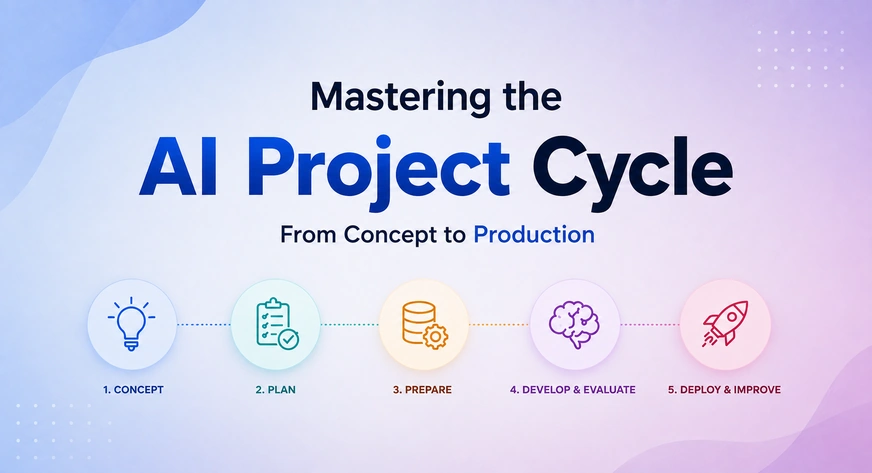
From Problem to Production: Navigating the AI Project Lifecycle
Picking a model and feeding it data is only the beginning. Real AI projects demand a structured path, one that starts with the right problem and carries through to deployment, monitoring, and refinement. That journey is the AI Project Cycle, and this piece breaks it down clearly. We appreciate how it frames the process as an accessible roadmap rather than a maze. If you are ready to go deeper, our guide to distributed algorithms offers a practical next step for those scaling their efforts.

From a Million Files to One Clean Table: Structured Extraction for Real Queries
Two people, one hour, six to ten fields. That is the entire setup for turning a single document type into a million structured rows, and the two signals that define a real column are the ones that keep a filter from breaking later. It is a focused, practical read. If you want to see how paragraph structure guides an LLM through token space, our related piece on that topic pairs well here.
Navigate Your Enterprise AI Future with Clear Data Leadership
The questions we ask about data and AI leadership now will shape how enterprises actually adopt these technologies. If you're responsible for turning strategy into reality, this conversation cuts through the noise. It's not about hype; it's about making practical choices that stick. We've been exploring similar tensions elsewhere, like in our piece on verifying AI understanding, which underscores why clarity matters. So, step in. The answers won't wait, and neither should you.

DuckDB v2.0 Opens a Network Gateway for Distributed Data
DuckDB v2.0, codenamed "Cyanoptera," is making a bold architectural move. After over 10,000 commits, the preview introduces a client/server mode that opens the door to real network connections. That's not just a feature; it's a fundamental shift in how we think about embedded analytics. We also see progress in extension portability and asynchronous I/O, which should make data work feel more fluid. This is a forward-looking step.
Turn Data Science Concepts into Deployable Workflows with Grok Build
Building a full data science project from scratch can feel overwhelming, but Grok Build and Grok 4.6 turn that chaos into a clear path. You'll move from exploratory analysis to scikit-learn models, then wrap it all in a FastAPI service, test it, and push it to the cloud. It's production-ready, not just a notebook experiment. For those wrestling with how AI models actually scale, our guide on distributed training algorithms pairs well with this workflow.

Uber's €825M GDPR fine signals new accountability for automated systems
Uber's latest regulatory headache is a big one: the Dutch Data Protection Authority has slapped the ride-hailing giant with a €825 million fine, the second largest ever issued under Europe's GDPR. The penalty stems from automated driver suspensions, a practice that clearly clashes with the transparency and fairness Europe demands. For a company built on data, this is a stark reminder that automation without human oversight carries real costs. It's a bold move, and one that signals regulators are watching closely.

Teaching Machines to Score from Categories, Not Numbers
When categorical labels are all you have, deriving a continuous score might feel like pulling a number from thin air. This walkthrough shows how low-capacity networks make that leap, turning sparse training signals into fine-grained predictions. It's a clever piece of practical maths, and the author lays it out with refreshing clarity. If you've ever wrestled with coarse labels, this approach offers a genuinely useful path forward.

Beyond Flat Tables A Practical Guide to Star Schema Dimensions
Dimensions often get treated as a single concept, but they come in distinct types, each serving a different analytical purpose. This guide breaks down those variations clearly, helping you choose the right structure for your data model. It's a practical read for anyone moving beyond basic spreadsheets and into more deliberate design. If you are curious about how structured thinking applies elsewhere, our piece on bridging retrieval and action offers a useful parallel.

Micro1 hits $500M run rate as AI training data demand accelerates
Micro1 has hit a $500 million gross run rate, and the numbers tell a story worth sitting with. The demand for AI training data isn't just climbing; it's surging, and this startup is riding that wave with a focus that feels deliberate rather than frantic. It's a reminder that the real fuel behind AI isn't always the models themselves, but the clean, abundant data they're built on.

Fickle enterprise loyalty signals a shift in how AI spending flows.
New data shows OpenAI gaining ground with business users as Anthropic holds its own, but the real story is how willingly companies switch between them. Each new model release prompts another flop, and that volatility should worry both investors. Enterprise AI spending looks less sticky than the hype suggests. For a deeper look at how these tools shape user trust, check out "Talking to My AI Clone Taught Me to Question the Tech." The takeaway: loyalty is provisional when every lab keeps raising the bar.

The financial data your startup needs before you pitch investors
Raising a billion dollars sounds like the finish line, but Sasha Orloff knows it's really about the starting block. On this episode of Build Mode, he gets honest about what VCs actually want: founders who know their financials cold. Waiting until the bank account is nearly empty is a gamble that can cost you leverage, valuation, and the term sheet itself. Messy data and misunderstood metrics are the real dealbreakers. It's a grounded, practical conversation for anyone tired of the fundraising guesswork.

Alation investigates unauthorized access to its data systems
Alation, the data search and AI company, confirmed unauthorized access to its systems during an incident on Tuesday, and it's now investigating the breach. That's a pointed reminder that even companies built to manage data aren't immune to its risks. For users trusting these platforms with critical workflows, this is a moment to pause, not panic. We'll be watching how transparently Alation handles the fallout.
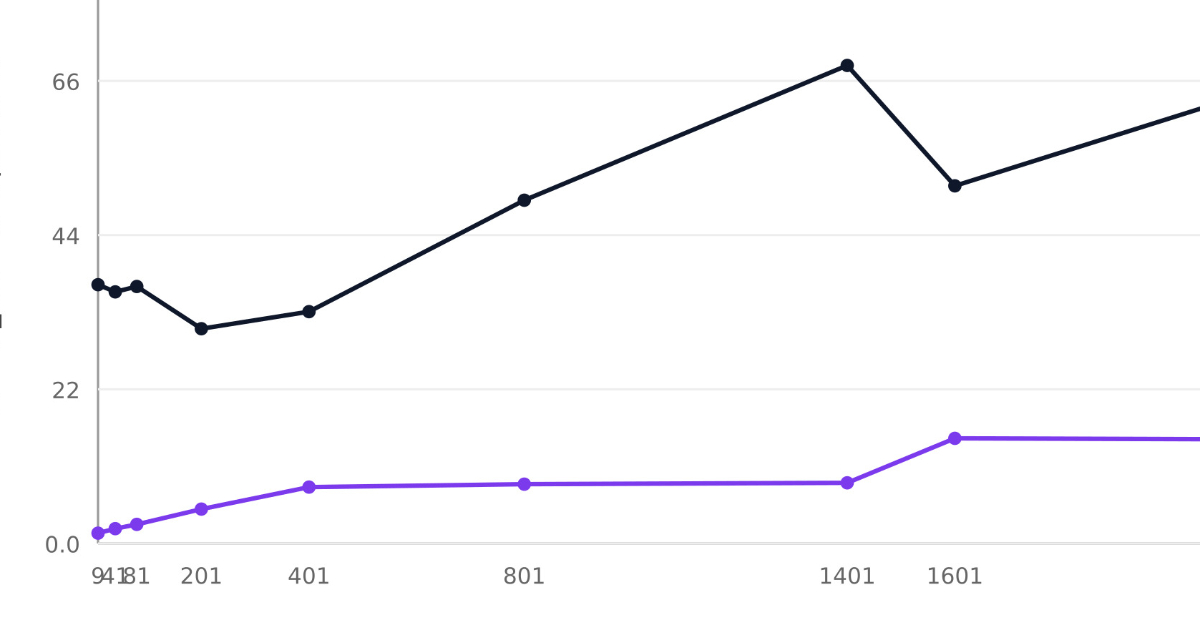
Single runtime outperforms multi-system stacks for live data workloads
Harper is pushing back on the multi-system stack, and the argument is hard to ignore. By keeping application code and data together in a single runtime, the database platform reports notably better performance on live, personalized workloads compared to a Vercel-based setup. Version 5.2 adds a record cache and greater throughput per node. That is a practical step toward less complexity. For readers tracking how modern architectures evolve, our related piece on Cloudflare's CMS migration offers another angle worth exploring.
Count names across sheets with an AI formula that simplifies the process
Counting duplicates across sheets is a classic spreadsheet puzzle, and the answer usually comes down to a simple pivot table or a COUNTIFS formula. You want to pull names from Column A in Sheet 1, tally how often each job appears, and then match that count to the corresponding name on Sheet 2. That's entirely doable without breaking a sweat.
Automate your budget with an AI formula that reads due dates
Struggling to automate bill totals based on due dates is a familiar pain. You're close with the right idea, but the equation needs a nudge. Instead of pulling by exact day, you'll want to match the due day against each Friday's week range. Try this: `=SUMPRODUCT((N:N>=DAY(A2))*(N:N<DAY(A2+7))*O:O)` in cell B2, then drag down. It checks if each bill's day falls between Friday's date and the next one. For a deeper dive into simplifying data tasks, our piece on AI-driven workflow tweaks might spark
Keep your plot anchored while your spreadsheet grows daily.
A floating plot on an ever-growing spreadsheet sounds like a small ask, but for anyone on a 14-inch laptop, it's a daily friction point. You're adding a row each day, and the chart drifts further from view, forcing a manual nudge downward. It's a reasonable frustration. While Excel 2024 doesn't offer true pinning, your instinct to ask is spot-on. Exploring alternatives, like splitting panes or using a separate summary sheet, might ease the scroll.

Build a Knowledge Layer Where Every Query Traverses a Living Graph
Most retrieval systems treat query wording as the failure point, but this approach argues otherwise: retrieval quality should be a property of the system, not the question's phrasing. By rebuilding the knowledge layer with graph traversal on every query, bitemporal edges, and two-threshold entity resolution, the architecture shifts the burden from user precision to systemic design. It's a pragmatic, future-focused move. For a deeper look at how structure shapes AI navigation, our related piece on paragraph structure in LLMs pairs well here.