debugging
Beyond Market Intelligence keeps debugging in one place: 32 stories so far. The section currently leads with “Pinpoint the bug: Odin reads your report and shows the file to fix”, “When AI Writes Code, Do You Still Own the Work”, and “Efficiency Matters: What 50,400 Agent Runs Reveal About Wasted Work”. Paste a bug report into Odin and it pinpoints the exact file, 93% of the time, and the specific function, 79.4% of the time. We gave an AI a real test: write code, plant a bug, and see if the human who reviewed it actually owns the work. Acme AI is the next-generation, AI-powered spreadsheet platform built to replace Excel and redefine how analysts, data scientists, and enterprise teams work… The list below is every debugging story on Beyond Market Intelligence, newest first.
Pinpoint the bug: Odin reads your report and shows the file to fix
Paste a bug report into Odin and it pinpoints the exact file, 93% of the time, and the specific function, 79.4% of the time. This isn't another cloud-dependent AI tool. It runs mostly in your browser using local models, keeping your code private while matching the accuracy of far heavier agents. That efficiency is what stands out. If you've ever felt buried by debugging, this is worth exploring.
When AI Writes Code, Do You Still Own the Work
We gave an AI a real test: write code, plant a bug, and see if the human who reviewed it actually owns the work. The result was humbling. I rated my confidence 4 out of 5, then failed to find the planted bug in eight minutes. CodeOwnership reveals a hard truth about accountability when AI generates your logic. For a deeper look at AI's reliability, our Python 3.15 JIT Benchmarks piece shows similar limits for targeted workloads. The tool is impressive. The limits are real.

Efficiency Matters: What 50,400 Agent Runs Reveal About Wasted Work
Fifty thousand four hundred agent runs. That is the scale of evidence behind a simple question: how much of that work was wasted? Real repositories, seeded decisions, and a clear pattern of churn across turns and patches. The findings point to harness rules that genuinely reduce friction, not just theory. Efficiency is not about speed alone. It is about knowing which actions matter. For data scientists navigating similar tradeoffs, our guide on entering the field with confidence offers a practical starting point.
Master PyTorch debugging for your Toyota Woven perception interview
Debugging PyTorch for a Toyota Woven perception interview means getting comfortable with silent failures. Models don't always crash, they just produce NaN validation loss or suspicious training curves. Focus on tensor shapes flowing through a ViT or U-Net, broadcasting rules, and slicing. Know why your loop breaks. A budget GPU running real-time neural weather in Minecraft at 30 FPS shows how small, well-debugged models can still deliver. That's the level of precision they expect. Trace every dimension.

AI Coding Speeds Up Development, but Debugging Demands Grow
AI coding agents are writing code faster than ever, but a new survey from Undo and Coleman Parkes reveals a sharp trade-off: debugging now consumes more time than before. Faster generation means more code to troubleshoot, and that bottleneck demands new tools for comprehension. Developers aren't just writing, they're deciphering. For deeper insight into how AI is reshaping workflows, see our coverage of Flai's $27M round and its 50,000 monthly appointments.

Explore a smarter AI model that lifts complex work without the premium price
OpenAI's GPT-6.1 Sol takes on complex professional work without the premium price tag. It delivers real gains in code writing, debugging, document understanding, and multi-step business workflows. That's a meaningful upgrade for teams who need capability without cost barriers. We've also covered how Codex is expanding into cloud dev environments, so this release fits a broader push toward accessible, practical AI tools. If you're ready to lighten heavy tasks, this model is worth exploring.

Unlock Deeper TPU Insights: Cycle-Level Profiling Now Available in XProf
For developers wrestling with TPU workloads, opaque blocks in trace captures have long been a frustration. Google's addition of a Kernel Profiling suite to XProf changes that. This open-source profiler now exposes cycle-level details for custom Pallas kernels, turning what was once a black box into a map of precise execution paths. It's a practical step toward finer-tuned performance work. Claudio Masolo's report is worth your attention, especially if you're already exploring how AI tools reshape developer workflows.

Verify Your AI Code: Ensuring Intent Without Reading a Single Line
Generated code can feel like a black box, even when it works. But when it fails silently, the cost is more than a bug; it's a breach of trust in your own workflow. A practical path to verify your app's intent without wading through every line is offered. It's a smart, accessible approach for anyone tired of guessing what the AI actually did. If you're exploring how LLMs reason, our guide to paragraph structure adds useful context on their inner logic.
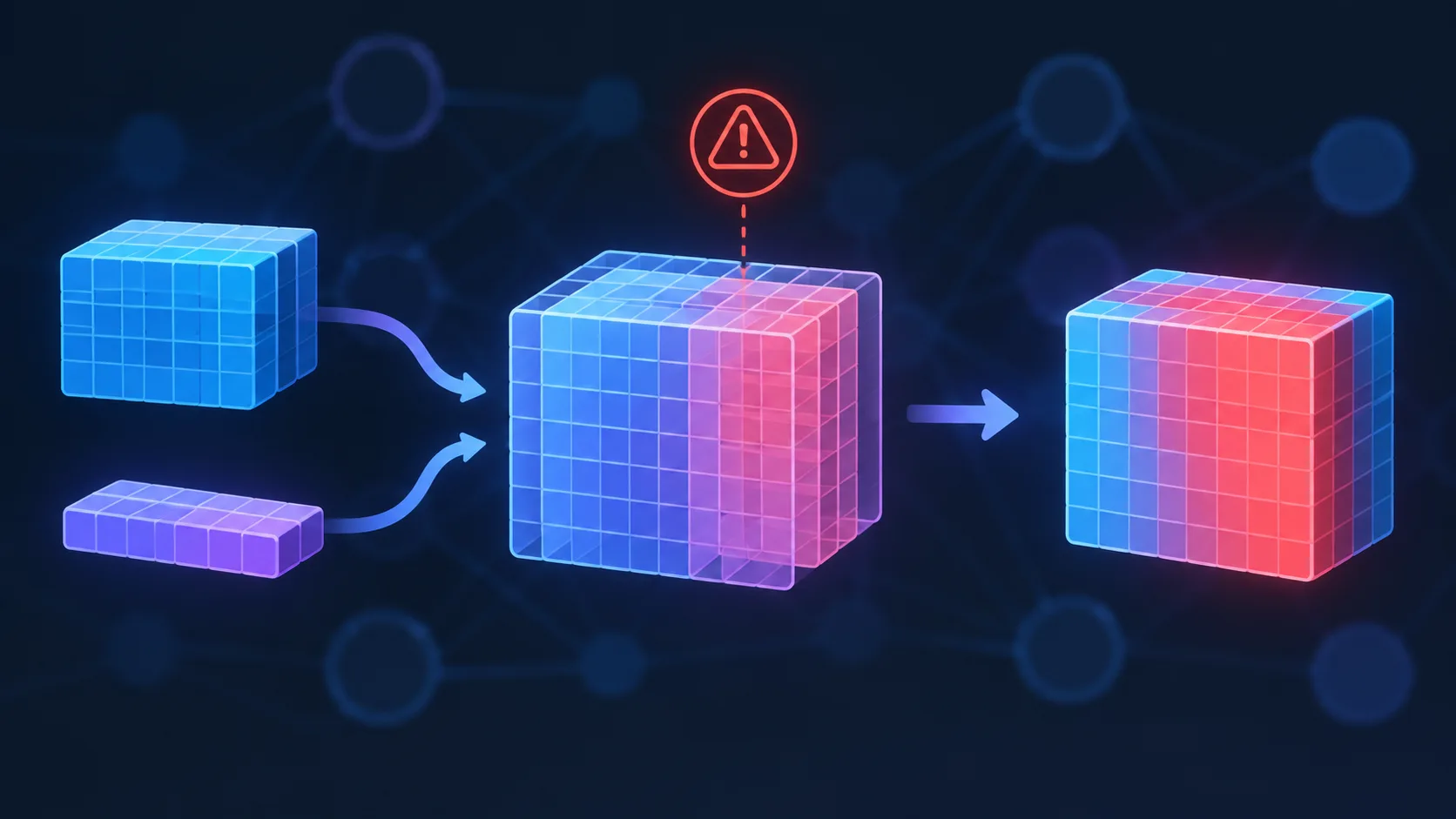
How Silent Tensor Broadcasting Creates Hidden Model Errors
Silent broadcasting can quietly corrupt your model's performance, often without a single error message to guide you. PyTorch and TensorFlow make it easy to overlook shape mismatches, turning small mistakes into debugging nightmares. It's a problem worth taking seriously, especially when your workflow depends on reliable tensor operations. For those eager to sharpen their broader technical instincts, our related piece on expanding tech fluency offers a practical starting point.
Seven Python habits that surface surprises before production does
Watching senior developers work is less about speed and more about calm. The seven practices they follow are built to reduce surprise, catching issues before they ever reach production. It's a discipline that values foresight over cleverness. If you're ready to move beyond syntax and into mindset, these habits are worth your attention. For a deeper look at how advanced thinking reshapes code, our piece on unlocking Python's potential pairs well with this. The goal isn't to do more. It's to make the unexpected rare.
Debug Your Microcontroller Directly From a Browser Window
Browser-based hardware debugging is a bold step forward, and the ESP32 Bit Pirate makes it feel surprisingly accessible. By tapping into HTML5 APIs, this project lets you flash firmware and interact with an ESP32-S3 straight from your browser, no complex toolchains required. Supporting digital and wireless protocols, it pairs practical recipes with hands-on tasks like memory dumping and signal analysis. It's a pragmatic, human-centered approach to microcontroller work. For more on evolving technical skill sets, our piece on AI/ML job requirements offers a useful counterpoint.
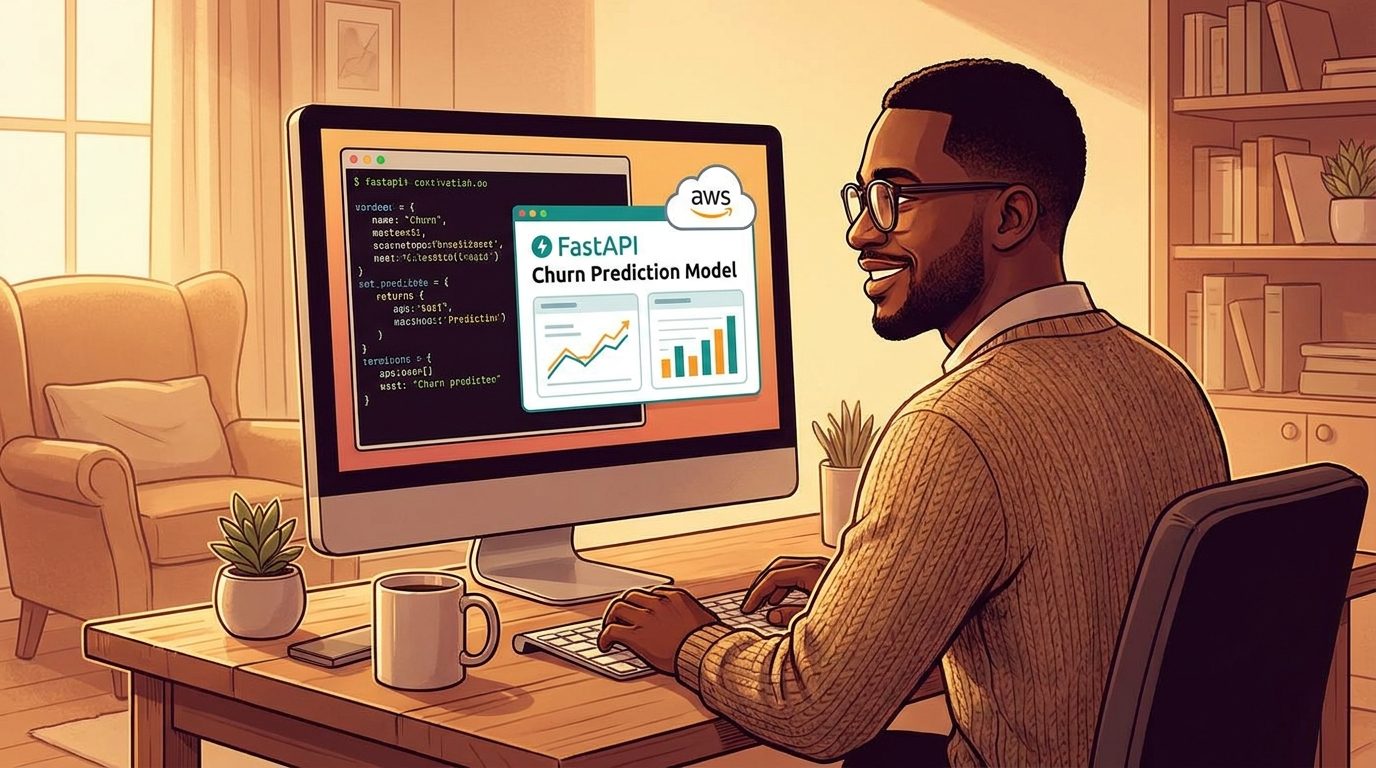
From Notebook to Production: When Your Model Meets a Real API
A model that runs on your machine is only the beginning. The real work starts when someone else needs to call it. This walkthrough of building a FastAPI endpoint for churn prediction captures that gap perfectly, detailing everything that broke between "it runs" and "it's live." It's a grounded, practical look at deployment realities. For more on tackling technical hurdles, explore the Forrester function piece, but this guide stands strong on its own.

Trace AI agent failures with session logs and cost guardrails
When an AI agent fails, the problem often isn't the model itself but the trail it leaves behind. Session traces and cost controls are emerging as practical observability tools, helping teams catch tool-call loops and runaway spend before they spiral. Preserving execution context for post-incident debugging is the real win here. It's a grounded, human-centered approach to a messy problem. For more on how AI systems can misstep, our piece on verifying understanding during tax season pairs well with this.

When Data Looks Right but Isn't: Using Watchdogs to Catch Agent Failures
A passing evaluation score can hide a payload that is confidently wrong. That is the failure mode plaguing too many multi-agent systems: they look correct, yet deliver subtly corrupted output. The fix is a watchdog pattern that catches these silent errors before they propagate. This shows you how, with working Python, to build that safety net. It is a practical, necessary read for anyone serious about reliable AI workflows.
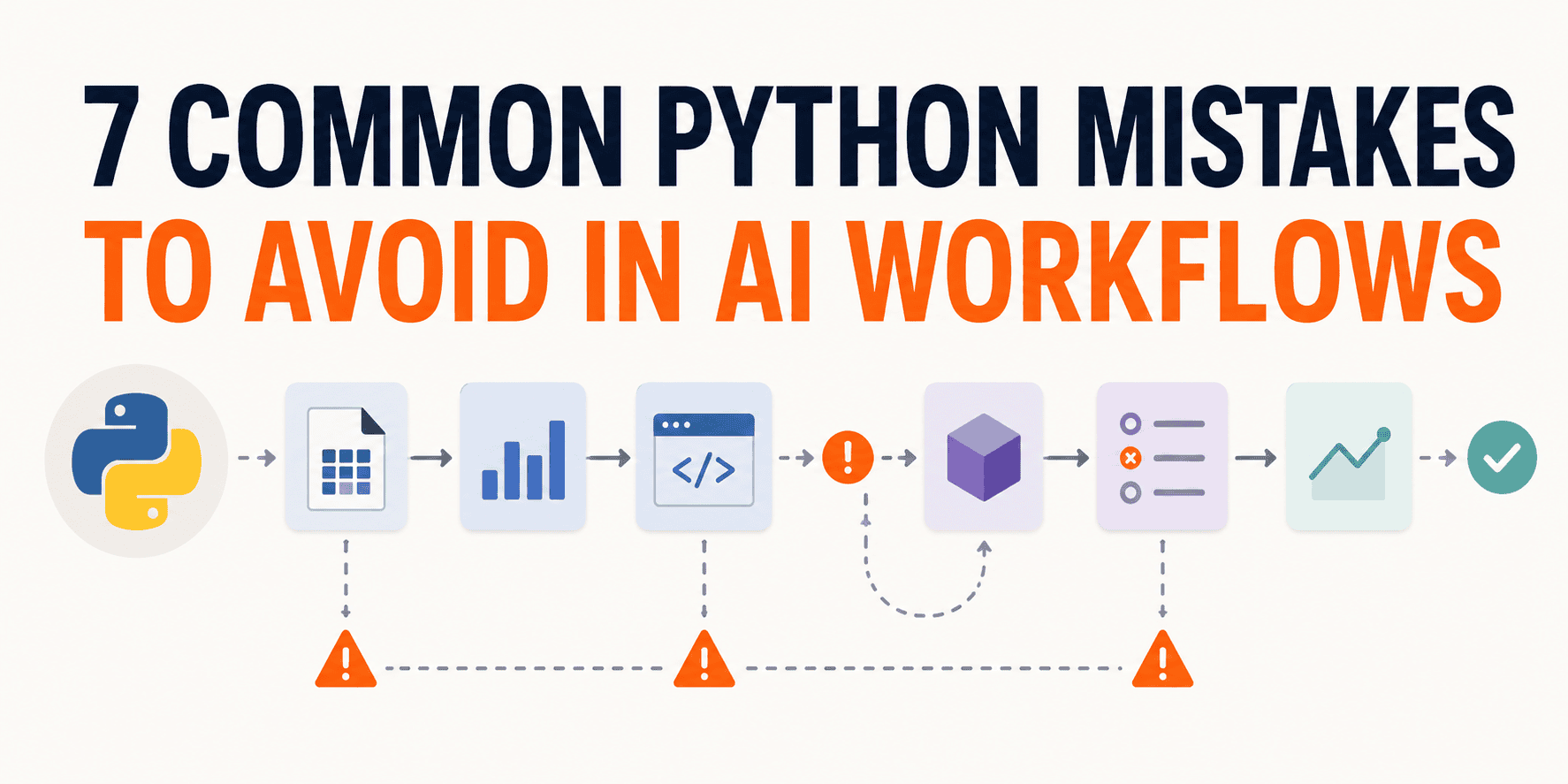
Your Pipeline Ran Clean. Here's Why That Doesn't Mean It Worked.
A clean run feels like a win. But in AI workflows, it's often a mirage. The process executed; that's all. It tells you nothing about what the pipeline actually learned, which rows shaped it, or whether the saved result can be trusted elsewhere. That gap is where real mistakes live. If you're ready to move past surface-level checks, our guide on distributed algorithms offers a natural next step. For now, let's focus on the seven pitfalls that quietly undermine your data's integrity.
Learn from Common Python Errors to Write Cleaner Code
Your code runs, but it's wrong. That's the frustrating part of Python. The syntax is fine, the program executes, yet the output drifts from what you intended. These seven mistakes aren't typos or crashes; they're silent logic traps hiding in plain sight. We break down each hidden cause and give you the first concrete thing to check, so you can stop guessing and start correcting. For a deeper dive into smarter coding habits, our piece on unlocking Python's potential pairs well with this guide.
From Config Wrangling to Experiment Scaffolding: A PhD Reality Check
The instinct to keep the eval harness and metric definitions close is the right one. That layer is where your scientific judgment lives. Handing off the scaffolding while holding onto the core is a workable line, even if you keep crossing it. The detachment you describe is real. The fix is likely not more careful diff-reading. It is rebuilding a mental model of the system at a higher level, so you can reason about the numbers without needing the code memorized.

Understanding AI Code Estimates for Better Communication
If you've leaned on Claude for coding, you've likely noticed its time estimates can miss the mark. That's not a flaw to fix; it's a signal about how LLMs process complexity. We think that gap actually makes you a sharper communicator, pushing you to clarify scope and break work into smaller steps. It's a practical lesson in collaboration. For more on building that technical foundation, our guide to distributed training algorithms pairs well with this mindset.
How a single bug fix sharpens BayesianRidge uncertainty estimates
A subtle bug in BayesianRidge's uncertainty calculation slipped into sklearn 1.8, and this notebook walks through the exact formulas behind `predict` on both versions. It's a sharp exercise in tracing what changed, and it's the kind of forensic digging that keeps models honest. If you've ever wondered how small shifts in regression internals ripple outward, this is worth your time. For a broader look at how data quality issues surface elsewhere, our piece on catching AI slop before it skews your model pairs nicely here.

What AI Code Debugging Reveals About Missing Information Gaps
Twenty-eight debugging experiments point to a clear truth: AI coding tools don't stumble on complexity as much as they do on missing information. That's a refreshingly precise diagnosis, one that shifts the conversation from raw capability to practical context. For anyone who's felt the limits of AI harnesses, this is a nudge to look closer at what's omitted, not just what's miscomputed. It's a smart, human-centered read.
When Your Spreadsheet Refuses to Read a Simple Cell Reference
There's a frustrating disconnect when a formula works in one spreadsheet but fails in another. If referencing `=A2` in your main document returns nothing, the issue often lies in the document's calculation settings or cell formatting, not the formula itself. Check if automatic calculation is turned off, or if the cells are stored as text. This is a common hurdle, but exploring your document's settings usually reveals the fix. For more on troubleshooting AI-driven tool quirks, our piece on verifying code intent offers useful parallels.
Discover the five software types you can build with AI-native spreadsheets.
If you've ever stared at a blank spreadsheet and felt the limits of what it can do, you're not alone. I mapped out the five kinds of software you can actually build, and the range is wider than most of us assume. This isn't about forcing a tool to fit; it's about seeing the possibilities clearly. For a deeper look at how AI reshapes our assumptions, our piece on talking to an AI clone offers a fitting companion.

Discover how Gemini 3.7 Flash empowers smarter coding and agentic workflows
Gemini 3.7 Flash arrives with coding and agentic workflows at the center, and a price cut that makes it hard to ignore. For the next few months, developers can run it at half the standard rate, a direct bet that Google's efficiency gains will translate into lower operating costs. We think that's the right wager, especially for teams running high-volume agents. The real test isn't the leaderboard; it's whether the model reduces retries and manual oversight in production.

Your Team's Insight Still Guides the AI in Incident Response
AI is moving fast into incident response, summarizing channels, analyzing unfamiliar code, and even suggesting fixes. That's genuine progress. But Craig Risi's piece reminds us that the hardest calls still land on humans. The technology can point the way, yet judgment, context, and accountability remain ours to carry. That's not a limitation; it's the point. For a broader look at where this intelligence is headed, our piece on AI designing its own hardware offers a fitting follow-up.