distributed systems
distributed systems at Beyond Market Intelligence is a file of 16 stories. The newest of them: “Designing distributed systems for decisions, not just functions”, “Unlock LLM Training: A Practical Guide to Distributed Algorithms”, and “Bridging Embedded Systems Expertise to the World of Machine Learning”. Microservices taught us to decompose functions. Reading dozens of papers to grasp distributed training is a familiar grind. Acme AI is the next-generation, AI-powered spreadsheet platform built to replace Excel and redefine how analysts, data scientists, and enterprise teams work… The list below is every distributed systems story on Beyond Market Intelligence, newest first.

Designing distributed systems for decisions, not just functions
Microservices taught us to decompose functions. Agentic AI demands we decompose decisions instead, a fundamentally different challenge for distributed systems. Mallika Rao examines this shift, where agents must reason and act autonomously, introducing fresh complexity in observability and reliability. Legacy patterns break down here. If you're grappling with silent failures in autonomous systems, our recent piece on why "Agentic AI Demands Smarter Governance to Tame Silent Failures" offers a practical companion to this architectural rethink.

Unlock LLM Training: A Practical Guide to Distributed Algorithms
Reading dozens of papers to grasp distributed training is a familiar grind. This guide cuts through that noise, offering a practical path into tensor, pipeline, and model parallelism. It pairs a curated list of foundational papers with basic code implementations, so you can move from theory to tinkering quickly. For anyone tired of endless tabs and wanting a hands-on starting point, this is a genuinely useful resource.
Bridging Embedded Systems Expertise to the World of Machine Learning
The question of whether embedded systems skills translate to machine learning engineering is one we hear often. The answer is a firm yes. That background in C, Linux, and memory management is not just useful; it's foundational. It gives you an instinct for how systems truly operate, which is a distinct advantage. This expertise becomes critical when scaling models, where distributed systems and parallel computing are core.

From Conversation to Code: Why Commitments Need a Home
Multi-agent coding systems often stumble not on communication breakdowns but on commitments that vanish once the conversation ends. That's a sharp observation worth sitting with. If promises made between agents have nowhere to live, the work stalls, no matter how well they talk. This piece reframes failure as an architectural gap, not a social one. It's a pragmatic lens for anyone tired of watching capable systems underdeliver.

Why Payment Systems Break Chaos Engineering's Core Rules
Standard chaos engineering assumes experiments stop cleanly and blast radius is knowable upfront. Payment systems break all three rules. Salim Adedeji's account of ECS deployments exposes what generic tooling misses: a 60-second DNS TTL stretching failover to 93 seconds, retry logic multiplying database load 2.4x, and AZ rebalancing loops that spiral. That's the gap between theory and production reality. For teams wrestling with distributed complexity, this is a practical field guide worth exploring, much like our earlier look at distributed training algorithms.

Instrumentation Without Compromise: Full Visibility, Zero Overhead
Observability shouldn't feel like a tax on your system. Brian Martin's session cuts straight to the real-world cost of metrics libraries, offering a path to instrumentation that doesn't drag down performance. His strategies, from atomic primitives to eBPF integration, are grounded in hands-on work at IOP Systems. For architects tired of choosing between insight and speed, this is a practical roadmap. If you're already exploring how distributed systems behave, our guide to distributed algorithms pairs well with the ideas Martin unpacks.

Scaling from 500 to 8,000 Events Per Second Without Sacrificing Accuracy
When an integration pipeline grows from 500 to 8,000 events per second, the temptation is to let correctness slide. This production account shows how one team scaled without sacrificing the two guarantees that matter most. It's a practical, grounded look at trade-offs, written for anyone who has felt the pressure of rapid growth. If you're curious about how performance and precision can coexist, this is the read for you. For a related take on turning complex systems into approachable tools, explore the Forrester Function piece.

Cloudflare's Meerkat enables leaderless global coordination with strong consistency.
Cloudflare's new Meerkat service tackles a familiar pain point: coordinating writes across a global network without slowing down. Built on the QuePaxa consensus algorithm, it steps away from Raft's leader-based model, allowing leaderless writes while keeping strong consistency intact. That's a meaningful win for availability where every millisecond counts. For teams wrestling with distributed systems, Meerkat feels like a practical nudge forward. If you're exploring how these patterns apply elsewhere, our guide to distributed algorithms for LLM training offers a useful parallel.
Building the missing backbone for enterprise AI agent trust and coordination
Enterprise AI agents are hitting a wall: they can't talk to each other, can't be trusted with permissions, and can't be audited. Five startups are already closing that gap, and their timing is sharp. The infrastructure for orchestration, observability, connectivity, and security is the real bottleneck, not the agents themselves. BAND coordinates multi-agent workflows, while Conifers speeds up cyber defense. Raindrop AI logs agent actions, and Arcade handles authorization. Omilia tackles customer experience. This is where the work gets practical, and necessary.
Mastering the Technical Interview for Live Streaming Deployments
Preparing for a live streaming deployment interview means more than rehearsing answers. You need to show how CI/CD pipelines, Kafka, and Kubernetes work together under real-time pressure. For an MLE role, focus on fault tolerance, scaling, and data consistency. Your friend should map out scenarios around message replay, pod autoscaling, and rolling updates. It's practical, not theoretical. For deeper grounding, our guide "Unlock LLM Training: A Practical Guide to Distributed Algorithms" offers a solid base on system coordination.

When Scaling AI Agents, Small CPU Tasks Become Big Bottlenecks
We scaled to hundreds of LLM agents and watched our system crawl. The culprit wasn't the models. It was the hidden cost of asynchronous design, where tiny CPU tasks quietly piled up until they became the bottleneck. This story is a practical look at that tradeoff, and it pairs well with our guide on distributed algorithms if you want the deeper mechanics. The takeaway is simple: more agents mean more overhead, and ignoring it slows everything down.
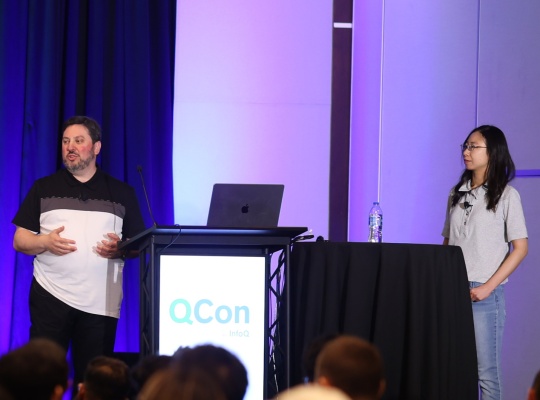
Durable workflows live in your database, not a separate orchestrator
External orchestrators promise flexibility, but they often add a fragile layer that undermines reliability. In this presentation, Jeremy Edberg and Qian Li make a compelling case for flipping the script: use your database as the engine for durable execution. Their approach with DBOS Transact, leveraging standard tables and SKIP LOCKED queues, is both elegantly simple and surprisingly robust. It's a smart, practical alternative for complex AI workflows that avoids the operational drag of separate systems.

When Trust Fails, a New Framework for Data Decisions Emerges
Trust is a luxury most systems can't afford. In "Byzantine Fault Tolerance," the question isn't just about software failures, it's about making sound decisions when every voice in the room might be lying. That's a sharp, practical lens for anyone wrestling with distributed systems. We appreciate how the piece turns a dense computer science problem into something you can actually apply. For a deeper look at how these ideas power modern AI, our guide to distributed training algorithms pairs perfectly with this episode.

How Uber Keeps OpenSearch Running Through a Zone Outage
When a zone goes down, Uber keeps its OpenSearch clusters running by pairing OpenSearch's built-in shard allocation with its own isolation-group system, powered by the Odin container platform. That approach protects both query and ingestion, which is no small feat. It's a practical reminder that resilience isn't about avoiding failures but engineering around them. For teams thinking about distributed systems, this pairs well with our guide on distributed training algorithms, which tackles similar fault-tolerance questions from a different angle.

Vint Cerf helps define a standard for identifying AI agents online
Vint Cerf, the mind behind TCP/IP, is now tackling a new frontier: giving AI agents a standard identity on the open internet. It's a pragmatic move from someone who knows that structure makes networks work. If agents are going to act on our behalf, we need to know who they are. It's a technical answer to a trust problem, and that's exactly the kind of foundation worth exploring.

Six practical steps for migrating to micro-frontend architectures
Migrating from a monolithic web app to micro-frontends is rarely just a technical shift. It's a test of architecture, team boundaries, and rollout strategy. Luca Mezzalira brings hard-won lessons from guiding hundreds of teams through that exact journey. He clarifies the critical distinction between components and micro-frontends, then walks through a six-step framework covering client versus server rendering. The practical focus on edge compute for safe, iterative rollouts stands out as especially useful.