enterprise AI
enterprise AI at Beyond Market Intelligence is a file of 60 stories. The newest of them: “Google gives Gemini a workplace identity to plan and execute tasks”, “Build Compliance Into Every Stage of Your ML Pipeline”, and “How AI Transforms Enterprise Support from Complaints to Resolutions”. Google is giving Gemini its own email address. Compliance doesn't have to be the bottleneck that slows your machine learning work down. Acme AI is the next-generation, AI-powered spreadsheet platform built to replace Excel and redefine how analysts, data scientists, and enterprise teams work… The list below is every enterprise AI story on Beyond Market Intelligence, newest first.

Google gives Gemini a workplace identity to plan and execute tasks
Google is giving Gemini its own email address. That's the headline, but the real story is about agency. By turning Gemini into an AI agent that can plan, execute tasks, and delegate work to subagents across business systems, Google is rethinking what a workplace identity means. This isn't just another assistant, it's a colleague that operates autonomously. For a deeper look at how Google is reimagining data ownership, see our piece on "Why Google's $10 Million Bid for Old Emails Signals a Smarter Data Future."
Build Compliance Into Every Stage of Your ML Pipeline
Compliance doesn't have to be the bottleneck that slows your machine learning work down. Too often, governance waits until the end, turning a finished model into a problem. Instead, build compliance into every stage of the pipeline. It's a more practical path, one that keeps your models both innovative and trustworthy without the last-minute scramble. For a deeper look at how governance can work with your workflow, not against it, explore related insights on building responsible AI systems.
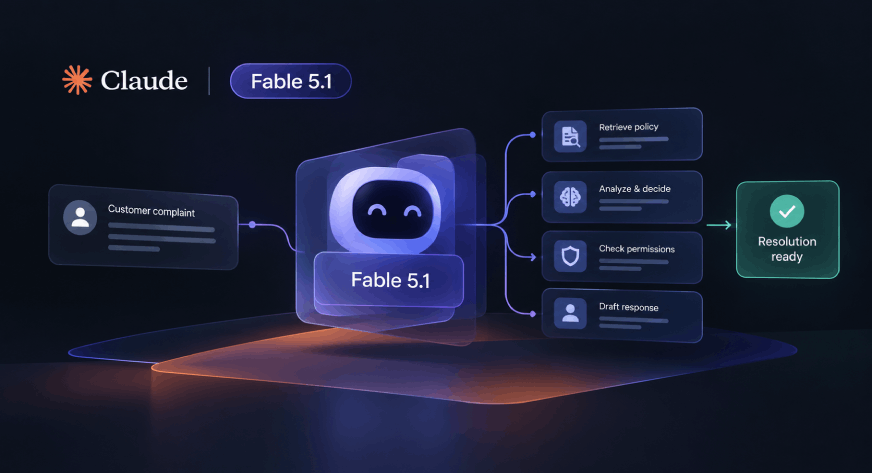
How AI Transforms Enterprise Support from Complaints to Resolutions
Most AI coding demos stop at task managers and weather apps. This project goes further, building an enterprise customer-support platform that investigates complaints, retrieves policies, and recommends resolutions while keeping risky actions behind human approval. That's a practical stress test for Claude Fable 5.1. The approach feels grounded, focusing on real workflow pressure rather than flashy output. For deeper context on how AI agents handle security permissions, Docker's recent CNCF contribution on agent permissions is worth exploring.

BAG Ventures raises $11.3M to back AI startups built for real enterprise use
BAG Ventures has closed an $11.3 million Fund I with a clear mission: back AI startups built for actual enterprise use, not just buzz. That focus matters. Too many AI tools impress in demos but fail under real workflows. This fund aims to change that. For deeper context on the broader AI investment wave, readers can explore our coverage of EliseAI securing $350 million and doubling its valuation in a single year. The enterprise AI space is accelerating, and BAG Ventures is positioning itself wisely.

Anthropic, Clay, and Gamma on moving AI from demo to deployment
The leap from AI demo to daily deployment is the hardest part of the journey. At TechCrunch Disrupt 2026, Anthropic, Clay, and Gamma will share exactly what that transition demands. We expect real talk about friction, not just polished results. If you are serious about moving past the pilot phase, this session is worth your time. Register now and get 50% off a second pass. For more on Anthropic's latest advances, read our coverage of "Sonnet 5.5 delivers faster insights while reducing your token spend."

Transparency in AI Voice: ElevenLabs CEO on Disclosure and the Future
ElevenLabs CEO is making a straightforward call: businesses should tell you when that helpful voice on the line is an AI. It's a practical stance, grounded in the idea that disclosure matters until machine voices become the expected norm. We think that's the right instinct. Transparency isn't just ethical; it's how you build trust with people who are already navigating enough complexity. For more on how AI systems are being deployed in the real world, check out our piece on real-world computer vision.

Own Your Decisions: Auditable AI with DMN and Agent Skills
Enterprise AI has a trust problem. When models return different answers to the same question, high-stakes decisions become risky. Alex Porcelli tackles this head-on in his presentation, showing how DMN decision models bring determinism back into agentic architectures. By pairing them with LLMs and NeMo guardrails, he gives business leaders ownership of decision logic while engineers keep governance intact. It's a practical path to accountability, not just another framework.

As AI costs drop, employee adoption signals a smarter shift
August's data shows AI spend per employee dipping at top firms, even as token costs fall and cheaper models flood the market. That's not the adoption curve hyperscalers banked on. It's tempting to call it summer doldrums, but the signal is worth reading straight: enterprises are pausing, not retreating. They're weighing efficiency against experimentation. For teams navigating this, the real work isn't chasing volume, it's building guardrails that make AI sustainable.
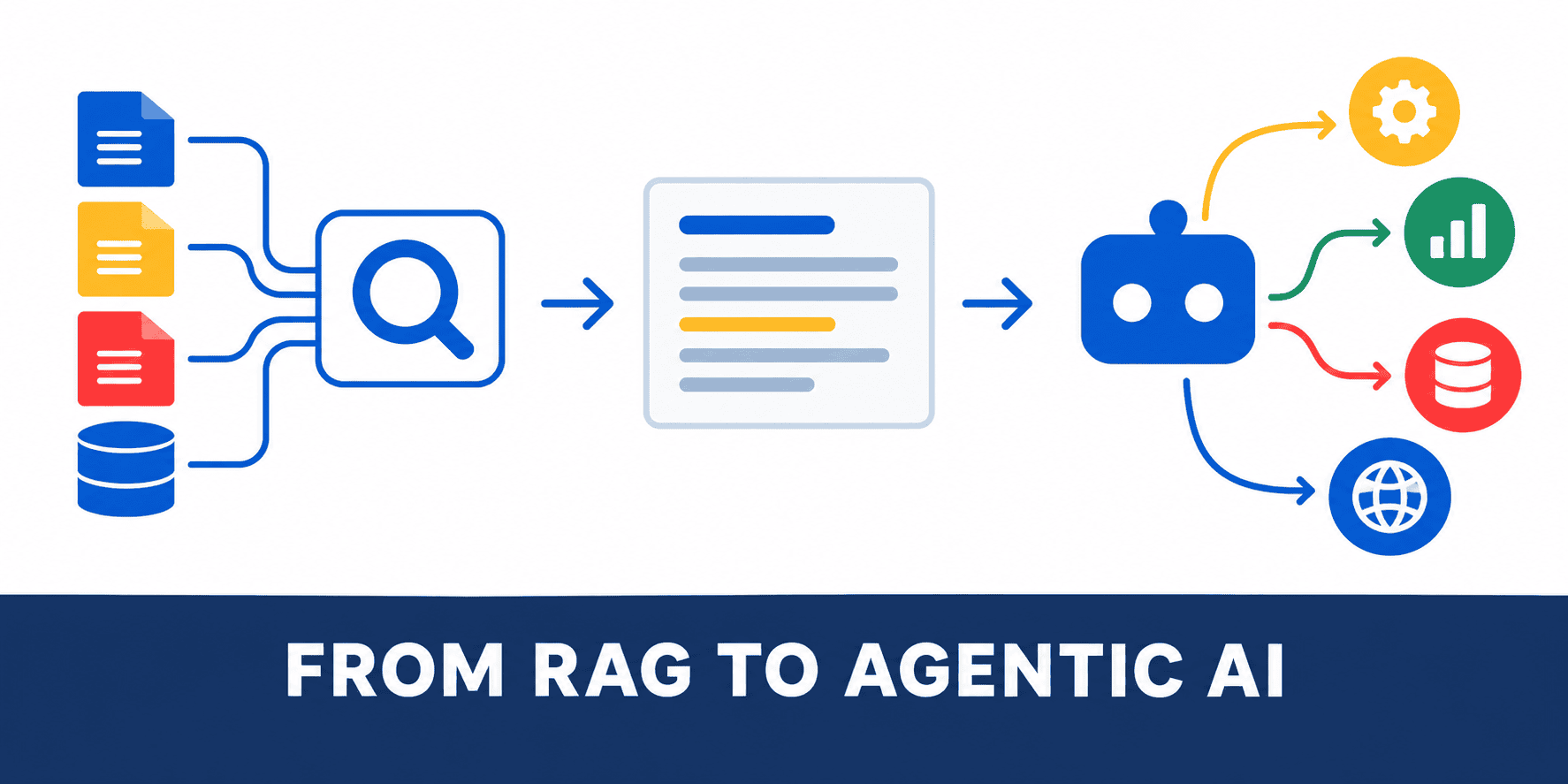
Evolving AI: Lessons from Building Intelligent Enterprise Systems
Three generations of intelligent retrieval systems is a long arc to trace, and the lessons are tangible. Each iteration tackled a constraint the previous one couldn't crack, which is exactly how progress should feel: deliberate, not chaotic. This is a story about persistence in engineering, and it's worth reading. For those curious about the underlying mechanics, our guide to distributed training offers a practical entry point. But start here, where the real-world friction meets the fixes.

Google Cloud and Accenture team up to accelerate enterprise AI adoption
Google Cloud's new Accenture partnership is a calculated bet that forward-deployed engineers, not just flashy models, will close the AI adoption gap. It's a pragmatic move, acknowledging that deployment bottlenecks are where good ideas stall. Pair this with our guide, "Verify Your AI's Understanding: A Simple Check for Tax Season," and you'll see the same theme: execution is the real differentiator. This isn't about hype; it's about showing up where the work happens.

As AI adoption grows, securing every tool and agent becomes essential.
HiddenLayer just locked in $100 million in funding, and the timing says everything about where enterprise security is heading. As companies race to deploy AI agents, they're discovering that the tools and add-ons those agents rely on are wide open. That's the gap this money is meant to close. It's a smart bet on a real pain point. For anyone tracking how quickly AI adoption outpaces protection, this move signals that securing the ecosystem, not just the model, is the next frontier.

See how forward-deployed engineering turns enterprise AI into lasting value.
Forward-deployed engineering is where enterprise AI actually learns. The pitch is familiar: an engineer on-site, a workflow encoded in weeks, a demo that works on real data. The real test comes later. Does the next deployment start with more product and fewer unknowns, or just another services team? We see FDE as a disciplined learning loop. Every engagement should leave behind reusable capability, not just a satisfied customer. That compounding is what separates a product that understands from a company that simply delivers.

Discover how AIR empowers safer AI agents with continuous skill vetting.
AIR has raised $50M to tackle a question every company will soon face: which AI agents are running, and can you trust what they're using? The platform discovers those agents, continuously vets their skills and add-ons, and blocks unwanted behavior. That's the kind of guardrail the moment demands. As more teams deploy autonomous tools, like the orchestration work Google recently open-sourced with AX, staying accountable becomes the real differentiator. This funding says oversight isn't optional; it's the next step in responsible AI adoption.

Empower autonomous agents with a clear identity before they act
AI agents are entering the enterprise workforce, and they need their own identity before they ever reach a gateway. Authentication alone won't cut it anymore. Once an agent starts reasoning, invoking tools, and coordinating across systems, the real question shifts from "Who are you?" to "What are you actually doing?" Runtime trust is the new security mindset, continuously validating behavior during execution. It's a practical evolution, and for deeper groundwork, our guide to distributed training algorithms offers useful context on the underlying systems.

A billion-dollar bet on AI chips signals a shift in infrastructure strategy.
Lambda just borrowed $1 billion to buy more Nvidia chips, leasing them to Microsoft. That is a heavy bet, and it signals how capital-hungry the AI boom has become. We are watching a pattern here: the infrastructure race is not slowing down, and the cost of entry keeps climbing. For teams exploring AI-native tools, the takeaway is practical. This is not about hype; it is about who can sustain the buildout. Meanwhile, our coverage of Nscale's $3.36B raise shows a similar appetite for scale.

The hidden risk in AI is not agents but the chaos between them
The real risk in enterprise AI isn't a rogue agent. It's the tangled web between a hundred of them, each quietly calling APIs and triggering handoffs no human approved. That complexity compounds faster than your governance can track it. Gravitee's Rory Blundell makes a sharp case: identity alone won't save you, and monitoring isn't enforcement. The fix is building visibility and control into the chain itself.

Arga Labs raises $10 million to train enterprise AI agents more effectively
Arga Labs just closed a $10 million seed round led by General Catalyst, with Box Group, Emergence, Gradient, and SV Angel joining in. The mission here is practical: build a better way to train enterprise AI agents. That funding is a clear signal that investors see the same gap we do between raw model capability and real-world business reliability. Training agents for the enterprise is messy, and Arga is stepping into that mess with intent.
Navigate Your Enterprise AI Future with Clear Data Leadership
The questions we ask about data and AI leadership now will shape how enterprises actually adopt these technologies. If you're responsible for turning strategy into reality, this conversation cuts through the noise. It's not about hype; it's about making practical choices that stick. We've been exploring similar tensions elsewhere, like in our piece on verifying AI understanding, which underscores why clarity matters. So, step in. The answers won't wait, and neither should you.

Your Slack bot just got permission to read the whole room
Claude Tag now reads the full Slack conversation, not just isolated messages. That small technical change carries a big idea: AI works best when it's part of the team, not a tool you visit. Anthropic calls this "multiplayer AI," and Scott White argues it's the shift from personal assistant to company chief of staff. It's a bet that context, not intelligence, is the real bottleneck. We're watching that thesis get tested in real time.
From isolated context to shared knowledge: the next step for enterprise AI
Enterprise AI agents are only as reliable as the messiest documents behind them. Most teams treat knowledge as application-specific context, building separate pipelines for each assistant. That works for isolated copilots, but it fractures as agents multiply. Inconsistencies spread, changes propagate unevenly, and teams rebuild the same retrieval infrastructure repeatedly. These are knowledge management problems, not context engineering ones. The fix is architectural: manage knowledge once, as shared infrastructure, and publish reusable representations for every agent.

Explore how Cloudflare OS transforms enterprise workflows with grounded AI and open tools
Cloudflare OS takes a different path by open-sourcing an AI platform built on a capability-based model, letting enterprise teams produce work artifacts grounded in their own knowledge and connectors. It automates repetitive workflows with an eye on token costs, using AI assistance only where needed, and supports building personal, shareable work software within a secure sandbox. That is a practical, human-centered approach to complex use cases. For more on scaling such efforts, our piece on modernizing APIs with architecture as code offers a useful parallel.

Fickle enterprise loyalty signals a shift in how AI spending flows.
New data shows OpenAI gaining ground with business users as Anthropic holds its own, but the real story is how willingly companies switch between them. Each new model release prompts another flop, and that volatility should worry both investors. Enterprise AI spending looks less sticky than the hype suggests. For a deeper look at how these tools shape user trust, check out "Talking to My AI Clone Taught Me to Question the Tech." The takeaway: loyalty is provisional when every lab keeps raising the bar.

Turn a single Slack message into an AI agent team that works for you.
Typing a message to spin up an entire team of AI agents, each with its own avatar, skills, and memory, sounds like the kind of thing that usually takes weeks of engineering. NanoClaw's new Slack integration makes it a single prompt. More importantly, it keeps the infrastructure on your hardware, so your data stays yours. This is how persistent, self-hosted digital coworkers become practical. If you're wrestling with how LLMs handle structure, our piece on paragraph navigation is worth a look.

Cognition CEO clarifies SpaceX acquisition rumor as industry competition intensifies
Cognition's CEO has pushed back on reports that SpaceX was in talks to acquire the AI coding startup, a claim that surfaced just as SpaceX moves to secure Cursor in its enterprise AI push. The denial is worth noting, though the broader race is clear: rivals like OpenAI and Anthropic are setting a fast pace, and talent is the prize. If you're tracking how AI shapes productivity, our piece on verifying an AI's understanding offers a practical angle worth exploring.