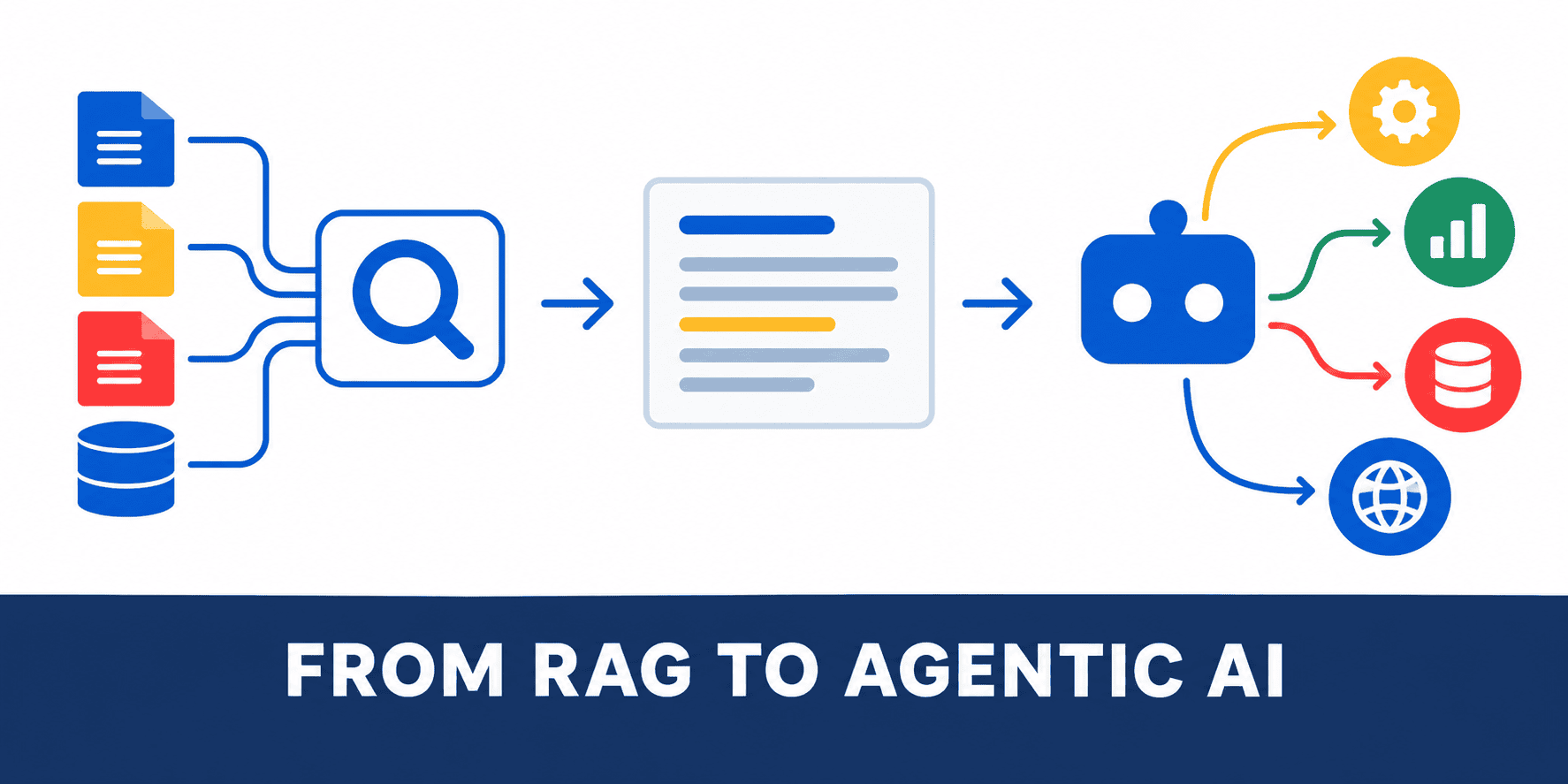
Three generations of intelligent retrieval systems, each one solving problems the one before it couldn't. That is the quiet arc of progress, and it's worth pausing on because it reveals something essential about how enterprise AI actually matures. This isn't describing a single breakthrough moment. They're describing a disciplined, often unglamorous evolution. And that's exactly the kind of honesty we need more of in a field that loves to pretend every release is a clean break with the past.
What strikes us most is the implicit lesson about compounding value. Each generation didn't just add a feature; it unlocked a category of questions the previous system couldn't even formulate. That's not incremental improvement. That's architectural learning. For anyone building with large language models, this mirrors the shift from learning how to prompt a model to understanding how to structure the entire system around it. If you're looking for a deeper handle on that infrastructure layer, our guide to Unlock LLM Training: A Practical Guide to Distributed Algorithms walks through the distributed thinking that makes such systems possible. And when you start to consider how these models navigate the granular space of tokens, the piece on Exploring Paragraph Structure: How LLMs Navigate Token Space offers a useful mental model for why retrieval quality varies so much depending on context. The through-line is that every layer matters, from the raw training dynamics to the final user-facing retrieval.
Our take for readers who are currently wrestling with their own enterprise AI deployments is this: stop treating your system as a finished product and start treating it as a learning organism. The experience suggests that the real value emerges when you institutionalize the feedback loop between generations. Don't just log failures. Ask what kind of failure it is. Was it a gap in retrieval, a misunderstanding of intent, or a limitation in the underlying model? Each answer points to a different next step. That's a practical, quotable takeaway: *The maturity of an intelligent system is measured not by the questions it answers well today, but by the quality of the questions it learns to ask tomorrow.*
The open question we'd leave you with is about organizational capacity. Most teams can build one good system. Far fewer can build three successive generations, because each iteration demands that you dismantle what worked and rebuild with new constraints. The author clearly did that, and the lesson is that competitive advantage now lies in that willingness to obsolete your own work before a competitor does. For practical guidance on getting started with the tools that enable this kind of iterative work, our piece on Unlock ChatGPT for Work: A Practical Guide to Getting Started is a useful entry point. The detail to watch is whether your next project treats AI as a feature to add or as a system to evolve. Only one of those paths leads to compounding returns.