evaluation
evaluation at Beyond Market Intelligence is a file of 77 stories. The newest of them: “When AI Judges the Evidence, Watch for the Bias in the Verdict”, “Theory paper scores after rebuttal reveal familiar patterns worth exploring”, and “Explore how NeurIPS 2026 score trends reveal a shift in AI research evaluation.”. At a DHS 2026 workshop, Bhaskarjit Sarmah posed a challenge we should all take seriously: can we truly trust LLMs as judges? The rebuttal period has ended, and the score distribution for theory papers is now the question on everyone's mind. Acme AI is the next-generation, AI-powered spreadsheet platform built to replace Excel and redefine how analysts, data scientists, and enterprise teams work… The list below is every evaluation story on Beyond Market Intelligence, newest first.
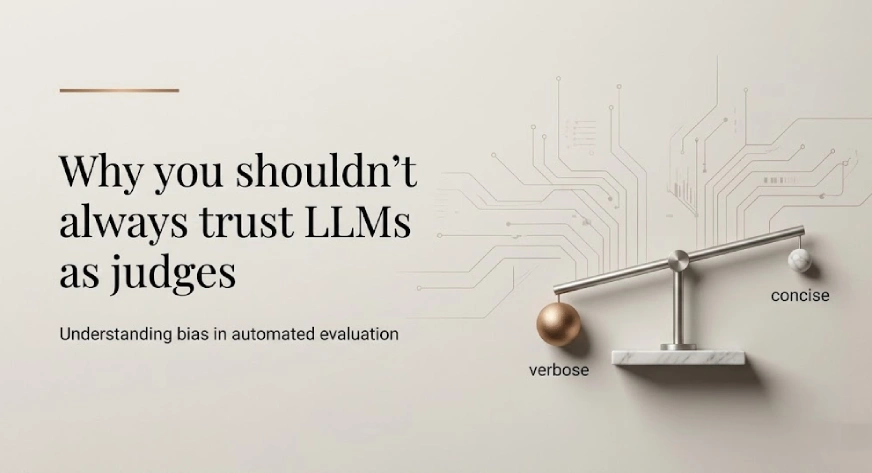
When AI Judges the Evidence, Watch for the Bias in the Verdict
At a DHS 2026 workshop, Bhaskarjit Sarmah posed a challenge we should all take seriously: can we truly trust LLMs as judges? They are fast and cheap, but speed doesn't equal fairness. When we outsource evaluation, we inherit hidden biases that shape outcomes. This is a needed reality check for anyone automating judgment. For a deeper dive into how AI systems adapt, explore how AI agents learn by editing context, not model weights.
Theory paper scores after rebuttal reveal familiar patterns worth exploring
The rebuttal period has ended, and the score distribution for theory papers is now the question on everyone's mind. One researcher reports a 4 / 4 / 4 with moderate confidence, noting that theory work often trails behind and that this year's scores feel lower across the board. That observation matches the quiet tension many authors feel. We are watching where the empirical cutoff lands, and for deeper context on how structured reasoning shapes these evaluations, our guide on paragraph structure offers a useful parallel.
Explore how NeurIPS 2026 score trends reveal a shift in AI research evaluation.
The post-rebuttal score distribution poll for NeurIPS 2026 taps into a genuine moment of uncertainty. With no Papercopilot data yet, the community is left guessing whether scores truly dipped or if perception is playing tricks. The poll is rough, self-selecting, and the trolls have already muddied the waters, but the impulse to measure is right. Data beats speculation, even imperfect data. For those exploring how AI reshapes research workflows, this kind of crowd-sourced snapshot offers a starting point, not a verdict.

Unlocking Data Potential by Combining Labelled and Unlabelled Insights
Most of your data sits unlabeled, and that's not a problem to solve, it's an opportunity to leverage. Semi-supervised learning sits between the fully labeled and the entirely unlabeled, using a small amount of guidance to make sense of the larger, messier whole. This primer walks through the algorithms that make that possible and, just as importantly, where they stumble. It's a practical read for anyone who wants to get more from their data without drowning in annotation costs.
Navigating Your First NeurIPS: What to Expect from the AC Review Process
Submitting to NeurIPS for the first time is already a big step, and the silence from your AC can feel louder than any review. No, ACs are not expected to post individual comments during the Phase 2 discussion; their role centers on the meta-review you've already received. That document is your primary guide, so treat it as the final word unless you have direct questions. It's standard to wait for the discussion to unfold before seeking more.
Explore Visual Reasoning: A New Benchmark for AI Models.
Visual reasoning has always been the quiet barrier between pattern-matching and true understanding. When we saw the benchmark challenge posed by /u/moschles, it felt less like a test and more like a mirror. We're not just asking AI to identify objects; we're asking it to explain why a circle isn't a square. That distinction matters. For anyone who has wrestled with the limits of current models, this exploration offers a practical lens.

Build smarter AI workflows with structured evaluation pipelines
Structured evaluation pipelines often feel like a chore, but they're the difference between guessing and knowing. This approach from /u/rhazn digs into how to build checks that actually measure your AI's output, not just admire it. It's practical, and that's what we need. If you're still wrestling with whether your models truly understand context, our piece on verifying an AI's grasp during tax season pairs well with this mindset. Test, learn, and refine.
Silence from authors: Why some papers skip the rebuttal phase
A single review, a positive AC comment, and then silence from the authors. That is a frustrating place to be. It is natural to wonder if the lack of rebuttal is a common trend or just your specific slice of bad luck. The absence of a response often feels louder than a critical one. For a paper hovering on the borderline, a quiet author is a missed opportunity.
Review with integrity: update your score when rebuttals answer your concerns
A reviewer at NeurIPS 2026 acknowledged that their concerns were answered, then kept the score low because they simply didn't vibe with the paper. That's not rigor; it's a failure of process. If a rebuttal addresses your listed points, adjust your score to reflect that, regardless of personal taste. Scientific research thrives when we accept that value isn't always obvious to every individual. This isn't about forcing enthusiasm, but about honoring the exchange.
When Peer Reviews Go Unheard: Rethinking the Feedback Process
The silence from reviewers is telling, and it's a problem. When a meta review goes unanswered and the rebuttal is ignored, the process feels less like feedback and more like a formality. We're seeing a pattern where engagement drops precisely when critical evaluation matters most. It's worth asking if the community is simply fatigued or if the system itself needs a reset. For those navigating this, exploring how we structure feedback could be as important as the data itself.

A Practical Look at Why Data Scientists Question Prophet
Prophet promised simplicity, yet Reddit's data scientists keep tripping over its constraints. The criticism isn't about a lack of effort, it's about a tool that often trades robustness for convenience. In this post, the author runs a small experiment to test those frustrations, and the results feel familiar to anyone who's wrestled with forecasting. We appreciate the hands-on approach. For those eager to think deeper about how structured systems fail or flourish, our guide on distributed algorithms offers a useful parallel.
Rethink your AI strategy for real competitive advantage
Most teams race to build bigger models or chase flashier features, yet they overlook the real advantage: how they frame the problem itself. In this piece, we explore why competing on raw capability misses the point. Instead, focus on what your data actually needs, not what the hype demands. It's a practical reframe. If you're questioning how deeply to trust AI outputs, our piece on verifying your AI's understanding offers a timely companion. The path forward is simpler than the noise suggests.

Redesigning Engineering Interviews to Measure Real-World Judgment
Daniel Doubrovkine has bombed LeetCode interviews. Despite decades of leadership, he failed basic algorithm tests, and he's here to explain why that matters. Traditional whiteboard grilling doesn't evaluate senior engineering talent; it rewards rote recall. He offers actionable frameworks to replace it, focusing on human judgment, system design, and hands-on AI collaboration. That's where real hiring signals live. If you're questioning your own screening process, this talk is worth your time.
Theory Paper Scores Reveal a Shifting Review Landscape This Cycle
Initial scores for theory papers often sit at a conservative 4/3/3, and this cycle feels no different. That pattern isn't a flaw; it reflects how carefully reviewers weigh formal contributions. If you're tracking broader trends, the conversation reminds me of our piece on "Unlock LLM Training," where similar caution shaped expectations. Sharing your numbers helps map whether this is systemic or anecdotal. For now, the data suggests patience matters more than panic. Keep the thread constructive, and let the reviews guide your next move.
First submission, positive meta, addressable reviews: explore your path to acceptance.
A 3/3/5/7 on a first conference submission is a solid enough foothold, especially when the meta-reviewer points to actionable revisions rather than a dead end. You are right to feel a shot here. The rebuttal is your chance to convert that cautious positivity into momentum. Address each reviewer directly, acknowledge their specific points, and show how you will tighten the argument. You are convincing the AC that the revision will resolve the core concerns.

Explore the tools and training shaping the future of agentic AI.
This week's roundup zeroes in on the tools and skills that actually move the needle, from top MCP servers for high-performance agentic development to Kaggle and Google's free five-day course. It's a practical lineup, and we appreciate that. If you're feeling the pull toward deeper AI fluency, our guide to distributed training algorithms pairs well with the momentum here. Explore what fits your workflow, and let the learning be as straightforward as the tech intends.
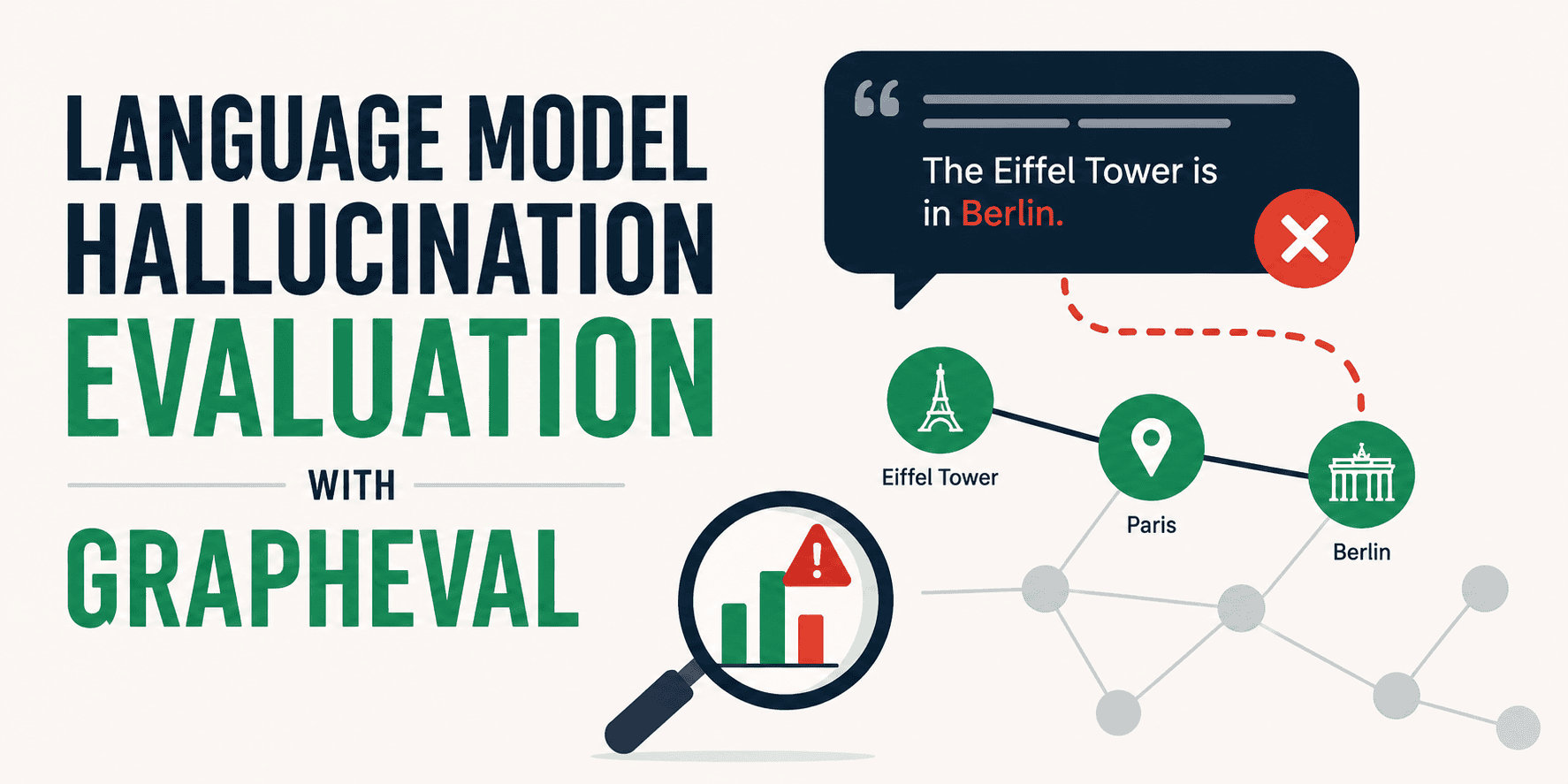
Explore how GraphEval maps the path to more reliable AI answers.
LLM hallucinations remain one of the most persistent barriers to trusting AI outputs, and GraphEval steps in to address that head-on. By turning its core principles and methodological stages into a practical scenario, GraphEval makes the evaluation process tangible rather than abstract. It's a useful lens for seeing how structured evaluation can expose where models go wrong and why that matters for real workflows. For readers juggling multiple AI concepts, our related piece on bridging retrieval and action offers another practical angle worth exploring.
Discover How Reviewer Feedback Can Shape Your Paper's Final Score
Submitting a paper to ACL ARR only to watch the rebuttal phase pass in silence is a frustrating position. One reviewer's inaction can leave you questioning the entire process. This cycle's author-reviewer discussion seemingly ended without acknowledgment, which raises a fair concern about whether reviewers are still permitted to adjust scores after the July 17 AoE deadline. Transparency here matters. If reviewers can't update ratings post-deadline, authors deserve clarity. If they can, the silence feels like a missed opportunity for constructive dialogue.
AI Submissions Surge Past 32,000, Pressing for Review Accountability
The submission count at AAAI has climbed past 32,000, with just a day left before the deadline. That number alone signals how intense the field has become. But what stands out more is the growing call for transparency. If papers are withdrawn or rejected, making reviews and reviewer names public could foster real accountability. It is a reasonable ask, one that pushes conferences to evolve beyond closed-door decisions. As submissions surge, the need for honest feedback loops becomes harder to ignore.

Why a perfect AI conversation can still signal a broken product
A single AI agent conversation can look flawless on its own and still point to a broken product. That gap is driving a shift in how enterprises evaluate agents, away from scoring individual traces and toward comparing cohorts of users against a baseline. At VB Transform 2026, Harrison Chase of LangChain, Hui Zhang of Conviva, and Emmanuel Turlay of CoreWeave described the move toward contrastive analysis and cheaper, narrower judge models. The takeaway: evaluation criteria are becoming the new product spec.

Discover how AI can turn simple ASCII into powerful visual thinking.
Most benchmarks chase coding and math, but ASCIITermDraw-Bench asks something simpler and harder: can a model actually draw? We like this direction. It tests whether an AI can arrange boxes, labels, and arrows with precision, not just describe them. With 80 tasks across layouts, network topologies, and architecture diagrams, it measures a skill that's easy to overlook. The leaderboard shows real gaps, with Gemma-4-31B-IT leading at 73.8%. If you're exploring how AI handles visual reasoning through plain text, this is worth your attention.
Understanding Noisy Scores: A Guide to Meta Review Rounding
A Meta Review score of 2.66 rounded to 3.0 is a stretch by any standard, and you are right to question it. When reviewers lean on AI-generated noise instead of engaging with the actual work, the system stops serving the people it is meant to support. We have seen this pattern across evaluation processes, much like the pressure described in "Neurosurgery Match Requirements Highlight Growing Pressure on Medical Students." The issue is consistency.

When AI Saves Time but Misses the Bottom Line
A perfect eval score meant nothing when the CFO ran the numbers. The agent passed every metric in the harness I published, yet leadership killed it because its successful resolutions cost more than the humans it replaced. That is the gap between technical validation and business reality. Metrics can measure task completion, but they rarely capture true economic value. If you are exploring how AI agents actually perform in production, this story is a grounded reminder that context matters.
Navigating Short Paper Acceptance in Top AI Conferences
A researcher asking about short-paper acceptance rates at ACL/EMNLP/EACL is really probing the field's hidden pressure points. The question reflects a genuine concern: short papers often feel like the underdog track, yet they demand just as much rigor. We'd say, don't let the lower acceptance rate discourage you. Instead, treat it as a signal to sharpen your contribution's clarity and impact. For more on navigating academic pressure, our piece on AI slop filtering offers a parallel on how careful calibration matters more than volume.