experiment
19 stories filed under experiment on Beyond Market Intelligence. The newest of them: “A test of 17 AI agents across 7,700 poker hands shows what local models can do”, “Smarter AI Memory Saves 20x Cost Without Sacrificing Performance”, and “A 1D physics solver wins, but neural networks take the lead in 5D”. Seventeen AI agents went head-to-head across 7,700 poker hands, and the results reveal exactly what local models can achieve today. Pasting an entire chat history costs 20 to 31 times more than a smarter memory system, yet delivers no better results. Acme AI is the next-generation, AI-powered spreadsheet platform built to replace Excel and redefine how analysts, data scientists, and enterprise teams work… The list below is every experiment story on Beyond Market Intelligence, newest first.

A test of 17 AI agents across 7,700 poker hands shows what local models can do
Seventeen AI agents went head-to-head across 7,700 poker hands, and the results reveal exactly what local models can achieve today. This kind of test moves beyond theory, showing real performance where it matters. For anyone weighing the trade-offs between local and cloud-based AI, the findings are worth exploring. Deeper context awaits in our related piece, "Finding Your Balance Between AI Effort and Real Results."
Smarter AI Memory Saves 20x Cost Without Sacrificing Performance
Pasting an entire chat history costs 20 to 31 times more than a smarter memory system, yet delivers no better results. That's the finding from testing four ways to give an AI assistant memory. The obvious approach, dumping everything in, was the worst value. For anyone building AI tools, this is the kind of practical insight that saves real money. It echoes the collaborative thinking behind our coverage of vote-based federated selection, where institutions choose features without sharing raw data.
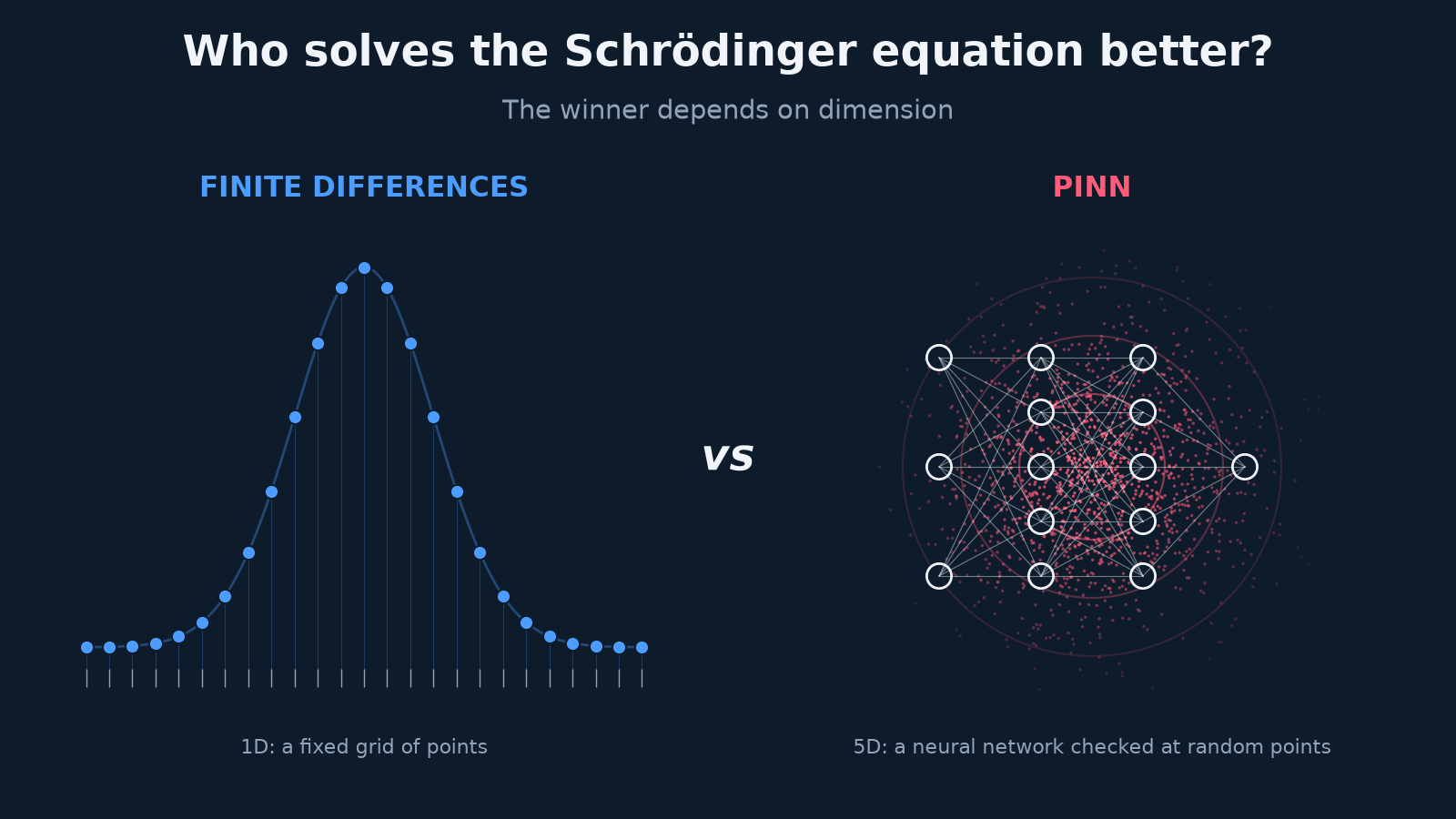
A 1D physics solver wins, but neural networks take the lead in 5D
A 1D physics solver wins; in 5D, neural networks take the lead. We put a physics-informed neural network against a plain finite-difference solver twice, and the winner changed. That shift tells us something important about when AI-powered methods actually outperform classical numerical approaches. It's not a blanket victory, it's conditional, and understanding those conditions matters. For more on how AI adapts to complex environments, see our piece on two AI copies keeping drones in sync with 94% less data.
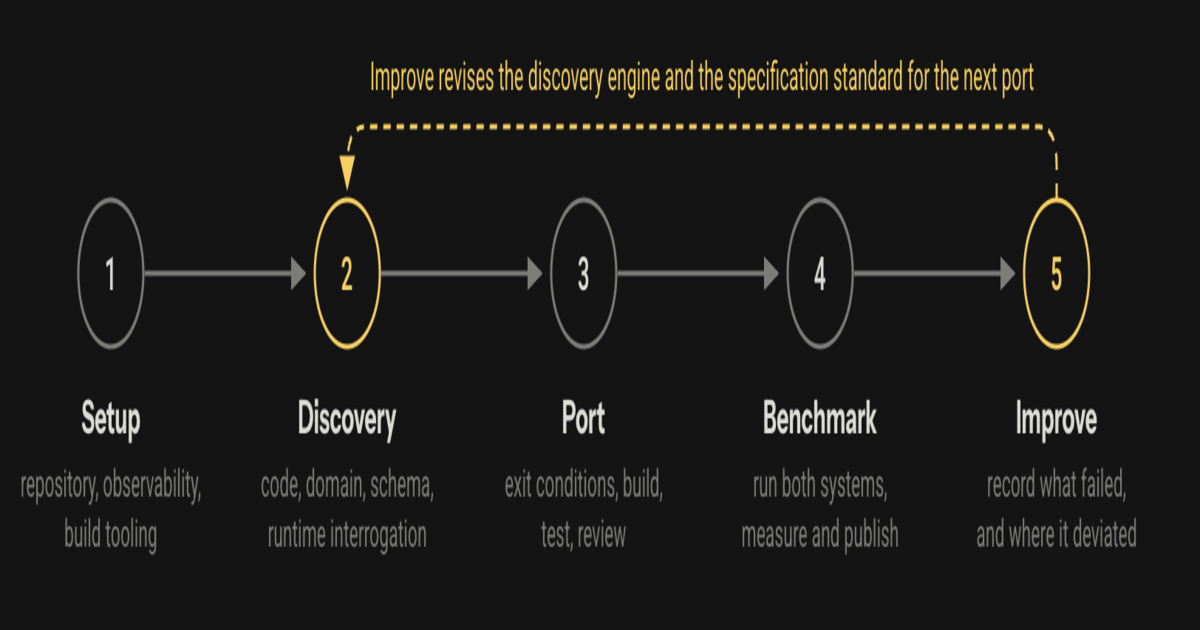
How Spec Design Shapes AI Performance Across 65 Open Source Projects
Spec structure matters more than most teams assume. Akka ran 65 open-source projects through a controlled experiment on AI-assisted software porting, measuring how specification design, context, model choice, validation, and guardrails, shifted outcomes in time, tokens, code size, test parity, and performance. The variation across models and project types was substantial. It's a practical reminder that how we frame a task directly shapes what AI delivers. For a deeper look at how models process context, see our related piece on hash-table-based copy layers.
Share your data projects and discover collaborators in our community
If you're building something with data, you need people who get it. Share your projects, startups, or collaboration needs here. Be clear about payment and pricing for any products or services. No link shorteners, no auto-subscribe links, and no abuse of trust, that gets you banned. This thread stays alive until the next one, so keep posting. It's an experiment. If the community doesn't like it, we'll cancel it.

Anthropic's biology lab tests the promise and peril of AI-driven science
Anthropic is now running a lab that runs biology experiments, which puts the company at the center of two promises at once. AI leaders have long claimed this technology will cure human disease, while Anthropic's own researchers have warned it might end us. That tension is worth sitting with. It is not a contradiction; it is the actual shape of the work. If you are trying to make sense of how AI systems handle complexity, our piece on paragraph structure offers a useful parallel.
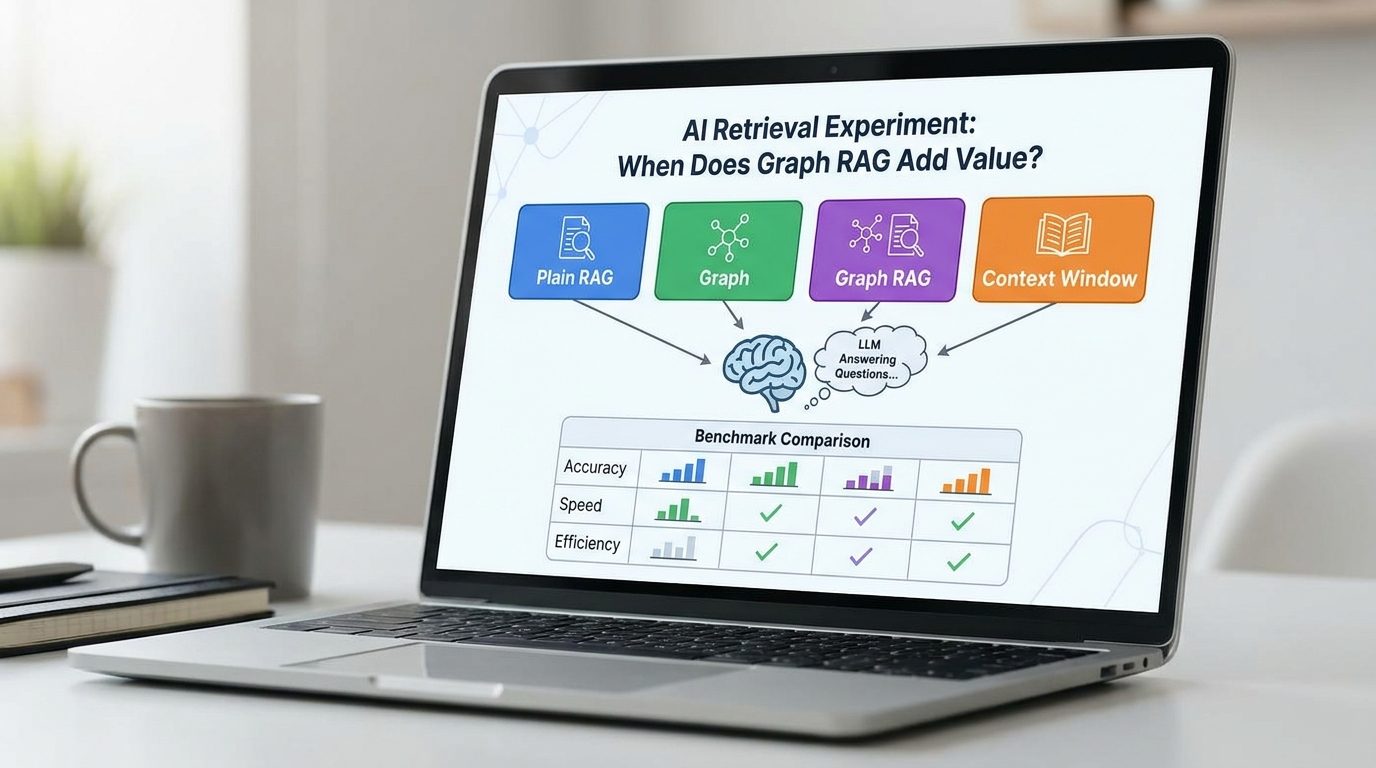
Four AI Retrieval Methods Benchmarked for Real-World Trade-offs
Four retrieval architectures, one laptop, and a single set of documents. That's the setup for this hands-on experiment, which benchmarks plain RAG, graph RAG, and a frontier model's context window against the same questions. The results offer a practical look at when graph RAG earns its complexity. For those exploring how AI structures understanding, our related piece on verifying AI comprehension in tax season is a natural next step. The trade-offs here are worth your attention.

Discover how AI redefines your spreadsheet workflow through a simple experiment
When I ran Fable against Astra, the gap between them wasn't subtle. Fable handled the workflow with a fluidity that felt natural, while Astra demanded more patience. It's a reminder that AI tools aren't interchangeable; they carry distinct personalities. For anyone weighing similar choices, I'd point to our earlier piece on the Forrester function. It's a different lens, but it reinforces how small mathematical insights can sharpen your evaluation of these systems. The experiment didn't just compare outputs; it exposed what each model prioritizes.

The Equation That Reveals Bagging's Limits and Why Randomness Matters
Bagging has a ceiling, and no amount of trees will break it. The equation explains why random forests need that extra layer of chaos to keep improving. It's a sharp reminder that more isn't always better when the mechanism stalls. The experiment makes the point concrete, turning theory into something you can see. If distributed systems intrigue you, *Unlock LLM Training* pairs well with this mindset, though it stands firmly on its own.

The future of roof-integrated solar lives beyond one company's setback
Tesla's solar roof was an experiment that never truly gained momentum, and its quiet fade from the company's priorities speaks volumes. That doesn't mean the concept of roof-integrated solar is finished. It means execution, not ambition, was the stumbling block. We're not mourning the product; we're questioning what comes next. For a glimpse of how Tesla is redirecting its energy focus, our piece on the Semi's production ramp-up offers useful context. The lesson here isn't abandonment. It's adaptation.

TikTok tests safety limits, sparking questions on user protection
TikTok's experiment to disable a safeguard designed to shield users from harmful content raises a pointed question: how far is too far in the pursuit of engagement? The company wanted to see if the feature made the app less compelling, but the trade-off feels steep. That's a risky calculation, and lawmakers are right to press for answers. It's a familiar tension in tech, one that echoes in our coverage of Meta's recent ad reversal.

Why Smarter Agent Networks Use Fewer Connections
More connections don't automatically mean better outcomes. In a controlled experiment across 50 runs, recovery held steady even as relationship density climbed from 20% to 100%. What shifted was behavioral: the share of edges actually used dropped sharply. That gap between configured and used connectivity is where the real insight lives. It's not about building denser graphs; it's about designing for the connections that matter.

Explore remote SQL execution with three concurrent DuckDB servers.
DuckDB is known for being fast, but what happens when you push it beyond a single machine? In this experiment, the team behind Quack ran SQL concurrently across three remote servers to see if the database could handle the pressure. The result is a practical look at distributed execution that feels both ambitious and grounded. It is not about hype; it is about what actually works. If you are exploring how AI-native tools handle real-world data challenges, this is a worthwhile stop.
Reproducible research needs more than promises: it needs code.
Twelve papers reviewed this year, and only one came with full code. That's not a fluke; it's a pattern. One reviewer's experience mirrors a systemic incentive problem: hiding code costs nothing, while sharing it invites scrutiny that can sink a paper. We should be demanding reproduction-ready submissions, not treating them as optional. If we want quality and reproducibility, we need real penalties for non-compliance.
Why stakeholders expect zero errors from models designed to improve decisions
There's a moment every data scientist knows well: the model performs safely in validation, stakeholders sign off, and then one wrong call triggers a cross-examination. It's frustrating, but it's also revealing. The expectation of a 0% error rate isn't about math; it's about trust and how we frame machine learning's limits. We never promised perfection, yet we often present models as if they're infallible. That mismatch is worth examining.
Discover your next data tool in our community showcase thread
Posting your own work here is a straightforward way to share what you are building without cluttering the main feed. We see the value in that directness, and this thread gives you a clear space to do it. Include your pricing or payment terms up front so there is no guesswork. Keep it simple, and avoid any link shorteners or auto-subscribe traps. Trust is the currency here, and breaking that hurts everyone.

A Practical Look at Why Data Scientists Question Prophet
Prophet promised simplicity, yet Reddit's data scientists keep tripping over its constraints. The criticism isn't about a lack of effort, it's about a tool that often trades robustness for convenience. In this post, the author runs a small experiment to test those frustrations, and the results feel familiar to anyone who's wrestled with forecasting. We appreciate the hands-on approach. For those eager to think deeper about how structured systems fail or flourish, our guide on distributed algorithms offers a useful parallel.

Move from Model Logic to Context Engineering for Faster Root Cause Analysis
The debate over root cause analysis is shifting. Engineers increasingly argue that modern LLMs can reason through the problem effectively, provided the context is prepared correctly. The real challenge, they say, lies in the pipelines that correlate telemetry. A Coroot experiment across eleven models offers early evidence for this claim. It is a pragmatic reframing of where the work actually happens. For those exploring how AI understands complex systems, this pairs well with our earlier piece on questioning AI's limitations.

Two AI patterns emerge for autonomous code debugging and system design.
What happens when the thing building the code is also the thing testing it? In this experiment, a code assistant had to design an agentic system using LangChain4j documentation. The result was a framework that writes, tests, and debugs code on its own. The supervisor and workflow patterns each brought distinct trade-offs between flexibility and speed. It's a practical look at autonomous development. If you're exploring how AI designs its own systems, our piece on when AI designs its own hardware pairs well with this.