financial modeling
Beyond Market Intelligence keeps financial modeling in one place: 201 stories so far. The section currently leads with “Your AI agents have the data. Now they need your trust.”, “Enterprise agents promise more than most are delivering today”, and “Manage AI spending with the same confidence you secure your passwords.”. Confident and wrong. The gap between ambition and reality defines enterprise agent orchestration today. Acme AI is the next-generation, AI-powered spreadsheet platform built to replace Excel and redefine how analysts, data scientists, and enterprise teams work… The list below is every financial modeling story on Beyond Market Intelligence, newest first.
Your AI agents have the data. Now they need your trust.
Confident and wrong. That's the failure mode now stalking enterprise AI, 57% of organizations have traced a confident but incorrect agent answer back to missing or inconsistent context. The infrastructure feeding these agents is being built faster than it can be trusted. Provider-native retrieval already leads the stack, yet most enterprises are still constructing the governed semantic layer that would close the gap. The direction is clear: the context layer is the next contested tier, and agents are running ahead of it.

Enterprise agents promise more than most are delivering today
The gap between ambition and reality defines enterprise agent orchestration today. Most "agents" are single-prompt chatbot wrappers, not multi-step workflows. Success requires reliability, yet the orchestration layer runs ahead of the portfolio it should manage. The path forward is clear: consolidate, build hybrid control, and treat token spend as an engineering problem. The ambition is real, now execution must catch up.

Manage AI spending with the same confidence you secure your passwords.
Token spend is becoming the next enterprise budget crisis, and 1Password is moving to put IT and finance teams back in control. Its new AI Spend and Consumption Management capability, embedded in SaaS Manager, delivers a unified, real-time view of consumption across Anthropic, Cursor, and OpenAI. This isn't about cutting costs blindly; it's about building the visibility needed to direct AI investment toward what actually drives business value.

How Kubernetes brings order to desktop infrastructure chaos
For years, enterprise infrastructure teams have converged on Kubernetes for application deployment, reaping benefits like declarative configuration and automated scaling. However, secure desktop and application delivery—critical for remote work and regulated industries—has remained an operational outlier. Kasm Technologies addresses this split, offering a Kubernetes-native workspace platform that aligns desktop infrastructure with modern cloud practices. Explore how Kasm empowers platform teams and enhances security, as demonstrated by organizations leveraging similar strategies for AI/ML development environments.
Cheaper AI models won't fix the growing token appetite of agent systems.
DeepSeek’s recent 75% price cut on its V4-Pro model should have signaled a boon for AI developers, yet many are discovering a surprising reality: cheaper models don't automatically guarantee healthier margins. The core issue is "token amplification"—agent systems consume tokens at a rate far exceeding price declines. This fundamentally challenges the established seat-based SaaS model, where power users can inadvertently drive costs beyond their subscription fees.
When Trust in Testing Fails, Agent Autonomy Outpaces Verification
Enterprise AI adoption faces a critical evaluation gap: agents are gaining autonomy faster than companies can reliably verify their performance. A recent VB Pulse survey revealed that half of enterprises deploying AI agents have experienced customer-facing failures despite passing internal evaluations. While 66% are accelerating automation, only 5% fully trust current automated testing methods. This mismatch highlights a need to prioritize repeatability and rigorous regression testing, as demonstrated in our related article, "57% of enterprises have watched AI agents be confidently wrong."

ChatGPT Work turns your AI assistant into an autonomous task manager
OpenAI introduces ChatGPT Work, a cloud-based AI agent poised to transform how professionals leverage AI. Embedded within the flagship chatbot, this new platform moves beyond simple Q&A, autonomously managing tasks across email, Slack, and calendars using the advanced GPT-5.6 model. ChatGPT Work streamlines workflows by generating documents, spreadsheets, and even websites, demonstrating OpenAI's commitment to democratizing agentic AI capabilities – a strategy highlighted by their recent confidential SEC filing.

Google's TabFM predicts on unseen tables without per-dataset training.
Google Research’s TabFM offers a transformative approach to tabular data prediction, bypassing the traditional need for per-dataset training. This innovative foundation model treats tabular prediction as an in-context learning problem, enabling instant predictions on unseen tables with a single API call – a significant acceleration for enterprise developers. By synthesizing strengths from prior architectures, TabFM preserves data structure and unlocks scalable zero-shot prediction, potentially redefining data workflows.

Your enterprise AI strategy needs more than one interface
Enterprise AI adoption isn't about a single interface—it's about adapting AI to diverse business needs. Presented by Oracle NetSuite, this exploration reveals why assuming a universal conversational system underestimates how organizations leverage new technologies. From finance teams prioritizing accuracy to analytics groups seeking flexible data exploration, different departments require tailored solutions. NetSuite’s AI Connector Service and Model Context Protocol empower businesses to connect data securely to existing workflows, ensuring AI enhances, rather than disrupts, established operations.

From Code to Confidence: Why Enterprise AI Needs More Than Generation
The promise of AI code generation is undeniable, yet a stark reality persists: most organizations fail to translate prototyping success into enterprise-grade execution. SAP's Michael Ameling observes that 81% strategize for AI, yet only a fraction achieve operational deployment, revealing a critical gap beyond code quality. Successfully integrating AI-generated logic into complex, legacy systems demands foundational data readiness, robust governance, and a shift in developer roles—a challenge amplified by AI’s very power. Discover how to bridge this gap and unlock true enterprise value.

Slackbot now pulls your CRM data and charts directly from a chat message
Unlock a new level of productivity with Slack’s latest integration, connecting Slackbot directly to the Salesforce platform. Now, from a simple chat message, you can pull CRM data, generate insightful charts, and even send DocuSigns—all without leaving Slack. This marks a significant step toward a unified system, leveraging Salesforce’s extensive data and AI capabilities within the familiar Slack workspace. Discover how this transformative change can streamline workflows and empower your team, echoing insights explored in our recent article, "Information Theory and Ensemble Models."

Scaling AI agents demands cost discipline and security clarity
Red Hat recently explored the hidden complexities of enterprise AI agent deployment at VentureBeat's AI Impact event. Beyond the initial excitement, Brian Gracely highlighted critical challenges: escalating costs, emerging security vulnerabilities, and the need for organizational buy-in. Enterprises often overestimate their readiness, leading to unsustainable spending. Right-sizing AI models and proactive patch management are key to controlling costs and maintaining security—similar to the FinOps practices that matured cloud computing. Discover how to navigate these essential considerations for successful AI agent scaling.

Trunk Tools cuts document review by 50 days with specialized AI architecture
Construction data presents a unique challenge: most general-purpose AI models struggle with the industry’s jargon-dense, abbreviation-heavy documents. Trunk Tools addresses this by building a specialized, three-layer architecture—perception, semantics, and agents—to transform data chaos into agent-ready workflows. This purpose-built stack has dramatically reduced document review cycles from months to days and prevents costly field errors.

Why smart enterprises diversified their AI strategy before Fable 5 vanished
The recent, weeks-long outage of Anthropic’s Claude Fable 5 underscores a critical shift in enterprise AI strategy. New VentureBeat Pulse Research reveals that two-thirds of organizations have already implemented a hedging posture, blending closed frontier models with open-weight alternatives or moving workflows entirely off closed APIs. This proactive stance highlights growing concerns about vendor dependency and the need for greater control. Enterprises are actively prioritizing resilience and flexibility, recognizing that reliance on a single model carries significant risk—a lesson reinforced by the unexpected disruption.
Design AI interfaces around user intent, not just chat
The rush to integrate AI often defaults to chat interfaces, overlooking a fundamental principle of user experience: matching modality to intent. Simply because Large Language Models thrive on dialogue doesn’t mean every AI capability should be presented conversationally. Great UX prioritizes the user, adapting the interface to their context and cognitive load. Explore how shifting beyond conversational tunnel vision unlocks more intuitive and effective data interactions—as discussed further in "Users Don’t Need More Tools: They Need Seamless Integrations."

Anthropic's new Claude Sonnet 5 brings flagship power at a mid-tier price
Anthropic has launched Claude Sonnet 5, a new AI model delivering near-flagship performance at a significantly reduced cost, aiming to broaden access to powerful agentic capabilities. Priced at introductory rates of $2 and $10 per million tokens, Sonnet 5 substantially outperforms its predecessor and even rivals Anthropic’s Opus model in several key benchmarks. This strategic move precedes the company’s highly anticipated IPO, designed to demonstrate broad developer adoption and compelling cost-performance.

Google delivers faster, cost-effective image generation for enterprise teams
Google today introduces Nano Banana 2 Lite (NB2 Lite), designated Gemini 3.1 Flash-Lite Image, a significant advancement in AI image generation designed for enterprise efficiency. This model delivers images in a remarkably fast 4 seconds at a competitive $0.034 per 1,000 images. Optimized for high-throughput workflows, NB2 Lite outperforms its predecessor while offering cost savings compared to other Gemini models. Explore its capabilities now via Google AI Studio, the Gemini API, and GEAP—a practical solution for rapid prototyping and automated asset generation.
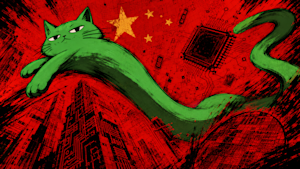
Meituan unveils LongCat-2.0, the open-source coding model built on Chinese chips
Meituan has unveiled LongCat-2.0, a 1.6-trillion-parameter Mixture-of-Experts (MoE) agentic coding model now openly available on GitHub, Hugging Face, and its platform. This near-frontier model, previously powering the anonymous "Owl Alpha" which topped OpenRouter charts, disrupts enterprise AI dominance with a permissive MIT license and a unique 1-million-token context window. Notably, LongCat-2.0 was trained entirely on Chinese-manufactured chips, signaling a potential shift in AI infrastructure. Explore its competitive pricing structure and discover how it’s reshaping autonomous software engineering, as detailed in related
Empowering small-scale farmers with AI and NASA data for smarter planning.
AgroVision DEMO offers a future-focused solution for small-scale farmers in Nicaragua, addressing the challenges of crop loss due to climate uncertainty. This free demo, built using NASA data and machine learning, empowers producers to decide what to plant and when, simulating future climate conditions to optimize planting strategies. The system assesses potential losses and gains, providing insights in real córdobas, and features an AI advisor, ARI, to guide decision-making. Explore the possibilities at [https://agrovision10.vercel.app/](https://agrovision10.vercel.

Explore how OpenAI's Sol, Terra, and Luna models could reshape your workflows.
OpenAI today initiates a limited preview of its next-generation GPT-5.6 model series—Sol, Terra, and Luna—designed to transform developer and enterprise workflows. Following coordination with the U.S. government, access is currently restricted to approximately 20 organizations. Sol, the top-tier model, excels in complex reasoning and security applications, while Terra balances performance and efficiency, and Luna prioritizes speed and cost-effectiveness. This phased release reflects a novel landscape of safety interventions and compliance parameters for enterprise buyers. "It’s not about Anthropic vs.

Small model, big impact: Liquid AI redefines on-device data extraction.
Liquid AI has released LFM2.5-230M, its smallest AI language model yet, demonstrating that architectural efficiency can outperform brute-force scaling. This 230-million-parameter foundation model excels at data extraction and is designed for on-device agentic workflows, running seamlessly on smartphones, laptops, and robotics. Notably, LFM2.5-230M surpasses models four times its size on key benchmarks, signaling a pivotal shift toward optimized AI solutions for enterprises seeking cost-effective, local processing—a strategy mirroring recent price adjustments seen in the gaming console market, as discussed in our article on Xbox.

Explore how GPT-5.5 Instant adapts to your intent with sharper, more natural responses.
OpenAI has significantly updated GPT-5.5 Instant, the default language model powering the free version of ChatGPT, delivering tangible improvements in shopping, complex instruction handling, and user intent understanding. This upgrade, now available to paid subscribers and rolling out to free users, represents a move toward a more intuitive and responsive AI experience. Developers can access these enhancements via the updated chat-latest API alias, though OpenAI still recommends the separate gpt-5.5 model for production environments.
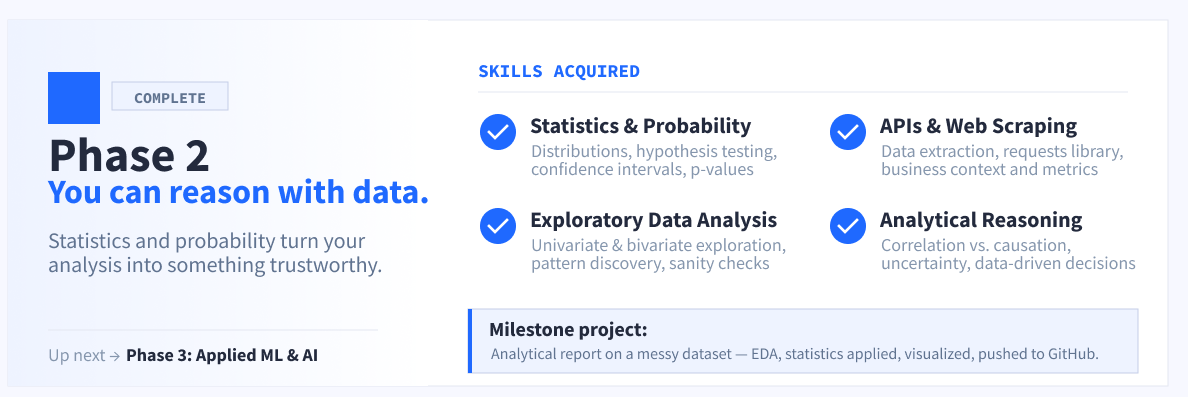
Your Practical Roadmap to Becoming a Data Scientist by 2027
## Data Scientist Roadmap for Beginners (2026–2027) Navigating the path to becoming a data scientist can feel overwhelming. This roadmap clarifies exactly what to learn, in what order, and how long it realistically takes to achieve job readiness by 2027 – whether you’re starting from zero or transitioning from data analysis, engineering, or research. We cut through the noise surrounding Python vs. R, degree requirements, and the rise of Generative AI to provide a focused, actionable plan.
Mindstone's Rebel lets AI agents remember which model fits each task
Navigating the burgeoning landscape of AI agent orchestration platforms can feel overwhelming. Mindstone’s Rebel emerges as a promising solution, offering a local-first, agentic AI operating system designed for enterprise efficiency. Released this week, Rebel utilizes a "Fair Source" license allowing teams under 100 users free adoption and customization, while larger organizations require an enterprise license.