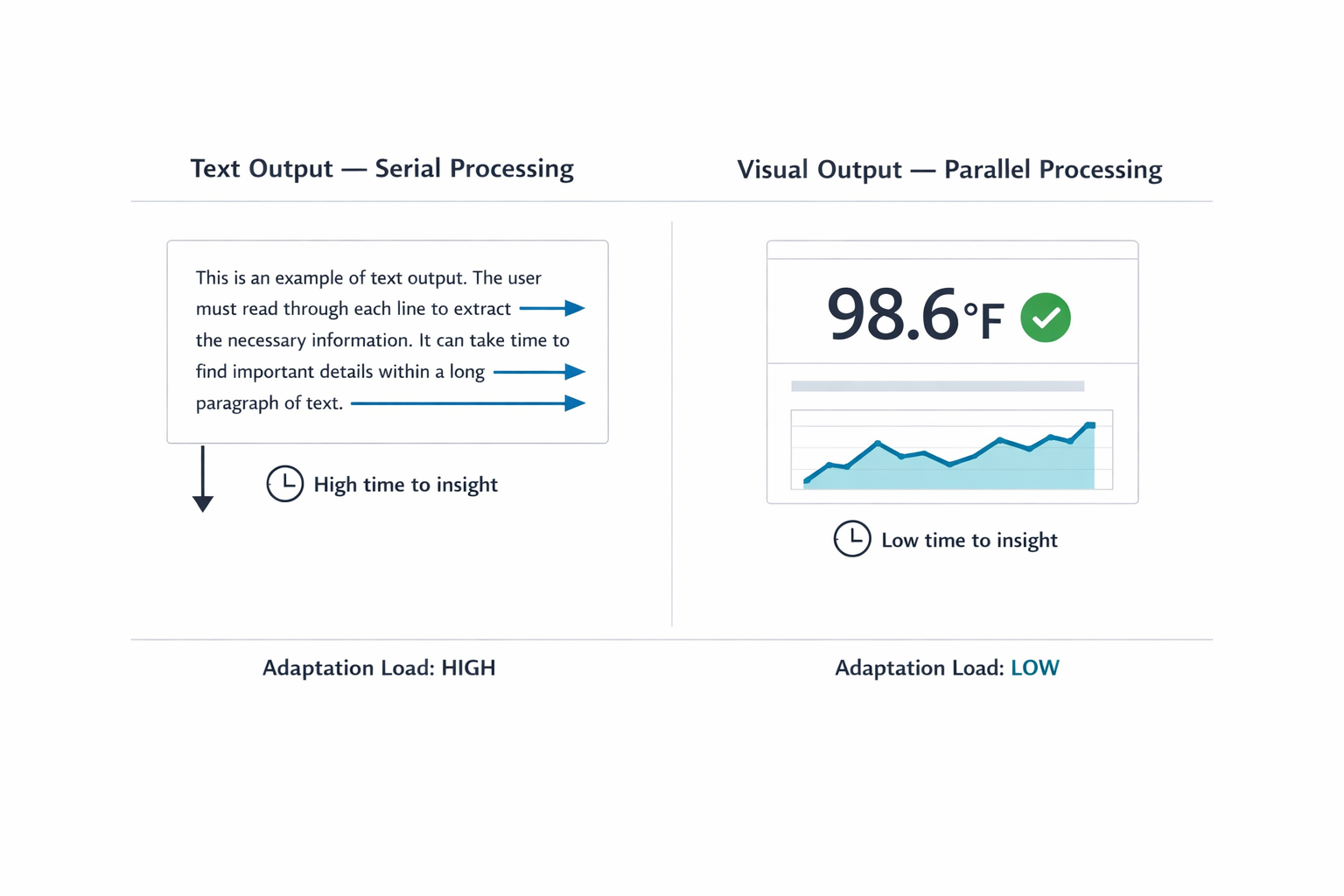
The current fervor surrounding AI has predictably led to a certain design orthodoxy: the chat interface. It's become the default, almost reflexive, choice for deploying AI capabilities, largely due to the training data underpinning Large Language Models (LLMs). However, this approach risks overlooking a fundamental principle of good UX, matching the interface to the user's task, context, and cognitive load. We've seen this tendency before; the early days of mobile apps often crammed all functionality into a single, overwhelming screen. Thankfully, design has matured. Similarly, blindly applying a chat interface to every AI interaction is a shortcut that prioritizes technological trend over user experience. This echoes a broader concern we've explored in Users Don't Need More Tools: They Need Seamless Integrations, where the focus should be on streamlining workflows, not simply adding another layer of complexity. Ignoring modality—the way users interact with a system—is a significant oversight.
The emphasis on intentionality in modality selection is crucial. A spreadsheet user, for example, might prefer a visual representation of data insights through charts and graphs rather than a text-based explanation delivered via chat. Consider a data analyst needing to quickly filter and analyze a dataset – a point-and-click interface within a spreadsheet environment would likely prove far more efficient than a conversation. The same applies to a marketer generating ad copy; a dedicated interface that allows for iterative refinement and A/B testing would be superior to relying on a chatbot. While conversational AI certainly has its place – particularly for exploratory tasks or complex troubleshooting – it shouldn't be the only, or even the primary, means of interaction. The recent policy shifts surrounding AI development, as detailed in Trump drops restrictions on Anthropic's Mythos and Fable models, add another layer of complexity, highlighting the ongoing need for adaptable and user-centric design principles to navigate a rapidly evolving landscape. Furthermore, the emergence of competitors like Etched, discussed in Nvidia competitor Etched hits $5B valuation, $1B in sales for AI chip, underscores the competitive pressure to deliver intuitive and effective AI-powered tools.
This isn't about dismissing the power of LLMs or the utility of chat interfaces. Rather, it's a call for a more nuanced and thoughtful approach to AI design. It's about recognizing that AI isn't a monolithic entity but a collection of capabilities that can be delivered through a variety of modalities. Successful AI-native tools will be those that intelligently adapt to the user's needs, offering a seamless and intuitive experience regardless of the task at hand. We're already seeing this in early iterations of AI-powered spreadsheet features – tools that suggest formulas or automatically generate visualizations within the familiar spreadsheet environment. The shift away from a one-size-fits-all chat approach represents a move towards a more mature and user-focused era of AI implementation.
Looking ahead, the challenge lies in developing design frameworks that prioritize modality selection based on user intent and cognitive load. This requires a deeper understanding of how people work, what tasks they perform, and the environments in which they operate. It also necessitates a willingness to move beyond the hype and embrace a more pragmatic approach to AI integration. Ultimately, the question isn't *whether* to use AI, but *how* to best leverage its capabilities to empower users and transform their workflows – and that begins with carefully considering the right interface for the job. Will we see a broader adoption of context-aware AI interfaces that dynamically adapt to user behavior, or will the conversational paradigm continue to dominate, potentially hindering the full potential of AI-native tools?