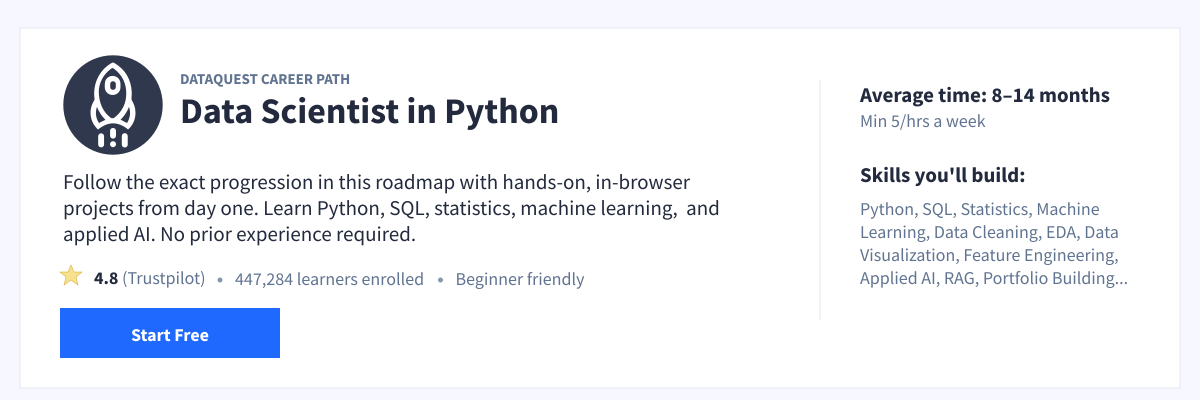
The data science landscape, already in constant flux, is about to undergo another significant shift. This “Data Scientist Roadmap for Beginners (2026–2027)” offers a valuable, and increasingly necessary, guide for those navigating the complexities of entering or transitioning within the field. The sheer volume of information and the rapid evolution of tools can be overwhelming, and this roadmap, grounded in the insights of Dataquest's Chief Technology Officer, Anna Pershyna, seeks to cut through that noise. It’s particularly relevant given the ongoing movement of AI talent, as evidenced by [AI researchers continue to leave Google for its rivals], and the evolving financial realities facing even established players like Cerebras, as detailed in [Cerebras stock plunges after earnings as CEO says margin outlook was misunderstood]. The emphasis on practical, job-ready skills, rather than chasing theoretical trends, is a welcome and increasingly pragmatic approach.
What’s striking about this roadmap isn’t simply *what* skills are listed—though Python proficiency, a strong understanding of machine learning fundamentals, and an embrace of generative AI are rightfully emphasized—but *how* they're prioritized. The focus on foundational knowledge before diving into advanced techniques, and the clear acknowledgement that self-teaching can be a viable route alongside formal education, is empowering. The roadmap's consideration of differing entry points—from data analysis to software engineering—further underscores its accessibility. The underlying message resonates: a data science career is achievable with a focused, iterative approach. The integration of GenAI isn’t presented as a replacement for classical ML, but rather as a powerful complement, a perspective which aligns with emerging industry trends. Further illustrating this shift, the exploration of techniques like Google’s OpenRL, which allows for LLM post-training fine-tuning [Google OpenRL is an Experimental Self-hosted API for LLM Post-Training Fine-tuning], indicates a growing sophistication in how AI models are deployed and optimized.
The inherent value of such a roadmap extends beyond individual career planning. It signals a maturing of the data science profession. Early on, the field was characterized by a degree of hype and a tendency to chase the "next big thing." Now, there’s a greater emphasis on practical application, demonstrable skills, and a deeper understanding of the underlying mathematics and statistics. This shift is fueled, in part, by the increasing commoditization of AI tools. While powerful platforms are becoming more accessible, the ability to effectively leverage those tools—to ask the right questions, interpret the results, and build robust, reliable models—remains a crucial differentiator. The roadmap’s focus on data wrangling and feature engineering, often overlooked in introductory materials, highlights this critical point. These are the skills that translate directly into business value, and the ones that will likely remain in high demand, regardless of the specific AI technology of the moment.
Looking ahead, the most interesting implication of this roadmap isn’t about the specific skills to learn, but about the evolving role of the data scientist. As AI tools automate more routine tasks, the human element—critical thinking, problem-solving, and the ability to communicate complex insights to non-technical audiences—will become even more important. This roadmap implicitly reinforces that point by emphasizing the importance of understanding the *why* behind the data, not just the *how*. The question worth watching is: will educational institutions and training programs adapt quickly enough to meet this evolving demand, or will the burden of upskilling continue to fall primarily on individual data professionals?