future of work
future of work at Beyond Market Intelligence is a file of 16 stories. The newest of them: “Reimagining the workplace where AI handles tasks so people can lead”, “AI sharpens focus but true productivity still depends on how we use it”, and “5 Human Skills That Thrive Alongside AI in Modern Workflows”. Amjad Masad sees a future where AI agents handle the daily grind so people can focus on real decisions. AI sharpens focus, but it doesn't decide where that focus lands. Acme AI is the next-generation, AI-powered spreadsheet platform built to replace Excel and redefine how analysts, data scientists, and enterprise teams work… The list below is every future of work story on Beyond Market Intelligence, newest first.

Reimagining the workplace where AI handles tasks so people can lead
Amjad Masad sees a future where AI agents handle the daily grind so people can focus on real decisions. He calls them "self-driving companies." It is a compelling vision, one that reframes productivity not as doing more tasks, but as leading with purpose. If the idea of automation freeing human potential resonates, read how Waymo brings self-driving tests to Toronto streets this year for a real-world look at AI taking the wheel.

AI sharpens focus but true productivity still depends on how we use it
AI sharpens focus, but it doesn't decide where that focus lands. That part still belongs to us. The tool is only as effective as the human wielding it. Our recent piece on how your people are your biggest expense makes the same point: AI helps teams ship faster, but speed alone isn't productivity. Real gains come from how we choose to apply these capabilities. Explore how AI can simplify your workflow, but never forget who's driving.
5 Human Skills That Thrive Alongside AI in Modern Workflows
Automation keeps getting smarter, but it still can't replicate the human instincts that make teams work. Judgment, empathy, adaptability, creativity, and communication remain the core strengths that AI amplifies rather than replaces. The key is pairing those skills with the right tools. If you're curious how far the technology can push, our piece on AI designing its own hardware offers a compelling glimpse. For now, focus on what you bring that no algorithm can.
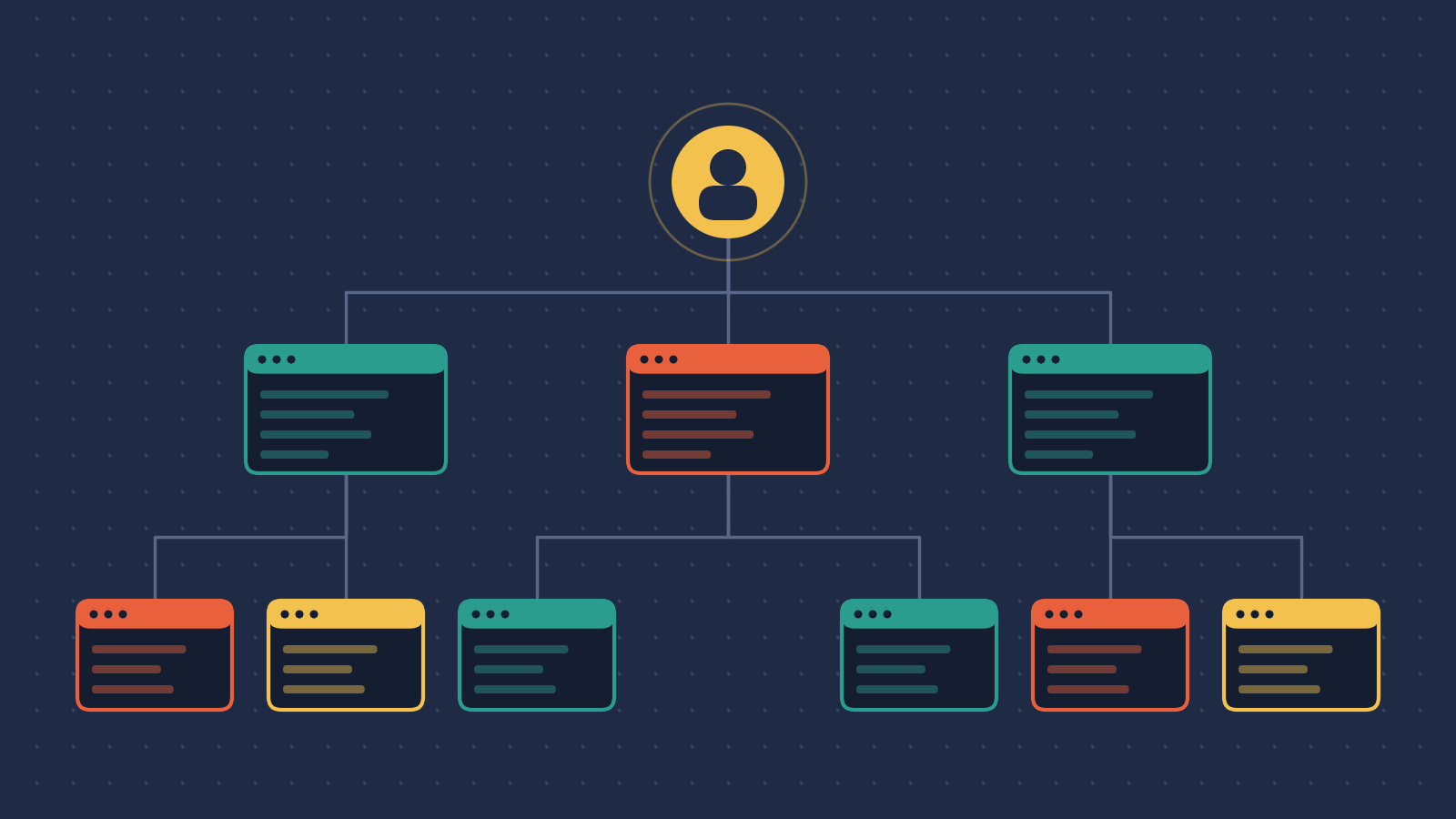
When Code Outpaces Reading, It's Time to Hire AI
AI agents now write more code than any of us can read. That single realization reframes the entire conversation around artificial intelligence. We have moved past the era of asking AI for help and into an era where we hire it as a collaborator. The shift is practical, not philosophical. If you are still treating AI as a tool for drafting emails, you are missing the point.

Building a resilient data science career in an AI-native world
Data science careers are being reshaped by the very tools they helped create. If you are entering this field now, the old playbook of static skills won't cut it. The key is to focus on how you adapt, not just what you already know. For those feeling the pressure to keep up, our piece on navigating AI/ML job requirements offers a practical look at how the expectations are shifting. This is about building a resilient skill set for the long haul.

Charting a clear path for AI safeguards that empowers progress
When former President Obama calls on Democrats to make AI safeguards a "central agenda," he's naming the quiet anxiety many feel. The economic impact is real, and the safety questions won't answer themselves. A clear plan isn't just political strategy; it's a necessary step toward responsible adoption. We'd add that clarity starts with how we talk about the tech itself. If you're navigating this shift, our piece on verifying your AI's understanding offers a practical starting point for building that trust.

Software engineers will lead by coordinating agents, not just coding.
Meryem Arik's QConAI 2030 talk cuts to a truth many would rather skim past: the software engineer's role is not disappearing, it's evolving into something broader. She points to token spend management and parallel agent infrastructure as the new operational realities, but the real shift is human. When non-technical builders start steering vendor decisions and regulatory pressure mounts, coding becomes the easy part. Product leadership and multi-agent coordination take over.

Explore the AI skills that will empower data scientists through 2027
If you're a data scientist, the tools you use are changing faster than the workflows you've mastered. That's why we're focusing on five AI skills that will keep you relevant in 2027. Each one targets a specific challenge, from simplifying complex tasks to boosting productivity. We've included runnable code you can paste straight into your notebook, so you're not just learning, you're doing. For a deeper look at how distributed systems fit into this, check out our guide on unlocking LLM training.
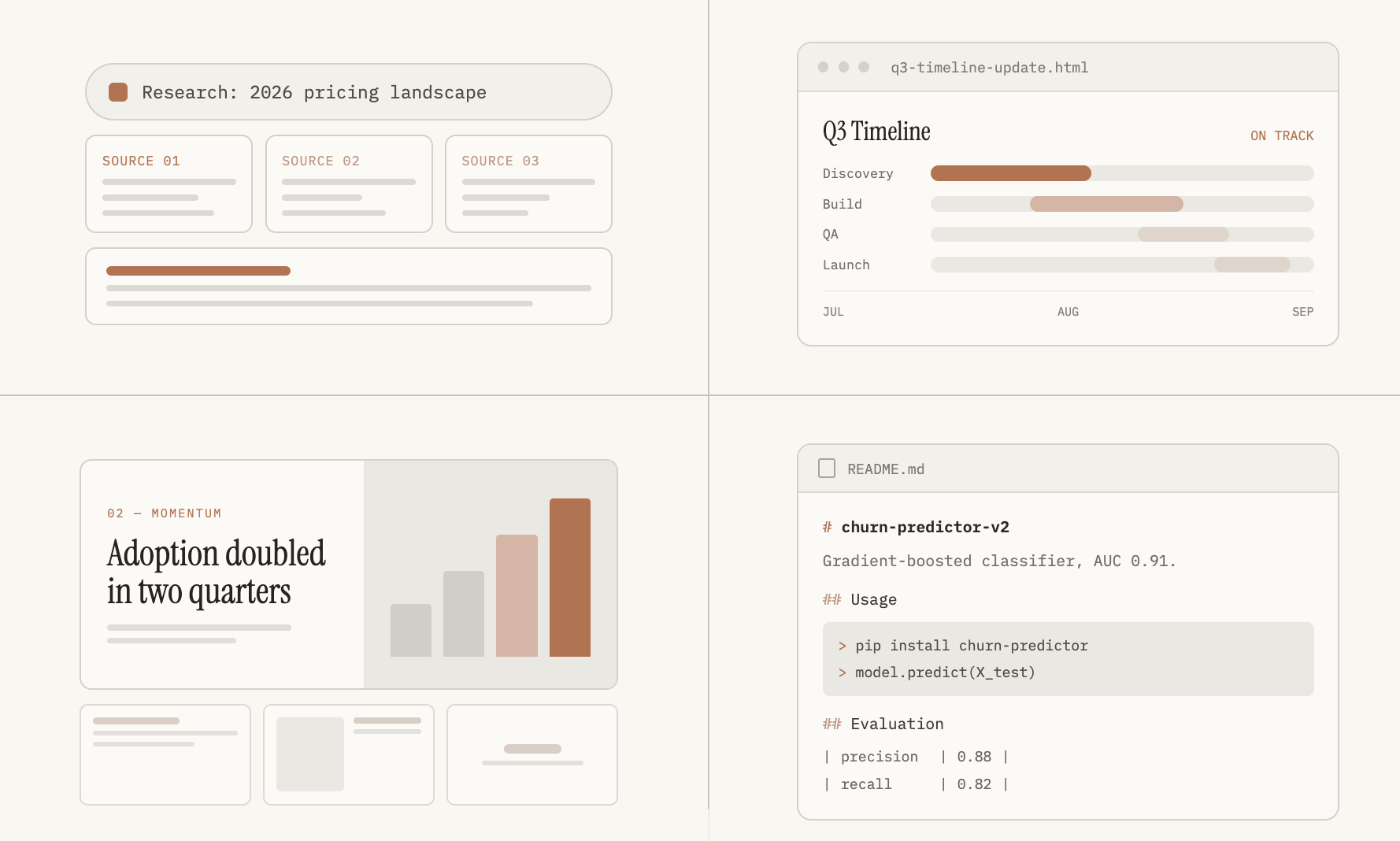
Four data skills to future-proof your workflow in 2026
Spreadsheets have taught us to wrestle with data. Claude skills, on the other hand, are built to help you stop wrestling and start working. This guide breaks down four practical additions to your workflow that keep you ahead of the curve without the hype. It is a grounded, useful read for anyone who wants to stay relevant. If you are also brushing up on the infrastructure side, our guide to distributed algorithms is a solid companion piece.
AI agents expand your workflow, not replace your role
The narrative that AI agents are quietly absorbing our jobs misses what's actually happening. We're seeing more work, not less, as these tools take over the tedious parts and leave us with richer, more complex problems to solve. It's a shift in effort, not a reduction of it. If you're exploring how this infrastructure is being built, our piece on Anthropic's bet with Akamai's cloud offers useful context.

Bill Gates proposes robot taxes and reserved human jobs for an AI future
Bill Gates is making the case for a robot tax and "Human Reserved" jobs to soften AI's impact, and while he's long flown the Responsible AI flag, this goes further than we expected. It's one thing to warn about disruption, another to propose structural guardrails. We appreciate the pragmatism, even if the details stay fuzzy. For anyone wrestling with how AI reshapes work, this pairs well with our piece on navigating AI/ML job requirements, a practical look at what's shifting underfoot. Worth reading both.
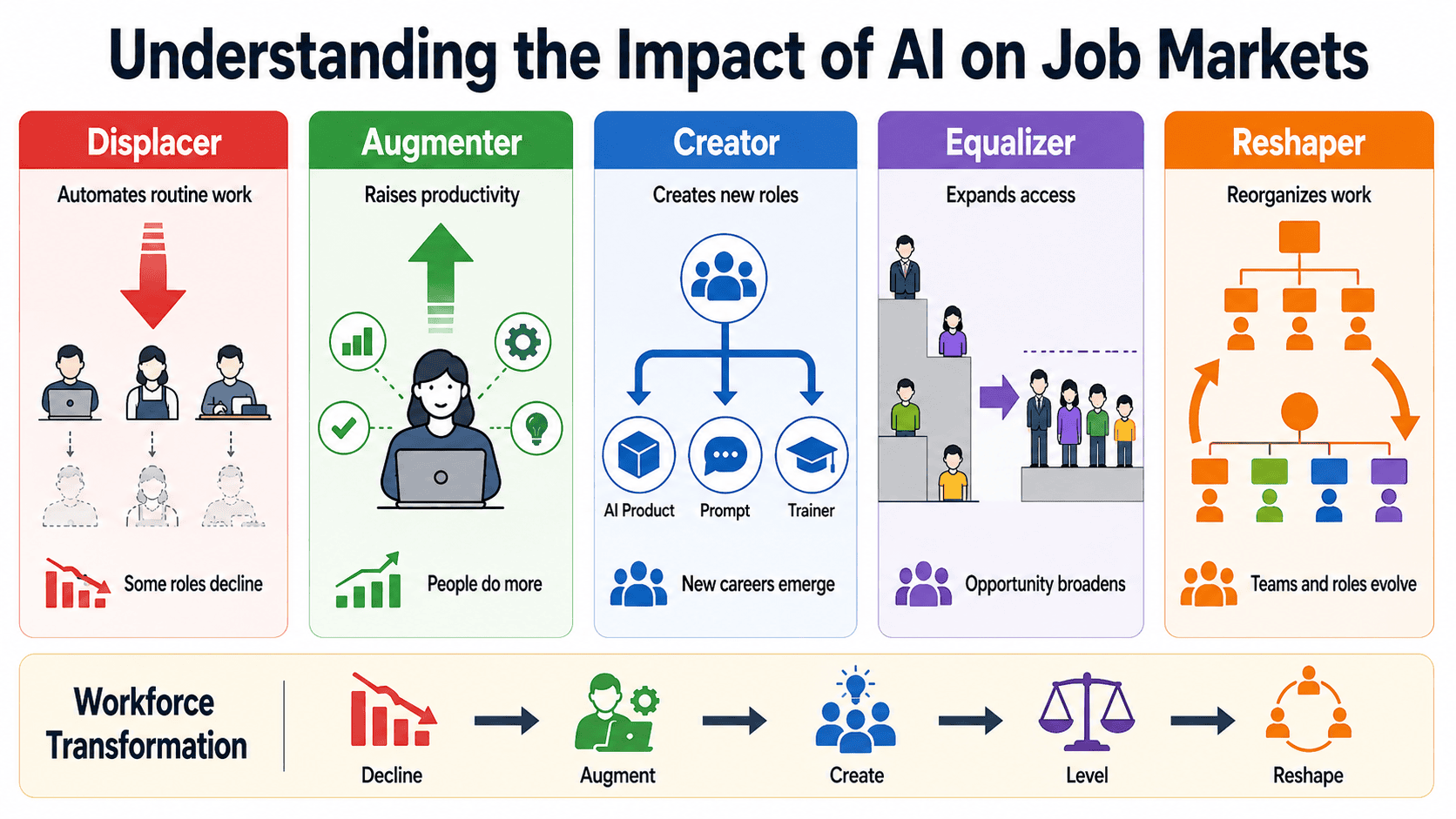
Five Ways AI Is Reshaping Work and Redefining Entry-Level Roles
The job market is shifting under our feet, and AI is the force nudging it along. From automating routine tasks to thinning out entry-level hiring, the change is tangible and, at times, uncomfortable. This isn't about doom-scrolling through predictions; it's about understanding five concrete ways work is being redefined. We explore what this means for your career, not just the economy. For a personal angle on this technology, our piece on talking to an AI clone offers a thought-provoking companion to the data.

Explore how teams balance AI progress with human-centered engineering in 2026
The 2026 Engineering Culture Trends Report zeroes in on something easy to overlook: the humans behind the algorithms. Ben Linders and his panel of QCon speakers and InfoQ contributors tackle AI adoption maturity, shifting team structures, and the roles that are transforming as a result. It is a grounded look at what changes when engineering cultures evolve. For a deeper dive into the enterprise side, our related article, "Unlock AI's Enterprise Potential," pairs well with this discussion.

The Autonomous Agent: Your Next Manager Lives in Shared Memory
The sharpest manager in your company might not sleep, and it won't need a coffee break. It will live in shared GPU memory, running a decentralized agentic loop. This systems-level view challenges us to rethink why middle management collapses into protocol and what breaks in today's AI stack. It's a bold, practical look at what autonomous agents need to actually run a business. For a deeper foundation on the mechanics, our guide to distributed training algorithms pairs well here.

Build your own AI layer or risk losing control of your data future.
Satya Nadella's warning cuts to the heart of the AI rush: lean on a single model for everything, and you might not survive the decade. He's right to push for ownership, whether that means building your own models or layering in AI gateways to keep your prompts separate from the model itself. It's not about tech for tech's sake; it's about control and adaptability. If you're questioning how deep this dependency runs, our piece on talking to an AI clone offers a timely reality check.

Discover how AI makes spreadsheets more intuitive and productive
The conversation around AI has shifted from fear to function, but that raises a new question: what happens when the tool stops being the obstacle? We've moved past wondering if AI works, and into how we wield it. It's less about the tech and more about the trust we place in its output. For a grounded take on that trust, our piece "Verify Your AI's Understanding: A Simple Check for Tax Season" offers a practical starting point.