generative AI automation
generative AI automation at Beyond Market Intelligence is a file of 286 stories. The newest of them: “When Trust in Testing Fails, Agent Autonomy Outpaces Verification”, “Enterprise AI runs at half capacity as controls lag behind deployment”, and “ChatGPT Work turns your AI assistant into an autonomous task manager”. Enterprise AI adoption faces a critical evaluation gap: agents are gaining autonomy faster than companies can reliably verify their performance. Wall Street's AI buildout debate has been answered: a VentureBeat Research survey of 573 technical leaders reveals that 86% of enterprises run their GPUs at half capacity or less – a clear sign of current infrastructure… Acme AI is the next-generation, AI-powered spreadsheet platform built to replace Excel and redefine how analysts, data scientists, and enterprise teams work… The list below is every generative AI automation story on Beyond Market Intelligence, newest first.

When Trust in Testing Fails, Agent Autonomy Outpaces Verification
Enterprise AI adoption faces a critical evaluation gap: agents are gaining autonomy faster than companies can reliably verify their performance. A recent VB Pulse survey revealed that half of enterprises deploying AI agents have experienced customer-facing failures despite passing internal evaluations. While 66% are accelerating automation, only 5% fully trust current automated testing methods. This mismatch highlights a need to prioritize repeatability and rigorous regression testing, as demonstrated in our related article, "57% of enterprises have watched AI agents be confidently wrong."

Enterprise AI runs at half capacity as controls lag behind deployment
Wall Street's AI buildout debate has been answered: a VentureBeat Research survey of 573 technical leaders reveals that 86% of enterprises run their GPUs at half capacity or less – a clear sign of current infrastructure utilization. This highlights a critical gap: enterprises are deploying AI agents ahead of robust control measures, with many relying on single-prompt chatbots rather than true multi-step agents.

ChatGPT Work turns your AI assistant into an autonomous task manager
OpenAI introduces ChatGPT Work, a cloud-based AI agent poised to transform how professionals leverage AI. Embedded within the flagship chatbot, this new platform moves beyond simple Q&A, autonomously managing tasks across email, Slack, and calendars using the advanced GPT-5.6 model. ChatGPT Work streamlines workflows by generating documents, spreadsheets, and even websites, demonstrating OpenAI's commitment to democratizing agentic AI capabilities – a strategy highlighted by their recent confidential SEC filing.

When models fail together, your safety net is an illusion.
Enterprises pursuing multi-model AI strategies are significantly underestimating failure rates—typically by 2.25 times. A new study of 67 frontier models reveals that the assumption that diverse models compensate for each other's weaknesses is mathematically flawed, a phenomenon termed the "co-failure ceiling." This highlights a hidden cost in complex routing infrastructure, often chasing illusory performance gains. Fortunately, developers can now use a free, pre-deployment sanity check—the Clopper-Pearson bound—to determine when multi-model orchestration will genuinely deliver value.

From Code to Confidence: Why Enterprise AI Needs More Than Generation
The promise of AI code generation is undeniable, yet a stark reality persists: most organizations fail to translate prototyping success into enterprise-grade execution. SAP's Michael Ameling observes that 81% strategize for AI, yet only a fraction achieve operational deployment, revealing a critical gap beyond code quality. Successfully integrating AI-generated logic into complex, legacy systems demands foundational data readiness, robust governance, and a shift in developer roles—a challenge amplified by AI’s very power. Discover how to bridge this gap and unlock true enterprise value.
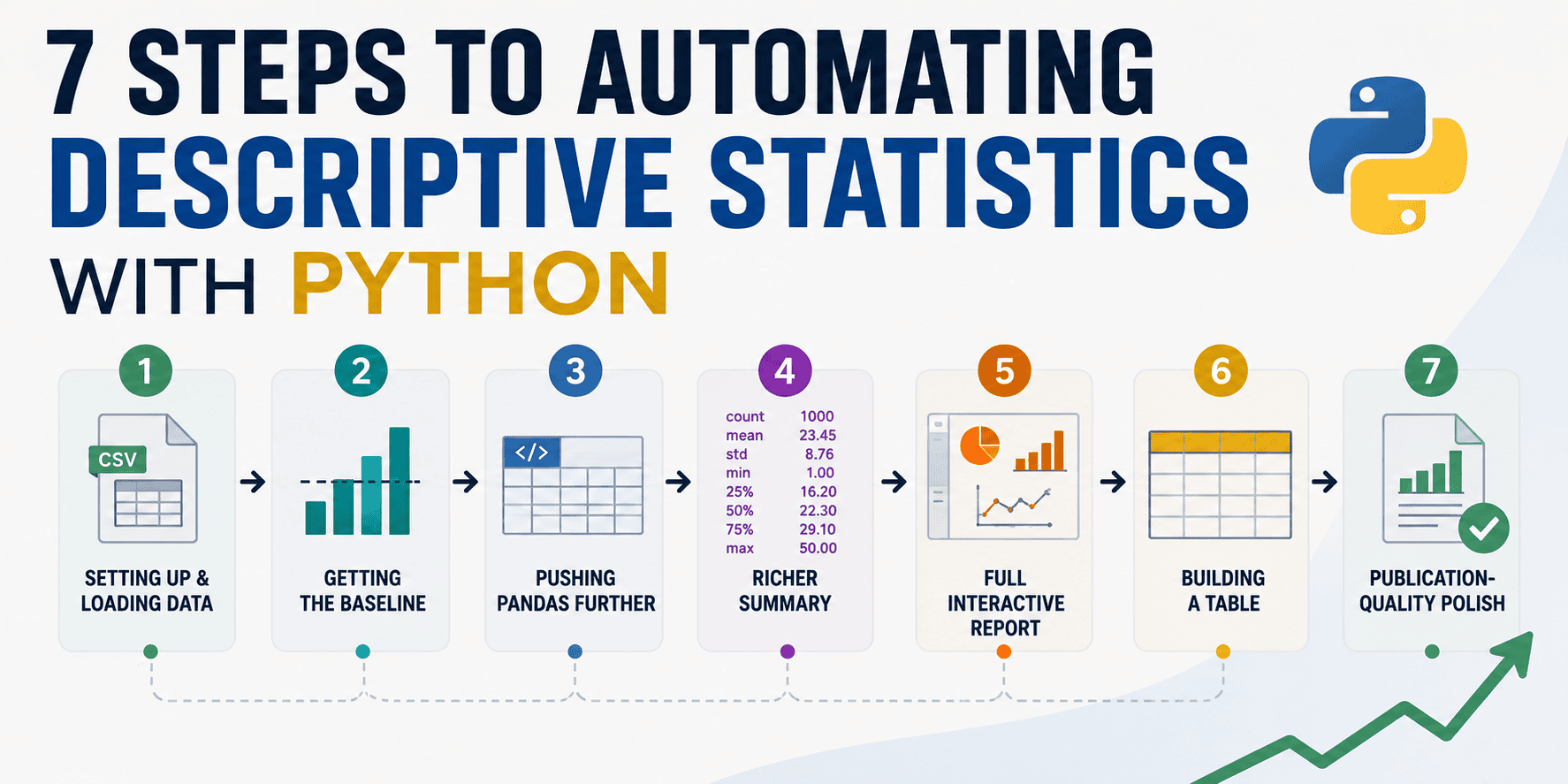
Automate descriptive statistics in Python for publication-ready tables
Stop manually calculating descriptive statistics. Automating this process is a critical step toward efficient data analysis. Our guide, "7 Steps to Automating Descriptive Statistics with Python," empowers you to generate publication-ready summary tables without repetitive coding. Learn to streamline your workflow and eliminate the need for repeated `mean()` and `std()` calls for each column. For a broader perspective on AI's role in complex systems, explore "The Kubernetes Approach to AI-Assisted Maintainership Prioritises Human Accountability."

Trunk Tools cuts document review by 50 days with specialized AI architecture
Construction data presents a unique challenge: most general-purpose AI models struggle with the industry’s jargon-dense, abbreviation-heavy documents. Trunk Tools addresses this by building a specialized, three-layer architecture—perception, semantics, and agents—to transform data chaos into agent-ready workflows. This purpose-built stack has dramatically reduced document review cycles from months to days and prevents costly field errors.

The discipline behind AI that works today and lasts at scale
For years, Expedia has leveraged AI and machine learning to personalize travel experiences and optimize operations. What billions of predictions taught us is a crucial distinction: AI that functions today isn’t necessarily AI that thrives at scale. Velocity without strategic direction can be a liability. To ensure lasting value and responsible deployment, we’ve developed a set of core ML and AI principles—guiding how we build, deploy, and evolve AI systems across our company. Learn more about the competitive landscape with our overview of Mistral AI.

Why smart enterprises diversified their AI strategy before Fable 5 vanished
The recent, weeks-long outage of Anthropic’s Claude Fable 5 underscores a critical shift in enterprise AI strategy. New VentureBeat Pulse Research reveals that two-thirds of organizations have already implemented a hedging posture, blending closed frontier models with open-weight alternatives or moving workflows entirely off closed APIs. This proactive stance highlights growing concerns about vendor dependency and the need for greater control. Enterprises are actively prioritizing resilience and flexibility, recognizing that reliance on a single model carries significant risk—a lesson reinforced by the unexpected disruption.
The data you manage should not limit your ambition
The machine learning job market is experiencing a perplexing shift. Once focused, requirements now demand an almost superhuman breadth of expertise. Companies, particularly in industrial automation, are seeking candidates with deep knowledge spanning LLMs, robotics, GPU programming, and more—a convergence of highly specialized fields rarely found in a single individual. This trend, while indicative of ambitious goals, raises the question: who *can* realistically fulfill such demanding profiles? Explore related insights in our "[D] Monthly Who's Hiring and Who wants to be Hired?" thread.
Integrate, Don't Accumulate: Smarter Tools Fit Your Workflow
Users aren't seeking another tool; they need seamless integrations that respect established workflows. The proliferation of disparate applications creates friction, hindering productivity. Our latest piece explores this critical shift, advocating for a design approach centered around integrating valuable features directly into existing mental models. Discover how this focus unlocks greater efficiency and reduces cognitive load. For further context on the evolving AI landscape, see our article on "Nvidia competitor Etched hits $5B valuation," demonstrating the growing demand for specialized AI solutions.
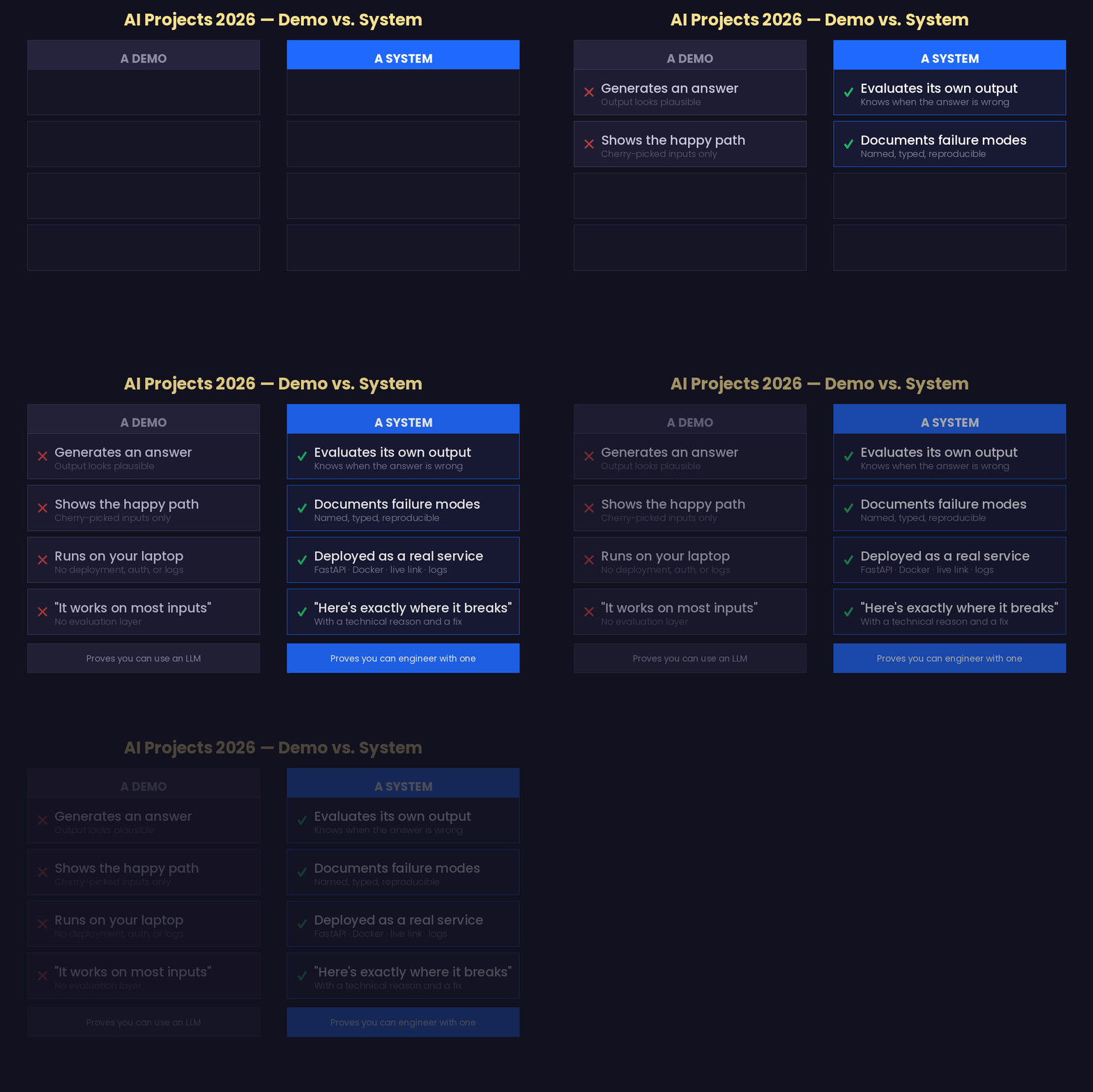
Build AI projects that prove you know where your system fails
Navigating the landscape of AI projects for 2026 requires a focused approach. The most compelling projects aren't about sheer complexity; they're about demonstrating a clear understanding of system limitations and articulating those failures confidently to potential employers. Forget wading through 50 ideas – this post delivers the top 10 AI projects poised to impress. Discover how to build demonstrable skills and showcase your expertise. For deeper insights into user interface design within AI, explore "Matching AI Modality To User Intent."

How Morgan Stanley sped up reconciliation by keeping humans closer to the process
Morgan Stanley dramatically accelerated a critical reconciliation process—profit and loss (P&L) reconciliation—by deploying an internal AI agentic system called FIXR. Counterintuitively, the firm achieved a 50% reduction in processing time by prioritizing human oversight and iteratively incorporating controller decisions into automated rules. This "co-worker" approach, rather than a fully autonomous model, unlocks complex organizational workflows and exemplifies a shift toward process-first AI implementation, as highlighted by Morgan Stanley’s Managing Director, Todd Johnson.

Google delivers faster, cost-effective image generation for enterprise teams
Google today introduces Nano Banana 2 Lite (NB2 Lite), designated Gemini 3.1 Flash-Lite Image, a significant advancement in AI image generation designed for enterprise efficiency. This model delivers images in a remarkably fast 4 seconds at a competitive $0.034 per 1,000 images. Optimized for high-throughput workflows, NB2 Lite outperforms its predecessor while offering cost savings compared to other Gemini models. Explore its capabilities now via Google AI Studio, the Gemini API, and GEAP—a practical solution for rapid prototyping and automated asset generation.
Accessibility as a core operational capability, not a final checklist
Teams are generating user interfaces at unprecedented speeds, yet ensuring usability, security, and maintainability remains critical. Accessibility shouldn't be a post-development audit; it’s an operational capability woven into every stage. This means proactively integrating accessibility considerations into workflows, empowering teams to build inclusive products from the outset. Discover how shifting this perspective transforms development, fostering efficiency and ultimately delivering superior user experiences. For deeper insights into isolated execution environments, explore our article on "AWS Launches Lambda MicroVMs."

Meituan unveils LongCat-2.0, the open-source coding model built on Chinese chips
Meituan has unveiled LongCat-2.0, a 1.6-trillion-parameter Mixture-of-Experts (MoE) agentic coding model now openly available on GitHub, Hugging Face, and its platform. This near-frontier model, previously powering the anonymous "Owl Alpha" which topped OpenRouter charts, disrupts enterprise AI dominance with a permissive MIT license and a unique 1-million-token context window. Notably, LongCat-2.0 was trained entirely on Chinese-manufactured chips, signaling a potential shift in AI infrastructure. Explore its competitive pricing structure and discover how it’s reshaping autonomous software engineering, as detailed in related

Explore how DeepSeek's DSpark framework accelerates AI inference by 85 percent.
DeepSeek has open-sourced DSpark, a new framework poised to significantly accelerate large language model (LLM) inference by up to 85%. This MIT-licensed system optimizes speed by employing a "scout" that anticipates likely text paths, allowing the LLM to quickly verify and proceed. The release, including technical papers and codebases, aims to address a key challenge in AI deployment – efficiently serving large models for real-time user experiences.

When AI meets reality, enterprise security must evolve beyond old assumptions.
Prompt injection poses a critical and escalating threat to enterprise AI deployments. Over the past two years, as businesses integrate large language models (LLMs) across operations, malicious actors have exploited fundamental design flaws, targeting agents, RAG pipelines, and model routers. Ranked as LLM01 by OWASP, prompt injection is demonstrably effective, evidenced by real-world incidents like data exfiltration from Slack and zero-click exploits against Microsoft 365 Copilot. Organizations must treat LLMs as untrusted components to mitigate this pervasive risk.

Explore how OpenAI's Sol, Terra, and Luna models could reshape your workflows.
OpenAI today initiates a limited preview of its next-generation GPT-5.6 model series—Sol, Terra, and Luna—designed to transform developer and enterprise workflows. Following coordination with the U.S. government, access is currently restricted to approximately 20 organizations. Sol, the top-tier model, excels in complex reasoning and security applications, while Terra balances performance and efficiency, and Luna prioritizes speed and cost-effectiveness. This phased release reflects a novel landscape of safety interventions and compliance parameters for enterprise buyers. "It’s not about Anthropic vs.

AI Pull Requests Demand Smarter Validation, Not More Reviewers
The software development lifecycle (SDLC) is facing a critical inflection point. Michael Webster’s presentation, "AI Works, Pull Requests Don’t," explores the emerging challenge of headless AI agents and the massive pull requests they generate—a bottleneck threatening stability and introducing technical debt. Webster demonstrates how engineering leaders can proactively address this by leveraging test impact analysis and automated validation. Discover strategies to verify agentic output and maintain a robust pipeline. For deeper insights into building and deploying AI agents, explore Vercel’s open-source framework, Eve.

Your software factory is producing bugs faster: let's build smarter.
Many organizations mistakenly believe they're building a software factory, when in reality, they're simply accelerating the release of bugs. Just as industrialized factories revolutionized physical production, a similar shift is now underway in software development, fueled by LLMs. However, traditional development lifecycles are ill-equipped for this new speed. A true software factory demands more than just velocity—it requires a platform with standardized processes, rigorous quality control, and inherent traceability. Otherwise, you risk generating "AI slop" faster than ever.

Small model, big impact: Liquid AI redefines on-device data extraction.
Liquid AI has released LFM2.5-230M, its smallest AI language model yet, demonstrating that architectural efficiency can outperform brute-force scaling. This 230-million-parameter foundation model excels at data extraction and is designed for on-device agentic workflows, running seamlessly on smartphones, laptops, and robotics. Notably, LFM2.5-230M surpasses models four times its size on key benchmarks, signaling a pivotal shift toward optimized AI solutions for enterprises seeking cost-effective, local processing—a strategy mirroring recent price adjustments seen in the gaming console market, as discussed in our article on Xbox.
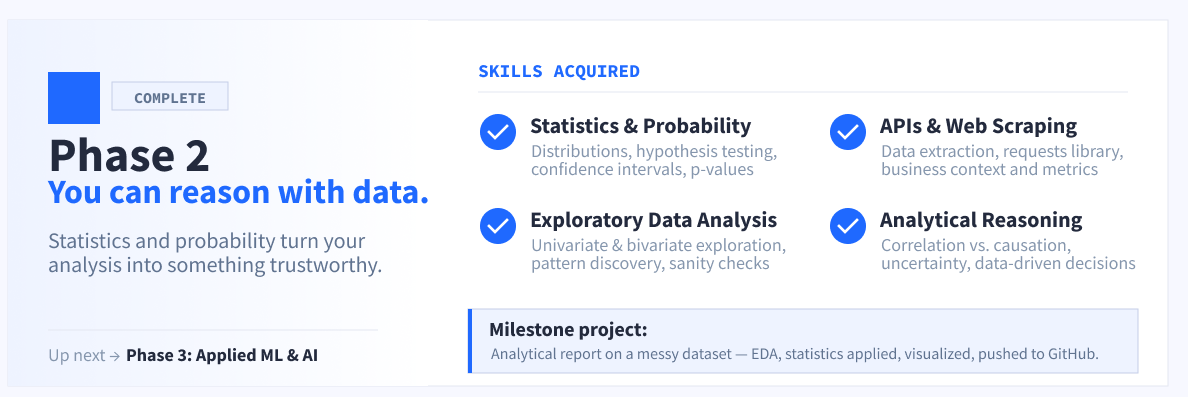
Your Practical Roadmap to Becoming a Data Scientist by 2027
## Data Scientist Roadmap for Beginners (2026–2027) Navigating the path to becoming a data scientist can feel overwhelming. This roadmap clarifies exactly what to learn, in what order, and how long it realistically takes to achieve job readiness by 2027 – whether you’re starting from zero or transitioning from data analysis, engineering, or research. We cut through the noise surrounding Python vs. R, degree requirements, and the rise of Generative AI to provide a focused, actionable plan.

Mindstone's Rebel lets AI agents remember which model fits each task
Navigating the burgeoning landscape of AI agent orchestration platforms can feel overwhelming. Mindstone’s Rebel emerges as a promising solution, offering a local-first, agentic AI operating system designed for enterprise efficiency. Released this week, Rebel utilizes a "Fair Source" license allowing teams under 100 users free adoption and customization, while larger organizations require an enterprise license.