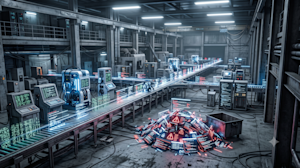
The central thesis that the rush to adopt AI-powered software development is creating more problems than it solves resonates deeply with the current state of affairs. We've long championed the idea of AI augmenting human capabilities, and the promise of LLMs accelerating code creation is undeniably appealing. However, the piece correctly points out that simply increasing output without addressing fundamental engineering principles is a recipe for disaster. It's a familiar pattern; industrialized factories changed how the world produced physical goods: more output, lower costs, faster than anything that came before. Now a similar shift is happening with software. LLMs have lowered the barrier to writing code, increased individual output, and pushed organizations to think about software development as a production system. The standard software development lifecycle and CI/CD practices that have held for decades won't hold up under that pressure. That's where the software factory comes in — and like physical factories, it needs more than speed to actually work. This echoes the sentiment in "You're learning AI wrong. Here's the fix #AI #Management #Leadership #FutureOfWork," which highlights the critical need for a strategic and thoughtful approach to AI integration, rather than a blind pursuit of efficiency. Similarly, the cautionary tale of "Using AI When You Don't Trust AI" serves as a vital reminder that speed and convenience shouldn't come at the expense of data security and governance – concerns that are amplified in a rapidly expanding codebase.
The core issue isn't the technology itself, but rather the lack of a cohesive platform and the prevalence of ad-hoc implementations. The "software factory" isn't about simply throwing more AI tools at the problem; it's about creating a standardized, traceable, and repeatable process. The experience with AI-generated data infrastructure morphing over time is a particularly stark illustration of this danger. This isn't a new phenomenon; we've seen similar issues arise with self-service tooling, where initial productivity gains were ultimately overshadowed by increased complexity and technical debt. The emphasis on rerunability and traceability, mirroring Toyota's approach to quality control, is a crucial insight. The ability to understand *how* a piece of code was generated, and to reproduce the process, is essential for debugging, maintenance, and ultimately, building reliable software. The shift from focusing on "How fast can someone write this?" to "Should this be written?" is a profound one, forcing a reevaluation of priorities and a greater emphasis on quality assurance.
The call for platform thinking, rather than just a collection of tools, is particularly compelling. A unified platform provides the foundation for standardization, automation, and collaboration, enabling teams to build and maintain complex systems more effectively. This necessitates a move beyond isolated AI agents and toward a more integrated, orchestrated workflow. The suggested principles—platform over tools, rerunability and traceability, safety and guardrails, standardization, and quality control—offer a roadmap for building a truly robust software factory. Ultimately, the success of this paradigm shift will hinge on a cultural shift within organizations, moving away from a narrow focus on velocity and embracing a broader perspective that prioritizes long-term reliability and maintainability. The discussion around quality control, specifically integrating static code analysis and providing templates for LLMs, is a practical step toward preventing errors from propagating downstream.
Looking ahead, the question becomes: how do we incentivize and reward the development of these cohesive platforms, rather than simply chasing short-term gains through individual AI tools? The market is currently flooded with point solutions, but the long-term value lies in building foundational infrastructure that can support the evolving needs of software development. Will organizations prioritize the upfront investment required to build a true software factory, or will they continue down the path of accelerating bug production? The data suggests the latter is already happening, and the consequences could be significant for the future of software engineering.