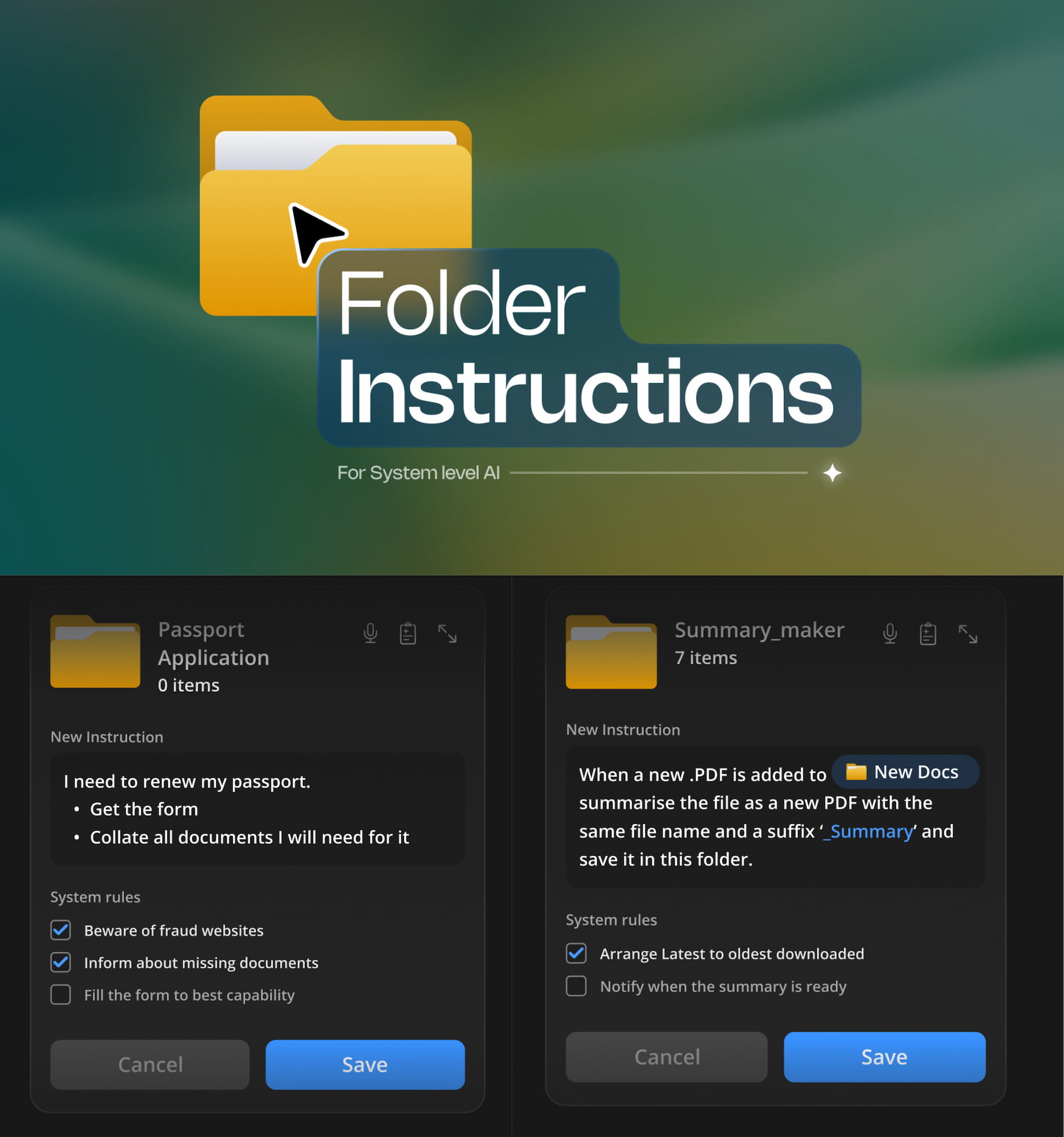
The relentless pursuit of “shiny new tools” in the AI space often overshadows a far more critical need: seamless integration. As Design Patterns For AI Interfaces so aptly points out, users aren't clamoring for yet another standalone application; they're seeking a more fluid and intuitive experience where useful capabilities are woven directly into their existing workflows. This resonates deeply with our own philosophy – the idea that transformative AI shouldn't disrupt established mental models, but rather enhance them. The current landscape is littered with fragmented solutions, forcing users to juggle multiple platforms and navigate complex transitions. This is particularly evident when considering the broader AI ecosystem; for example, the recent news of Trump drops restrictions on Anthropic’s Mythos and Fable models highlights the instability and uncertainty that can arise from constantly shifting regulatory environments – a distraction from the core need for usability. Similarly, the rise of competitors like Etched, achieving a staggering Nvidia competitor Etched hits $5B valuation, $1B in sales for AI chip, demonstrates that innovation isn't solely about raw processing power, but also about how that power is delivered and integrated into practical applications.
The emphasis on integration isn't merely about convenience; it's about fundamentally reshaping how users interact with data and AI. The frustration of jumping between chat interfaces or wrestling with command-line prompts stems from a disconnect between the task at hand and the tools required to accomplish it. AI-native spreadsheets, for instance, represent a paradigm shift – embedding intelligence directly within a familiar and widely understood interface, eliminating the need to constantly export, import, or translate data. The experiences of researchers who previously built poker AI, now finding success in the financial sector The DeepMind trio who built a poker AI are now making money for quant hedge funds illustrate this point; transferable skills translate well when underlying tools are intuitive and readily adaptable. This underscores the importance of designing AI interfaces that prioritize user experience and minimize cognitive load. The focus shouldn’t be on demonstrating the AI’s capabilities in isolation, but on seamlessly extending the user’s existing abilities.
This shift in perspective has profound implications for product development and adoption. Companies that prioritize building intelligent integrations—rather than simply launching isolated AI features—are likely to see greater user engagement and faster adoption rates. Think of the difference between a spreadsheet that automatically generates insightful visualizations based on your data versus requiring you to manually export the data to a separate charting tool. The former empowers the user; the latter simply adds friction. This isn’t about dumbing down the technology; it’s about making it accessible and useful to a broader audience. The era of standalone AI tools is waning; the future belongs to systems that intelligently augment existing workflows, providing value at the point of need.
Ultimately, the conversation around AI needs to move beyond the hype of individual breakthroughs and focus on the practical reality of user adoption. The most transformative AI solutions won’t be the ones that offer the most advanced algorithms, but the ones that feel the most natural and intuitive to use. As the AI landscape continues to evolve at a breakneck pace, a critical question emerges: how can we ensure that innovation serves the user, rather than the other way around? The answer, it seems, lies in prioritizing seamless integration and a deep understanding of established mental models – a focus that will define the next generation of AI-powered productivity tools.