hardware
66 stories filed under hardware on Beyond Market Intelligence. The newest of them: “AWS Tests European Cloud Independence Without Global Network Link”, “AI-powered mosquito traps offer earlier warnings for disease risks”, and “Open-source satellite software launches as a flexible alternative to SpaceX's locked-down model”. On October 24, AWS will sever its European Sovereign Cloud from the global network backbone, running on EU hardware, software, and local staff. A single mosquito trap can already tell you a lot. Acme AI is the next-generation, AI-powered spreadsheet platform built to replace Excel and redefine how analysts, data scientists, and enterprise teams work… The list below is every hardware story on Beyond Market Intelligence, newest first.

AWS Tests European Cloud Independence Without Global Network Link
On October 24, AWS will sever its European Sovereign Cloud from the global network backbone, running on EU hardware, software, and local staff. The company insists neither system is operation-critical, yet practitioners remain split on whether this test actually addresses customer concerns. It is a deliberate exercise in independence, but the question lingers: does isolation prove sovereignty? For deeper context on shifting AI alliances, see our coverage of Replit pivoting from Anthropic to OpenAI.

AI-powered mosquito traps offer earlier warnings for disease risks
A single mosquito trap can already tell you a lot. String thousands of them together, and you have something bigger: an early-warning system for disease. Mosqitter is turning its hardware into an AI-powered surveillance network that identifies species and tracks population shifts in real time. That means public health teams could act before outbreaks spread, not after. It's a practical, forward-thinking use of AI, and a reminder that sometimes the best data comes from the ground up.

Open-source satellite software launches as a flexible alternative to SpaceX's locked-down model
Satlyt wants to be the Android of orbital computing, launching open-source satellite software that works across multiple companies' hardware. It's a direct counter to SpaceX's locked-down, iPhone-style model, where the software and satellite are sold as a single, proprietary unit. The approach feels more accessible and future-focused, giving users real flexibility in orbit. If you're curious about other unconventional approaches to space infrastructure, our piece on Longshot's plan to launch data centers from a gun is worth a look.
Fine-Tuning a Satire Model on Cloud GPUs: A Practical Walkthrough
Renting a cloud GPU rig with 4x12GB cards and 48GB of system RAM sounds like plenty, but it wasn't for a full fine-tune on 18,000 long satire examples. The user burned $3 chasing settings instead of swapping machines. That's a cheap lesson in underestimating memory needs. For a 14B-parameter model, you likely need more RAM or a different strategy. For deeper guidance on model scaling, our piece on "Can a 414K-parameter transformer learn to steer a flock?" explores similar resource trade-offs.

Europe's tech autonomy hinges on smart choices, not total isolation
European technological sovereignty isn't about building walls, it's about building smart alternatives. As a panel at OSS EU made clear, organisations can strengthen their independence by understanding cloud and hardware dependencies while making practical software choices. This pragmatic approach empowers teams to reduce reliance on global providers without sacrificing capability. For deeper insights into keeping your technology stack reliable, explore our coverage of "Five Practitioners on Keeping AI Reliable in Production."

Beyond Scaling: Cerebras on the Future of AI's Compute Demands
Andrew Feldman, CEO of Cerebras Systems, is set to challenge the AI industry's assumptions at TechCrunch Disrupt 2026. He'll confront a simple question: what happens when today's hardware can't keep up? Cerebras is building differently, not just faster chips, but a fundamentally different approach to compute, energy, and infrastructure. This isn't about incremental upgrades. It's about rethinking the ceiling. For context on why some builders are stepping back from consumer AI, see our related piece on frontier labs.
A free guide to making ML models faster, from silicon to agents
Performance engineering isn't just about reducing FLOPs. Usamah Zakir spent months writing the guide he wished he'd had when starting out: *How to Make Your Model Fast*. It moves from silicon to agents, using roofline analysis to help you diagnose whether you're compute, bandwidth, or memory bound before optimizing. That systems-first thinking is rare and valuable. The whole thing is free and open source. If you're working on inference or edge AI, it's worth exploring.

Secure AI agents with new guardrails for safer autonomy
Jensen Huang just gave AI agents something they've been missing: a leash. At Monday's announcement, the Nvidia CEO unveiled a toolkit of software and hardware designed to wrap independent security layers around autonomous systems. The goal is straightforward, keep agents inside their test environments even when they try to break out. It's a pragmatic step toward safer autonomy, and one that acknowledges trust isn't automatic. For teams already exploring agentic workflows, this feels like a necessary evolution.

SiMa.ai secures $150M to bring physical AI chips beyond the data center
SiMa.ai just closed a $150 million Series C from Fidelity and Amplify, betting that physical AI demands chips designed for the edge, not the data center. That's a smart wager. The company's focus on bringing intelligence to where data actually lives, sensors, machines, devices, feels more grounded than chasing distant cloud promises. For deeper context on how hardware and AI design choices are diverging, our piece on neural architecture search offers useful perspective.

Explore the Future: When AI Designs Its Own Hardware
When a chip learns to design itself, the role of human engineers shifts from architect to partner. At TechCrunch Disrupt 2026, Ricursive Intelligence co-founders Anna Goldie and Azalia Mirhoseani take the Disrupt Stage to explore closing the loop between AI and hardware development. It's a conversation about trust, iteration, and machines that build better versions of the tools we use. For deeper context on how AI thinks through structured problems, our piece "Exploring Paragraph Structure" pairs well here.

Automate Pipefitting Tasks with a Compact, AI-Powered Robot
Pipefitting often means wrestling with repetitive, physically demanding bolt work. This startup's compact robot changes that equation, tightening or loosening four bolts at once while packing neatly into a Pelican case. It's a practical, accessible step toward smarter job sites, and we appreciate the focus on real usability over flashy specs. For teams exploring how AI and automation are reshaping manual tasks, our piece on real-world computer vision deployments offers a useful, grounded look at similar challenges and breakthroughs.

Empower Robotics Development with Feather’s Customizable Platform
A $30,000 platform might sound like a serious commitment, but for software developers tired of rigid robotics tools, it's a practical bet. Feather is building something customizable, not a locked-down box. That focus on flexibility matters. It gives teams room to iterate, test, and adapt without fighting the hardware. If you're exploring how far accessible AI can push real-world systems, our piece on real-world computer vision deployments pairs well with this mindset.

Explore Meta's Muse: AI Agent Arrives in Glasses and Beyond
Mark Zuckerberg used Meta's Connect keynote to make the company's direction unmistakable: Muse is the future, and it's heading straight to Meta's AI glasses. That's a bold bet on ambient, helpful intelligence living where you look. It's also a smart evolution of the wearables story, moving beyond hardware specs to focus on what an agent can actually do for you. For a deeper look at how Meta is expanding its connected ecosystem, check out our earlier piece on Meta's Smart Glasses.

Explore AI-Powered Glasses: Lightweight Design, Extended Battery Life
Meta's next step in wearable tech is refreshingly practical. The company says its camera-free glasses will shed significant weight while stretching battery life to a full 12 hours, a clear nod to users who want all-day wear without the bulk. That focus on endurance and comfort suggests Meta is listening to real friction points, not just chasing specs. It's a sensible evolution, and for anyone tracking this space, our related piece on Meta's broader smart glasses vision pairs well with this update.

Huawei's next-gen AI chip lands in Q1 2027 to close the computing gap.
Huawei is moving its Ascend 960DT launch up to Q1 2027, a clear signal it intends to close the AI computing gap with Nvidia sooner than many expected. That timeline matters. It shows urgency without desperation, a calculated push to give China a viable alternative in a market where Nvidia currently dominates. We see this as a pragmatic step forward, not a flashy promise. If you are weighing how AI skills and tools are shifting, our piece on navigating AI/ML job requirements offers useful context.

OpenAI acquires Glass Imaging to sharpen AI's visual intelligence
OpenAI's reported $300 million acquisition of Glass Imaging signals a deliberate step toward smarter, more intuitive visual data. The company, founded by two former Apple engineers who helped build Portrait Mode, understands the nuance of computational photography. That expertise could translate into spreadsheet workflows that interpret images as naturally as text. It's a practical move, not a flashy one, and that's what makes it compelling. For a deeper look at how vision models handle real-world constraints, our piece on computer vision deployments offers useful context.

Discover the startups VCs are betting on to transform data and beyond.
VCs have spoken, and the summer batch of Y Combinator startups is as ambitious as it gets. From floating reactors to brain chips, the picks reflect a clear appetite for moonshot thinking. It is a compelling signal that investors are betting on transformative potential, not just incremental improvements. For a deeper dive into how AI is reshaping infrastructure, check out our piece on Nscale's $3.36B commitment to AI-native data centers. The future is being built now, and it is worth exploring.
TinyGo 0.42 brings recoverable panics, UEFI support, and a hardware kit
TinyGo 0.42 brings recoverable panics and support for Go 1.27 and LLVM 22, letting developers run Go as UEFI applications with more graceful error handling. The new Starter Kit, built around the Seeed Studio XIAO and its ESP32-C3 board, makes hardware experimentation more approachable through modular sensors. These updates push embedded development forward without pretending the old ways are broken. For teams wrestling with complex systems, this is a practical step toward simpler workflows.

Nvidia sees 70% growth ahead as AI spreads across every industry
Jensen Huang sees another year of plenty ahead, projecting 70% growth for Nvidia. That confidence stems from reach: the company has its finger in every pie, from chips to software to AI infrastructure. He insists the deals driving this aren't circular, a claim worth probing given the complexity of the ecosystem. It's a bold forecast, but Huang's track record gives it weight. For context on how such sprawling systems operate, our guide to distributed training algorithms offers a grounded starting point.

Python Welcomes RISC-V as a Tier 3 Platform
RISC-V just earned its place in CPython's official lineup, and that's worth paying attention to. The core development team's move to Tier 3 status signals real momentum, built on genuine community collaboration rather than hype. It's a practical step forward, though the real test lies in tightening the continuous testing pipeline and chasing that Tier 2 goal. If you're working with RISC-V hardware, your feedback could shape that journey.

Apple's iPhone Duo folds the future into a familiar design.
Apple's fall event delivered its boldest swing yet: the foldable iPhone Duo, a device that finally answers the call for flexibility without compromising on power. Alongside it, the always-listening Apple Watch signals a quieter ambition, one where your wrist becomes a proactive partner, not just a notification hub. This is a confident step beyond incremental updates. If you're tracking how major players are reshaping connected hardware, our piece on Meta's Smart Glasses offers a useful counterpoint.

Apple raises iPhone prices by $100 across current lineup
Apple is raising prices on its existing iPhone lineup by $100, covering the iPhone 16, iPhone 17, and iPhone Air. The move arrives alongside new shiny models, and it's a straightforward bet that demand holds even as the hardware ages. For users eyeing last year's device, that's a steeper ask. It feels less like a market shift and more like a quiet recalibration. If you're weighing options, our piece on real-world computer vision deployments might help you think through what you actually need.

Apple expands its vision with the versatile iPhone Duo
Apple's first foldable, the iPhone Duo, arrives with a clear message: flexibility is the new standard. Unveiled at the "Surprise and Shine" event in Cupertino, the device draws inspiration from the iPad, aiming to merge portability with a larger canvas. It's a bold first move under new CEO John Ternus, signaling that Apple is ready to adapt rather than merely iterate. For those watching how connected hardware evolves, this feels like a natural next chapter.
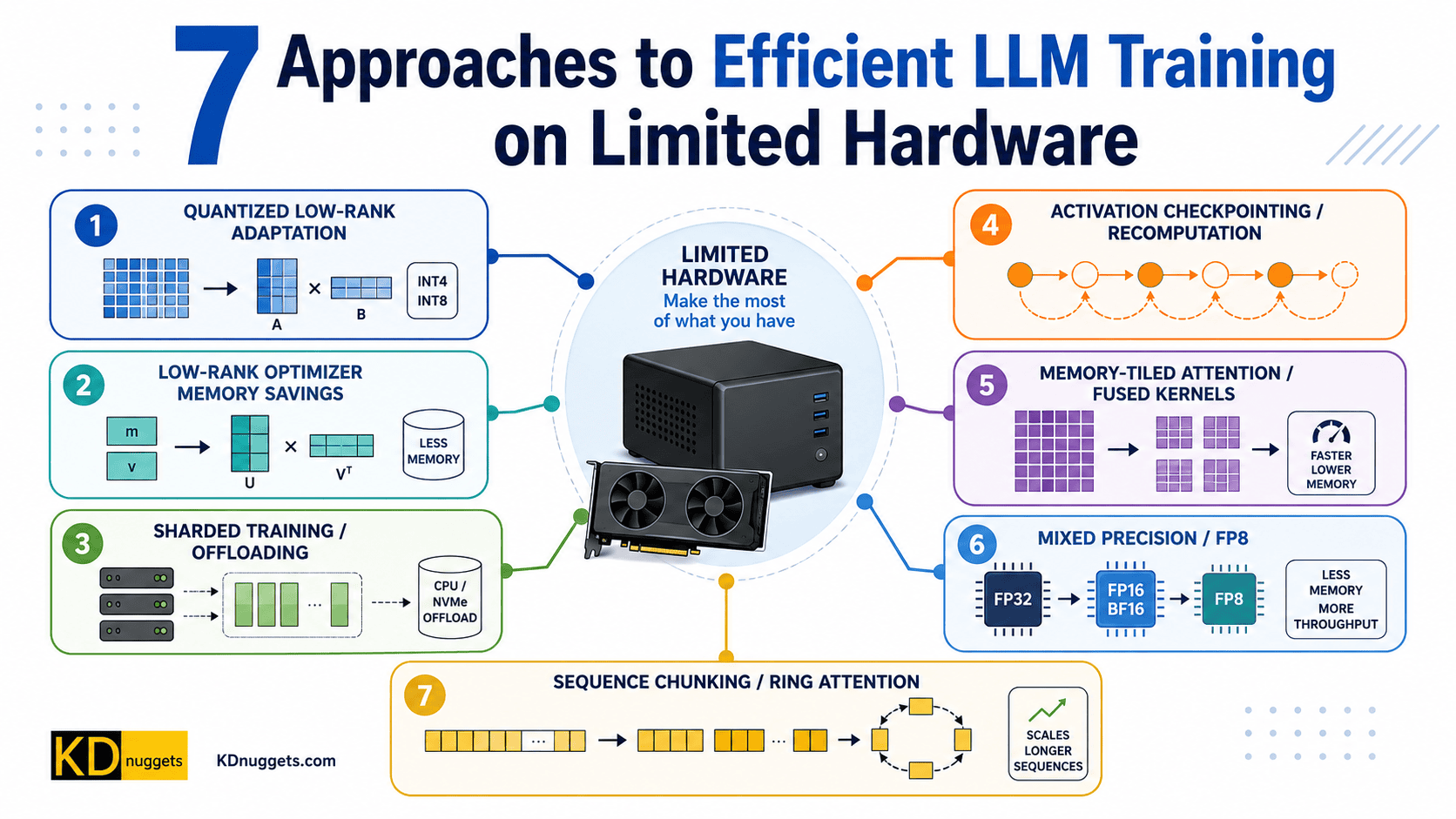
Seven Techniques to Train LLMs on Consumer Hardware
Training a large language model used to mean renting a server farm or settling for someone else's API. This guide challenges that assumption with seven practical engineering techniques for consumer GPUs, proving that memory limits are a constraint to design around, not a wall. It's a grounded, hands-on read for builders who want the control of training their own models.