human in the loop
human in the loop at Beyond Market Intelligence is a file of 11 stories. The newest of them: “Your AI Agent Is Ready Now Build the Scaffolding Around It”, “A 2016 Patent Reveals the Agentic Loop Behind Analytics”, and “Build Smarter AI Agents by Adding Human Oversight Where It Matters Most”. Agents got good. In 2016, I filed a patent on real-time concert feedback. Acme AI is the next-generation, AI-powered spreadsheet platform built to replace Excel and redefine how analysts, data scientists, and enterprise teams work… The list below is every human in the loop story on Beyond Market Intelligence, newest first.
Your AI Agent Is Ready Now Build the Scaffolding Around It
Agents got good. Now the hard part is building the scaffolding around them. Gubi reissued the Lotus lamp. That's the message from a new piece that argues your agent doesn't need more freedom, it needs structure. The most capable AI is pointless without the right architecture to support it. For a deeper look at that architecture, explore "From Cognitive Loops to Multi-Agent Swarms: Your 2026 AI Roadmap" on our site.
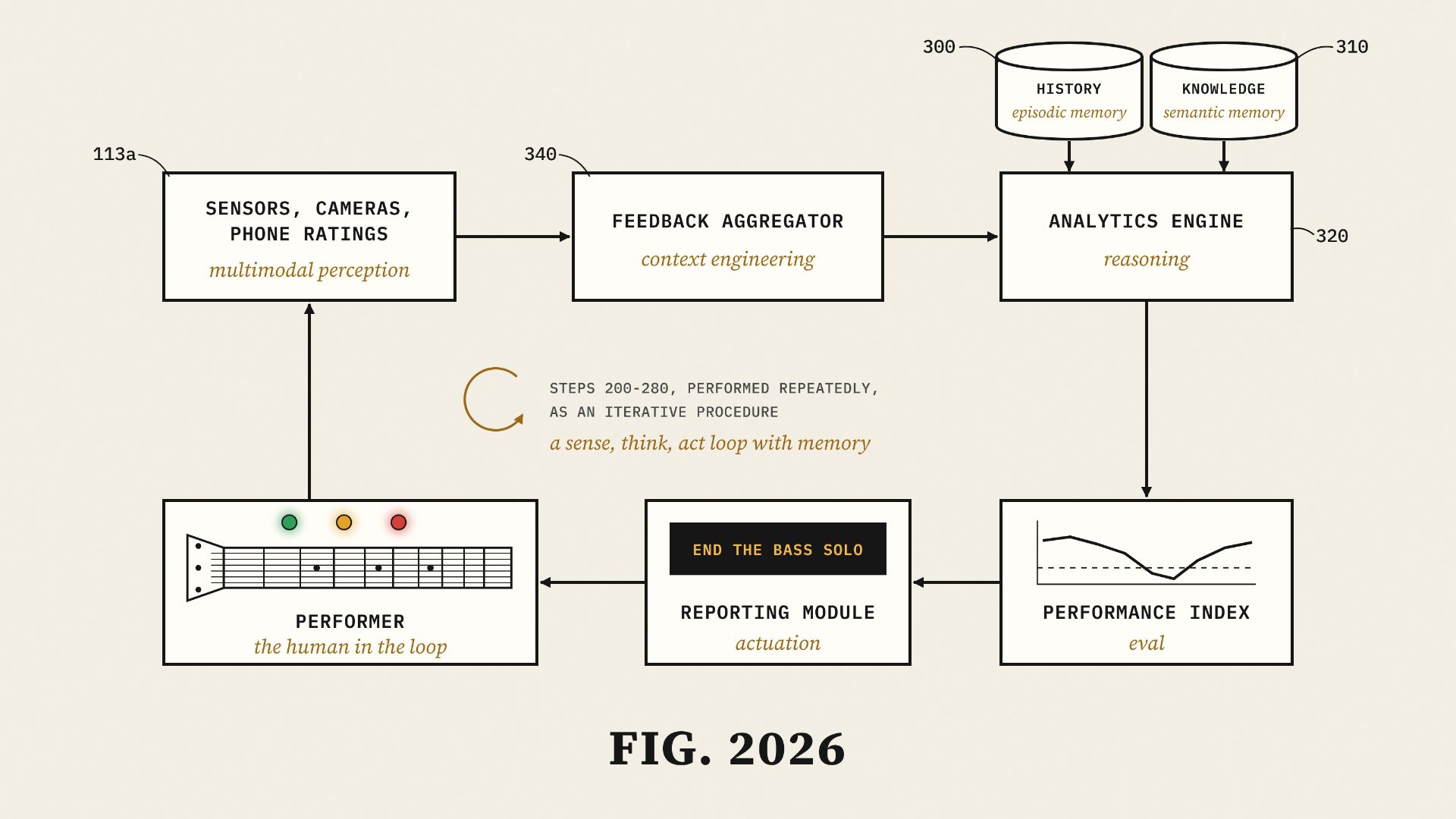
A 2016 Patent Reveals the Agentic Loop Behind Analytics
In 2016, I filed a patent on real-time concert feedback. Re-reading it now, the frame was wrong. We called it analytics. What we actually specified was an agentic loop: multimodal perception, memory-grounded inference, and a human in the decision path. That architecture was right. A decade of hindsight shows what agent builders still miss. For deeper context on how AI models handle perception differently, see our coverage of the vision AI benchmark where GPT-4o invented answers and Claude stuck with B.
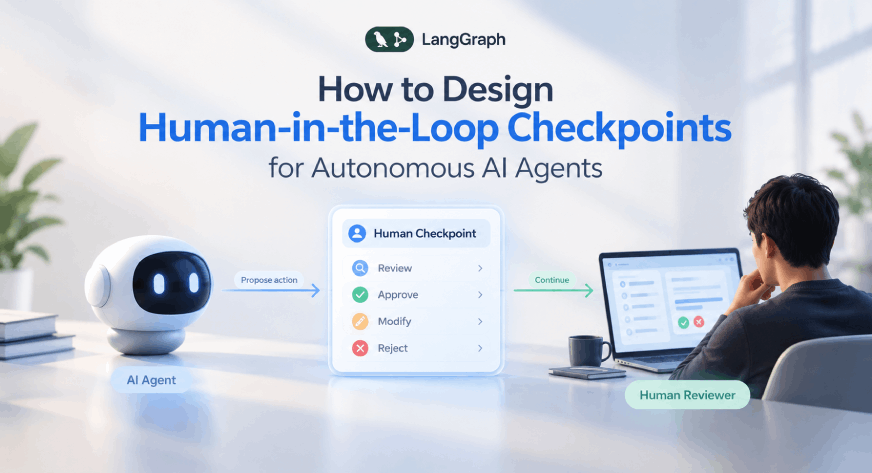
Build Smarter AI Agents by Adding Human Oversight Where It Matters Most
Autonomous AI agents can read, retrieve, reason, and trigger actions in seconds, useful speed, but real risk when the next step touches money, customer records, or live systems. Human-in-the-loop checkpoints add control exactly where a recommendation is about to become action. That's the smart design. For deeper context, our piece on Anthropic restricting internal AI tests from live internet shows how even the most advanced labs are rethinking control.
AI Claims Handling Finds Its Balance Between Automation and Human Insight
The real tension in AI claims handling isn't between speed and accuracy, it's between automation and the human judgment that only experience brings. Getting that balance right means building systems that learn from domain experts, not just from raw data. Our piece on how to "Build an AI Agent That Captures Real Expertise, Not Just Data" explores that exact challenge. When claims processing moves too fast, trust erodes. When it moves too slow, costs climb. The solution is smarter, more intentional design.

Focus human attention where it drives real data outcomes
Reviewing every AI action is a luxury most teams can't afford. In this piece, the author tackles a familiar bottleneck: how to keep humans in the loop without turning oversight into a full-time job. The answer isn't more checkpoints, it's routing attention to the moments that genuinely need it. We appreciate this practical take on balancing control with momentum. It pairs well with our guide on distributed training, where similar trade-offs between efficiency and oversight come into play.
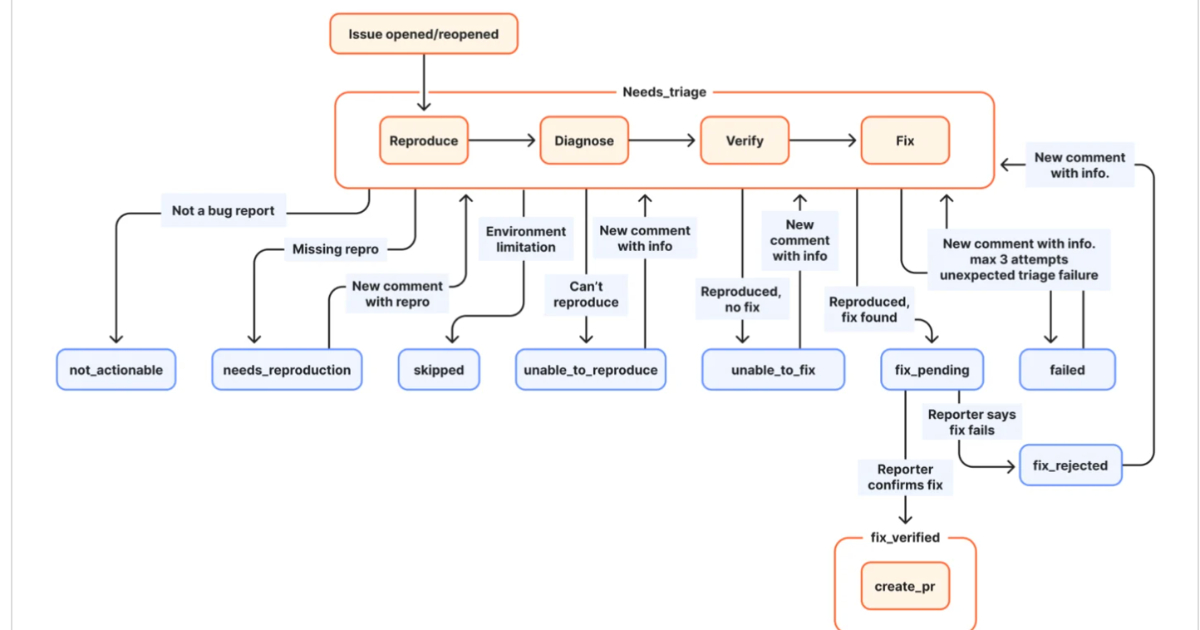
How AI agents triaged 85% of Astro's GitHub issues for Cloudflare
Astro's maintainers were drowning in GitHub issues, so they let AI agents take over triage. The result: an 85% cut in that workload, giving developers time back to focus on the work that matters. This isn't about removing humans; it's about making their role more meaningful. Cloudflare's approach, built on Workers with a human-in-the-loop, shows how agentic workflows can handle the noise. It's a practical win for open source, and it pairs well with our guide on distributed training algorithms.

When AI agents write 99% of your code, managing cost becomes the new skill
Engineers at Kilo Code now write or read code about 1% of the time, leaving agents to handle the rest. That shift is forcing hard questions about what to hand over, who fixes model mistakes, and whether ballooning token bills signal progress or waste. For Replit, Symbotic, and Kilo Code, it's a welcome evolution, provided teams set clear guardrails. Symbotic's Jared Go notes agents excel at greenfield builds, but brownfield work remains the real test. Replit keeps a human on the loop, not in it.
Transform Textbook Figures: Unlock Interactive Data with AI.
Turning static textbook figures into interactive, structured data is a compelling ambition, and this project tackles a real pain point. The focus on a human-in-the-loop pipeline is smart, acknowledging that AI works best when it assists rather than replaces judgment. The challenge of label removal while preserving artwork is the crux, and it is wise to seek low-cost alternatives to heavy multimodal models. This is less about a single breakthrough and more about a pragmatic blend of segmentation and inpainting.

Your AI agent passed your tests. Then it failed your customer.
Enterprise AI is granting agents more autonomy than the evaluations meant to govern it can support. Half of organizations have shipped an agent that passed internal tests, then failed a customer. Only 5% fully trust the automated evaluations in use today. The most-cited weakness: evaluations align poorly with real-world outcomes. Yet two-thirds are already deploying on automated results alone, or engineering toward it. That gap between autonomy and assurance is where failures scale.
Your AI agents are passing tests but failing customers
Enterprise AI is granting agents more autonomy than the evaluations meant to govern them can support. Half of organizations have shipped an agent that passed internal tests, then failed a customer. Only 5% fully trust automated evaluation today. Yet two-thirds are moving toward zero-human deployment. That gap between trust and autonomy is the defining tension, and the market is responding. Tooling is fragmented, investment is shifting toward human review, and the next year will show whether assurance catches up to ambition.

Google's Genkit Agents API gives developers human-in-the-loop control
Google's Genkit Agents API is now in preview for TypeScript and Go, and it's a meaningful step forward for developers building AI-native workflows. The framework wraps message history, tool loops, streaming, and state persistence into a single `chat()` interface, which is refreshingly direct. Detached turns are particularly compelling, letting agents keep working even after a client disconnects. Interruptible tools add human-in-the-loop control, complete with anti-forgery validation on resume. It's a practical approach to complex problems.