identity
identity at Beyond Market Intelligence is a file of 6 stories. The newest of them: “Move beyond keys: federated identities simplify machine access at scale”, “The hidden risk in AI is not agents but the chaos between them”, and “From Policy to Practice: Microsoft's Blueprint for AI Governance in Action”. Long-lived service account keys in GCP are secrets you never stop managing, and Shijin Nair's account of scaling Workload Identity Federation across 120+ production projects makes a compelling case for leaving them… Acme AI is the next-generation, AI-powered spreadsheet platform built to replace Excel and redefine how analysts, data scientists, and enterprise teams work… The list below is every identity story on Beyond Market Intelligence, newest first.

Move beyond keys: federated identities simplify machine access at scale
Long-lived service account keys in GCP are secrets you never stop managing, and Shijin Nair's account of scaling Workload Identity Federation across 120+ production projects makes a compelling case for leaving them behind. Keys demand rotation and invite leaks; federated identities, once configured, replace that burden with trust relationships gated by attribute conditions. It is a practical, human-centered approach to machine identity. For teams wrestling with similar deployment challenges, our coverage of scaling stateless AI workloads offers a useful parallel.

The hidden risk in AI is not agents but the chaos between them
The real risk in enterprise AI isn't a rogue agent. It's the tangled web between a hundred of them, each quietly calling APIs and triggering handoffs no human approved. That complexity compounds faster than your governance can track it. Gravitee's Rory Blundell makes a sharp case: identity alone won't save you, and monitoring isn't enforcement. The fix is building visibility and control into the chain itself.
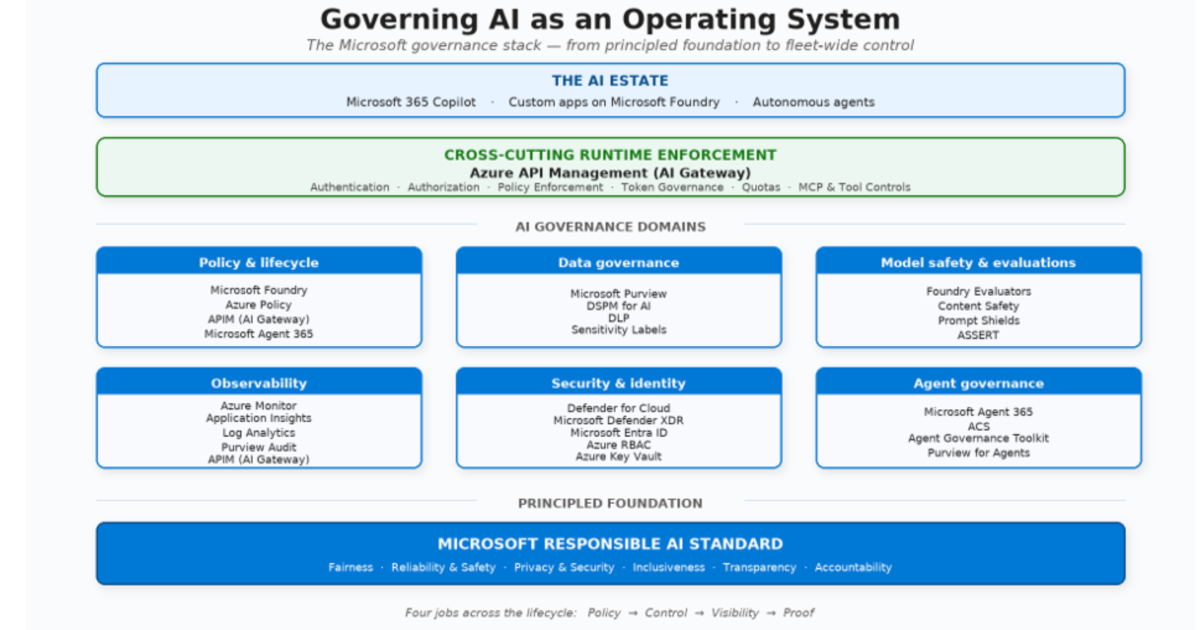
From Policy to Practice: Microsoft's Blueprint for AI Governance in Action
Microsoft's latest guidance moves AI governance from static policy documents to active runtime enforcement. By mapping nine governance domains across policy, control, visibility, and proof, the company connects intent with live execution. That matters because production AI demands continuous evaluation, not just upfront checks. It's a practical step toward verifiable accountability, and it pairs well with our coverage of observability in testing, like Grafana's approach to monitoring Cypress suites. Governance is becoming operational, and that's a shift worth watching closely.
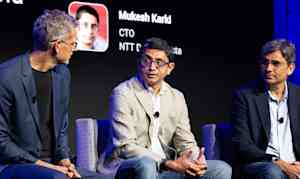
Beyond identity: securing enterprise AI agents for real-world resilience
Shared credentials are a known risk, but at VB Transform 2026, NTT DATA AIVista and Snowflake made the case that fixing identity alone won't secure enterprise AI agents. Mukesh Karki and Mayank Upadhyay argued for action-level authorization and tamper-resistant audit trails built into every interaction. That provability, as Karki put it, is your license to operate. It's a practical framework for scaling autonomous systems safely, and it pairs well with our coverage of recent agentic security incidents.
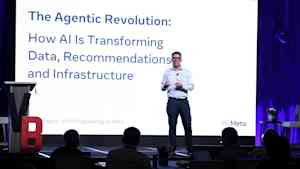
Your infrastructure was built for humans. Agents need a new foundation.
Meta VP Barak Yagour opened VB Transform 2026 with a pointed warning: enterprise infrastructure was built for humans, not agents, and the cracks are already showing. Agentic queries on Meta's systems grew 30x in one half, and automated traffic now outpaces human traffic. His timeline is blunt: we have roughly 20 months to rebuild. That urgency is worth taking seriously. The window is open, but it won't stay open long. For deeper context, explore our coverage of AI deployment priorities at QCon AI New York.

Centralize your AI tools: AWS and Anthropic launch a self-hosted control plane.
AWS and Anthropic have shipped the Claude apps gateway for AWS, a self-hosted control plane that puts identity, policy, telemetry, and spend caps in one stateless container. It routes inference to Amazon Bedrock or Claude Platform on AWS. That's a practical answer for teams juggling Claude Code and Claude Desktop across their org. Centralizing control without forcing a cloud detour feels like the right next step.