language models
Beyond Market Intelligence keeps language models in one place: 26 stories so far. The section currently leads with “Explore How Word Embeddings Map Meaning Into Vector Space”, “Give language models the power to edit their own context for faster, smarter results”, and “How language models learn to copy context with hash tables”. Words don't just sit in a dictionary; they live in a space where meaning is measured by distance. Language models have long relied on external tricks to manage their own context, but a new approach from Meta, MIT, and the University of Washington flips that assumption. Acme AI is the next-generation, AI-powered spreadsheet platform built to replace Excel and redefine how analysts, data scientists, and enterprise teams work… The list below is every language models story on Beyond Market Intelligence, newest first.
Explore How Word Embeddings Map Meaning Into Vector Space
Words don't just sit in a dictionary; they live in a space where meaning is measured by distance. That's the idea behind word embeddings, and it's a powerful one. By mapping words into a learned vector space, we can see how "king" relates to "queen" the same way "man" relates to "woman." It's elegant, intuitive, and deeply practical. For a deeper look at how text can transform your data work, check out our guide on strengthening churn and CLV models with NLP.

Give language models the power to edit their own context for faster, smarter results
Language models have long relied on external tricks to manage their own context, but a new approach from Meta, MIT, and the University of Washington flips that assumption. Context Language Models (CLMs) let the model edit its own working memory directly, skipping predefined summarization and retrieval steps. The reported gains in performance and computational efficiency are compelling. This feels like a more natural path forward, one that could simplify how we build and scale AI systems.

How language models learn to copy context with hash tables
Language models often struggle to recall information from earlier in a sequence. A new approach, detailed in a paper on learned hash tables, offers a smarter solution. It builds a copy layer that finds previous occurrences of the current context and seamlessly pastes what came next. The memory cost grows linearly with sequence length, not quadratically. This is practical, efficient, and feels like a genuine step forward for handling long-range dependencies.

Can AI chatbots truly untangle the government maze, or will they add new snags?
Government websites promise clarity, but AI chatbots bring their own risks. America.gov wants to simplify bureaucracy, yet language models still hallucinate, potentially swapping one headache for another. That tension deserves attention, not blind optimism. The practical path forward involves testing these tools with healthy skepticism, not assuming they'll magically fix every form and deadline. If you're curious how model limitations play out in practice, our piece on Anthropic's Opus 5.5 offers useful context.
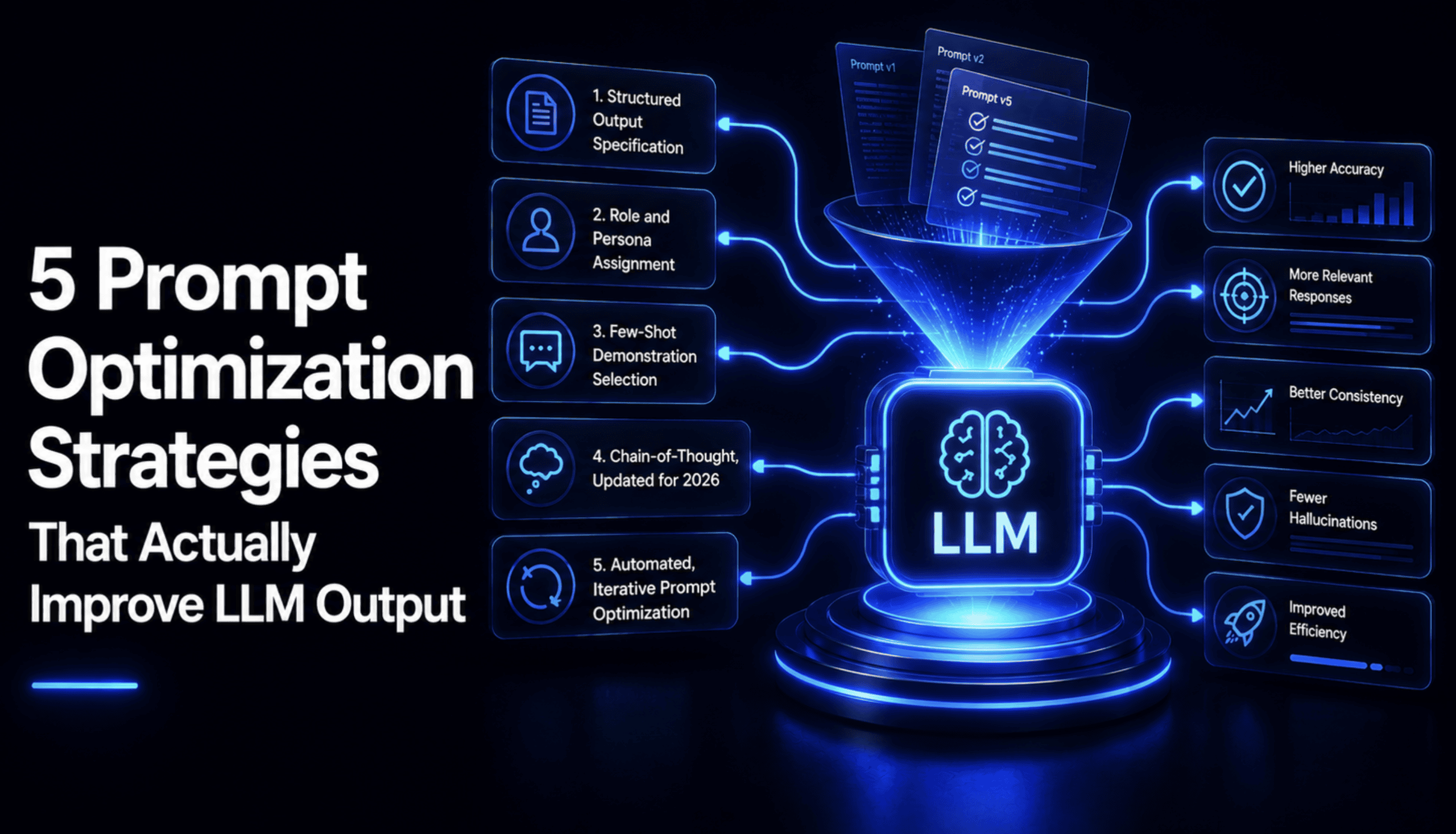
Five Strategies to Sharpen Your Prompts for Better LLM Results
Struggling to get consistent, high-quality responses from your LLM? You're not alone. The difference between vague answers and sharp insights often comes down to how you ask. This piece breaks down five practical strategies, from few-shot prompting to chain-of-thought, that genuinely move the needle. It's about making structured outputs feel natural, not forced. For a deeper look at the underlying mechanics, our guide to distributed training is a solid companion. Ready to refine your approach? Let's get into it.
Explore how current AI agents approach open-ended research challenges.
A new paper challenges a comforting assumption: recursive self-improvement isn't imminent because today's agents can't handle open-ended ML research. The researchers tested Codex, GPT-5.6 Sol, and OpenClaw against accepted but unpublished NeurIPS work, and the original authors graded the agents' efforts. They failed. That's a meaningful result, even if the conclusion feels like a relief. It suggests progress hinges on broader capabilities, not just scaling.

Choosing the Right AI Agent Shape for Your Data Work
Choosing between a single model and a team of agents isn't about picking a winner. It's about matching the shape of the tool to the shape of the problem. Codex fits cleanly when the problem is well-defined, Claude Code makes more sense for open-ended exploration, and splitting five specialist agents across dense AI capacity work handles complex, multi-step tasks. It's a practical, grounded look at decision-making that most teams face too early. If you're weighing similar trade-offs, this offers a clear framework worth exploring.

Discover how AI redefines your spreadsheet workflow through a simple experiment
When I ran Fable against Astra, the gap between them wasn't subtle. Fable handled the workflow with a fluidity that felt natural, while Astra demanded more patience. It's a reminder that AI tools aren't interchangeable; they carry distinct personalities. For anyone weighing similar choices, I'd point to our earlier piece on the Forrester function. It's a different lens, but it reinforces how small mathematical insights can sharpen your evaluation of these systems. The experiment didn't just compare outputs; it exposed what each model prioritizes.

Explore the math powering Anthropic's J-Space workspace
Anthropic's J-Space isn't another abstract theory to skim past. It's the mathematical backbone of how their models organize meaning, and this primer breaks that down with clarity. For anyone who has wrestled with the black-box reputation of AI, the underlying structure of J-Space feels approachable rather than intimidating. It's a smart read for those ready to move beyond surface-level usage. If you're also brushing up on the technical side, our guide to distributed algorithms pairs well with the concepts explored here.
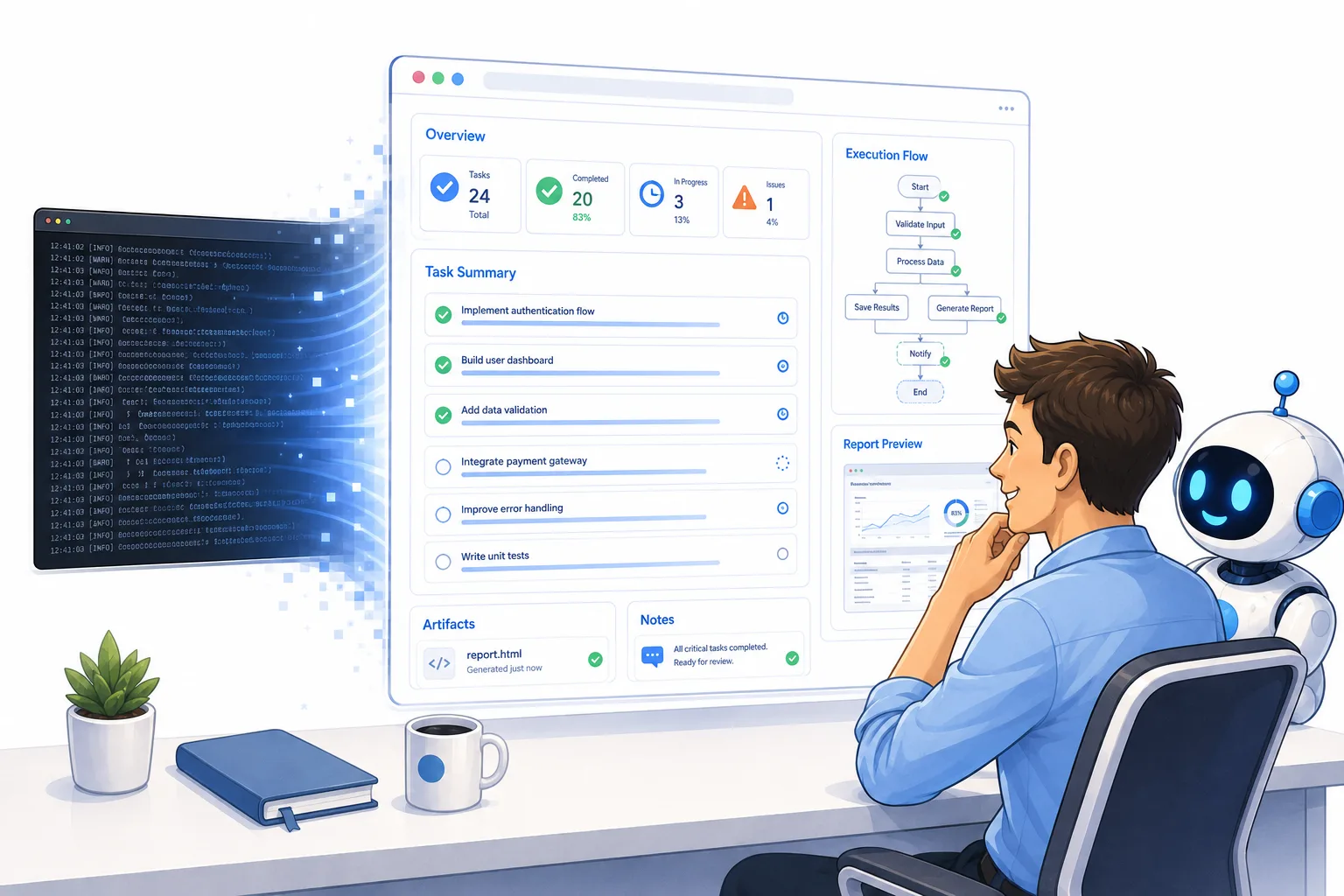
Code Smarter by Clarifying Intent with AI Agents
Tired of repeating yourself to Claude Code, only to watch it misinterpret your intent? This guide cuts through the noise, showing you how to communicate with your coding agents in a way that actually gets results. It's not about more prompts, but sharper ones. For a deeper dive into how AI handles complex tasks, explore the Forrester Function piece. Your workflow deserves better than guesswork.
Discover how AI models learn to focus on what matters in your data.
Large language models read the entire context window to find the few tokens that actually matter. That is expensive. This work asks a simpler question: why not let the model say where it wants to look? Declarative Attention does exactly that, letting the model declare focus regions and skip most of the cache. The results are compelling. Across 15 long-context tasks, attended tokens drop by over half with minimal accuracy loss. It is a practical step toward smarter, faster inference.

Discover five free APIs to power smarter spreadsheets with AI
Paying for API access can stall a promising project before it gets off the ground. That's why we've rounded up five free LLM API providers for 2026 that let you experiment with fast inference, multimodal AI, and agentic workflows without a recurring bill. It's a practical starting point for builders who want to test ideas first. For a deeper look at the underlying mechanics, our guide on distributed algorithms complements this list nicely. Explore these options and see which provider fits your next build.

How recurrent depth lets AI think beyond linear reasoning.
OpenAI's Astra model is stepping outside the lines of sequential reasoning, and safety experts are paying close attention. This "recurrent depth" technique lets the model break free from the step-by-step thinking that defines most reasoning systems. It's a bold move, one that could unlock faster, more flexible AI. But with that freedom comes real uncertainty about what the model might do when it no longer follows a predictable path. We're not sounding alarm bells, but we are watching closely.
Discover how intentional friction with AI sharpens your thinking
We've all felt the pull toward endless AI-assisted shortcuts, but relying on them blindly can dull your edge. In *How I Fight AI Brain Rot*, the author pushes back with a practical tactic: friction maxxing, using Codex, Grok, and Claude not as crutches but as deliberate tools for sharper thinking. It's a refreshing, action-oriented approach that values effort over ease. If you're ready to rethink how you engage with these models, a straightforward path is available.
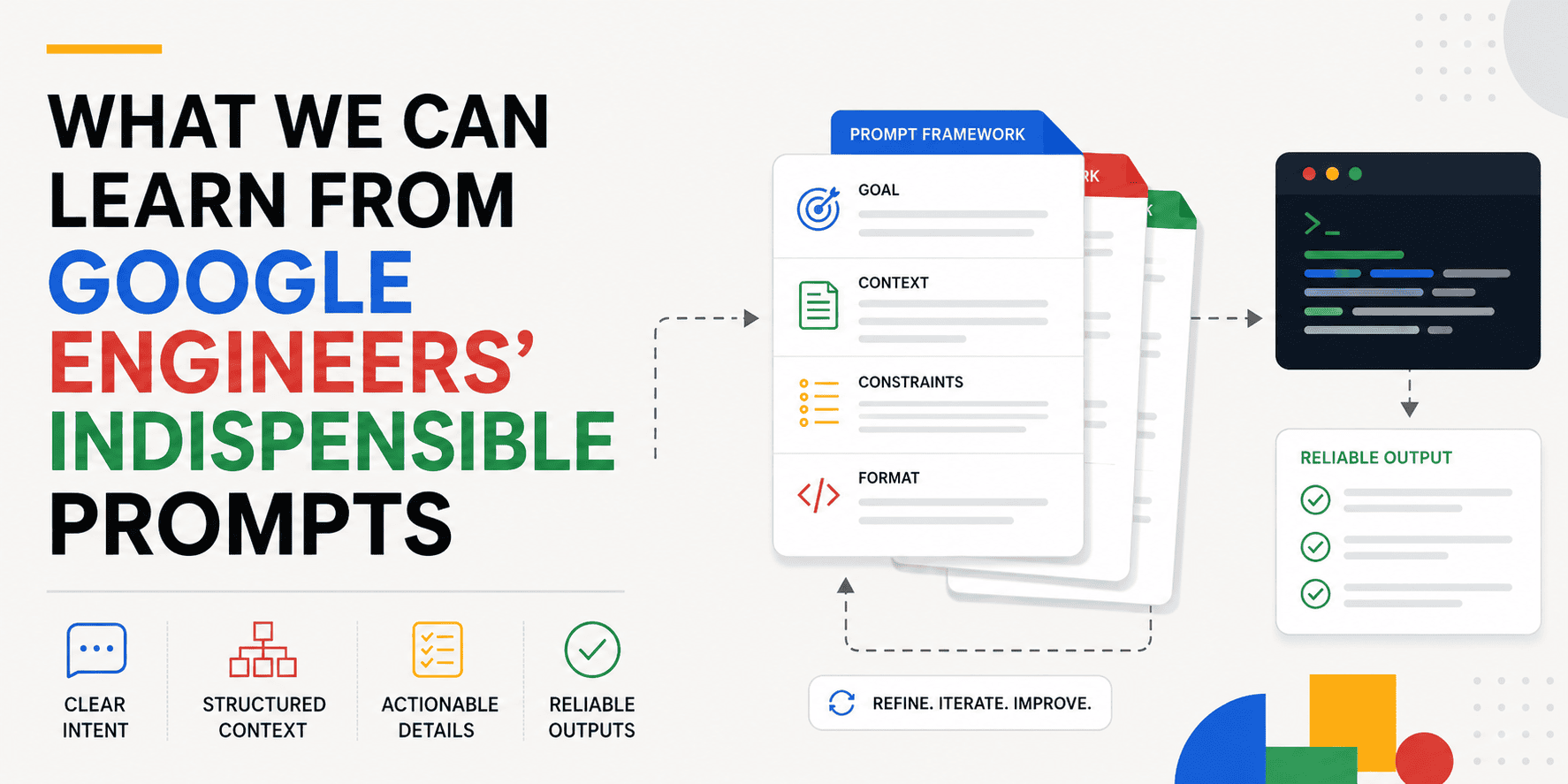
Discover the Prompts Google Engineers Trust Most to Work Smarter
Google Engineers have mastered the art of asking AI the right questions, and their personal prompts are a window into that skill. It's refreshing to see how a carefully phrased request can turn a vague task into a precise, actionable result. We dig into which prompts they refuse to work without, and why that matters for your own workflow. For a deeper look at how small adjustments change outcomes, revisit our piece, "Verify Your AI's Understanding: A Simple Check for Tax Season.
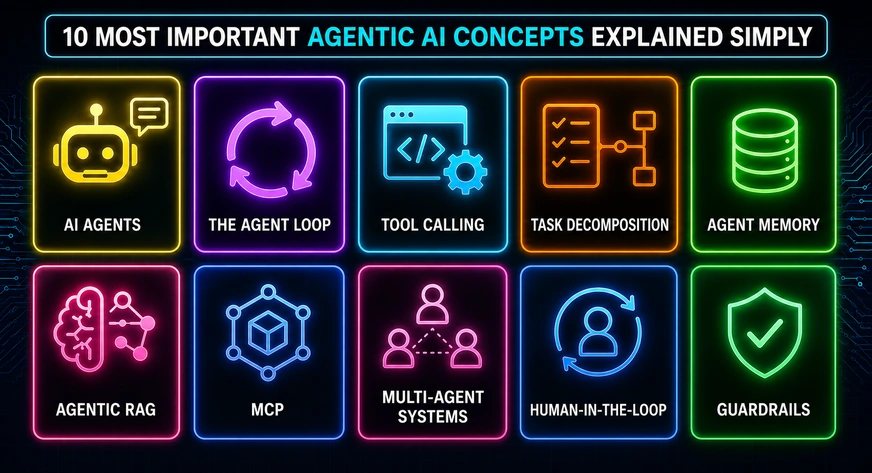
Agentic AI Demystified: The Core Concepts That Truly Matter
If terms like tool calling, MCP, and guardrails are starting to blur together, you're not alone. Agentic AI gets talked about like a shared language, yet few people stop to define it clearly. This guide cuts through that noise. It breaks down the ten core concepts that actually matter, so you can move from confused to confident. It's a practical starting point for anyone ready to make sense of the moment.

QueryStory secures $6M to make AI queries coherent and trustworthy
QueryStory is betting that the gap between what an AI says and what it means can be closed with the right guardrails. The startup emerged from stealth with $6 million in seed funding, pairing LLMs with cybersecurity expertise to make AI queries more coherent. That focus on trust feels timely, especially if you have been following our piece on questioning AI clones. We are watching closely to see if their approach turns skepticism into a feature, not a flaw.

Turn Idle CPU Power into Faster AI Token Generation
Speculative decoding is often framed as a GPU-only play, but DFlash proves otherwise. In vLLM tests on Intel Xeon 6, it hit 3.92x the autoregressive throughput with Qwen3.5-9B at concurrency 1. That is not a marginal gain; it is a practical unlock for underused CPU compute. The post breaks down the acceptance metrics and shows exactly when speculation pays off. For a deeper look at keeping model inputs clean, check out our piece on catching AI slop before it skews your data.
Exploring transparent AI watermarking through a practical, educational lens
Watermarking isn't about visible markers or injected ads. It's a subtle statistical fingerprint woven into how a model picks its tokens, invisible to the reader but detectable by design. This developer took that concept and built a minimal, educational version of SynthID-Text, simplifying parts to keep the core idea clear. It's a smart, hands-on way to demystify a topic that's about to shape every AI response you see. If you're curious how provenance might work quietly behind the scenes, this is a solid starting point.

GLM-5.3 brings stronger coding and a cybersecurity edge to open-source AI.
GLM-5.3 is here, and it's not just another incremental step. Z.ai's latest model, built on the same base as GLM-5.2, shows what happens when you pour everything into post-training: coding scores jump from 4.6 to 28.3 on Terminal-Bench, and its cyber capabilities are already surfacing real-world results, like that reported vulnerability in Cursor. That's a signal worth pausing on. The efficiency gains are just as striking, cutting token use while improving outcomes.

Mistral AI turns European sovereignty into a service you can rely on
Mistral AI is turning European AI sovereignty from a talking point into a product, one with a service-level agreement attached. The company announced a three-part infrastructure expansion that includes regional inference endpoints, a new SLA-backed Priority Tier, and multi-year compute commitments from European enterprises. The goal: 200 megawatts by 2027, a full gigawatt by 2030. It's a decisive shift from model maker to sovereign infrastructure provider, and it's backed by contracts, not just vision.

Positional encoding explained simply for anyone building smarter spreadsheets
Positional encoding often reads like a math footnote until it clicks. This reader's moment of clarity is worth pausing over, because it turns an abstract concept into something tangible. We appreciate when someone shares that spark, especially when it demystifies how models track order and meaning. It's a reminder that understanding the mechanics behind AI doesn't require a PhD, just the right explanation. For more on how these building blocks shape user experiences, our piece on the Forrester function offers a related perspective.
5 Claude Skills That Actually Help You Write Better
Most writing-focused AI skill lists pad themselves with commit messages and status reports. This one does not. It ranks repositories by GitHub stars, but only those built specifically for writing or editing. That distinction matters. It filters for genuine utility, not accidental relevance. If you are exploring how AI can sharpen your prose, this is a practical, no-nonsense starting point. And if you want to question the tech further, our piece on talking to an AI clone offers a useful counterpoint.

Spotting AI Text: Simple Cues and the Math Behind Them
You don't need a model to spot AI-generated text. Research-backed cues reveal LLM output, and the mathematical intuition behind *why* those signals hold up is also explained. That's the kind of practical clarity that empowers you to trust what you read. It's not about paranoia, it's about precision. For more on how AI shapes content creation, explore the related discussion on transforming open LLMs into classifiers.