latency
latency at Beyond Market Intelligence is a file of 42 stories. The newest of them: “Visualizing Telemetry Data Beyond the Default Line Chart”, “LLM Benchmarks Show Surprising Daily Performance Fluctuations”, and “Five Production Methods to Make Your LLM Leaner and Faster”. Line charts have served observability well, but they were never designed to answer every question a modern systems engineer needs to ask. A single hourly LLM benchmark score can mislead you. Acme AI is the next-generation, AI-powered spreadsheet platform built to replace Excel and redefine how analysts, data scientists, and enterprise teams work… The list below is every latency story on Beyond Market Intelligence, newest first.

Visualizing Telemetry Data Beyond the Default Line Chart
Line charts have served observability well, but they were never designed to answer every question a modern systems engineer needs to ask. In her presentation, Yao Yue draws on 15 years of operating large-scale systems to challenge this default. She shows how moving beyond time-series basics can directly address critical capacity and fleet-sizing decisions. It is a practical, overdue call to rethink how we visualize telemetry. For those exploring how AI reshapes data work, our piece on Jev versus LLMs offers a useful companion.

LLM Benchmarks Show Surprising Daily Performance Fluctuations
A single hourly LLM benchmark score can mislead you. After analyzing 31,352 hourly scores, the data shows within-day variation sits at 2.8 points, while between-day variation jumps to 8.4 points. That threefold gap matters. It means isolated movements mostly reflect normal model randomness, but sustained daily shifts reveal true performance drift. This is the missing observability layer for production AI. You cannot manage what you only sample once. Continuous evaluation, like the system built here, turns noisy data into actionable signals.
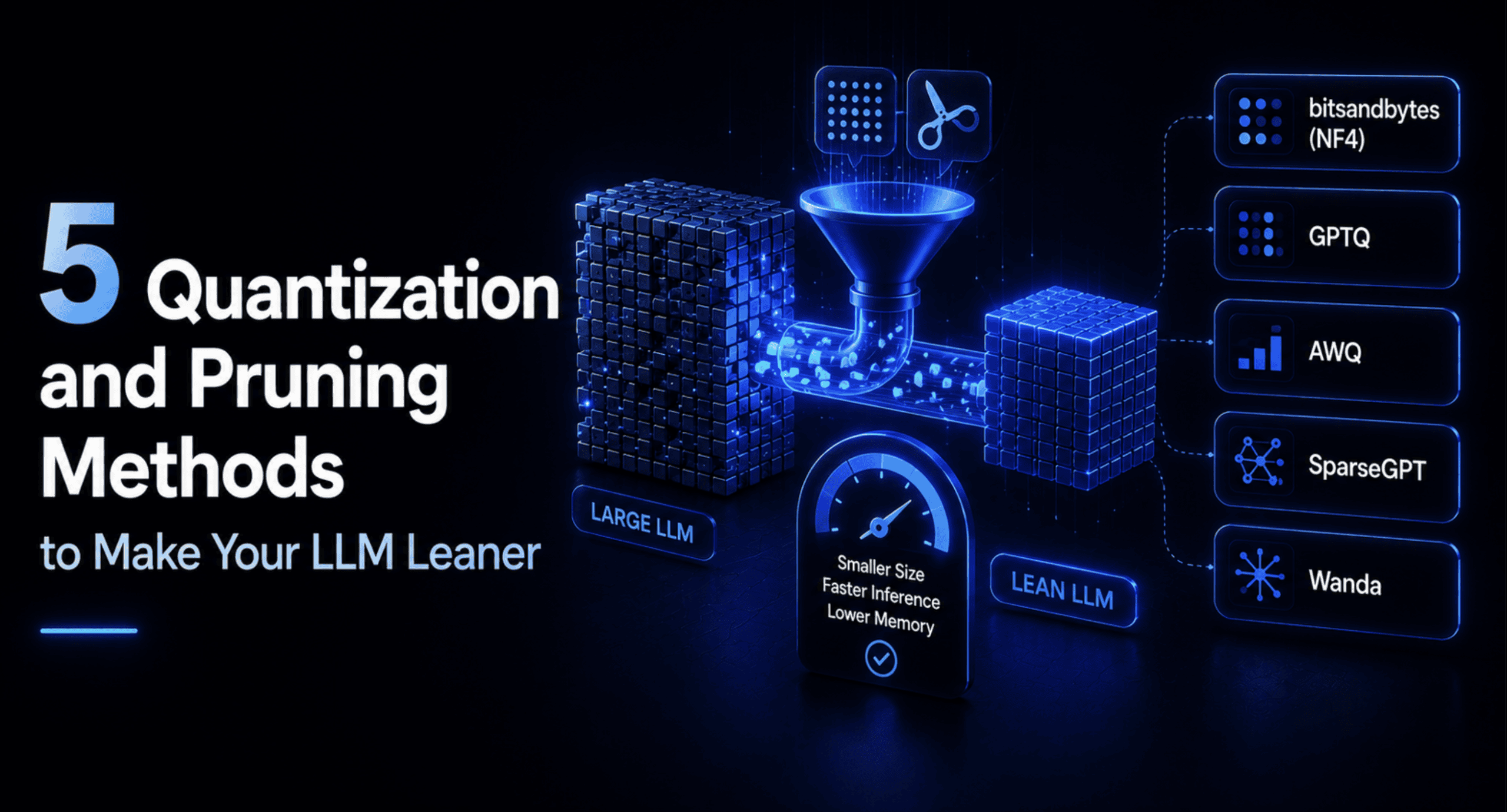
Five Production Methods to Make Your LLM Leaner and Faster
Every parameter in your model costs money, and too many of them mean your inference bill climbs with every prompt. Quantization and pruning are how you cut that weight without gutting performance, and skipping them leaves you paying for latency you do not need. Quantization and pruning cut model weight without gutting performance, and five production methods demonstrate how. If you are still unpacking how distributed systems shape model training, our guide to distributed algorithms pairs well with this one.

Nvidia's simple math cuts costly recomputation across AI models
Swapping models mid-session has always meant paying the full prefill tax again, until now. Nvidia's researchers found that a simple linear mapping can transfer a KV cache between compatible models, bypassing the expensive recomputation that bogs down multi-LLM agentic workflows. The math is refreshingly direct, not a heavyweight neural network. On tested pairs, this approach runs up to 25 times faster while keeping nearly all accuracy. It's a practical fix for a costly bottleneck, and it points toward leaner long-horizon AI systems.
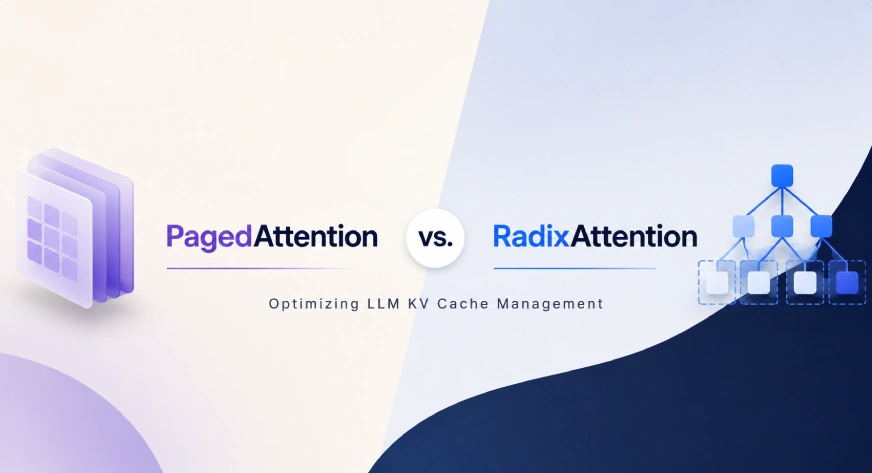
Unlocking LLM Performance Through Smarter Memory Management
KV cache memory can quietly decide whether an LLM deployment thrives or stalls. PagedAttention tackles fragmentation with smarter allocation, while RadixAttention targets prefix reuse. Both cut the GPU strain that limits concurrency and throughput. What stands out is how practical these optimizations feel. Production latency improves without demanding new hardware. For readers exploring how context shapes model behavior, our piece on agentic context learning pairs well with this discussion. It is a useful next step for understanding what makes modern LLMs efficient beyond raw architecture.

Blinded Tests Reveal When Long Context Beats RAG on Quality
A 127,000-token prompt can beat a top-5 RAG pipeline on the same 12 questions, graded blind for correctness, completeness, and grounding. That's the claim this controlled comparison puts to the test, and it's a useful one. Most teams assume retrieval is the only way to manage cost and latency, but Kimi K3's 1M token context window challenges that reflex. The tradeoffs are real, and the data here gives you a clearer lens on when full-context wins.

Route easy queries around the model to cut latency and cost
Every question in an enterprise RAG pipeline doesn't deserve a full model call. The pipeline from Article 9 proves that simple keyword matches can skip the LLM entirely, saving about two seconds per query. That's not a small win; it's a direct cut to latency and cost without sacrificing accuracy. Buying faster hardware isn't the only answer. Routing easy questions around the model is smarter. For more on questioning AI's assumptions, check out "Verify Your AI's Understanding: A Simple Check for Tax Season."

Enterprises invest in AI speed but lack visibility into infrastructure costs.
Enterprises are running AI in production, 66% have live workloads, and 29% operate at scale, yet fewer than half can rigorously track what that compute costs. Performance and GPU availability now outrank total cost of ownership, and reliability outranks price. That trade makes sense under pressure, but it leaves the weakest satisfaction score on value for money, a judgment made without full instrumentation. The next dollar targets specialized clouds and new silicon, even as current GPU utilization stalls near half.

Your Network Was Built for Yesterday. AI Demands More.
Traditional networks were built for predictable traffic. AI shatters that assumption. Continuous inference, agent-to-agent communication, and real-time data pipelines generate unpredictable, always-on demand that legacy architectures simply cannot handle. As AI moves from pilot to operational backbone, the network becomes the critical control layer determining performance, reliability, and cost. The gap between ambition and reality is stark: most enterprises still operate on transitional infrastructure. Treating the network as passive plumbing turns AI investments into a gamble. It must evolve into an intelligent, programmable platform.

Space lasers set to transform how data moves beyond ocean cables
Space lasers are about to take over the data superhighway, and that is a bold move worth watching. Endeavour Optical Networks plans to launch the fastest space laser communications system yet built, shifting data transmission from ocean fiber to the vacuum above us. It is an ambitious bet on speed and reliability, one that could free us from the physical limits of undersea cables. For anyone tired of legacy constraints, this feels like a genuine leap forward.

Beyond static tests, an AI sparring match reveals true adaptability.
An autonomous boxing benchmark is a clever way to test an AI's decision speed and adaptability. Instead of static problem sets, this pits models against the chaos of a street fight, where dodging a punch matters as much as reasoning. The creator's metrics, like reaction latency and stamina efficiency, get at something deeper than accuracy. It is a fun, human-centered approach to evaluation. We appreciate the humor in watching an AI get overconfident at 1% HP.
Mastering the Technical Interview for Live Streaming Deployments
Preparing for a live streaming deployment interview means more than rehearsing answers. You need to show how CI/CD pipelines, Kafka, and Kubernetes work together under real-time pressure. For an MLE role, focus on fault tolerance, scaling, and data consistency. Your friend should map out scenarios around message replay, pod autoscaling, and rolling updates. It's practical, not theoretical. For deeper grounding, our guide "Unlock LLM Training: A Practical Guide to Distributed Algorithms" offers a solid base on system coordination.

Explore cost-effective vector search with on-disk ANN indexes like DiskANN
RAM is the ceiling that most vector search budgets hit first. When that ceiling gets too expensive, the conversation shifts to disk. The real trade-offs between in-memory HNSW and on-disk options like SPANN and DiskANN are walked through, giving a practical lens on latency versus storage cost. It's a grounded look at architecting infrastructure that scales without breaking the bank. For a deeper dive into system-level choices, our piece on adaptive recommendation systems offers a useful parallel.

When Scaling AI Agents, Small CPU Tasks Become Big Bottlenecks
We scaled to hundreds of LLM agents and watched our system crawl. The culprit wasn't the models. It was the hidden cost of asynchronous design, where tiny CPU tasks quietly piled up until they became the bottleneck. This story is a practical look at that tradeoff, and it pairs well with our guide on distributed algorithms if you want the deeper mechanics. The takeaway is simple: more agents mean more overhead, and ignoring it slows everything down.
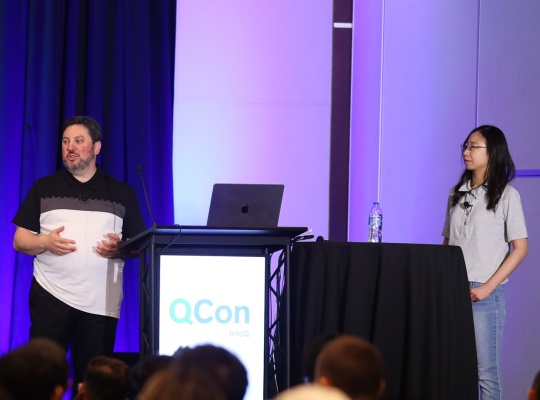
Durable workflows live in your database, not a separate orchestrator
External orchestrators promise flexibility, but they often add a fragile layer that undermines reliability. In this presentation, Jeremy Edberg and Qian Li make a compelling case for flipping the script: use your database as the engine for durable execution. Their approach with DBOS Transact, leveraging standard tables and SKIP LOCKED queues, is both elegantly simple and surprisingly robust. It's a smart, practical alternative for complex AI workflows that avoids the operational drag of separate systems.
Explore the future of multimodal interaction at the RTCA Workshop at NeurIPS 2026.
Conversational AI has moved past text chat into a world of voice modes and embodied avatars, yet building these systems to feel natural in real time remains a distinct challenge. The RTCA Workshop at NeurIPS 2026 directly targets this gap, focusing on streaming generation, interaction naturalness, and live evaluation. It is a practical step toward making machines that listen, watch, and respond fluidly. For those exploring how to evaluate such systems, our piece on "Jev vs LLMs" offers a useful parallel on measuring live performance.
When Blocking the Main Thread Becomes the Right Call
Conventional wisdom says never block the main thread, but Victor Ayomipo found a case where that rule deserved a second look. Working on a screenshot extension, he hit a scenario where pausing the thread was the practical call, not a failure of engineering. It's a refreshing counterpoint to the usual absolutism. Rules like that exist for good reason, but they're starting points, not laws. For a deeper take on handling complexity, check out "Evolve Your Recommendations: Real-World Insights on Adaptive Systems.
Stop Wasting Compute: Smarter Ways to Speed Up LLM Inference
Scaling LLMs isn't about adding GPUs. It's about removing wasted work from every request. That distinction shapes our latest guide, which lays out 12 practical ways to cut latency and inference costs without chasing hardware. Each tactic targets the inefficiencies that quietly slow production systems. If you're ready to move past brute-force scaling, this is where you start. For a deeper look at how distributed systems underpin these choices, our guide on unlocking distributed training algorithms pairs well with the conversation.