latency
latency at Beyond Market Intelligence is a file of 42 stories. The newest of them: “Building a GPT-2 KV Cache to Measure Real AI Performance Gains”, “Linear Recurrence Matches Transformer Accuracy at a Fraction of the Cost”, and “Seven Decision Models Put to the Test Against a Generative LLM”. Building a GPT-2 KV cache in PyTorch as a learning project is exactly the kind of hands-on work that reveals where the math meets reality. When you budget-match a linear recurrent model and a transformer down to 15 million parameters on a long-context retrieval task, something unexpected happens: neither learns much. Acme AI is the next-generation, AI-powered spreadsheet platform built to replace Excel and redefine how analysts, data scientists, and enterprise teams work… The list below is every latency story on Beyond Market Intelligence, newest first.
Building a GPT-2 KV Cache to Measure Real AI Performance Gains
Building a GPT-2 KV cache in PyTorch as a learning project is exactly the kind of hands-on work that reveals where the math meets reality. The numbers tell a fascinating story. At context length 1,000, the FLOP estimate suggests a 1,000x reduction with caching, yet actual per-token latency only drops about 6x. That gap is worth exploring. The memory measurements are impressively clean, with requested bytes matching the formula to zero after accounting for a constant cuBLAS workspace offset.
Linear Recurrence Matches Transformer Accuracy at a Fraction of the Cost
When you budget-match a linear recurrent model and a transformer down to 15 million parameters on a long-context retrieval task, something unexpected happens: neither learns much. Accuracy hovers near chance for both. The real story is cost. At 8,192 tokens the linear model runs 2.37× faster, and training time opens a 6-7× gap that only widens with scale. This negative result from Jev's decision-lab is exactly the point, small decision models are accuracy-starved regardless of substrate, so the winning choice becomes efficiency.
Seven Decision Models Put to the Test Against a Generative LLM
A head-to-head test of seven open decision models against a generative LLM reveals a clear winner on routing accuracy, latency, and output reliability. The results are both practical and telling. For teams wrestling with model selection, this hands-on Jev repo comparison offers concrete data instead of speculation. We also published "Two Paths to a Smarter Decision Model" if you want to explore how different approaches can match on accuracy while diverging sharply on cost. The future of data decisions starts with honest benchmarks like these.
Two paths to a smarter decision model: equal accuracy, unequal cost
Two paths to the same decision model, matched within 0.02% on parameters, yet the cost difference is stark. A linear recurrent backbone and a standard attention transformer were built on identical budgets for a long-context retrieval task. At 8K tokens, the linear model runs 2.37× faster. Training? Six epochs took 30 minutes versus 40-45 minutes *per epoch* for the transformer. Neither substrate learned much at 15M parameters, accuracy hovered near chance. The real insight is where cost lives.
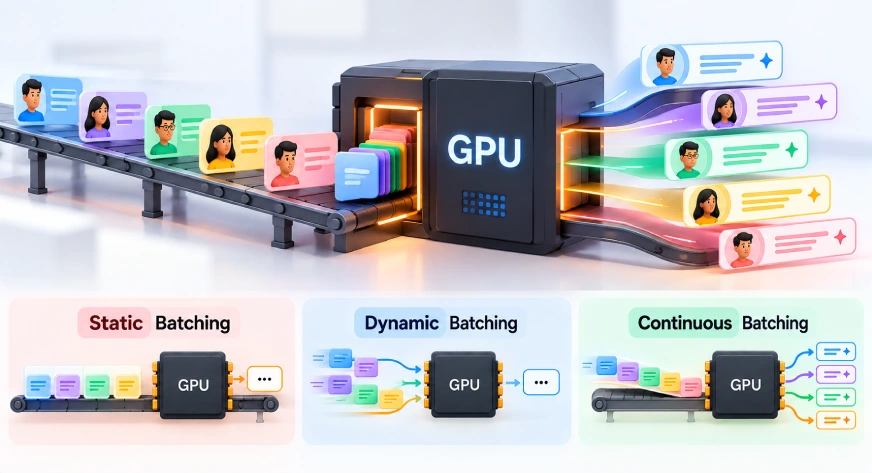
Smarter resource use: how batching transforms LLM performance
Four people heading to the same destination in separate taxis make four identical trips. Put them on a single bus, and everyone arrives together using far less fuel. That is the logic behind batching in large language models. Instead of processing one request at a time, the system groups them, sharing memory and compute across the batch. It is a smarter use of resources that makes AI faster and more efficient. For deeper coverage, explore how hierarchical routing cuts memory while preserving long-context accuracy.
Stop Waiting for Answers Your Local Model Already Knows
Waiting seconds for an answer your local model has already figured out hundreds of times is a familiar frustration. shad0v solves that by sitting in front of any OpenAI-compatible server, logging responses, and after roughly a thousand, compiling a tiny table that answers repeats on CPU in microseconds, only when it agrees with the model 95% of the time. It even learned Snake from an LLM's moves.
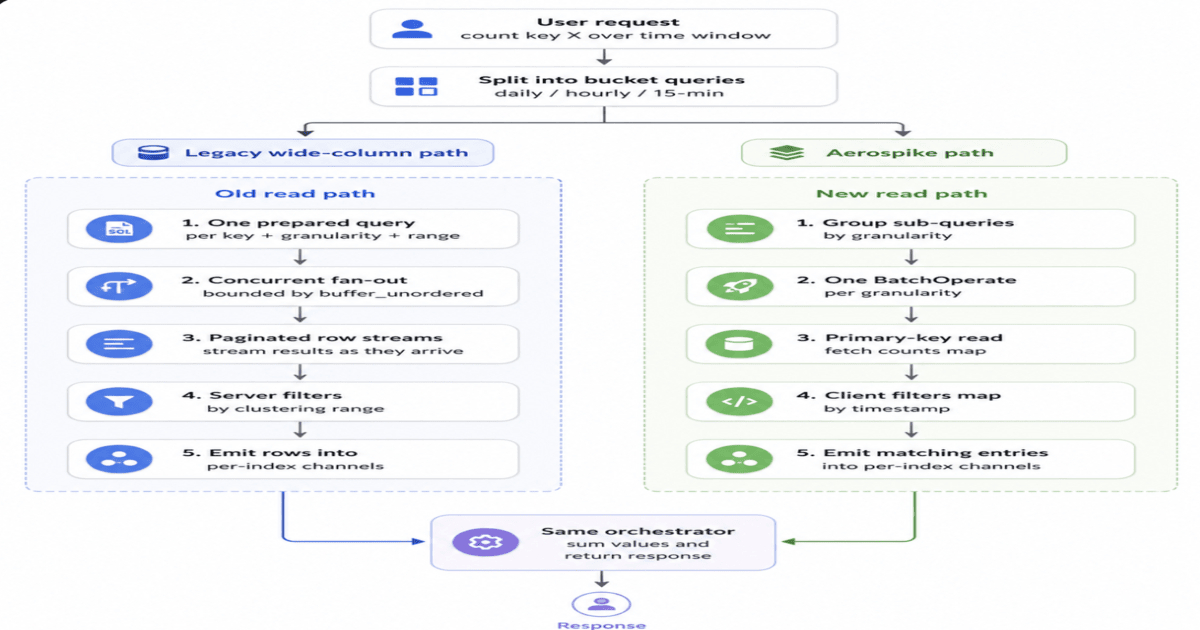
Grab Cuts Spreadsheet-Style Data Delays With a Smarter Storage Shift
Grab cut spreadsheet-style data delays by rethinking how it stores high-volume Counter Service data. Moving from a wide column database to Aerospike, with storage abstraction, shadow traffic, and gradual migration, slashed production p99 read latency by roughly 50%. Disk usage dropped to 1 TB from 3 TB, and per-node costs fell up to 50%. That is a smarter storage shift worth exploring. For deeper engineering lessons, our piece on building Python AI libraries in production pairs well with this story.
Faster chunking in Rust without sacrificing accuracy, now open source
Chunking speed usually trades away accuracy, but this open-source Rust library challenges that trade-off. Chunkr delivers throughput measured in gigabytes per second, outperforming LangChain and LlamaIndex by wide margins while supporting strategies like recursive, markdown header, and hierarchical chunking. Its native PDF loader processes pages 15.9x faster than pypdf. For teams wrestling with large document pipelines, this is a practical leap forward. If you're exploring how performance shapes AI tooling, our piece on spec design across 65 open-source projects offers useful context.
TypeSafe AI's Jev Delivers Focused Utility Without Hallucinations
Jev, TypeSafe AI's new model, promises frontier-class reasoning without hallucinations, and it's built by a co-inventor of ChatGPT. We put that claim to the test, running it live on over 16,000 benchmark requests. What we found is a smaller, humbler model that delivers focused utility at near-zero cost. It serves a specific job nobody else quite fills. For deeper context on where AI logic still struggles, see our piece on Nonograms.

How DoorDash Built a GenAI Platform for 5,000 Users
DoorDash bet big on open-weights models after starting with vendor-first setups, and that shift is the spine of this story. Swaroop Chitlur and Sidd Kodwani walk through building a GenAI platform for over 5,000 internal users, tackling LLM gateways, agent gateways, and the constant trade-off between accuracy, latency, and cost. For teams wrestling with similar scale, their architectural bets offer a practical blueprint. Read "Small models, smarter labels: confidence scoring without the hype" alongside this for a complementary take on model evaluation.
How one developer slashed AI search costs while keeping queries accurate
Building a search engine that actually understands "a game like Hades that feels cozier and is co-op" is a hard problem. One developer solved it by swapping an expensive AI extraction step for a faster, cheaper alternative: Jev on OpenRouter's Decisions API. That single change made the query pipeline roughly 10x faster and slashed costs by about 6x, all while keeping accuracy intact. It is a smart, practical trade-off that prioritizes speed over flashy completions.

Cut token costs by routing text-heavy images away from pixel processing
Routing text-heavy images through pixel processing is a waste of VRAM and context space. One developer built a smarter path: a deterministic pre-pass that classifies images and sends schematics to the VLM while extracting text from code screenshots as plain strings. The result is an 88.7% token reduction. That kind of practical optimization feels more valuable than chasing raw model size. For a deeper look at efficiency trade-offs, our piece on two AI transcribers compares real-world performance where the numbers actually matter.

Python Workers Go Live as Questions on Speed and Upstream Support Emerge
Cloudflare's Python Workers have gone GA, but the launch feels more like an opening act than a headliner. Built on PEP 783 and socket syscalls over the Workers connect API, the announcement conspicuously omits performance figures. That silence is loud. A urllib3 maintainer is already asking who supports the upstream work afterward, and Wasmer's founder wants cold-start numbers, citing about 1.027 seconds from Cloudflare's own blog. These are fair, pointed questions. If you're evaluating this for production, you'll want answers before committing.
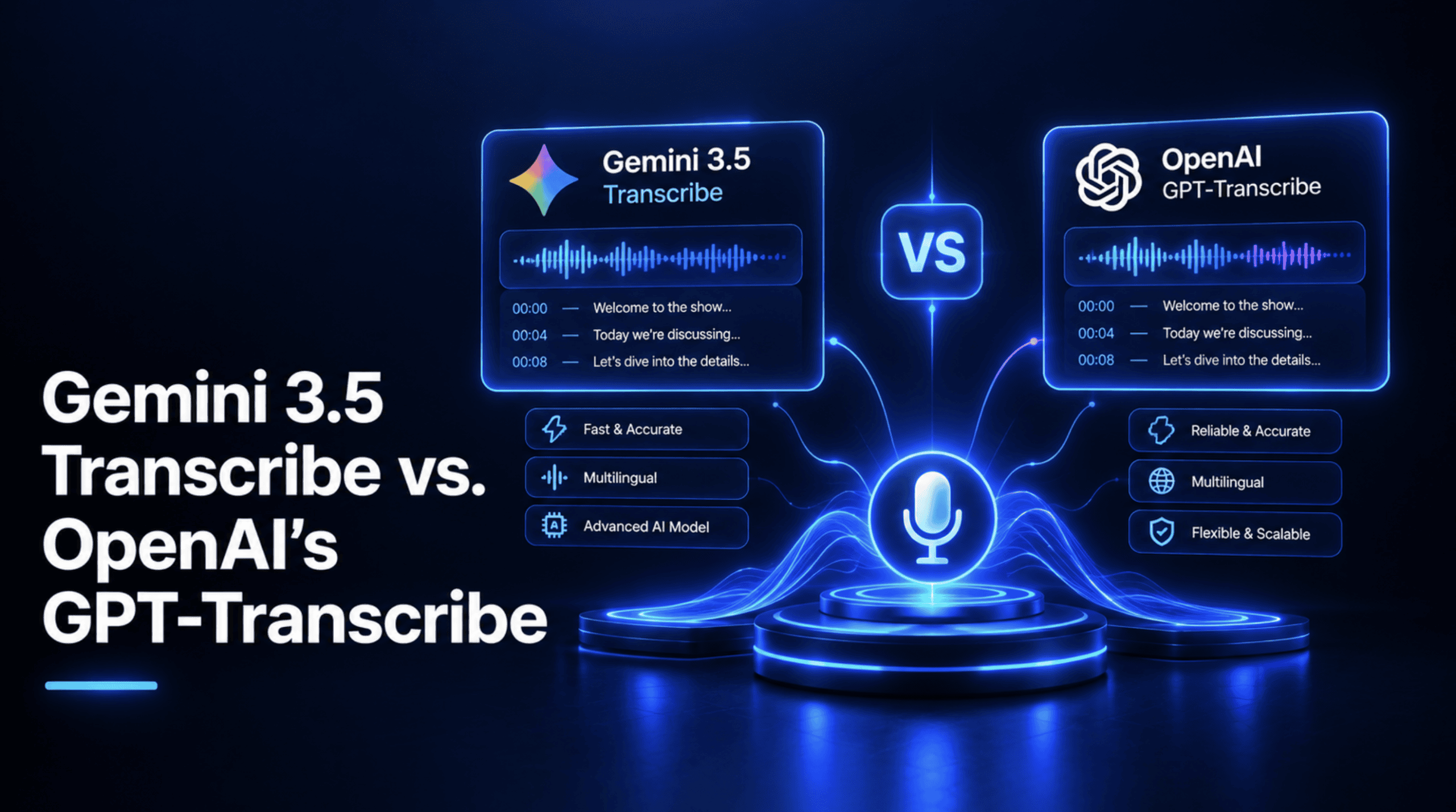
Two AI transcribers compared: real performance where the numbers count
You've read the benchmarks, but what happens when two AI transcribers face real-world data? We pushed them past marketing claims to see where the numbers actually land. The comparison walks through each model's background, a concrete use case with working code, and a side-by-side comparison of the metrics that determine productivity. If you appreciated our breakdown of Qwen3-VL's struggles with dates, this follow-up answers a practical question: which tool earns its place in your workflow?

Evolve Your Recommendations: Real-World Insights on Adaptive Systems
Adaptive recommendation systems are rarely defeated by model architecture alone. Mallika Rao shows that real complexity emerges in production, where real-time feedback loops, retrieval freshness, and multi-stage orchestration must all bend to latency and cost constraints. This is practical insight, grounded in operational reality. For deeper context on how such systems are built, explore our piece on *Agent Harnesses* to see similar engineering discipline applied elsewhere. Rao's work is a reminder that evolution happens under pressure, not in isolation.

Jev vs LLMs: Evaluating AI for Practical Decision-Making
Spreadsheets have long forced a choice between speed and judgment. In a new test, TypeSafe AI's Jev tackled 3,080 classification tasks, and the results are worth your attention. The comparison focuses on accuracy, latency, calibration, and confidence, asking whether a dedicated tool can serve as a practical decision layer where LLMs might falter. It is a grounded, useful evaluation. For those exploring how AI systems handle reasoning under pressure, this pairs well with our guide to distributed training algorithms.
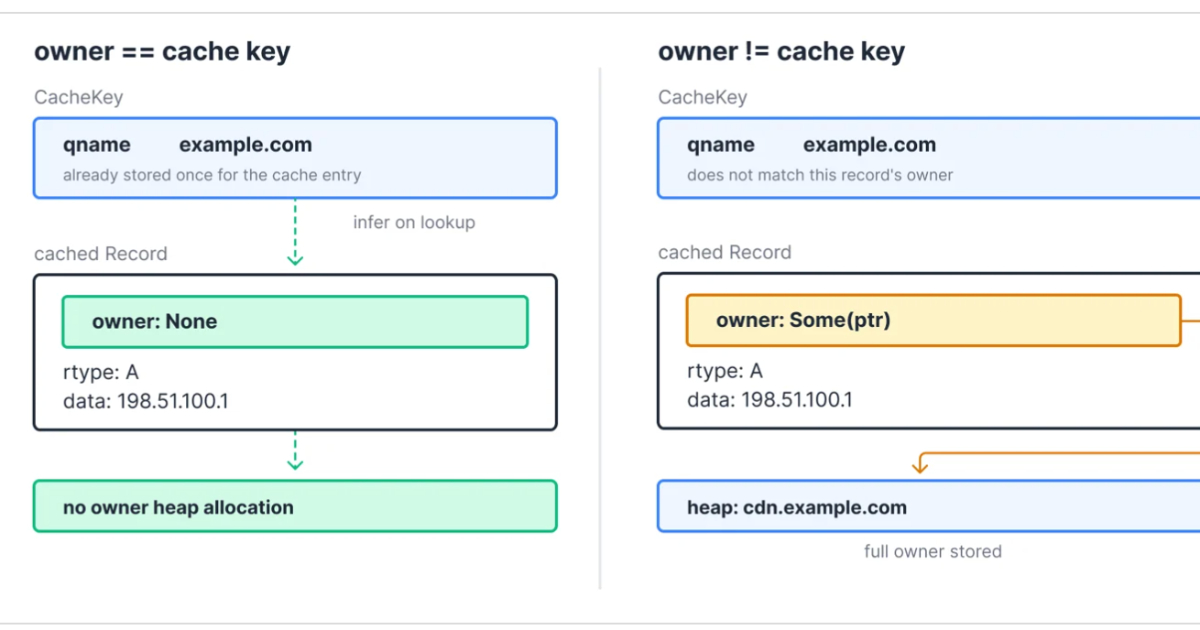
Cloudflare's Data Innovation Frees 100 TB, Boosts DNS Performance
Cloudflare's Big Pineapple DNS cache just got a serious upgrade. By redesigning the in-memory representation of its entries, the team cut the per-entry footprint by 56%. That freed roughly 100 TB of working-set memory across the fleet, which is a massive win for efficiency. The Rust-based changes didn't stop there. Cache insertion throughput climbed 43%, and lookup latency dropped 19%. This means faster, more responsive DNS without needing extra hardware. It's a smart, practical step forward.

Orchestrate AI Agents: Google Open-Sources AX for Enhanced Efficiency
Google has open-sourced AX, an orchestrator designed to keep autonomous AI agents from idling away resources. By treating agents as stateful actors on its Agent Substrate runtime, AX suspends tasks during downtime and resumes them on demand, trimming latency without sacrificing performance. The control plane's Kubernetes-style primitives make managing agent workloads feel familiar, not foreign. It's a practical step toward efficient, scalable AI operations.

Cloudflare's smarter TLS handshake cuts latency by over 150 milliseconds
Cloudflare's decision to replace static origin TLS guesses with per-origin measurement is a smart, practical win. By measuring instead of assuming, they cut HelloRetryRequests from 52% to 3.7% and shaved over 150 ms off p90 latency. That's meaningful progress. Post-quantum connections now complete in one round trip 99.2% of the time, even if only 12.8% of origins support it yet. It's a measured step forward, not hype. For more on how Cloudflare refines performance behind the scenes, their EmDash migration offers another useful look.

Active Compute Fabric cuts GPU idle time, reshaping AI infrastructure.
Cornelis just raised $205 million, and the message is clear: Nvidia's grip on AI infrastructure isn't untouchable. The company's Active Compute Fabric targets a quiet but costly problem, the wasted GPU cycles spent waiting on data. That's where efficiency lives, and that's where Cornelis is aiming. It's a smart, grounded challenge to the status quo, one that speaks to a future where hardware works smarter, not just faster. For more on how systems handle real-world demands, our piece on adaptive recommendation systems offers useful context.
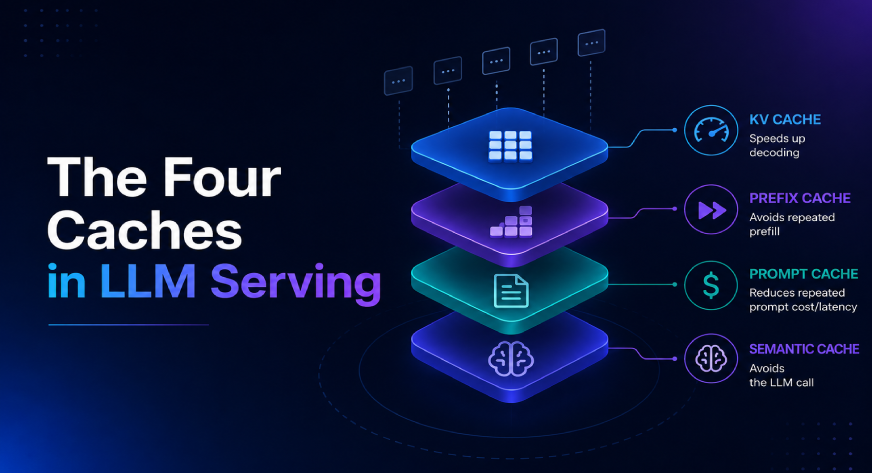
Smart Caching: Optimizing LLM Performance and Reducing Costs
Every request your LLM handles may carry millions of tokens, yet much of that data repeats across calls. Reprocessing it wastes time and drives up compute costs. Smart caching targets exactly this waste, and the new piece breaks down the four cache layers that make serving faster and cheaper. It's a practical read for anyone tired of paying twice for the same work. For a deeper look at distributed systems, our guide to distributed algorithms pairs well with this one.

Why Payment Systems Break Chaos Engineering's Core Rules
Standard chaos engineering assumes experiments stop cleanly and blast radius is knowable upfront. Payment systems break all three rules. Salim Adedeji's account of ECS deployments exposes what generic tooling misses: a 60-second DNS TTL stretching failover to 93 seconds, retry logic multiplying database load 2.4x, and AZ rebalancing loops that spiral. That's the gap between theory and production reality. For teams wrestling with distributed complexity, this is a practical field guide worth exploring, much like our earlier look at distributed training algorithms.
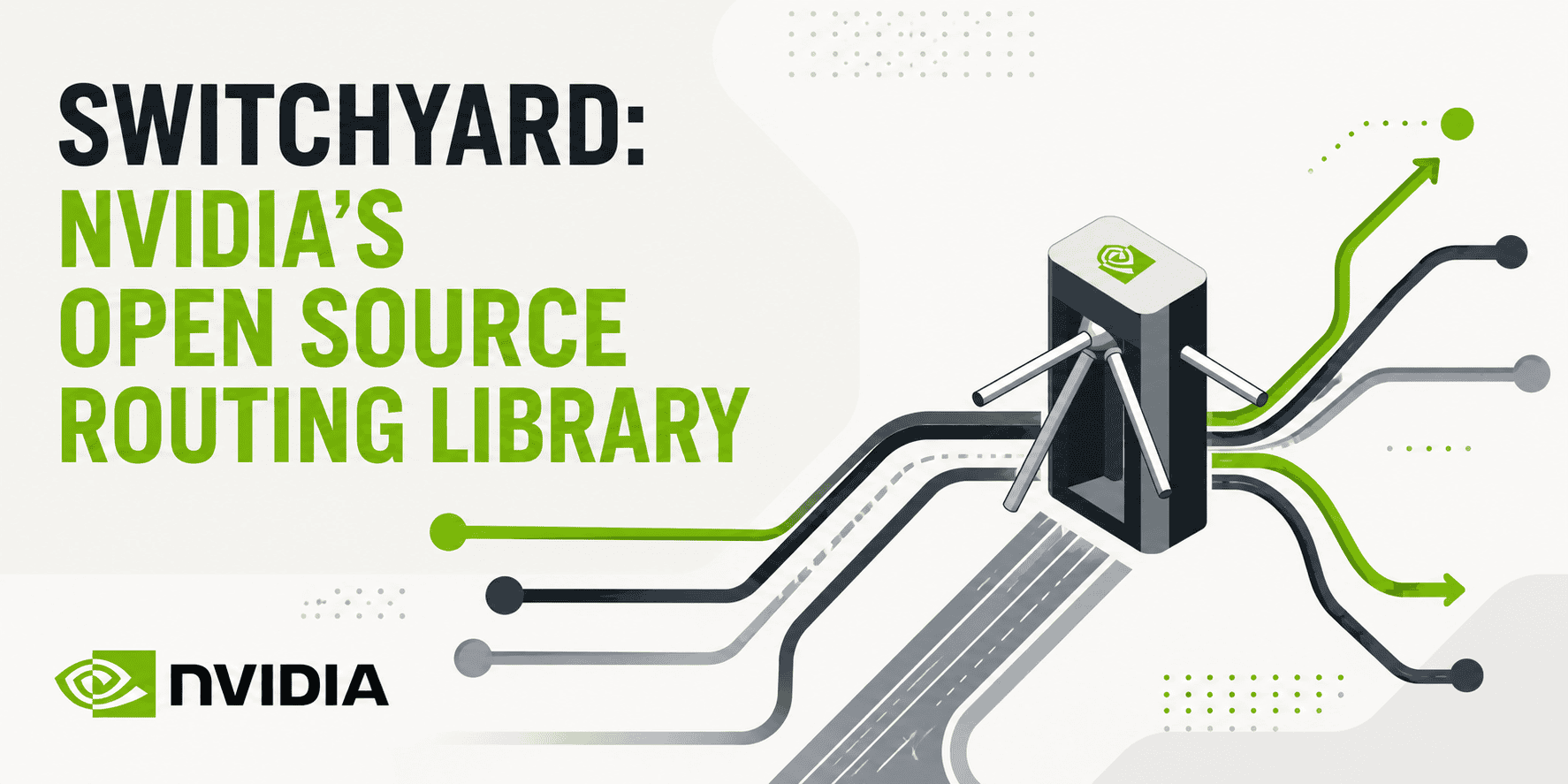
Intelligent routing reduces AI costs without sacrificing quality.
Not every AI request needs the full power of your most expensive model. Switchyard, NVIDIA's open-source routing library, offers a smarter approach: route simpler queries to lighter models, saving cost and latency without a major drop in quality. It's a practical shift toward efficiency. For those building distributed systems, our guide on distributed algorithms explores the foundational concepts that make routing like this possible. Explore Switchyard and see how intelligent routing changes the math.
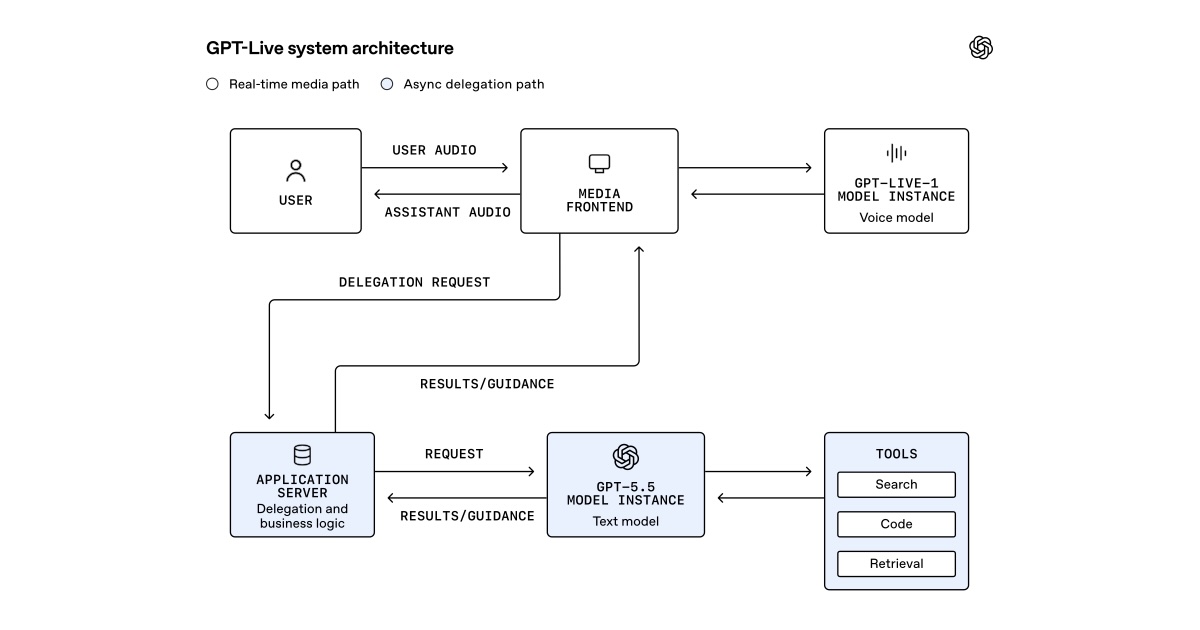
How OpenAI Built Continuous Voice Without Compromising Speed
OpenAI's engineering deep dive into GPT-Live reveals a thoughtful separation of concerns: the live path handles media and inference, while application logic runs behind an asynchronous RPC boundary. That's a pragmatic architecture for continuous voice interaction, one that prioritizes responsiveness without tangling latency-sensitive work in heavier tasks. It's the kind of clarity that makes complex systems feel inevitable. For broader context on AI behavior in practice, our earlier piece on AI agents sharing user images offers a cautionary counterpoint worth revisiting.