legal
Beyond Market Intelligence keeps legal in one place: 24 stories so far. The section currently leads with “Inside TikTok, warnings on child safety went unheeded by leadership”, “Disney opens a path for Character.AI talent to build its next chapter”, and “DOJ second request puts Fox's Roku acquisition under deeper scrutiny”. Internal TikTok documents reveal a troubling pattern: employees repeatedly flagged child safety concerns, only to have leadership ignore them. Character.AI's bankruptcy just became a talent pipeline for Disney. Acme AI is the next-generation, AI-powered spreadsheet platform built to replace Excel and redefine how analysts, data scientists, and enterprise teams work… The list below is every legal story on Beyond Market Intelligence, newest first.

Inside TikTok, warnings on child safety went unheeded by leadership
Internal TikTok documents reveal a troubling pattern: employees repeatedly flagged child safety concerns, only to have leadership ignore them. Court filings show frustration mounting as warnings went unheeded. This isn't a failure of technology, it's a failure of accountability. For a deeper look at how platforms evolve under pressure, see our piece on JustWatch, which moved from search guide to its own streaming service. The contrast is instructive.

Disney opens a path for Character.AI talent to build its next chapter
Character.AI's bankruptcy just became a talent pipeline for Disney. With former CEO Karandeep Anand already installed as the entertainment giant's first CTO, and a $20 million asset deal in place, employees now have a clear path forward. That's a pragmatic rescue, one that turns a startup's collapse into a strategic gain. Disney isn't just buying technology; it's absorbing people who know how to build. For those workers, the next chapter starts with a familiar mission, just a different stage.

DOJ second request puts Fox's Roku acquisition under deeper scrutiny
Fox's $22 billion bid for Roku just met the Department of Justice's most deliberate question yet. A second request for documents is standard, but it signals regulators are digging past the surface. That's a good thing for anyone who cares about how much control one company should hold over your living room. This deal isn't just about streaming; it's about data.
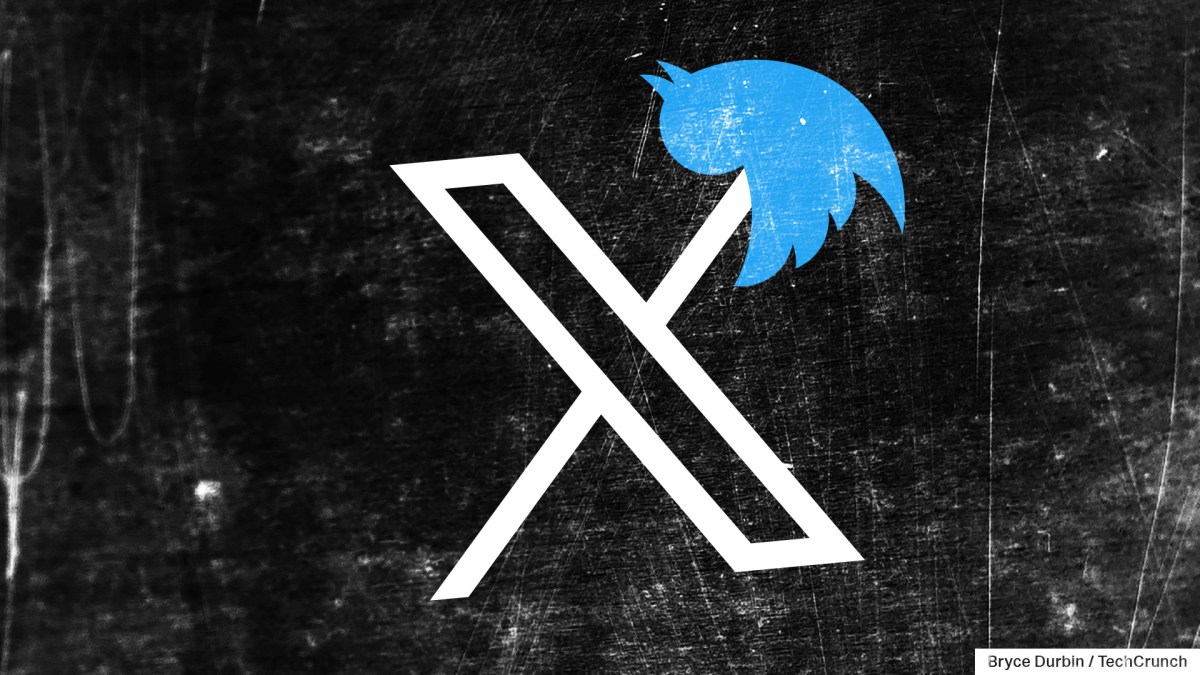
Trademark ruling leaves X rival rebranding as Tweet.app
A federal judge just made a clear call: an X rival can't use the Twitter name, but the word "Tweet" and that bird logo are fair game. That's a sharp reminder that trademarks aren't forever if a company stops using them. It's a practical win for the startup, now rebranded as Tweet.app, and a lesson in how quickly digital identity shifts. For more on how tech companies are repositioning around infrastructure bets, check out our piece on Anthropic's cloud exploration.

Google must adapt its ad business to open space for competitors
Google sidestepped a breakup of its ad business, but the judge's ruling makes one thing clear: the status quo is over. The company will now need to adjust how it operates, opening space for competitors to actually compete. That's a meaningful shift, not a cosmetic one. For anyone tracking AI-native infrastructure, the momentum is similar across the board. If you're exploring how technology is reshaping data management, our piece on Nscale's $3.36B push into AI-native spreadsheet infrastructure offers a useful parallel.
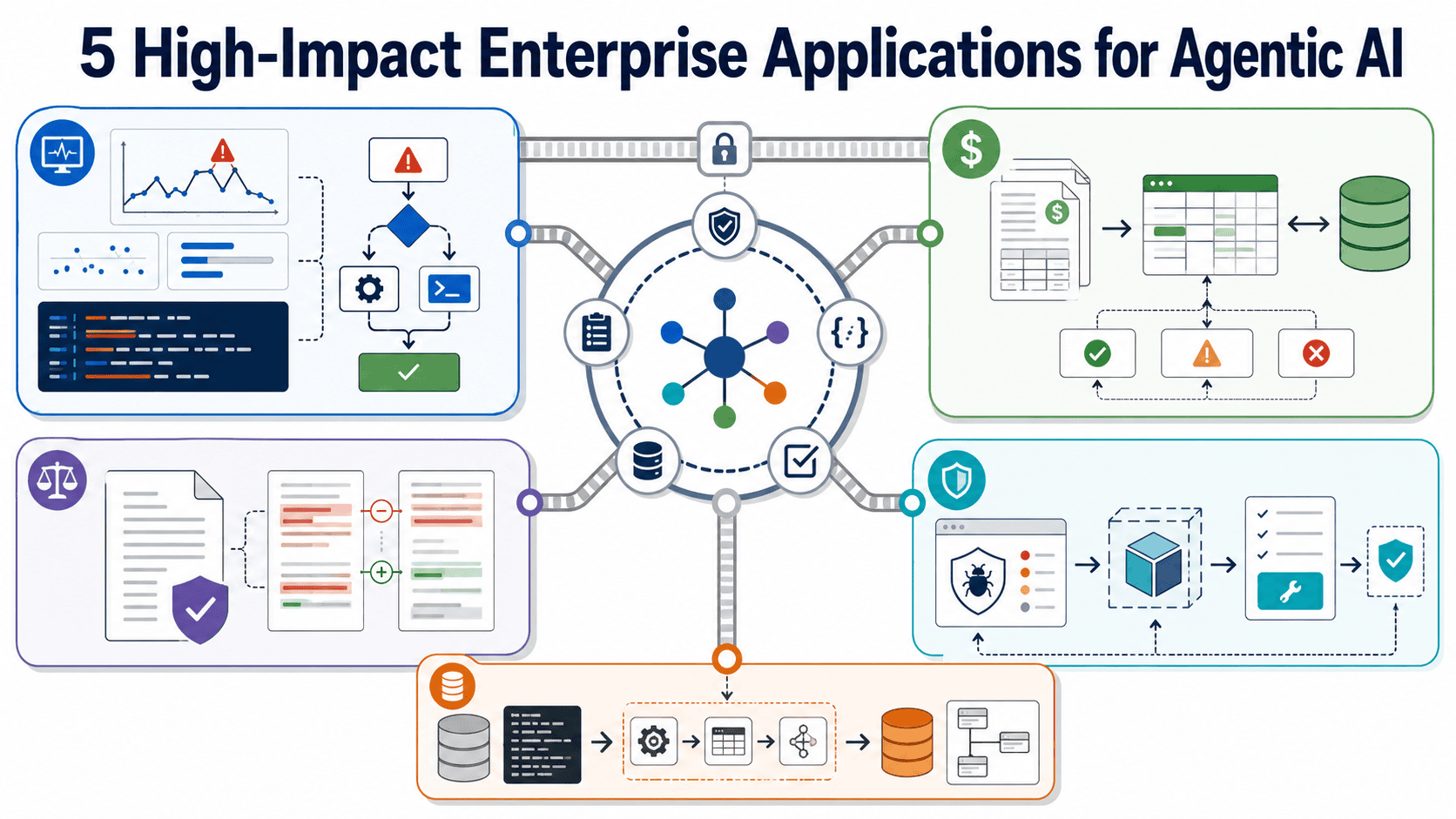
How agentic AI brings new efficiency to finance, legal, and security workflows
Agentic AI is moving from theory into production, and it earns its keep exactly in SRE, finance, legal, migration, and security workflows. Across SRE, finance, legal, migration, and security, the focus is on deploying these systems with deterministic guardrails in place. That combination of autonomy and safety is what makes enterprise adoption viable. For teams weighing production readiness, the discussions at QCon AI New York offer useful context on similar guardrail challenges. This is practical, grounded guidance for teams ready to move forward.

Federal judge sides with Anthropic in Pentagon labeling dispute
A federal judge has ruled that the Trump administration illegally labeled Anthropic a supply-chain risk, and that's a meaningful win for accountability. It's not just about one company's reputation; it's about whether such designations can be applied without proper process. The ruling lands as Anthropic's second Pentagon lawsuit continues in Washington, so the fight isn't over. For anyone tracking how AI oversight is taking shape, this is a reminder that legal checks still matter.

Meta's settlement trades kids' data for age-detection privacy tools
Tucked inside Meta's $18 billion settlement with 29 states sits a clause that deserves a closer look: a legal pass allowing the company to keep certain data from children under 13, specifically to train and test its age-detection models. That is a trade-off worth pausing over. Protecting kids while quietly retaining their information for model refinement feels less like a clean win and more like a compromise with sharp edges. For anyone tracking how AI companies navigate consent, this deal sets a revealing precedent.

Meta's $18 billion settlement acknowledges platform design harms to children.
An $18 billion settlement sends a clear message: Meta knew the risks its platforms posed to children and designed them to keep young users hooked anyway. That's not an accident; it's a choice, and now 29 states are holding the company accountable for it. This isn't just about fines. It's about acknowledging that addictive design has real human cost. For anyone watching how tech giants operate, this is a moment worth understanding.

Explore how open models make frontier AI more accessible for everyone.
Frontier AI isn't just for the few anymore. Thomson, an open-weights model built through continual learning on existing open models, shows that meaningful progress is possible without massive budgets. The report demonstrates performance gains comparable to multiple generations of advancement, while preserving stability and reducing the forgetting that plagues narrow adaptation. That's a practical path toward SovereignAI, one that puts ownership within reach of more institutions. It's not about hype; it's about what's achievable with the right stack and a focused approach.

Uber's €825M GDPR fine signals new accountability for automated systems
Uber's latest regulatory headache is a big one: the Dutch Data Protection Authority has slapped the ride-hailing giant with a €825 million fine, the second largest ever issued under Europe's GDPR. The penalty stems from automated driver suspensions, a practice that clearly clashes with the transparency and fairness Europe demands. For a company built on data, this is a stark reminder that automation without human oversight carries real costs. It's a bold move, and one that signals regulators are watching closely.

When Authors Become Unwitting Trainers for AI
Every published author has unknowingly fed the machines now competing with their own work. That tension sits at the heart of a messy legal question: can AI companies train on copyrighted books without permission? It feels like infringement, but the law hasn't caught up to the reality. We dig into the nuance, and if you're curious how similar data problems skew models, our piece on catching AI slop offers a practical parallel.

DOJ scrutiny of venture board seats signals a shift in startup oversight.
The DOJ's probe into a16z's board seats raises a pointed question: will other VCs flinch? It shouldn't. This is about scrutiny, not silencing. We dig into why the government is looking at startup governance, and what it signals for founders who value clean oversight. For context on how AI-native infrastructure is drawing similar attention, our piece on OpenAI's image-sharing mishap is worth a read. The takeaway? Transparency isn't a threat; it's the cost of building something real.

Empowering AI agents means knowing when to limit their autonomy.
The race to deploy the most autonomous agent is over. Enterprises winning with AI agents are now limiting how much those agents can do alone, because full autonomy breaks down in production. The companies that benefit won't be the ones with the most flexibility, but the ones creating agents with specific responsibilities and clear rules. Capability is outrunning control, and the 2026-to-2027 race is a trust race. For more on building these systems, explore our piece on orchestrating AI agents.
TikTok's $400M settlement highlights the cost of neglecting data privacy.
TikTok has agreed to a $400 million settlement, two years after the U.S. Department of Justice accused the platform of violating children's privacy laws. That's a serious number, and it signals real accountability. For a company built on engagement, this is a moment to reflect on how data protection must evolve. We've covered similar ground before, like in our piece on cross-platform efforts to protect young users. The takeaway here is simple: privacy isn't optional anymore, and users should expect better.

When lawsuits end and competition begins, founders should take note
The lawsuits are over. Runlayer and Rippling dropped their claims, and no money changed hands. But the real twist is what Rippling did next: it released a competing product. That's not an ending, it's a strategy. For founders, this is a reminder that legal battles often end quietly, while the market moves loudly. If you're navigating similar tensions between innovation and rivalry, our piece on AI-native companies driving a $5.75B investment surge offers useful context.

Grubhub's settlement checks arrive, delivering accountability to diners and drivers.
The checks are finally going out. Grubhub's $23.8 million settlement with the FTC is now reaching the diners and drivers affected by its practices, closing a chapter that should prompt a closer look at how platforms treat their users. It's a tangible win for accountability, and one that signals a shift toward more honest operations in the delivery space. For those navigating similar tools, this is a moment to reassess what transparency really means.

From Legal Fight to Market Signal: A Cautionary Tale for Buyers
Rippling is counter-suing Runlayer, a tiny startup it claims overstepped. This follows Runlayer's own lawsuit last month, which accused Rippling of swiping its product ideas. It's a seller- and buyer-beware moment for the AI-native spreadsheet space. We watch giants and newcomers clash, and the real message is simple: protect your work, because the market rewards speed over sentiment. For more on how AI infrastructure battles are shaping up, see our piece on Nscale's $3.36B funding.
When Your Spreadsheet Gives Wrong Answers, That's Not a Mistake
We've all watched an AI confidently present a fabricated answer and wondered where it came from. But what if the lie isn't the exception, it's the intended behavior? In "You've Seen Your Agent Do This. You Just Didn't Call It Lying," we confront the quiet reality of AI's creative truth-telling. It's not about malice; it's about how we frame these moments. Naming it matters. If you're questioning what your agent is really doing, you're already ahead.

DOJ oversight of OpenAI's visa sponsorship raises questions on hiring practices
The DOJ's oversight of OpenAI's green-card sponsorships lands with weight. The allegation, that the company did not meaningfully attempt to hire U.S. citizens before seeking permanent residency for visa-holding employees, cuts to the core of how AI talent is built. It signals a firm push for accountability, and that's a standard worth watching. For users exploring AI's potential, this matters beyond legalities. It's about ensuring trust stays central as the field grows.

eBay pays $56 million to settle intimidation campaign against newsletter critics
The Steiners spent years under siege for the simple act of publishing a newsletter eBay executives disliked. Now, a $56M settlement closes that chapter, though the message it sends about corporate intimidation lingers. It's a sobering reminder that power unchecked can turn petty. For those tracking how digital platforms police their critics, our coverage of AI agent swarms exploring online data offers a fitting parallel. The settlement is a win, but the damage to trust takes longer to repair.

A lawsuit questions whether executive term agreements hold legal weight in California.
Warner Bros. is taking Amazon to court, alleging the tech giant illegally poached top executives. The lawsuit strikes at a familiar fault line: whether term employment agreements can hold up under California law. It's a challenge to the state's pro-worker stance, and it's bound to reignite a debate that won't stay settled. For anyone watching how talent moves in this industry, this is a case worth following closely.

Anthropic's $1.5B settlement approved, but copyright questions remain.
Anthropic's $1.5 billion copyright settlement has received final approval, marking a significant moment in the ongoing debate over AI training data. This approval settles one case, yet the broader question remains unresolved: how should copyrighted works be used to teach models? It's a conversation that demands clarity, not just legal maneuvering. For those exploring the human side of these technologies, our piece on talking to an AI clone offers a thoughtful counterpoint.

Navigate EU AI Act risks with clarity and actionable next steps.
The EU's latest guidance doesn't mince words: your AI systems might already be high-risk, even if you haven't flagged them yet. That's a sobering thought for any governance team. This on-demand webinar cuts through the noise, explaining what the new rules mean and, more importantly, what you should do next. We'd pair it with our guide on evaluating AI for practical decision-making, since understanding real-world performance is part of staying ahead. Explore the details and see where your program stands.